
Physics
Australian Team's AI Method Independently Confirms the First Black Hole Image
CSIRO researchers rebuilt the M87 black hole's ring from raw Event Horizon Telescope data without being shown what a black hole looks like.
Topic
143 stories from Planck Standard. Latest: November 12, 2026.
CSIRO researchers rebuilt the M87 black hole's ring from raw Event Horizon Telescope data without being shown what a black hole looks like.

Queen's University Belfast astronomers confirmed two stable asteroids and one candidate, doubling the known long-lived population in Neptune's trailing cloud.

Astronomers dated VVV CL001 using Hubble images and say that if it formed in place, it could be the oldest globular cluster in the galaxy's bulge.

A 0.13-arcsecond shift between images taken 3.5 years apart shows the object is a Milky Way dwarf about 2,400 light-years away, not a galaxy 100 million years after the Big Bang.

Radio surveys from Arecibo and China's FAST telescope point to AGC 322753, a candidate dark galaxy holding 2 billion Suns' worth of gas and little or no starlight.

Astronomers checked five candidate isolated black holes within 49 light-years against infrared and radio surveys and concluded they are unlikely to be real, with a big new radio dataset due in 2027.

The object, provisionally 2026 ED138, may be about 1,000 kilometers wide and would be the largest body found beyond Neptune in roughly 20 years.

Hungarian astronomers say tidal forces left the star KIC 2852961 almost, but not quite, locked in rotation, and that gap powers the most violent flares in the Kepler field.

A Helsinki researcher's streak-hunting software caught C/2026 S1 (Euclid) in five image sets, and the Minor Planet Center confirmed it on Oct. 8.

Nearby starburst galaxies with the fastest winds leaked the least ionizing light, suggesting young stars did the work before the first supernovae went off.

Gaia ages for stars across the galaxy show the disk flattened fast until about 10.8 billion years ago, then slowly, favoring one of two rival models of how it formed.

A compact clump 16,300 light-years away holds 20 to 30 times the Sun's mass yet shows no sign of jets, a rare view of how giant stars begin.

Planet-forming disks in the famous nebula look far younger than their stars. A merger of two stars a few hundred thousand years ago, triggered by a third, may explain why.

A new analysis finds all eight suspiciously dense super-heavy planets orbit magnetically active stars, with odds of that happening by chance near 1% for the four rocky ones.

A transient called AT 2026abck, in a galaxy at redshift 5.017, was caught four to 10 days after its blast without help from a gravitational lens, astronomers report.

TDE 2023mfm is a rare off-nuclear tidal disruption, hinting that a wandering black hole of 1 to 10 million solar masses roams the host galaxy.

Radio images of IRAS 06530 reveal a vast ring, spiral arcs and a young central nebula, but none of the fast jets that theory says should have shaped them.

The source, TXS 2354+015, sits at redshift 4.946, when the universe was under 1.2 billion years old, and its radio output beats the previous record from a 2008 census.

The system ZTF J0440+2325, reported in Nature Astronomy, is the first caught with one low-mass object steadily feeding on another, and it could last for billions of years.

The flash, FRB 20240304B, left a tiny star-forming galaxy when the universe was only about 3 billion years old, more than doubling the previous distance record.
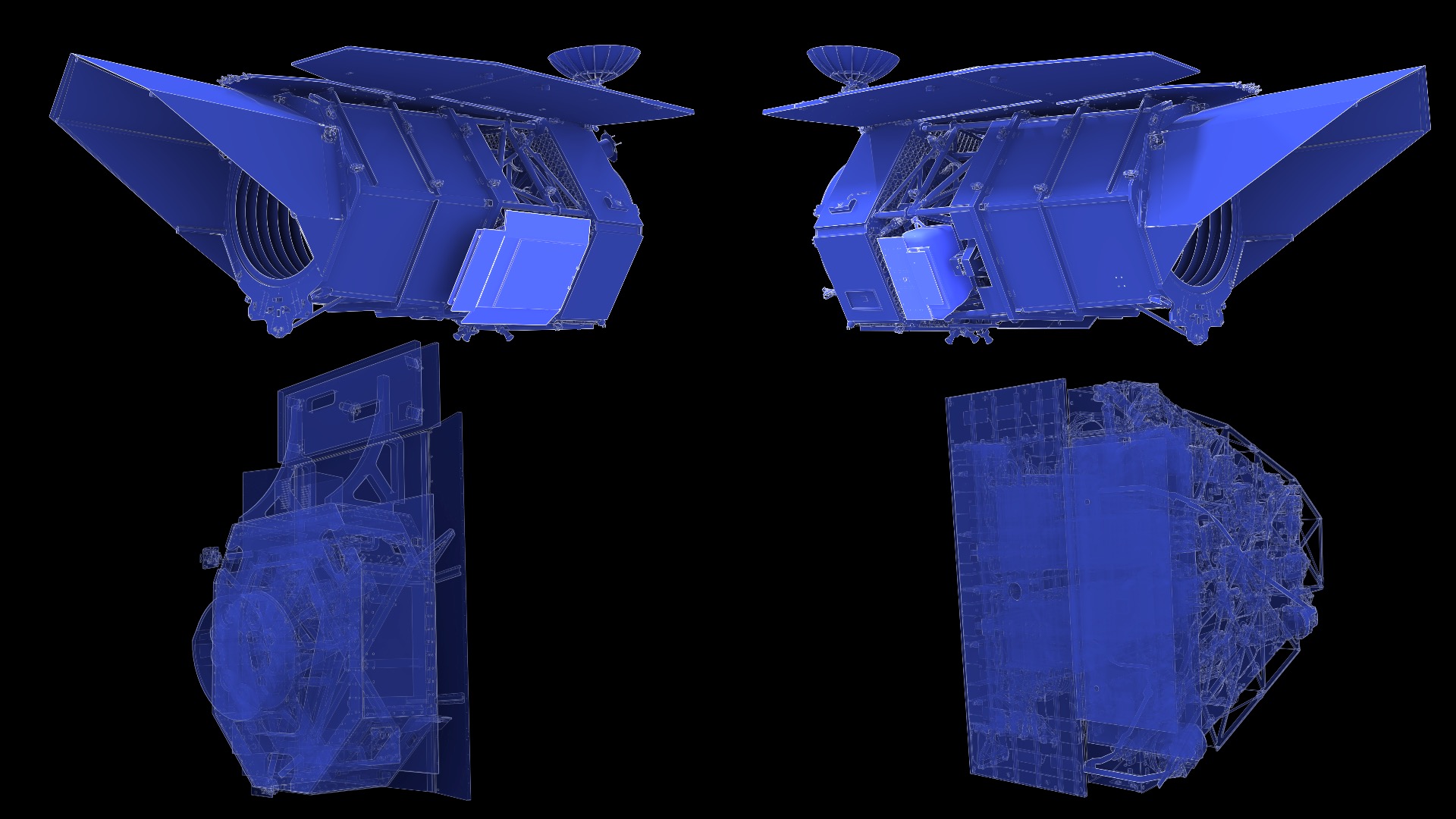
The first test image shows stars as blurry rings, exactly as expected. Sharp pictures are still months away, and science operations are set for 2027.

By stacking data on hundreds of galaxies, Arizona State astronomers found hydrogen glowing along jet paths deep into the gas halos that feed star birth, but not in other directions.

Astronomers in India found four nested pairs of radio hotspots around a galaxy 3.9 million light-years across, each one older the farther it sits from the core. The jets' direction has also swung by 24 degrees, a sign the black hole's spin axis is wobbling.

Radio images of WISPIT 2b, a planet five times Jupiter's mass still pulling in gas 430 light-years away, show swirls that simulations predicted for decades but no one had seen next to a known planet.

Nearly 20 of the Qumran scrolls deal with calendars and astronomy. Prof. Eshbal Ratzon argues the calendar was live in the sect's second-century BCE founding fight with Jerusalem, became unworkable as the seasons slid, and was set aside as relations warmed under Alexander Jannaeus, without ever losing its place in the community's identity.

TOI-1355 b gave itself away when its secondary eclipse arrived early, a sign the orbit is not circular. The University of Tokyo team says the planet was probably flung inward by other giants and is now being slowly reeled into a circle by its star's tides. They are already writing a JWST proposal.

The August 31 burn was more than 99 percent accurate. Goddard's center director credited 'exquisite planning by our orbital dynamics team, brilliant execution by the operations team, and a precise launch from SpaceX.' A second burn later this month is expected to add four more years.

NGC 1068 is 45 million light-years away and one of the best-studied active galaxies in the sky. The hidden component moves 300 km/s faster than the visible one, tops 2,000 km/s and is escaping the galaxy for good.

David Kipping's search of LP 890-9c is by far the most sensitive exomoon hunt ever done. It rules out anything the size of Europa, Rhea or Umbriel, and it shows JWST has no noise floor stopping it from finding moons that small.

X-rays flared on schedule during AT 2016blu's March 2026 outburst and were absent in Chandra data from 2001–02. The star is the first known luminous blue variable with a compact companion.

Twin stars form from the same cloud and should match chemically. HD 129171 does not — and the element that proves it is one stars cannot make themselves.

The DESI Legacy Imaging Surveys released their 11th data set on Monday, covering roughly three-quarters of the sky. More than 160 scientists and four telescopes built it, and anyone can open it in a browser.

DR20 includes half a million black hole spectra, 1.5 million Milky Way stars and the survey's first optical spectroscopy from the Southern Hemisphere — all of it free to anyone who wants it.

Each holds about three million suns' worth of hydrogen inside a halo weighing 3.7 billion solar masses. If the interpretation holds, they are dark matter halos that never lit up.
Manganese piles up in a galaxy over time, so the amount of it says how old the place is. The hard part was knowing what its light should look like.

The star's inner atmosphere has grown lopsided since 2015, and the newly confirmed companion star may be steering where the convection cells sit.

The planet's north pole has worn a hexagon for four decades. The new southern decagon is still strengthening — and two amateur astronomers saw the first hints of it.

Sodium gas appeared and vanished over successive nights around PDS 70, a young sunlike star 370 light-years away. The likely explanation is icy bodies falling inward past two newborn gas giants.
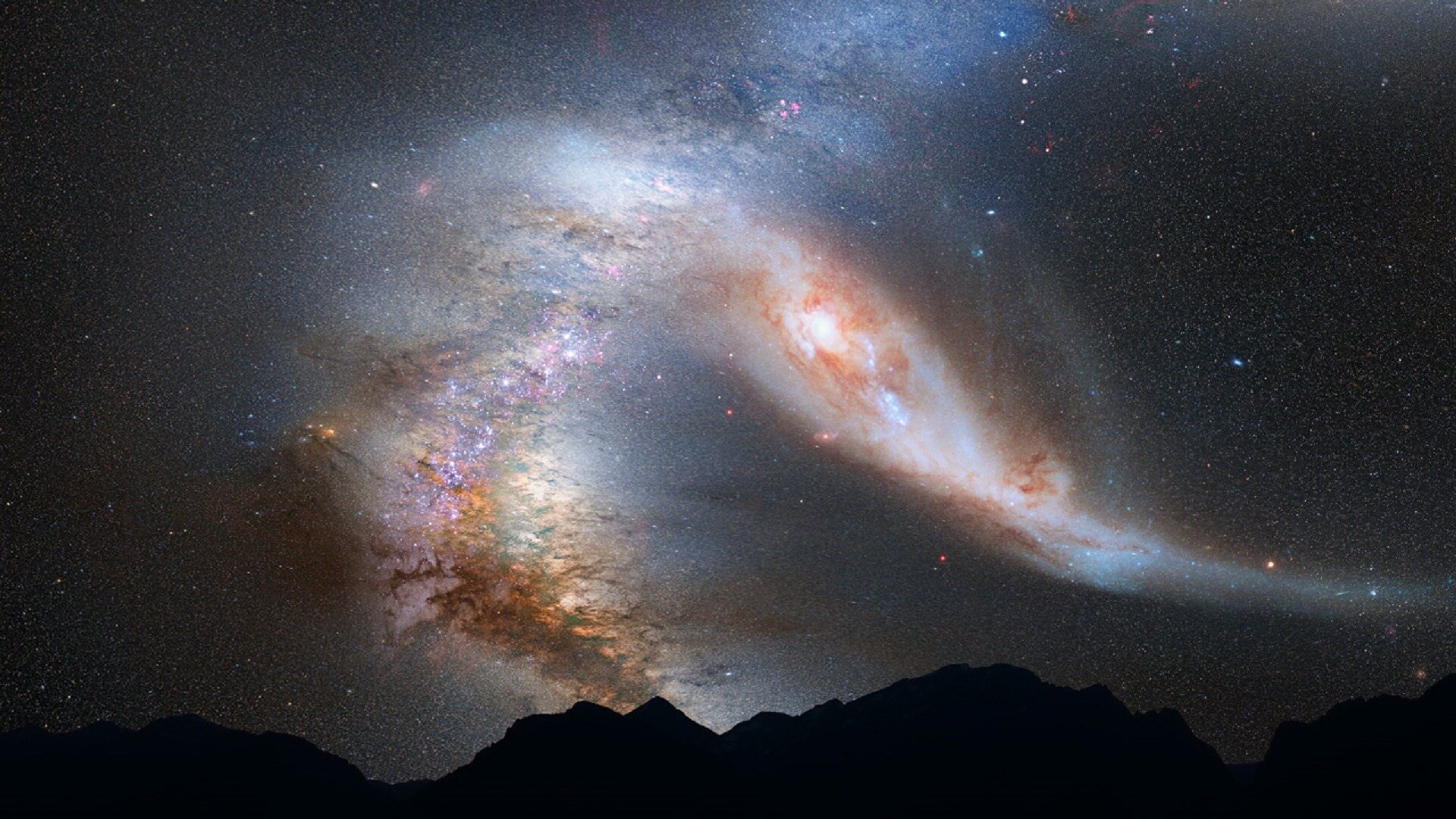
A Missouri team compared star clusters mapped by Gaia and found the mix of large and small stars differs from cluster to cluster — breaking a 50-year assumption and possibly explaining Webb's impossibly heavy early galaxies.
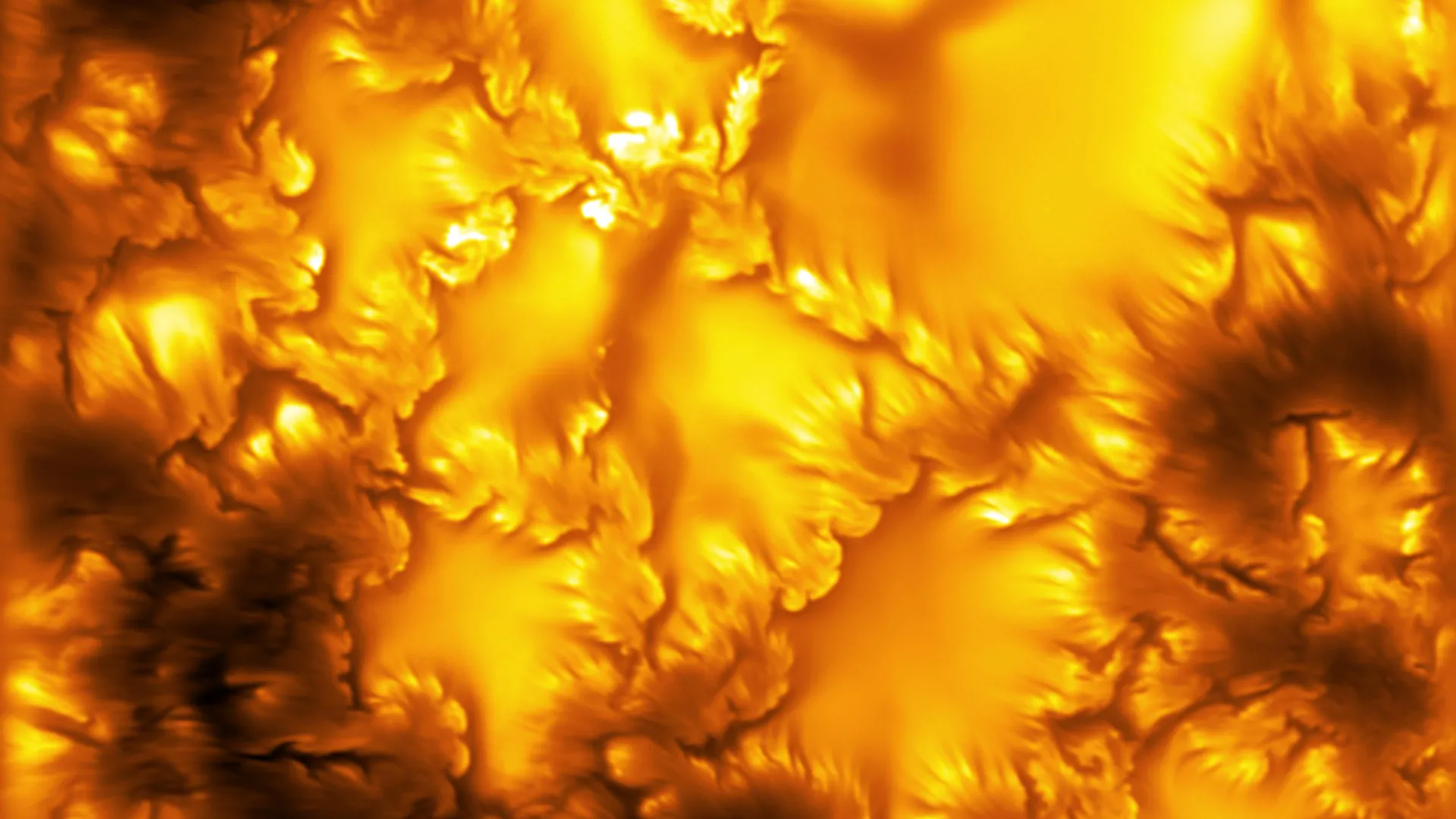
The vortices had never been resolved before. Researchers think they twist magnetic field lines tight enough to power nanoflares and move magnetic energy through the Sun's atmosphere faster than models allow.
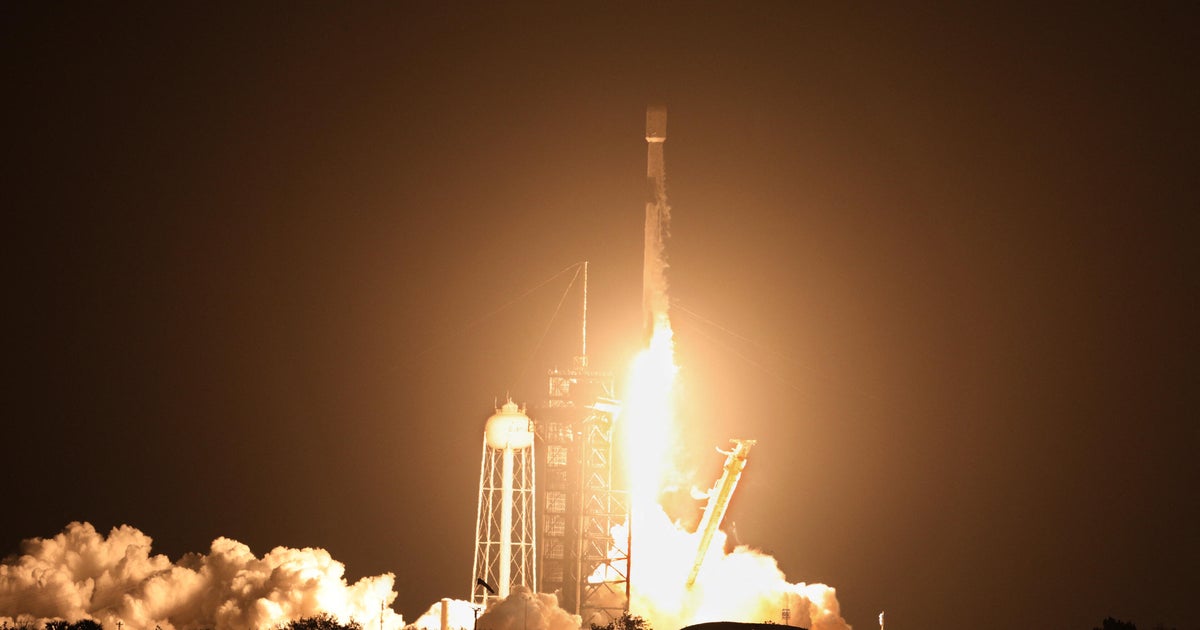
The 8,800-pound Falcon 9 second stage that launched two lunar landers in January 2025 finally came down Wednesday, near the far-side craters Einstein and Bell.

Astronomers measured the gravitational redshift of SDSS J0608−0059 and found it sits on the wrong mass-radius curve for an ordinary white dwarf — evidence it came from a single massive star, not a merger.
 Watch
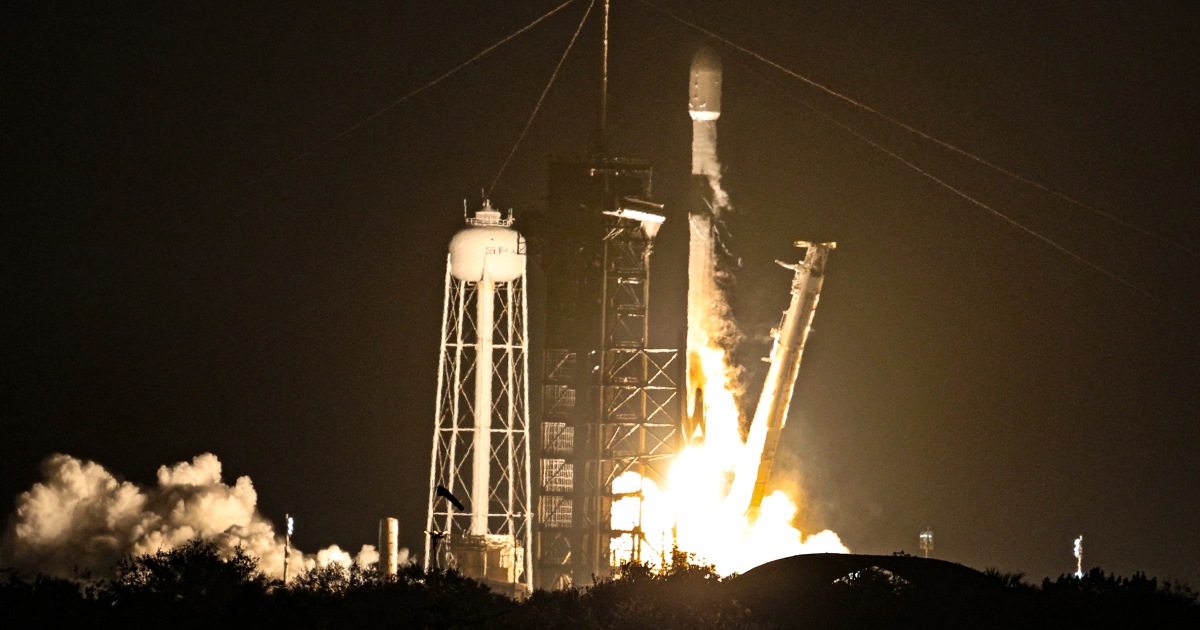
The discarded Falcon 9 upper stage that launched two private lunar landers in January 2025 drifted for eighteen months and hit near Einstein Crater at 6:35 UTC Wednesday. Nobody photographed the collision, but the Very Large Telescope read its chemical signature.

Astronomers using adaptive optics on two of the world's largest telescopes found a shape no model of asteroid formation predicts, and a faint companion nobody had seen.
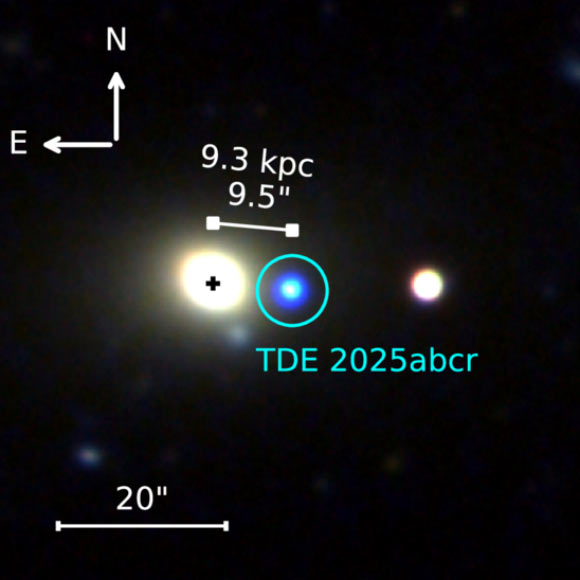
The flash astronomers named TDE 2025abcr came from 30,000 light-years off-center in a galaxy 750 million light-years away — the first quiet, wandering giant ever caught this far from home.
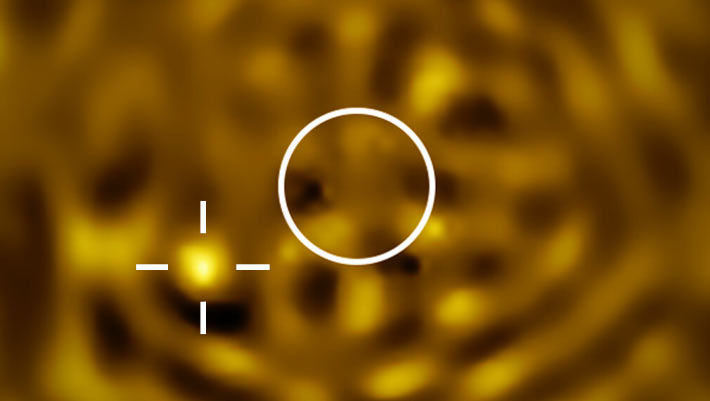
A faint point of light 8.8 astronomical units from the red supergiant turned out to be a young star of roughly three solar masses — bright enough to see only because it is heavier than anyone predicted.
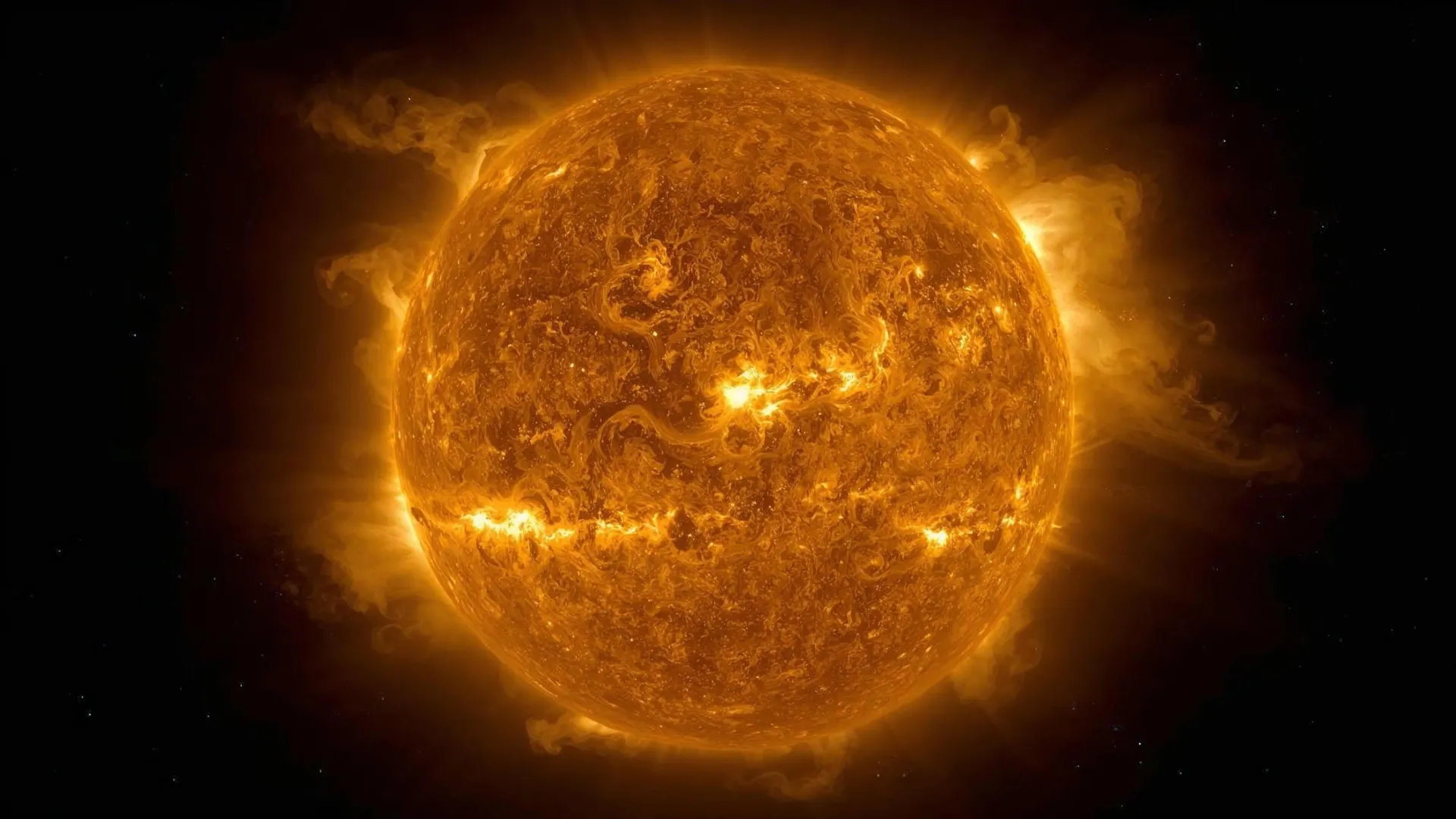
A Swedish team rebuilt the physics of how silver atoms absorb sunlight and closed a stubborn gap between our star and the oldest rocks in the solar system.

A camera built to shoot the bright surface of Mars was pushed far beyond its design limits to capture a visitor from another star system, tail and all.
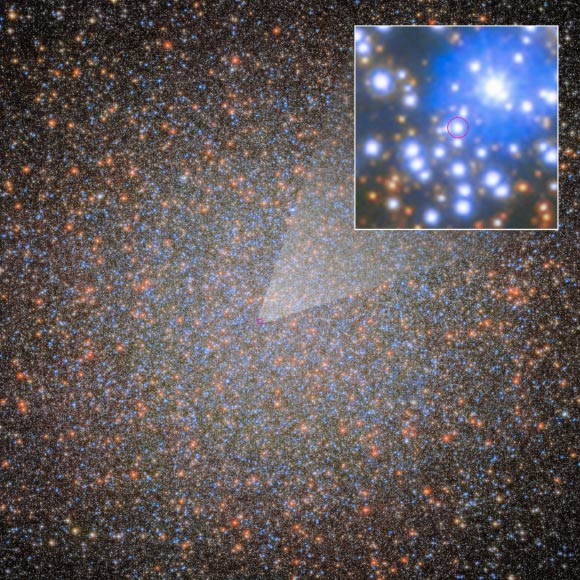
Sifting through two decades of Hubble images, a University of Utah team spotted a star being tugged by an invisible companion — the first of thousands of black holes thought to be hiding in the giant cluster.
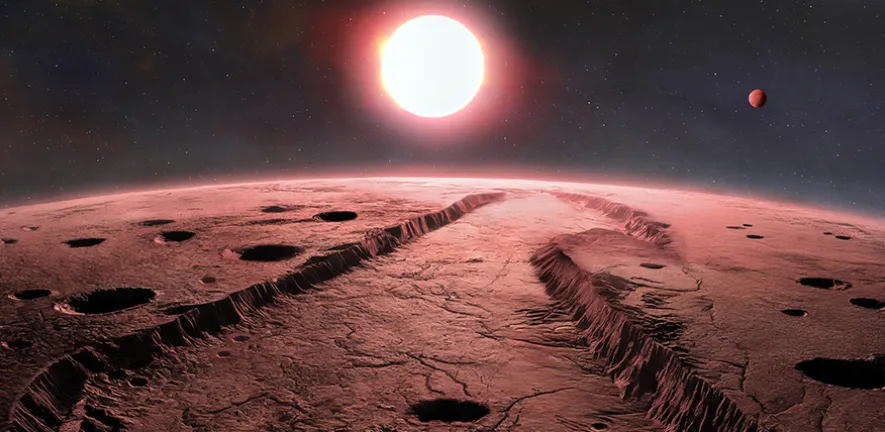
Cambridge scientists find the planets circling our closest single-star neighbor are smaller than Earth, larger than Mars, laced with a rare deep-mantle mineral, and locked so close to their star that any atmosphere would be stripped away.

A UC Irvine–led team detected a planet about twice the size of Earth orbiting a nearby red dwarf, receiving almost exactly as much starlight as Earth gets from the sun.
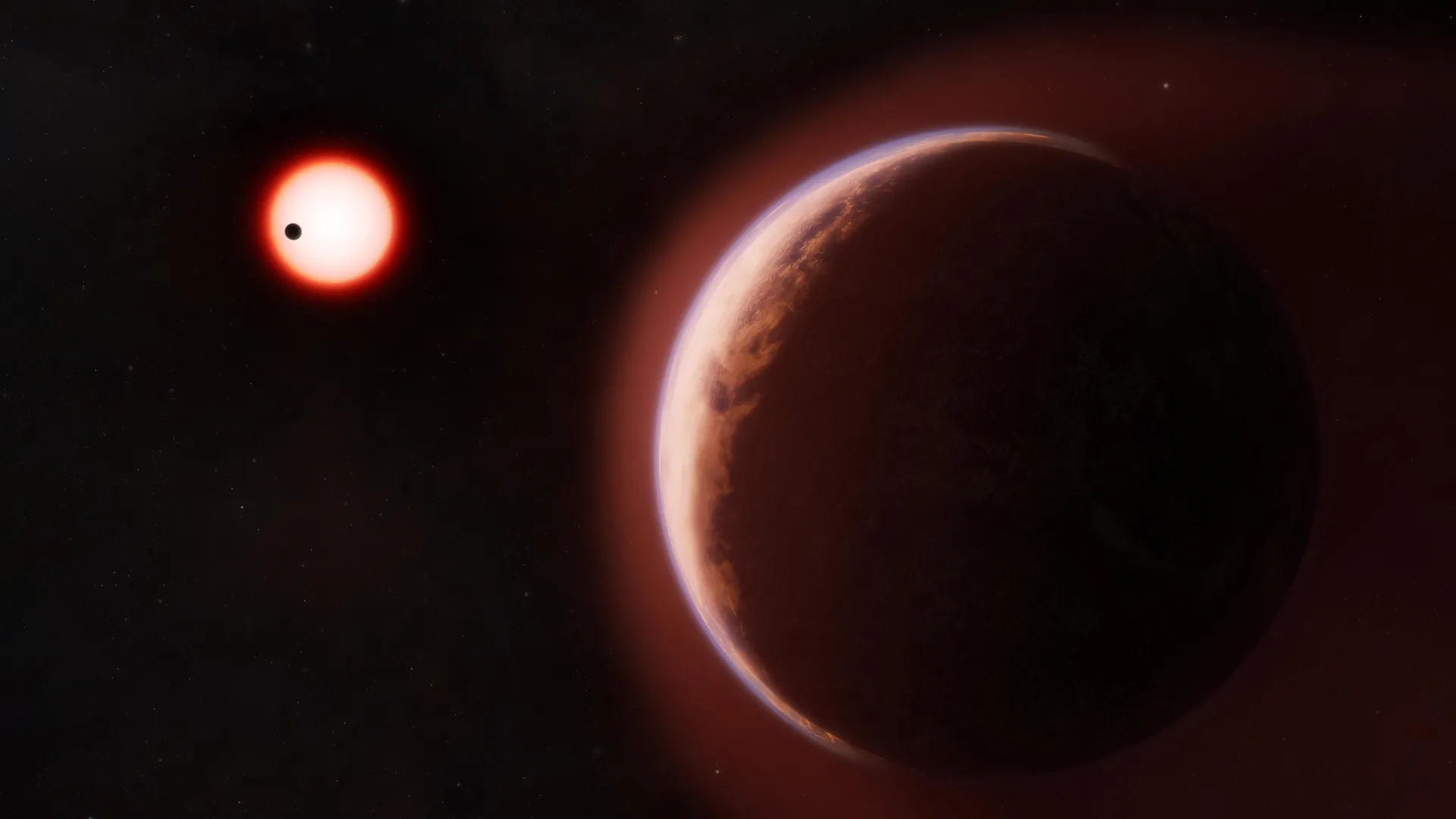
Using a ground-based telescope in Chile, scientists spotted helium streaming off the exoplanet LHS 1140 b, the first time an atmosphere has been confirmed around a rocky world in the life-friendly zone of another star.
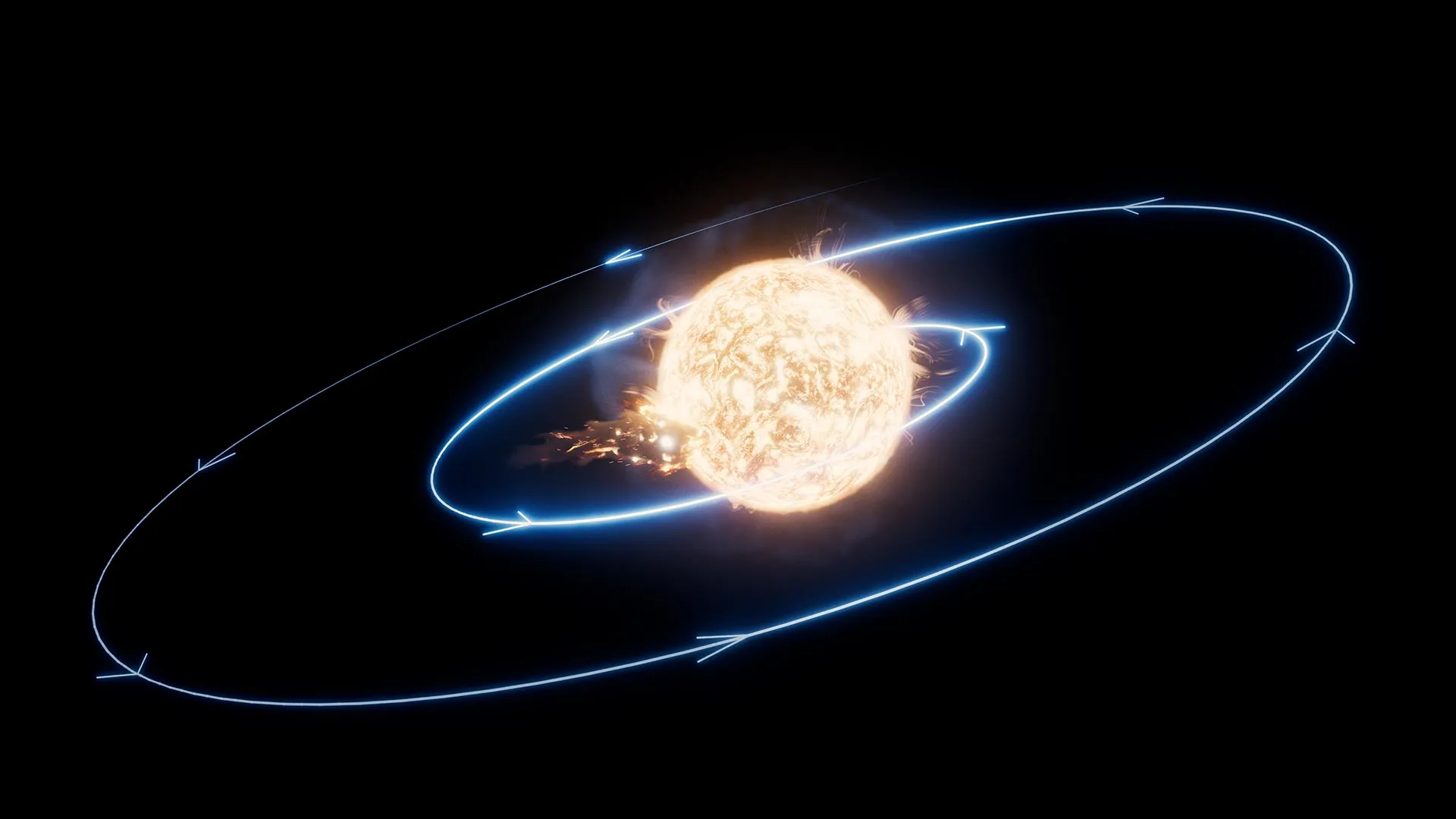
A telltale surge of lithium in the star TOI-5882, some 1,300 light-years away, points to a planet consumed whole — possibly nudged to its doom by a hidden brown-dwarf companion.

A chemical analysis of Barnard's Star suggests its four sub-Earth planets are packed with a rare deep-Earth mineral, stripped of atmospheres and locked in eternal day and night — utterly hostile to life just six light-years away.
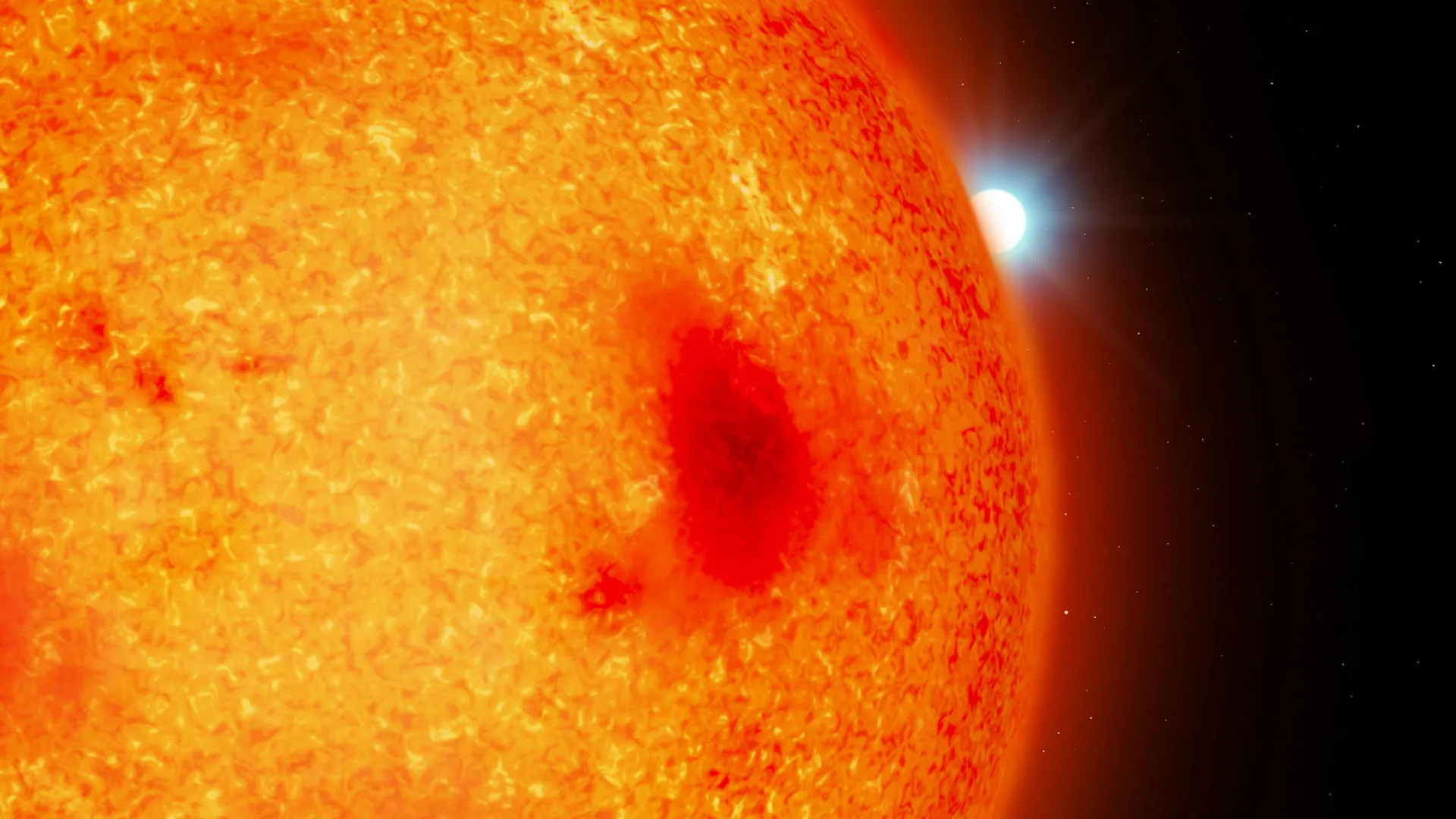
Astronomers at Warwick and Colorado used Hubble's ultraviolet vision to pull four dead stars out of the glare of brighter companions — one just 25 light-years away, now the ninth-closest white dwarf to the Sun.
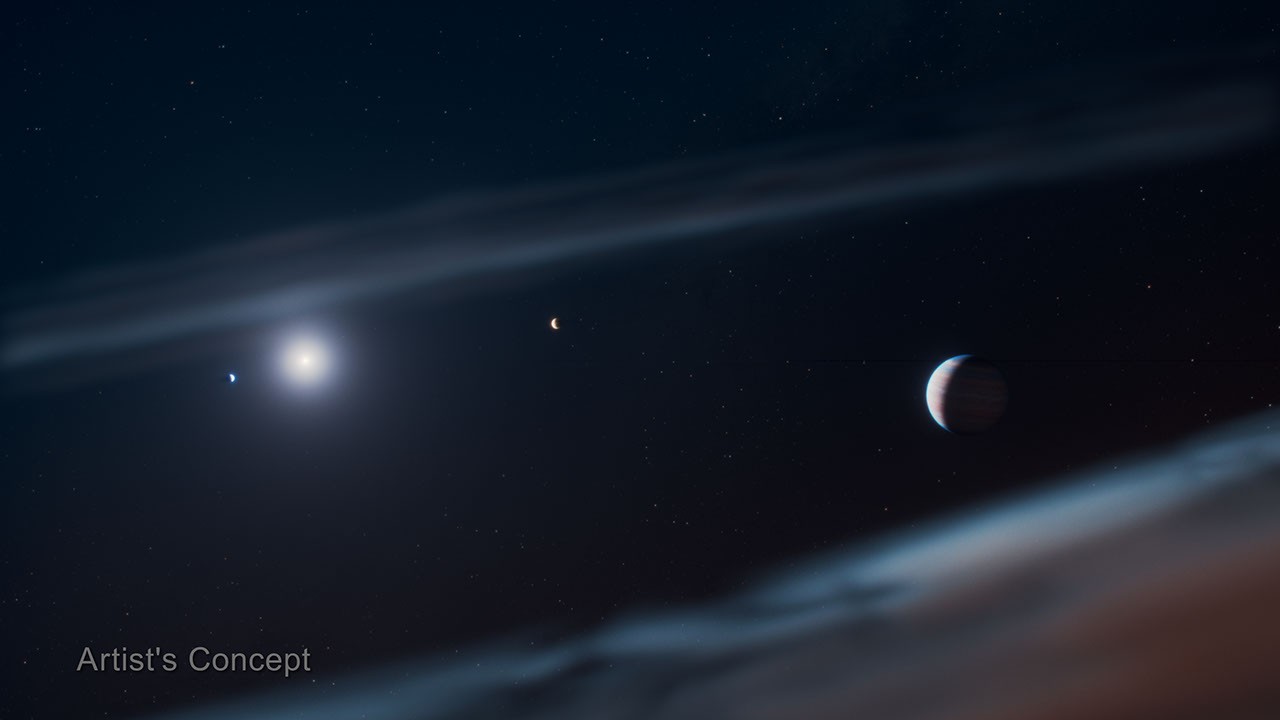
The newly identified world, Beta Pictoris d, makes the young nearby system only the second ever found to host at least three directly imaged planets.
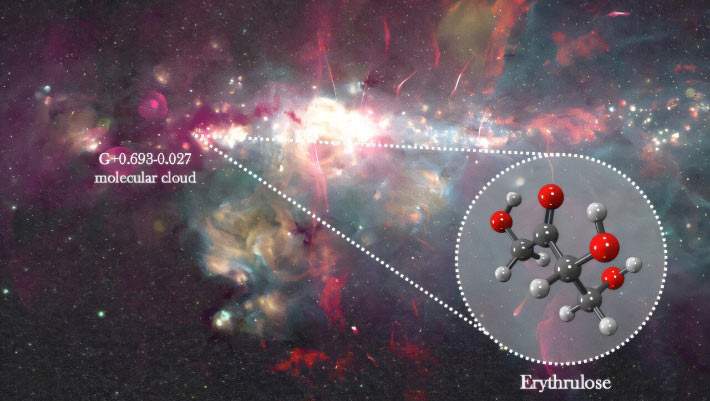
Erythrulose, a four-carbon sugar found in raspberries, was spotted in a cloud near the galaxy's center — and may have rained down on the early Earth by the millions of tons.

A massive, chemically mature spiral with a 14,700-light-year central bar existed just over a billion years after the Big Bang — a structure astronomers thought could not form so early.

Astronomers argue the universe's X-ray-silent, seemingly overmassive black holes are actually smaller objects feeding at furious rates — a finding that could defuse one of cosmology's freshest crises.

New modeling of tidally locked worlds like LHS 3844b suggests heat can circulate in a stable loop, making the twilight 'terminator zone' between scorching day and frozen night more hospitable than thought.
Showing the latest 60. More in Science.