ALMA Catches a Baby Gas Giant Stirring Its Birth Cloud for the First Time
Radio images of WISPIT 2b, a planet five times Jupiter's mass still pulling in gas 430 light-years away, show swirls that simulations predicted for decades but no one had seen next to a known planet.

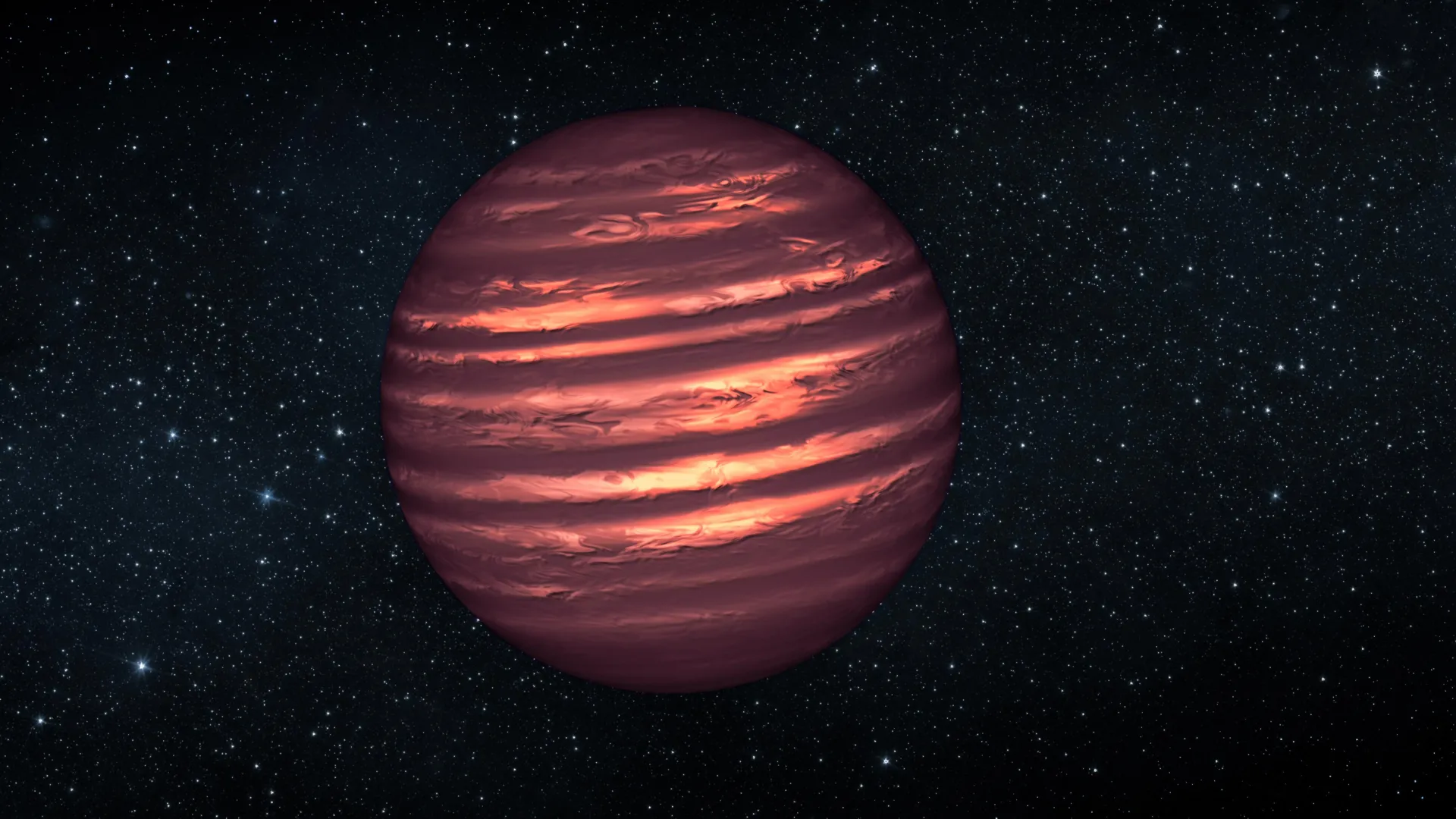
Astronomers have captured what they call planet formation in action: a young gas giant churning the disk of gas it is growing out of, in images detailed enough to show gas swirling around the planet itself.
The team, led by Myriam Benisty of the Max Planck Institute for Astronomy in Heidelberg, used the ALMA observatory in Chile to study WISPIT 2b. The planet has about five times the mass of Jupiter and orbits inside a disk of gas and dust around a young star system 430 light-years from Earth. The results are described in two papers posted on the arXiv preprint server.
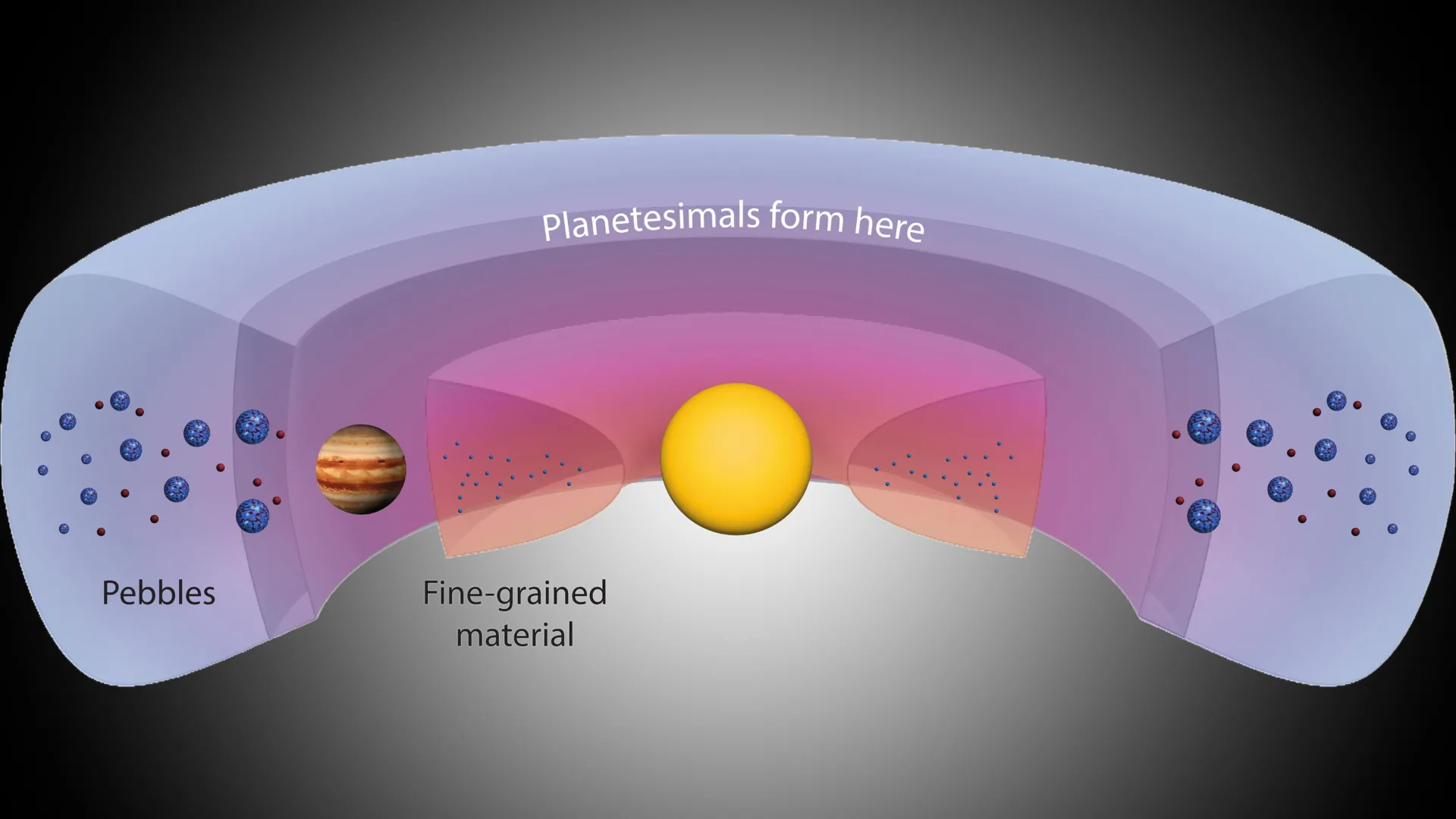
Astronomers have a detailed theory of how planets form. Dust in the disk around a new star clumps into pebbles, then into bodies a few to a hundred kilometers wide, then into rocky worlds. In gas-rich parts of the disk, some of those rocky cores pull in huge amounts of gas and become giants like Jupiter and Saturn. Simulations support that story, but direct observations have been rare. ALMA delivered the first images of rings in these disks in 2014, and in 2018 a team imaged the first confirmed protoplanet, PDS 70b. But the PDS 70 planets have cleared away the gas around them, so they can't show how a growing planet interacts with it.
WISPIT 2, announced in August 2025, is only the second disk where a forming planet can clearly be seen. The planet WISPIT 2b gives off the red glow of hot hydrogen, a sign it is still pulling in gas and getting heavier. A second planet, WISPIT 2c, was reported in March 2026. In August, Max Planck doctoral student Cade Bürgy showed that the center of the system holds two stars in a tight orbit, not one.
Seeing structures this small at that distance is extremely hard. The researchers compare it to reading a book from 5 kilometers away. ALMA can do it because its 66 radio dishes on the Chajnantor plateau work together like a single telescope up to 16 kilometers across. A team led by Stefano Facchini of the University of Milan pointed the array at the system in September 2025, with follow-up observations in November 2025 and March 2026. "We clearly see both planets shaping their environment," Benisty said. "WISPIT 2c has carved a cavity, and WISPIT 2b a gap. Around WISPIT 2b, we find swirls of gas that had been predicted by simulations of disk-planet interactions, but never actually seen before. Now there is an image of them!"
That makes WISPIT 2b the only known forming planet where astronomers can see the disk, the planet, evidence that it is still feeding and gas moving directly around it. The result could help settle a running argument. Swirls like these have been spotted in other disks where no planet has been seen. Some researchers take them as signs of hidden planets, while others say turbulence in the disk could make them without any planet. "Hopefully, observations like this will teach astronomers to distinguish between disk features that indicate the presence of a protoplanet and features that don't," Facchini said.
WISPIT 2b orbits 57 times farther from its stars than Earth is from the sun, almost twice as far out as Neptune. Most known exoplanets orbit much closer in. The team says the next generation of instruments, including the European Southern Observatory's 39-meter Extremely Large Telescope and a planned ALMA upgrade, could produce a similar picture within about a decade of a giant forming at the distance of Jupiter or Saturn.