Asteroid Bennu's Amino Acid Holds the Biggest Isotope Anomaly Ever Seen in Space Organics
Penn State researchers found one carbon atom in a single molecule wildly out of balance with its neighbors, evidence of chemistry that may predate Earth.

Scientists studying a pristine sample from the asteroid Bennu have measured the largest isotope anomaly ever recorded in an organic molecule from space, a result that points to chemistry from the very dawn of the solar system, possibly before Earth existed. The work, led by researchers at Penn State, was published in Communications Earth & Environment.
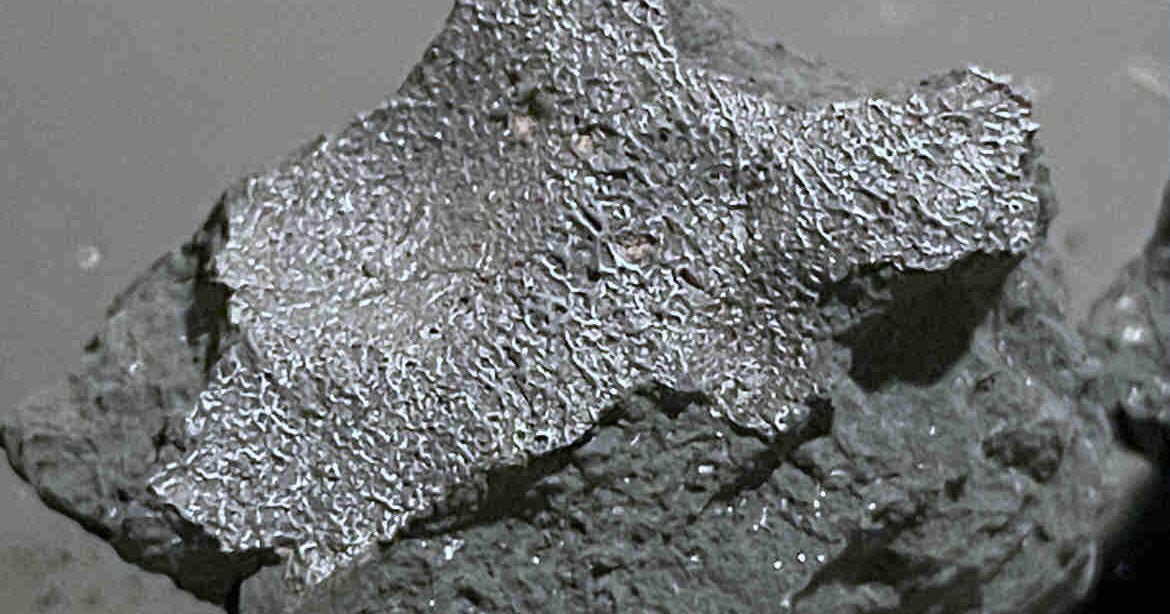
The team examined beta-alanine, an amino acid that is not one of the 20 that build proteins but is naturally made in the human body and is among the most abundant amino acids found in asteroid and meteorite samples. They compared material from Bennu, delivered to Earth in 2023 by NASA's OSIRIS-REx mission, with a sample of the Murchison meteorite, which fell in Australia in 1969. Bennu's sample came straight from space with no terrestrial contamination, which makes it a clean test of where these molecules formed.
Most isotope studies report an average for the whole molecule. This team developed a technique to look at the individual carbon atoms inside beta-alanine. "This intramolecular information provides a much more detailed isotopic fingerprint," said Ophélie Mcintosh, a former postdoctoral researcher at Penn State and lead author. The work relied on a Penn State instrument called pico-CSIA that can analyze tiny amounts of material, plus a modified GC-Orbitrap that measures isotope composition at specific positions within the molecule.
When the team compared the two samples, the whole-molecule carbon averages were so close that, within the margin of error, they were basically the same. "But when you look at intramolecular carbon, they're completely different," Mcintosh said. Of beta-alanine's three carbons, one was highly enriched in the heavier carbon isotope while the other two were very depleted in both samples, but the exact values differed between Bennu and Murchison. The enriched Bennu carbon was the highest isotope anomaly ever recorded in an organic molecule from space.
"I was genuinely astonished by the enormous isotope difference between two neighboring atom positions within the same molecule," said Katherine Freeman, the project's principal investigator. "The preservation of such startling differences is an indicator of the primordial nature of these molecules. We are working with molecules formed at the very dawn of the solar system, possibly even before the formation of Earth."
The researchers said the two samples share a similar isotopic structure, which suggests a related underlying chemistry and possibly the same formation process. But the differences in measured values indicate the molecules formed in different parts of the solar system. The same group previously studied glycine, the simplest amino acid, and found that glycine on Bennu may have formed in a harsh, cold environment, which runs against the prevailing idea that life's building blocks formed under warm, wet conditions.
"Isotope ratios provide a measurable tag that can link molecules to specific reservoirs or processes," said co-author Christopher House. Understanding how and where space organics formed matters because meteorites and asteroids may have delivered such compounds to the young Earth. Bennu is currently more than 200 million miles from Earth, but its returned sample is giving researchers a view of that ancient chemistry that no meteorite can match.