Osaka Team Tells Mirror-Image Amino Acids Apart One Molecule at a Time, a Step Toward Spotting Alien Life
A nanogap electrical sensor plus AI distinguished L- and D-forms with over 80% accuracy and worked on Murchison meteorite and Atacama soil extracts.

Searching for signs of life elsewhere in the solar system and beyond requires instruments that are both sensitive and compact. Researchers at the University of Osaka say they have taken a step in that direction with an electrical method that can tell mirror-image forms of amino acids apart, one molecule at a time. The work is set to be published in Nature Communications.
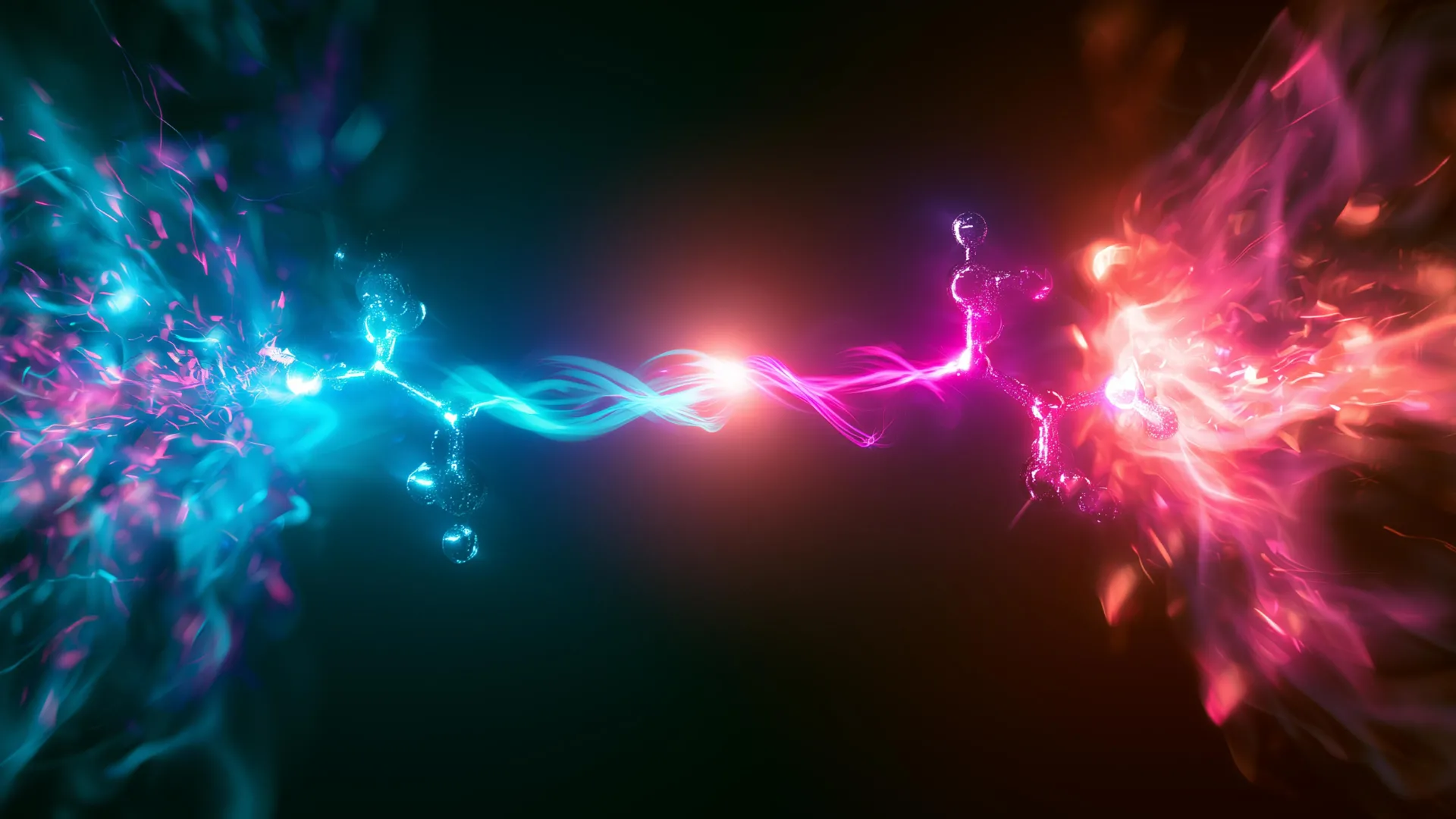
The approach rests on a basic fact of biology. Amino acids, the building blocks of proteins, come in two mirror-image forms, called L and D. They have the same chemical formula, but living organisms use almost exclusively the L-form for amino acids, while sugars are found in the D-form. Nonliving chemical and physical processes make both forms in equal amounts. A lopsided ratio of L to D is therefore a potential biosignature, which makes amino acids a prime target for astrobiology.
Traditional methods measure large groups of molecules at once, which brings practical challenges. Scientists have suggested electrical detection as a simpler alternative that is less sensitive to vibration and does not need chemical reagents. The Osaka team used recent advances in nanotechnology that can electrically detect single molecules. Molecules pass through a gap between two gold nanowires, which produces an electrical tunneling current. The current waveform looks different for each form of an amino acid, so the team could count the molecules directly.
Pairing that nanogap technique with artificial intelligence was the key. "By combining our nanogap tunneling technique with artificial intelligence, we were able to distinguish between the L- and D-forms of amino acids with over 80% accuracy," said lead author Takahito Oshiro. He called it "the first discrimination of amino acid chirality at the single-molecule level" and "a fundamental advance in chemical sensing."
Real astrobiology samples are messy and contain many kinds of molecules, so the team tested whether the method works in mixtures. Senior author Masateru Taniguchi said they analyzed natural samples from the Murchison meteorite, which fell in Australia, and soil samples from the Atacama Desert in Chile. "Our method was comparable to traditional methods, as both were capable of capturing the major features of amino acid composition," he said. The Atacama's hyperarid core is a well-known analog for Mars.
The researchers hope the technique can lead to compact, electrically based instruments for detecting extraterrestrial life. An accuracy above 80% for each molecule is far from a definitive life detector. But a tool that reads molecules individually and needs no reagents could be small enough to fly on a spacecraft.
The team describes it as the first discrimination of amino acid chirality at the single-molecule level. Whether it can be made rugged enough for a mission to Mars or an icy moon is the next question the team will have to answer.