Solar Orbiter Flies Through a Magnetic 'Switchback' and Traces It to the Sun's Surface
A Nature Astronomy study finds the particle fingerprints point to 'interchange reconnection,' while waves and turbulence take over once the kink leaves the sun.

The European Space Agency's Solar Orbiter spacecraft has flown through an S-shaped kink in the sun's magnetic field and traced it back to the solar surface, giving scientists their strongest clue yet to how these structures, called switchbacks, are born. The work appears in Nature Astronomy.
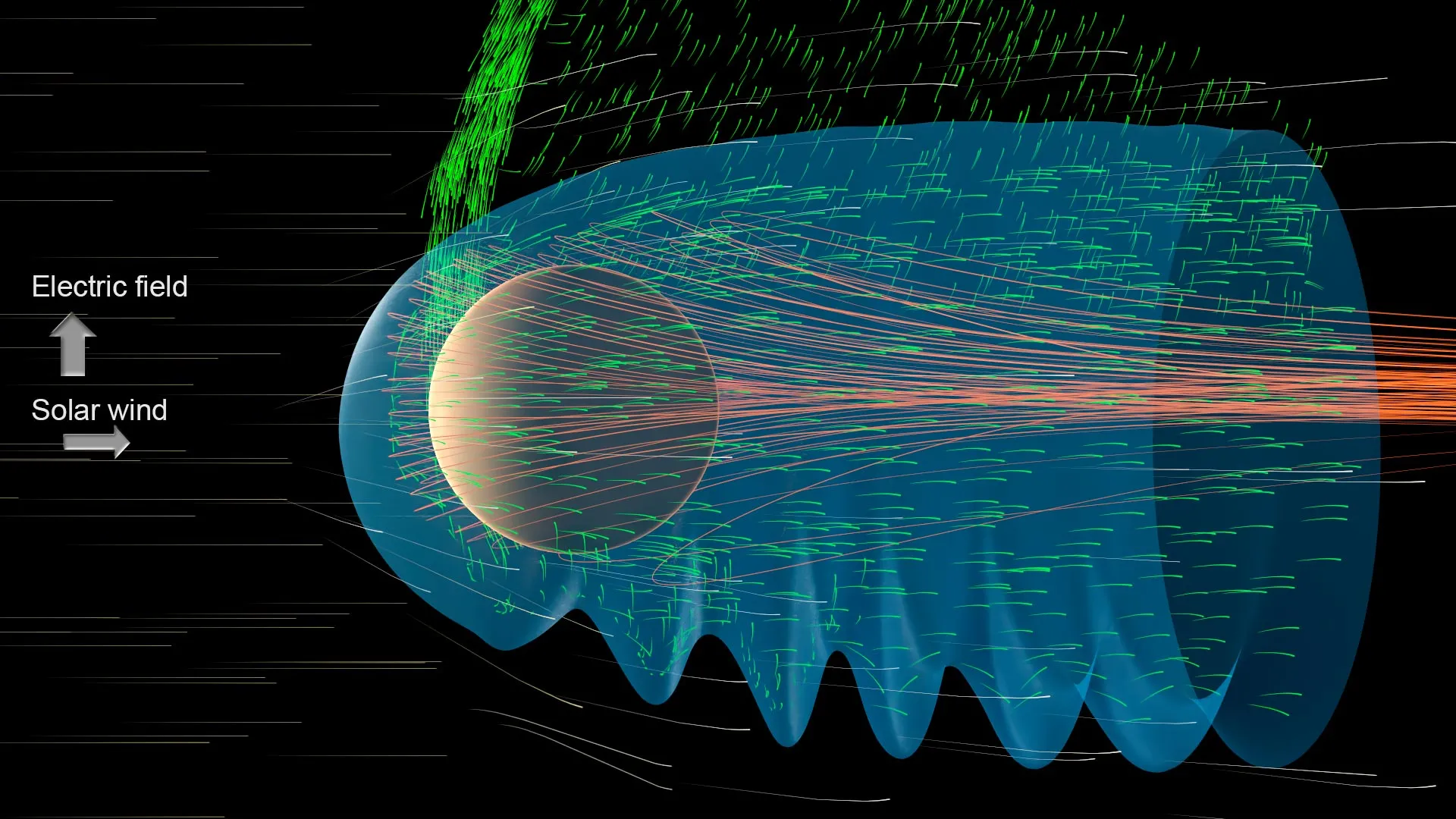
The sun has an intense, restless magnetic field. The solar wind, a stream of hot charged particles that pours constantly from the sun, drags that field outward along field lines. On the journey through the solar system the lines can twist, snap or fold back on themselves. A switchback is one such fold, a place where the field bends sharply back on itself in an S shape. They are common near the sun, but scientists have argued over how they form.
ESA reported in 2022 that Solar Orbiter had spotted a switchback, confirming it to be S-shaped, something researchers had predicted but never seen directly. The new result adds the origin story. "Solar Orbiter flew through a very large switchback," said Jesse Coburn of CNRS/LPP in France, the paper's lead author. "Because of this, we were able to sample rarely observed particles there that have telltale fingerprints of their origin."
Using the spacecraft's Solar Wind Analyser, which sampled the plasma while Solar Orbiter was roughly halfway between Earth and the sun, the team found a mix of charged oxygen and carbon particles that could only have formed in one way: inside hot magnetic loops at the sun's surface. "There are two main competing theories for how a switchback, and by extension the solar wind, forms," Coburn said. "The specific mix of particles detected by Solar Orbiter is the smoking gun for a formation process known as 'interchange reconnection.'"
Interchange reconnection happens when parts of the sun with different magnetic properties meet. In the sun's atmosphere, open regions have field lines that stretch away like highways, letting material race out into space. Closed regions have lines that curve back to the sun and form loops. When an open region engages with a closed one, the lines can crowd together, snap open and reconnect in new ways, releasing plasma that had been trapped in a loop. That is what happened with this switchback.
The rival explanation involves waves and turbulence, the kind Solar Orbiter has found to play a key role in heating and accelerating the solar wind. The team saw signs of that too, but, as co-author Stephanie Yardley of Northumbria University put it, "likely only after the switchback heads out into space." Once the kink has left the sun, waves and turbulence govern how it moves. "Overall, it seems that both processes ... are involved in how switchbacks form and move through space," she said. "Our finding reconciles the two, showing that they simply operate at different stages in a switchback's lifetime."
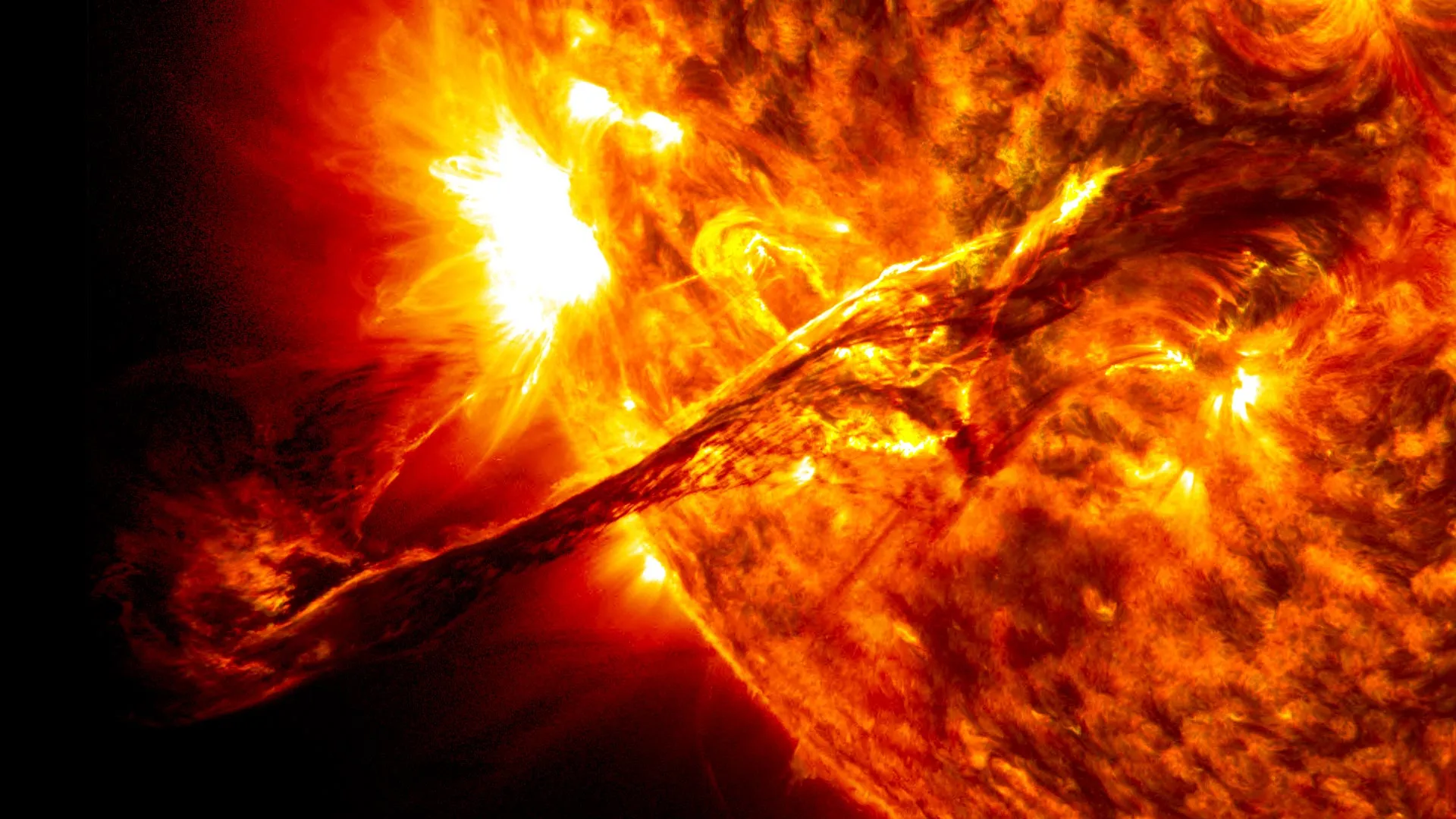
To make the link, the researchers combined the spacecraft's in situ particle data with images of the sun's disk and models of the magnetic fields of both the sun and surrounding space. They built a new model to identify where the plasma came from, connecting Solar Orbiter's measurements to data from NASA's Solar Dynamics Observatory to reveal the switchback's solar source in unprecedented detail.
The finding also suggests that the sun's atmosphere stamps its signature onto the particles of the solar wind, offering a way to read the history of solar plasma far from the sun. ESA project scientist Daniel Müller said the solar wind ties Earth to the sun and that better understanding it helps protect against extreme space weather.