A Hidden 'Switch-Off' in the Sun's Cycle Could Predict Killer Solar Storms Seven Years Early
Physicists at the University of Warwick identified a sudden turning point in the solar cycle that forecasts the strength of the next one, potentially giving satellite operators and power grids years of advance warning.
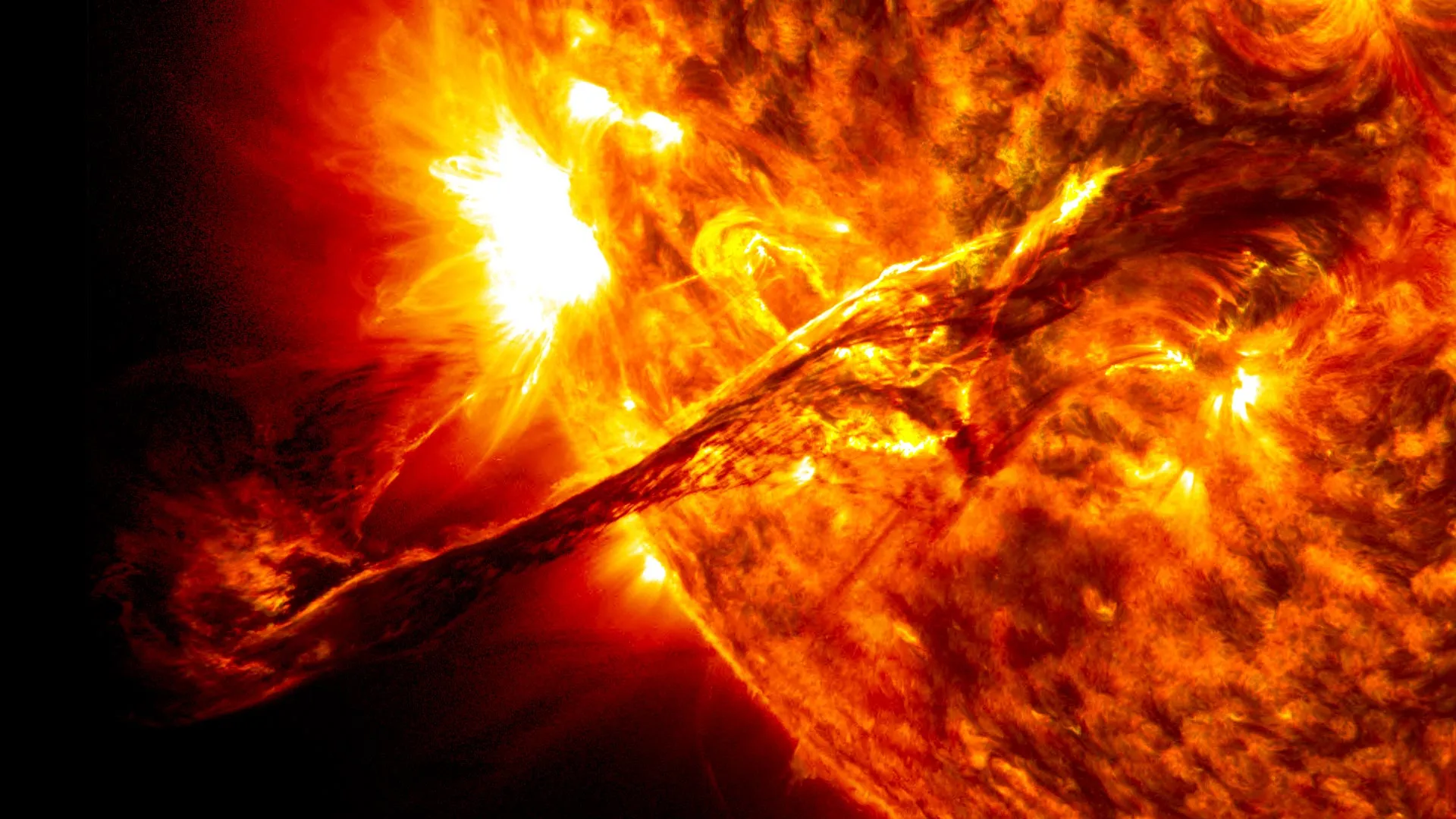
Scientists have discovered a hidden "switch-off" point in the Sun's roughly 11-year cycle, a moment when the most extreme space weather abruptly shuts down — and, crucially, one that can be used to predict how violent the next solar cycle will be as much as seven years in advance.
The work, led by Sandra Chapman, a professor of physics and director of the Centre for Fusion, Space and Astrophysics at the University of Warwick, builds on her earlier "sunclock" method for reorganizing decades of messy sunspot records into a clean, repeating pattern. Within that pattern, Chapman's team found a sharp transition that has gone largely unnoticed.
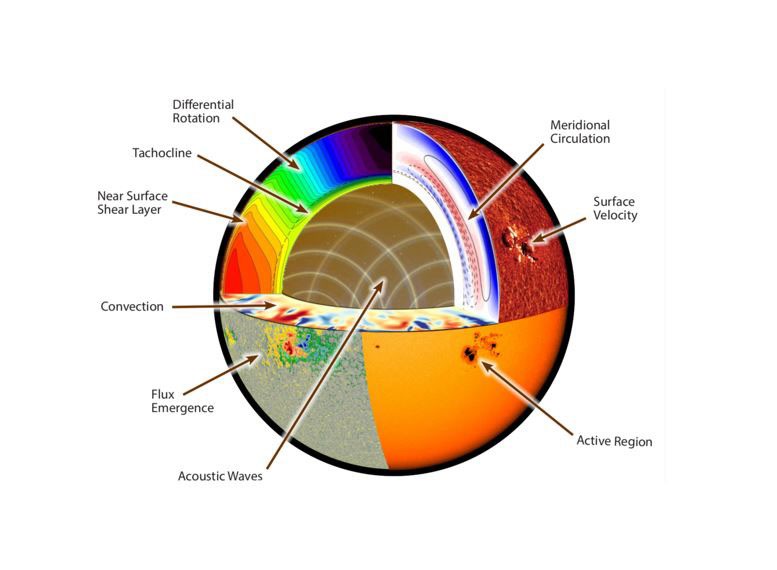
The switch-off occurs when the belts of active sunspots migrate toward the Sun's equator, dropping below about 15 degrees of solar latitude. At that point, the difference in how fast the Sun rotates at different latitudes weakens, removing the main engine that drives coronal mass ejections — the enormous eruptions of plasma and magnetic field that trigger geomagnetic storms on Earth. Extreme events, the researchers found, cease quite suddenly once this threshold is crossed.
The number of sunspots present at that switch-off moment turns out to be a reliable gauge of the strength of the cycle that follows, giving forecasters a concrete number to work with six to seven years before the next peak. Applying the technique, the team's early projections suggest the upcoming Solar Cycle 26 will produce roughly 100 to 120 sunspots, making it comparable to or somewhat weaker than the current cycle.
The stakes are high. Powerful solar storms can knock out satellites, scramble GPS navigation, disrupt radio and aviation communications and, in the worst cases, damage electrical grids on the ground. Longer lead times would let operators harden equipment, reroute flights and schedule launches around the most dangerous stretches of the cycle.
History offers a sobering reminder of the danger. In 1859, a colossal solar storm known as the Carrington Event set telegraph lines ablaze and lit up auroras as far south as the tropics; a comparable strike today could inflict trillions of dollars in damage on a world utterly dependent on satellites and interconnected power grids. Forecasters have struggled to say when the next big one might come, because the Sun's behavior has resisted the kind of clean prediction that weather on Earth increasingly allows.
Chapman presented the findings at the Royal Astronomical Society's National Astronomy Meeting in Birmingham in July. A firm forecast for Cycle 26 will have to wait until the current cycle reaches its own switch-off point, expected in about two years, but the method offers space-weather forecasters something they have long lacked: a physically grounded early warning for the Sun's most dangerous moods.