Quantum 'Cat' States Stop Bouncing Back as Chinese Team Adds More Qubits
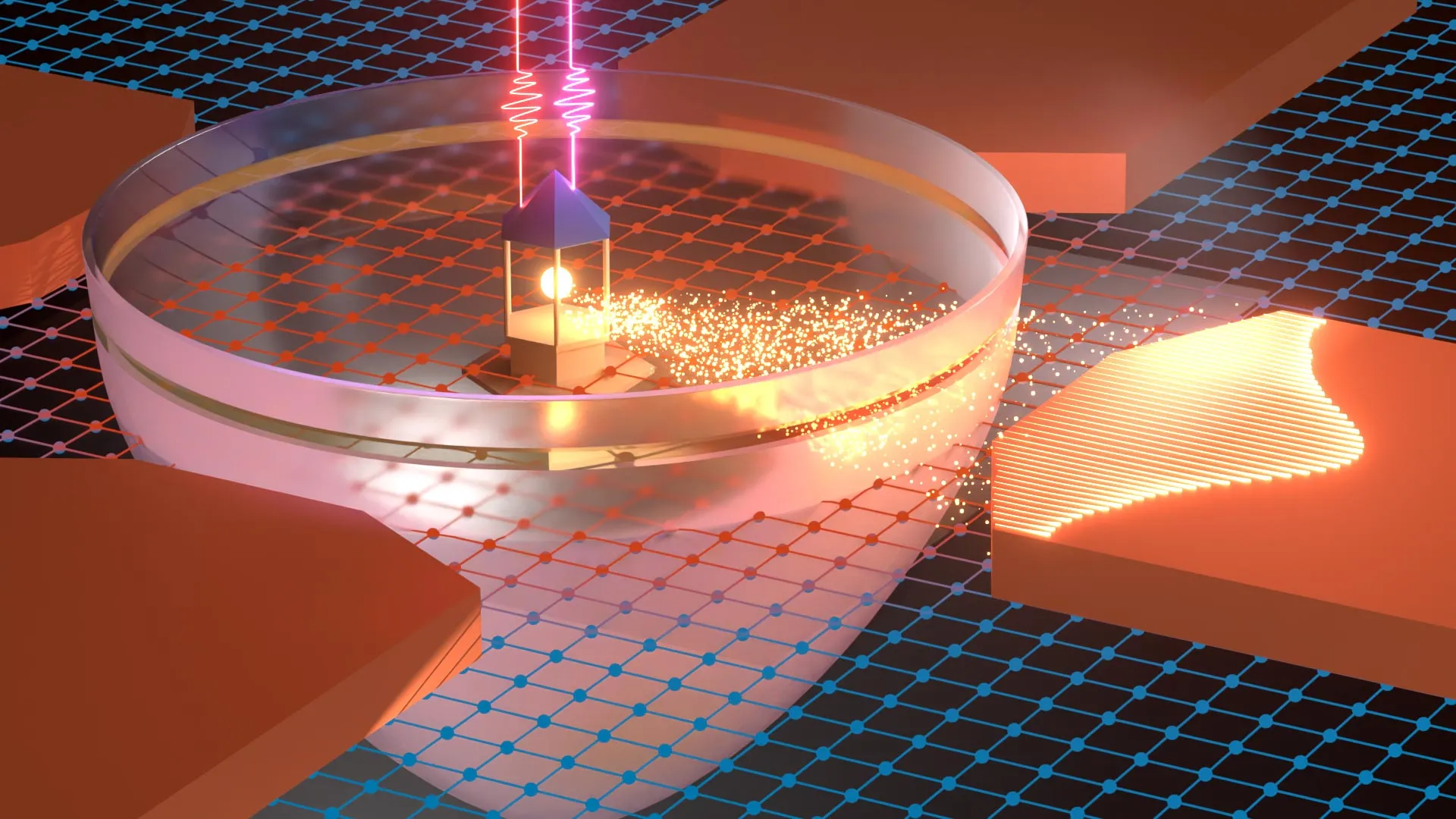
Fuzhou University physicists watched a microwave superposition recover its coherence with one qubit nearby, then lose it for good when the environment grew to eight.
Topic
114 stories from Planck Standard. Latest: October 26, 2026.

Fuzhou University physicists watched a microwave superposition recover its coherence with one qubit nearby, then lose it for good when the environment grew to eight.

Oldenburg researchers overlapped two femtosecond laser pulses of different colors to build three-dimensional light fields, then used them to excite electrons in potassium atoms.

A single atomic layer of tungsten diselenide, a few degrees above absolute zero, and a beam of light gave physicists their first read on the inner life of a Wigner crystal.

Physicists at TU Dortmund built self-oscillating spin systems inside a semiconductor chip and found that distant ones synchronize, holding the rhythm for hours.

Light passing through rubidium gas emerged earlier than it entered, by a measurable amount. A second, completely independent measurement of the atoms themselves gave the same negative number.

Atoms cooled to near absolute zero collided harder and harder, and the resistance simply stopped rising. The team calls the limit 'lattice unitarity.'

Two colors of laser light interfere inside a semiconductor and squirt electrons in a chosen direction. Rotate the light's polarization and the electron beam sweeps like a lighthouse lamp.
A new framework reconciles opposing pictures of how a single 'impurity' particle behaves inside a crowded quantum sea.

A Los Alamos team built control protocols that can stretch, blur and even reverse the 'arrow of time' in quantum systems, then used the effect to design a 'quantum demon' that pulls energy out of measurement itself.

Los Alamos researchers designed control protocols that reshape the 'arrow of time' in quantum systems, then used the trick to pull energy back out of the very act of measurement.

Physicists paired machine learning with quantum theory to find and confirm two new materials — a recipe that could speed the long hunt for a room-temperature superconductor.

A Los Alamos team designed control protocols that make quantum systems appear to run backward, reviving Maxwell’s demon in a modern quantum form.

Using ultracold cesium atoms in a quantum wire, an Innsbruck team realized a bizarre new phase of matter that breaks the textbook rule for how particles fill energy levels.

Oxford physicists demonstrate quantum superposition built from squeezed states rather than classical wave packets, opening possibilities for more resilient quantum computers.

A Cal Poly team shows that periodically driving a material with shifting magnetic fields can create quantum phases that have no equivalent in any static material — and may bolster quantum computers.

University of Chicago researchers discovered an elegant way to generate complex entangled quantum states without complicated hardware, potentially advancing quantum computing and sensing technologies.

University of Chicago researchers have developed a surprisingly straightforward approach to generate complex entangled quantum states using common laboratory equipment.

University of Chicago researchers discover surprisingly straightforward method to generate complex entangled states without sophisticated hardware.

University of Chicago researchers discover surprisingly simple method to generate powerful quantum entanglement without complex hardware.

University of Chicago researchers have discovered a surprisingly straightforward way to generate powerful entangled quantum states using small atomic energy modifications, potentially advancing quantum computing and sensing technologies.

University of Chicago researchers discover that small changes to atomic energy levels can generate complex entangled states without complicated hardware.
A Cal Poly study in Physical Review B shows that rapidly switching a magnetic field can create quantum phases that don't exist in static materials — and may resist the errors that plague quantum computers.

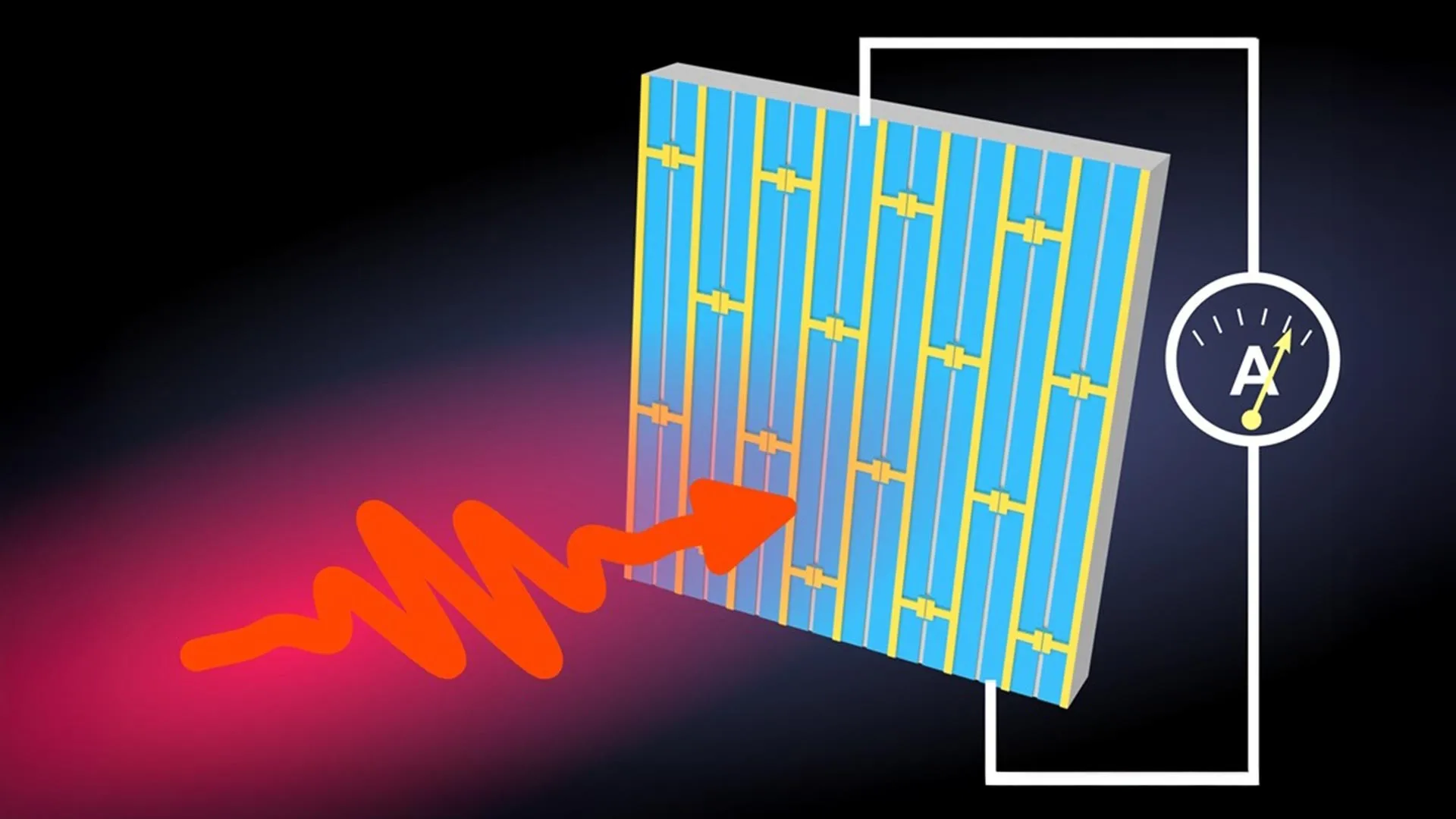
Researchers developed a compact detector that boosts terahertz radiation detection efficiency by roughly 20 times, potentially revolutionizing healthcare and communications.

By arranging custom-designed silver nanoparticles like LEGO blocks, scientists stabilized a mysterious crystal phase that had never been observed before and exhibits promising quantum properties.

Compact room-temperature detector could revolutionize terahertz technology for healthcare, communications and scientific research.

Using terahertz lasers, researchers watched angular momentum move through crystals and found rotations can unexpectedly flip direction due to quantum symmetry effects.

Ultra-powerful terahertz lasers reveal how angular momentum transfers through crystals, with surprising reversals caused by quantum symmetry effects.

Researchers using terahertz laser pulses discover bizarre effect where atomic rotations unexpectedly reverse direction due to crystal symmetry.

Ultra-powerful terahertz lasers reveal how atomic rotations can unexpectedly flip direction as momentum transfers through quantum materials, offering new insights into magnetism's fundamental origins.

Scientists directly watch angular momentum move through crystal for first time, discovering unexpected reversal effect.

By layering two non-commuting forces on a single calcium ion, the team can flip a quantum oscillator between standard squeezing, trisqueezing and quadsqueezing in microseconds, unlocking a new toolkit for quantum sensing, simulation and bosonic error correction.

Supercomputer calculations reveal that the apparent "rule-breaking" particle behavior was likely a calculation error, keeping the Standard Model intact.

Stevens Institute theorist Igor Pikovski's proposal with Colorado State and NIST experimentalists pinpoints a measurable quantum signature of relativistic time inside ion clocks already in operation.

Japanese researchers develop revolutionary method to identify complex quantum entangled states in single measurements, advancing quantum computing and teleportation.

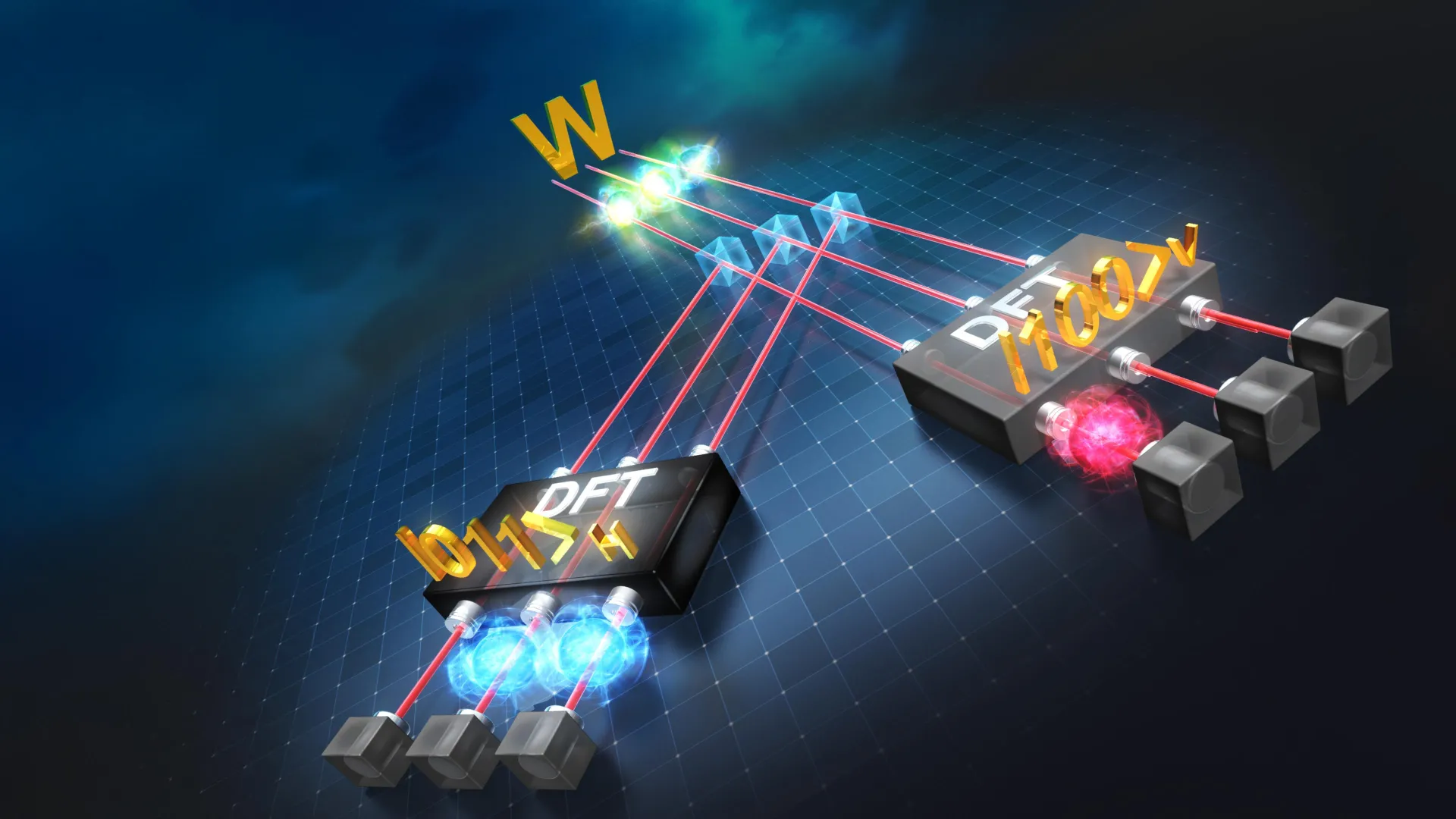
Japanese scientists developed the first method to instantly detect quantum "W states," a major milestone that could unlock faster quantum communication and powerful new computing systems.

Japanese researchers develop new method that could revolutionize quantum teleportation and computing systems.

Researchers demonstrated quantum interference in sodium nanoparticles made of thousands of atoms, pushing quantum mechanics into a new realm of surprisingly large objects.

Researchers demonstrated that metallic nanoparticles made of thousands of atoms can exist in quantum superposition, pushing the boundaries of quantum mechanics into surprisingly large-scale objects.

Scientists identified a one-dimensional system capable of supporting "anyons" — bizarre particles that fall between the two fundamental categories that have defined physics for decades.

Scientists identify 'anyons' in one-dimensional systems, exotic particles that exist between the familiar categories of bosons and fermions.

Researchers demonstrate existence of "anyons" in one-dimensional systems, opening new possibilities for tunable quantum particles beyond traditional bosons and fermions.

Researchers use quantum light-matter particles to prove that wildly different systems—from crystals to living organisms—follow the same hidden growth rules.

Scientists achieve first experimental proof of 40-year-old theory in two dimensions, strengthening idea that wildly different processes follow same hidden rules.

Aalto University researchers achieve first-ever coupling of perpetually moving quantum system to mechanical oscillator, opening door to new technologies.

Scientists demonstrate that bizarre anyons can exist in one-dimensional systems and may be adjustable, opening new frontiers in quantum physics.

Researchers have experimentally confirmed a universal growth law in two dimensions using a quantum system of fleeting light-matter particles.

Researchers achieve first experimental proof that the Kardar-Parisi-Zhang theory holds in two dimensions using quantum light-matter particles.

Researchers use quantum system of fleeting light-matter particles to prove 40-year-old physics theory applies across wildly different processes.

Researchers used quantum light-matter particles to prove the Kardar-Parisi-Zhang theory works in two dimensions, strengthening ideas about hidden rules governing everything from crystals to living systems.

Researchers have successfully linked a time crystal to an external mechanical system for the first time, opening doors to revolutionary quantum technologies including ultra-precise sensors and advanced computing systems.

Researchers at Aalto University successfully linked a time crystal to an external mechanical oscillator, opening doors to revolutionary quantum technologies and ultra-precise sensors.

Researchers successfully link perpetually moving quantum system to external oscillator, opening door to practical applications in sensors and quantum memory.

Cal Poly researchers discover that carefully timed magnetic field changes can generate quantum states impossible under normal conditions, potentially revolutionizing quantum technology stability.

New research reveals that quantum collapse processes linked to gravity may create fundamental limits on time's precision, opening new paths to unify physics.

Breakthrough quantum physics research reveals entirely new forms of matter that don't exist under normal conditions, potentially revolutionizing quantum computing.

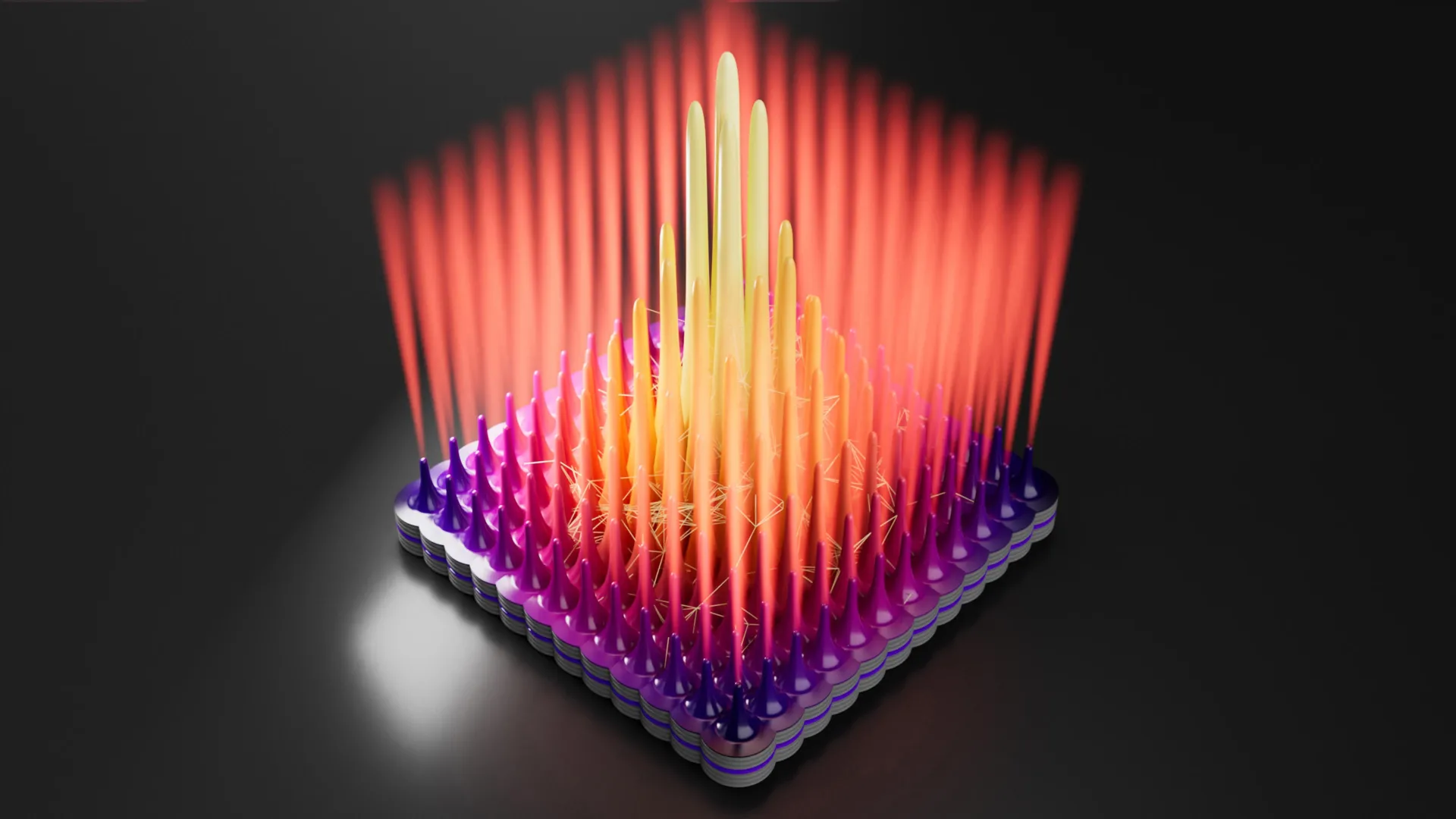
Using a single trapped ion and two non-commuting forces, the Oxford team generated a fourth-order squeezed state more than 100 times faster than conventional methods — a demonstration that promises to make exotic quantum behaviors usable in real machines.

International team achieves first-ever quantum teleportation between separate quantum dots, marking crucial milestone toward quantum internet development.

Researchers demonstrate powerful fourth-order quantum effect by combining simple forces, making previously hidden quantum behaviors visible and controllable.

Scientists demonstrate wave-particle duality in positronium, opening new frontiers for antimatter research and potential gravity tests never before possible.

Breakthrough research captures copper atoms forming and dissolving highly charged ions in unprecedented detail, advancing laser fusion diagnostics.
Showing the latest 60. More in Physics.