Scientists Achieve Instant Detection of Quantum W States in Major Breakthrough
Japanese researchers develop new method that could revolutionize quantum teleportation and computing systems.
Scientists in Japan have achieved a major milestone in quantum physics by developing a revolutionary method to instantly detect elusive quantum "W states," a breakthrough that could accelerate the development of quantum communication, teleportation, and advanced computing systems. The research team from Kyoto University and Hiroshima University successfully demonstrated a technique that can identify these complex entangled states in a single measurement, solving a problem that had puzzled researchers for more than 25 years. The achievement represents a crucial step toward building practical quantum technologies that could transform everything from secure communications to computational power.
Quantum entanglement describes the strange phenomenon where particles become so deeply connected that their properties cannot be understood individually, but must be treated as a unified system. While scientists had previously developed methods to detect Greenberger-Horne-Zeilinger (GHZ) states, the W state had remained beyond their reach until now. W states are particularly valuable because they maintain their entangled properties even when one of the particles is lost, making them more robust for practical applications than other types of quantum entanglement.
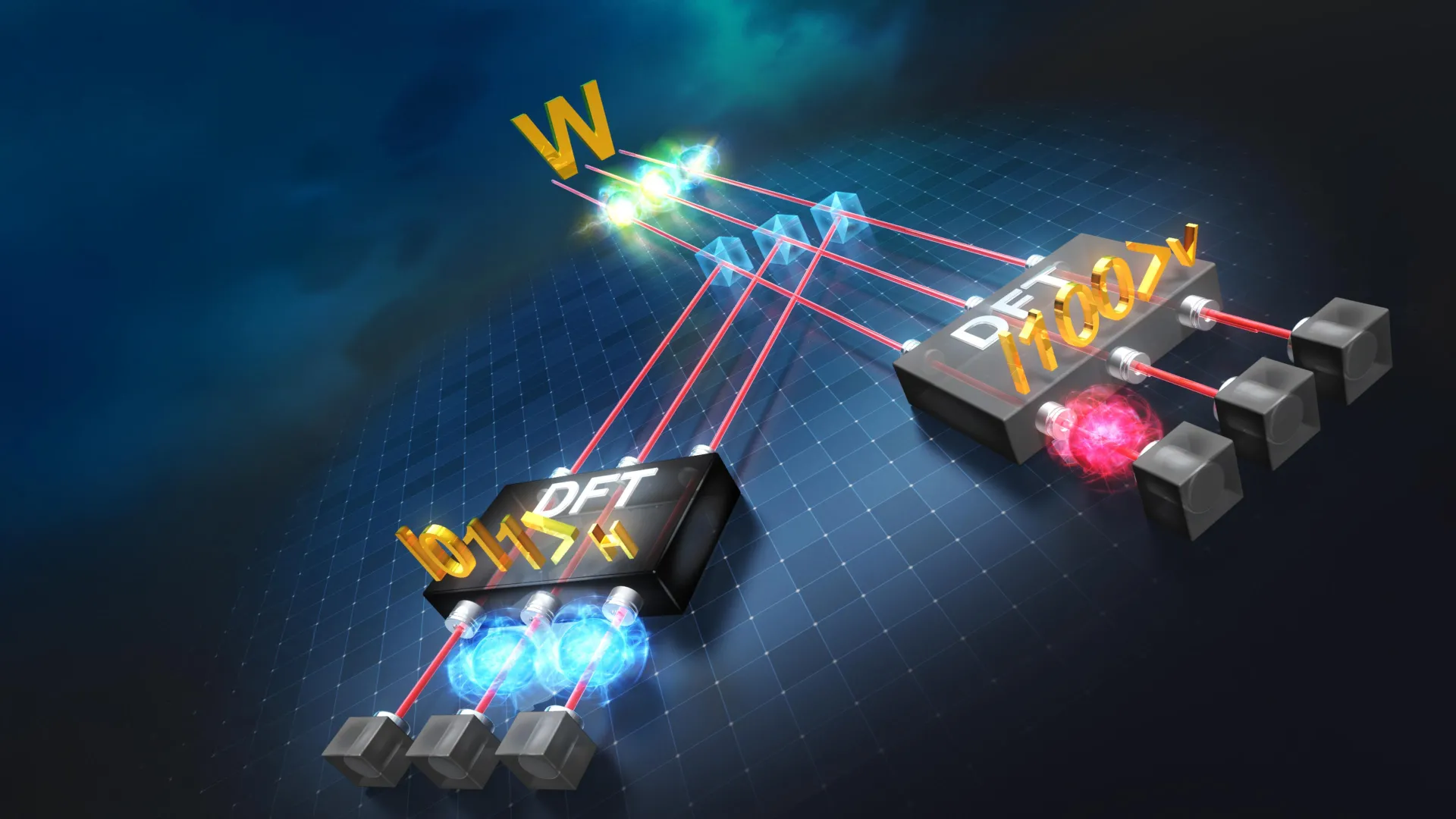
The breakthrough came from the team's focus on a unique feature of W states called cyclic shift symmetry. Lead researcher Professor Shigeki Takeuchi and his colleagues designed a photonic quantum circuit that performs a quantum Fourier transformation specifically tailored for W states with any number of photons. This approach allowed them to convert the hidden structure of W states into measurable signals that could be detected instantly. The method represents a significant improvement over traditional quantum tomography, which requires an exponentially growing number of measurements as more particles are added to the system.
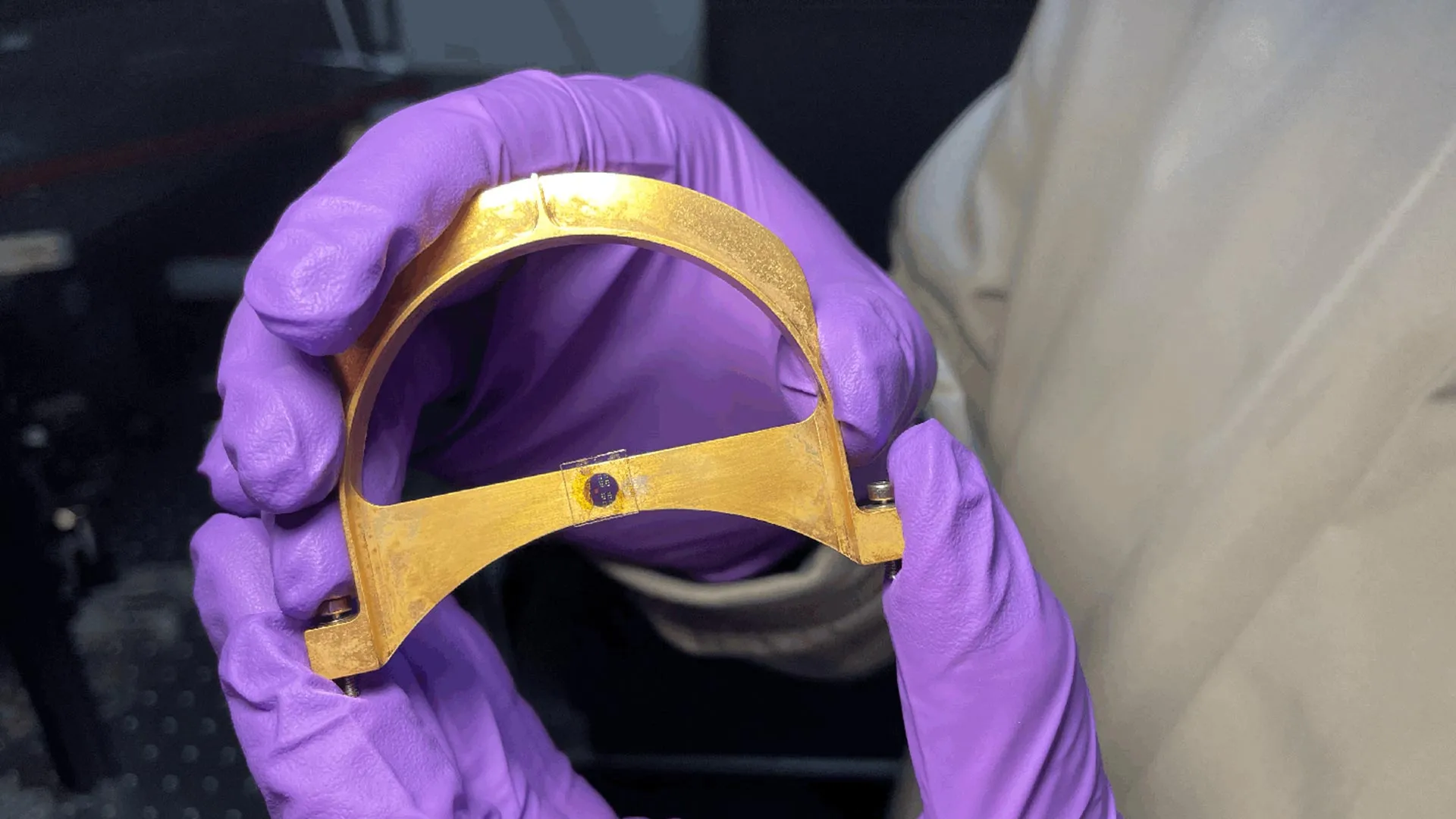
To demonstrate their technique, the researchers built a highly stable optical device capable of processing three-photon W states for extended periods without requiring constant adjustments. The system successfully identified W states by inserting three single photons in carefully chosen polarization states and measuring the resulting interference patterns. The stability of their experimental setup is particularly important for future quantum technologies, which cannot rely on fragile laboratory equipment that requires constant manual calibration.
The implications of this research extend far beyond academic interest, as W states are considered essential building blocks for quantum communication networks and quantum computing architectures. The ability to reliably detect these states could enable new forms of quantum cryptography, more efficient quantum algorithms, and robust quantum networks that maintain their functionality even when individual components fail. The research team's success in creating a stable, practical detection system brings these applications significantly closer to reality, potentially accelerating the timeline for deploying quantum technologies in real-world scenarios.