Scientists Achieve Quantum Breakthrough in Detecting Elusive 'W States' Instantly
Japanese researchers develop revolutionary method to identify complex quantum entangled states in single measurements, advancing quantum computing and teleportation.
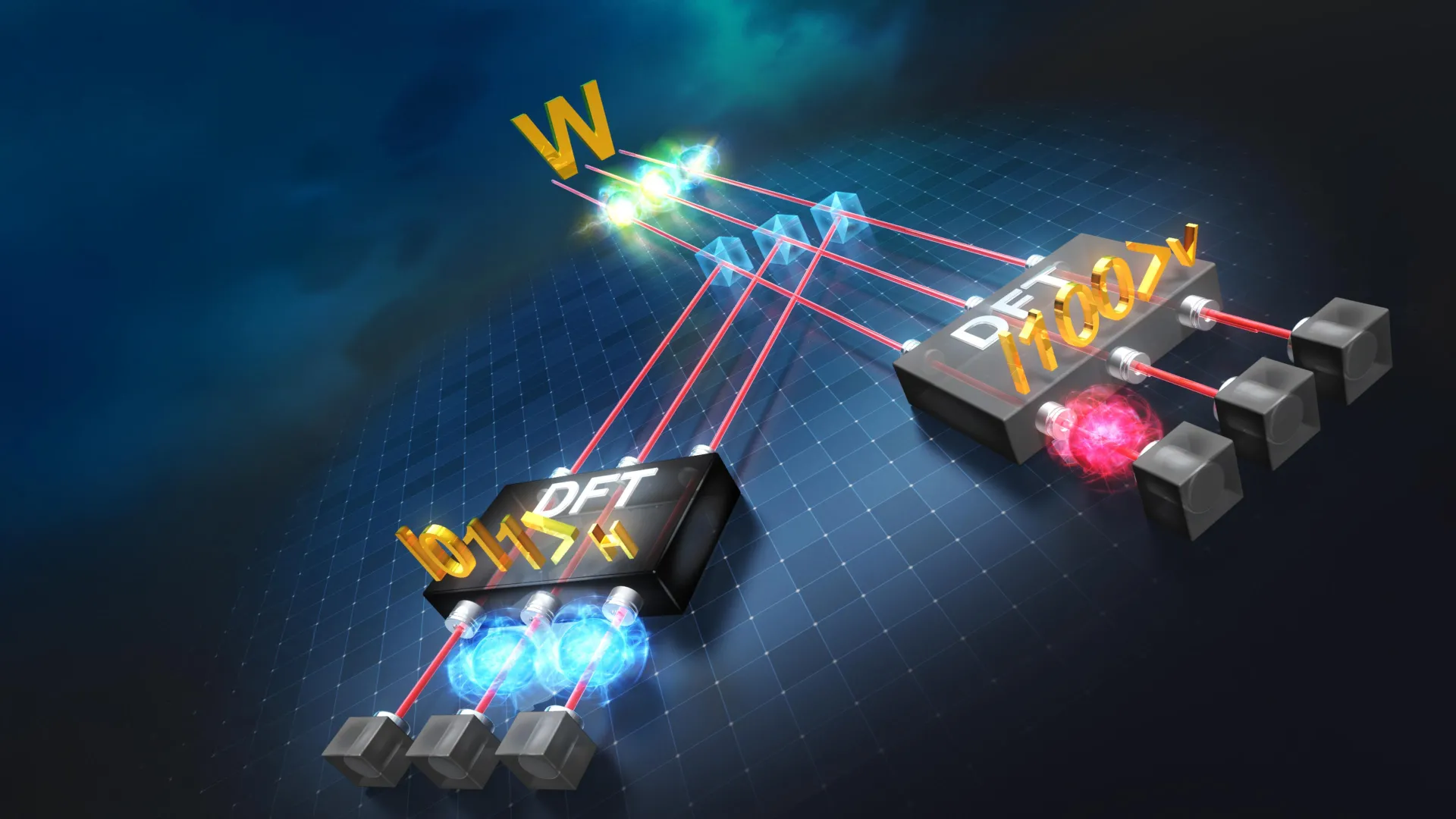
Scientists in Japan have achieved a major quantum technology breakthrough by developing the first method to instantly detect elusive quantum "W states," a milestone that could help unlock faster quantum communication, teleportation, and more powerful computing systems. The research represents a significant advance in quantum entanglement detection, solving a problem that has challenged physicists for more than 25 years.
Quantum entanglement describes situations where particles such as photons become so deeply linked that their properties cannot be understood individually, forcing scientists to treat the entire system as a unified whole. This strange quantum phenomenon, which famously troubled Einstein, has become a crucial ingredient in many future technologies including quantum computing, quantum communication, quantum teleportation, and quantum networks. However, building these technologies requires more than just creating entangled states - scientists also need reliable methods to identify exactly what kind of entangled state they have produced.
The challenge lies in measurement complexity. Standard quantum tomography can estimate quantum states, but the number of measurements needed grows exponentially as more photons are added to the system. For systems containing many entangled photons, this creates a serious bottleneck that limits practical applications. While scientists had previously demonstrated entangled measurements for Greenberger Horne Zeilinger (GHZ) states, the W state - another major type of multi-photon entanglement - had remained beyond their reach until now.
The research team from Kyoto University and Hiroshima University focused on a special feature of W states known as cyclic shift symmetry. Using this property, they developed a photonic quantum circuit that performs a quantum Fourier transformation specifically designed for W states with any number of photons. "More than 25 years after the initial proposal concerning the entangled measurement for GHZ states, we have finally obtained the entangled measurement for the W state as well, with genuine experimental demonstration for 3-photon W states," says corresponding author Shigeki Takeuchi.
To test their breakthrough, the team built a device using highly stable optical quantum circuits that could operate for extended periods without active control - an important feature for future quantum technologies that cannot depend on constantly adjusted laboratory setups. The system successfully identified three-photon W states in single measurements, proving that their theoretical approach works in practice. This achievement could accelerate the development of quantum communication networks and quantum computing systems that rely on precise control and measurement of complex entangled states.