Quantum Breakthrough Enables Instant Detection of Elusive 'W States' for First Time
Japanese scientists develop revolutionary method to identify multi-photon quantum entanglement in single measurement, advancing quantum computing.
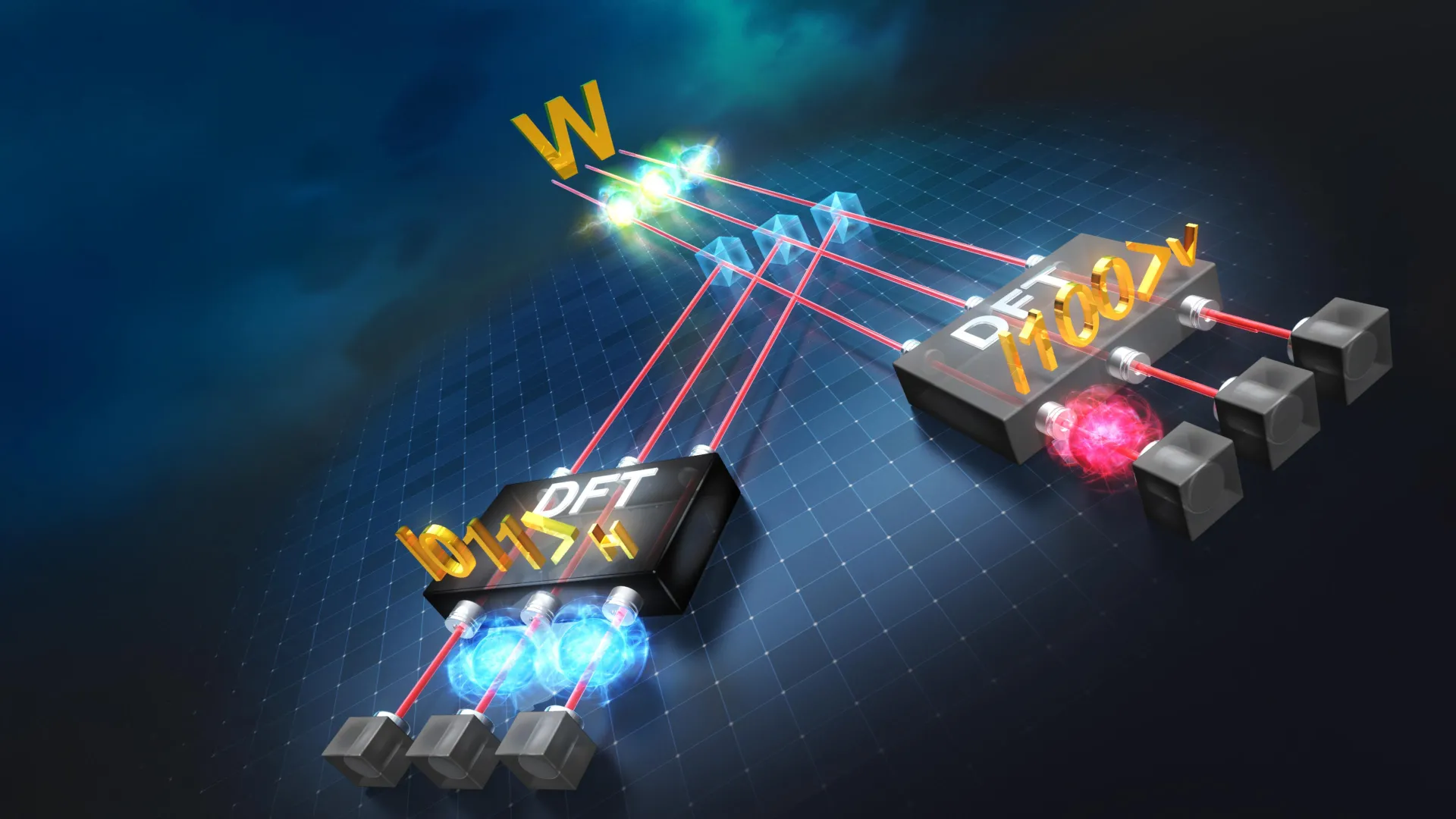
Scientists in Japan have achieved a groundbreaking quantum physics milestone by developing the first method to instantly detect elusive quantum "W states"—a crucial type of multi-photon entanglement that could revolutionize quantum communication, teleportation, and computing systems. The breakthrough, demonstrated by researchers from Kyoto University and Hiroshima University, solves a 25-year-old puzzle in quantum mechanics and opens new pathways for advanced quantum technologies.
Quantum entanglement represents one of the most counterintuitive aspects of quantum physics, where particles become so fundamentally connected that their properties cannot be understood individually. While scientists had previously developed methods to identify certain types of entangled states like Greenberger-Horne-Zeilinger (GHZ) states, the more complex W states had remained beyond reach. W states are particularly valuable because they maintain their entanglement properties even when some photons are lost, making them more robust for practical applications.
Corresponding author Shigeki Takeuchi emphasized the significance of the achievement: "More than 25 years after the initial proposal concerning the entangled measurement for GHZ states, we have finally obtained the entangled measurement for the W state as well, with genuine experimental demonstration for 3-photon W states." The team's approach exploited a special mathematical property of W states called cyclic shift symmetry to design a quantum circuit that performs instant identification.
The breakthrough required developing highly stable optical quantum circuits capable of operating for extended periods without constant laboratory adjustments—a critical requirement for future quantum technologies. The researchers successfully demonstrated their method using three single photons in carefully prepared polarization states, with their device performing quantum Fourier transformations that convert the hidden structure of W states into measurable signals.
Beyond solving a fundamental physics puzzle, this advance could accelerate development of quantum networks, secure quantum communication systems, and fault-tolerant quantum computers. The ability to quickly and reliably identify different types of quantum entanglement represents a crucial step toward practical quantum technologies that could transform computing, cryptography, and scientific research in coming decades.