
Physics
World's Most Sensitive Lab Search for Axions Finds Nothing and Narrows the Hunt
Germany's ALPS II experiment shot a laser through a wall of magnets to look for the hypothetical particle, and its first results set robust new limits.
Topic
98 stories from Planck Standard. Latest: November 12, 2026.
Germany's ALPS II experiment shot a laser through a wall of magnets to look for the hypothetical particle, and its first results set robust new limits.
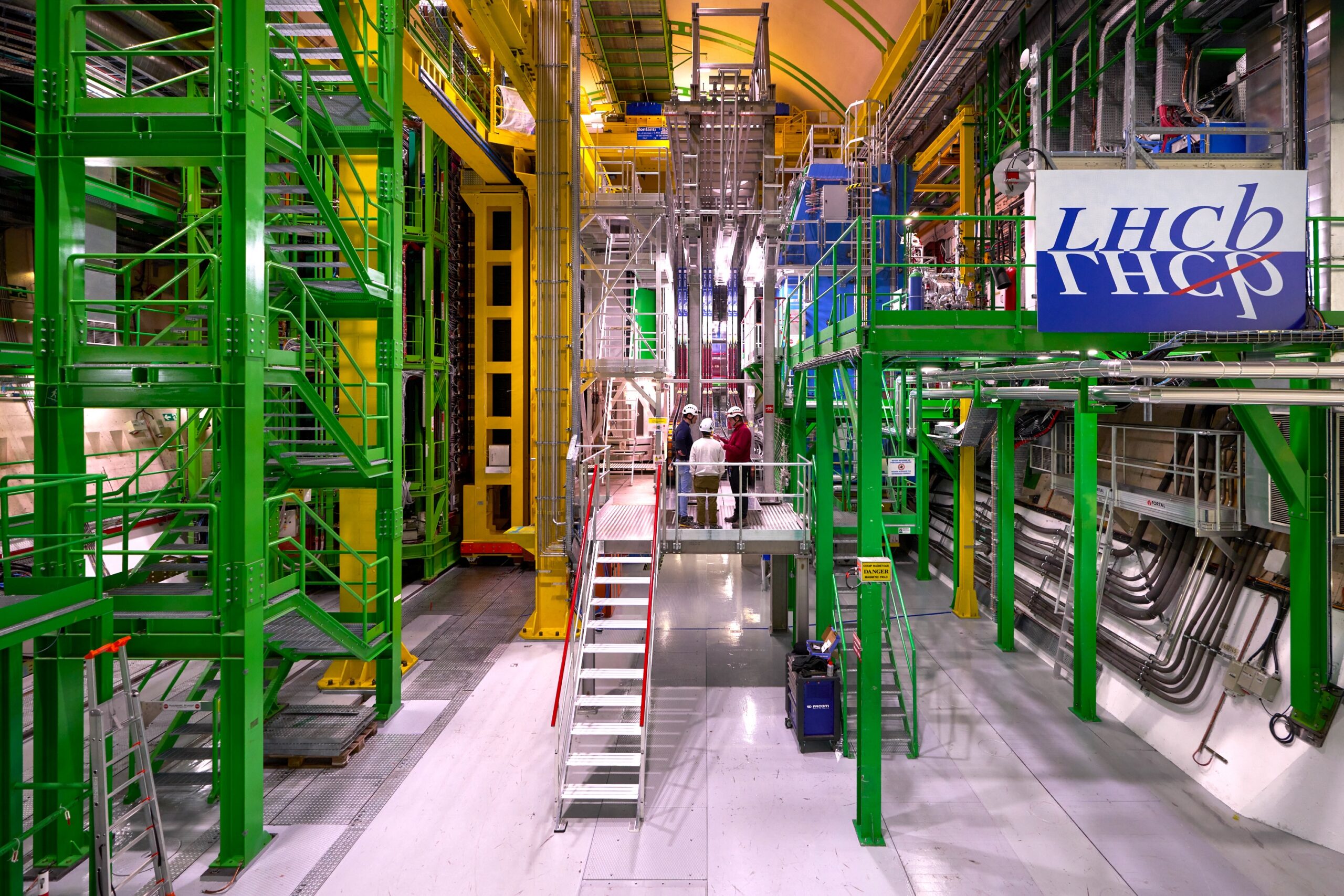
The upgraded experiment at CERN saw a beauty particle decay into two muons at 3.2 sigma, matching the Standard Model but opening a narrow window onto the 'Zeptoverse.'

The LHCb experiment sees a beauty particle turn into two muons at 3.2 sigma, matching the Standard Model and ending a 40-year hunt's first chapter.

CMS and LHCb both see small, consistent differences in a decay that happens about once in 10 million beauty-particle decays, though neither result is conclusive.

A Romanian team used a high-power laser to build an artificial muon beam and captured the shadow of a pile of lead bricks behind a 2-meter concrete wall.
Duke-led physicists recreated 'string breaking,' the process that turns stretched-out energy into particle pairs. Google and QuEra teams reached similar results on different hardware.

The DarkSide-50 detector under Italy's Gran Sasso mountain found no ultraheavy composite dark matter, but ruled out a wide range of its possible properties.

Titanium diselenide, strontium ruthenate and hole-doped diamond host low-energy electron waves called plasmons that amplify the faint kick a light dark matter particle would deliver, physicists report in Physical Review Letters. All three can be made today.

Physicists used entangled lambda hyperons to measure how often a strange quark turns into an up quark. The numbers still add up to one — and still disagree slightly with the older kaon measurements.
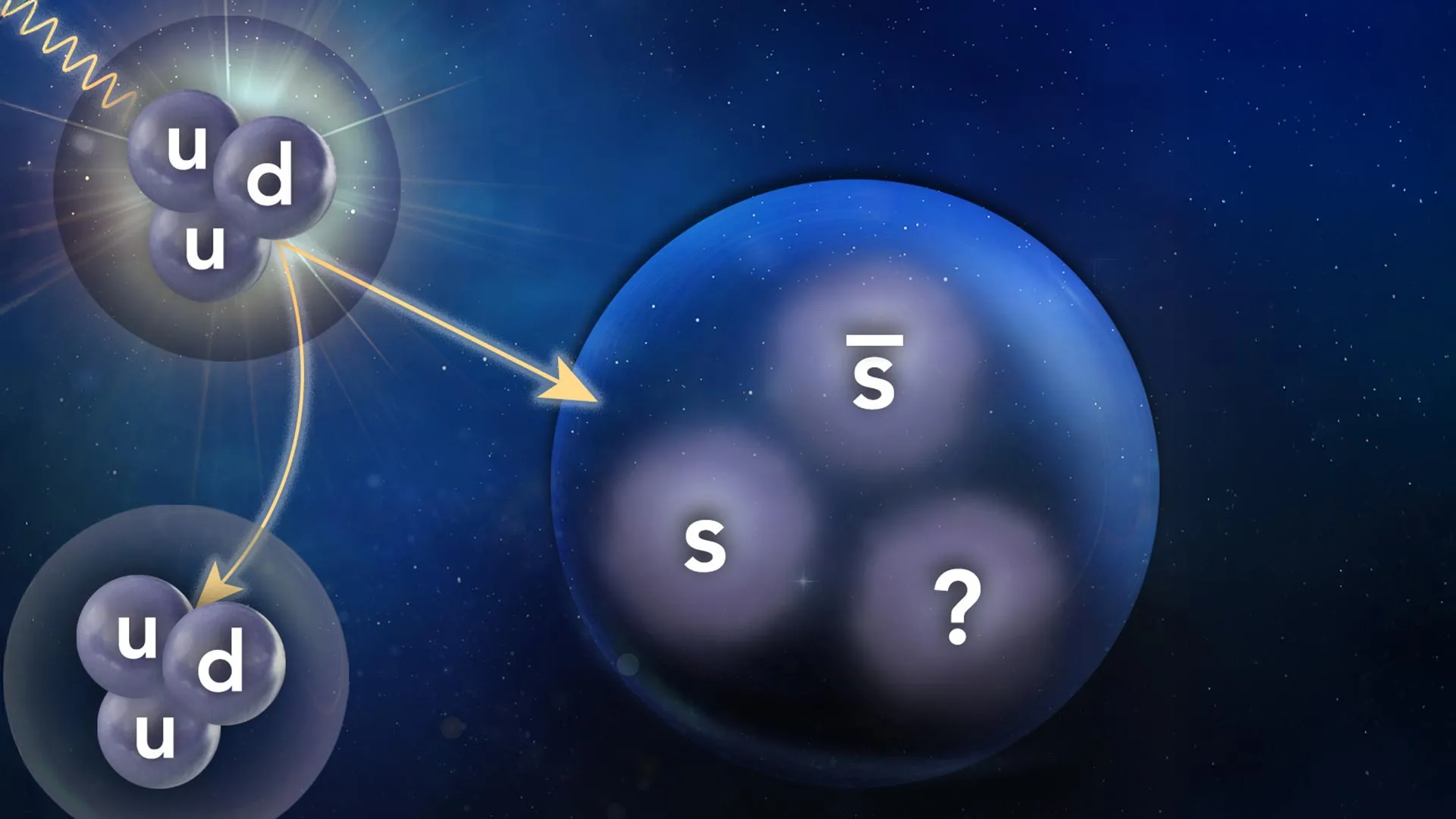
The GlueX experiment aimed a photon beam at protons to confirm a 20-year-old particle candidate. It missed that target and instead found evidence for two previously unseen structures, one of them at the five-sigma threshold physicists treat as a discovery.

XENONnT pushed the direct detection threshold for neutrinos lower than anyone has managed before. The signal comes from the proton-proton fusion that powers the Sun.

LUX-ZEPLIN found a single high-energy interaction sitting exactly where dark matter should appear and where almost no background should. At 2.6 sigma, it is nowhere close to a discovery.

SuperCDMS SNOLAB has begun taking its first science data. Its shielding includes lead salvaged from ancient ballast on the floor of the Mediterranean.
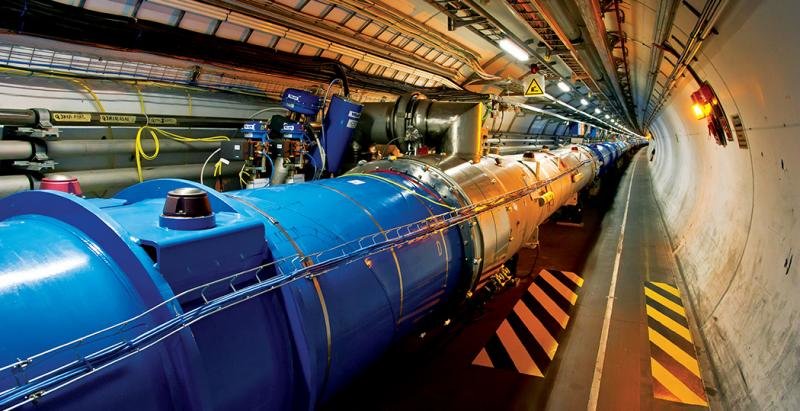
Physicists thought you needed lead — 200 times heavier than a proton — to melt matter into quark-gluon plasma. Oxygen and neon just did it, and ALICE, ATLAS, CMS and LHCb all saw it independently.

A specially shaped mirror sweeps a laser's focal point down the beam axis at the vacuum speed of light, defeating the 'dephasing' ceiling that has capped plasma accelerators. Electrons hit 396 MeV where the limit predicted 185.

XENONnT found nothing — and that nothing is the tightest limit yet on axion-like particles and dark photons. It is the first detector to reach the boundary where the sun's own neutrinos start masquerading as a signal.
The BESIII collaboration in Beijing reported that a particle called X(2370) is dominated by a pseudoscalar glueball, a knot of gluons with no quarks in it at all, closing in on one of quantum chromodynamics' oldest unconfirmed predictions.

A Japanese team used the cavity between Earth's surface and its ionosphere as a natural resonator, then searched a decade of magnetic-field recordings from a Scottish observatory for the signature of axions.

The Double Chooz experiment logged about 100 antineutrinos during 17 days when both reactors next door were shut down — the first measurement of its kind, and a possible new tool for catching cheating on nuclear treaties.
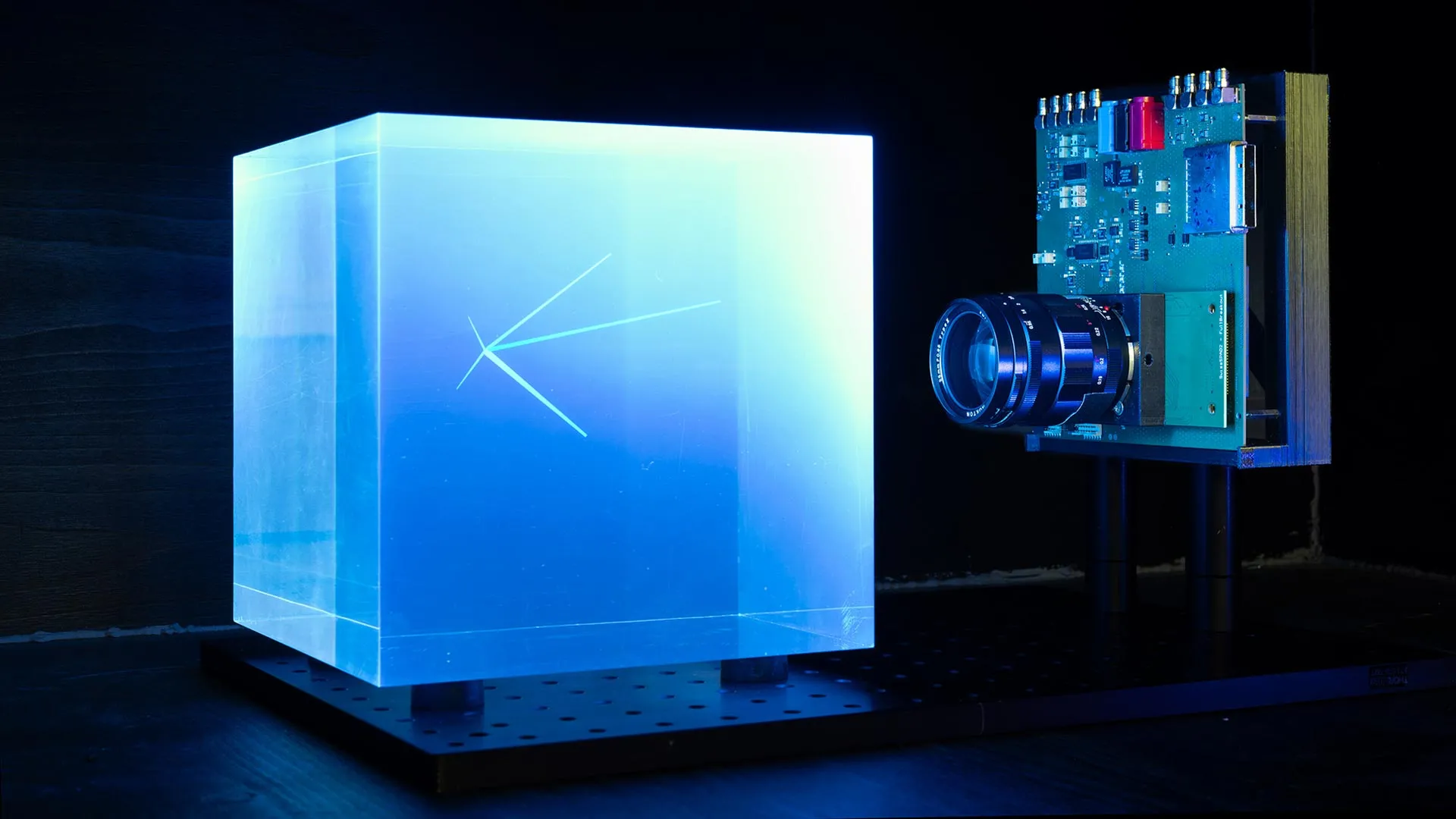
A Swiss team's detector, called PLATON, could replace millions of tiny sensor components with a single block of light-producing material, using a light-field camera and AI to reconstruct particle tracks.

A proposed semiconductor detector would convert theoretical dark-matter particles into light and tune itself simply by changing a magnetic field, potentially opening mass ranges that have long eluded searches.
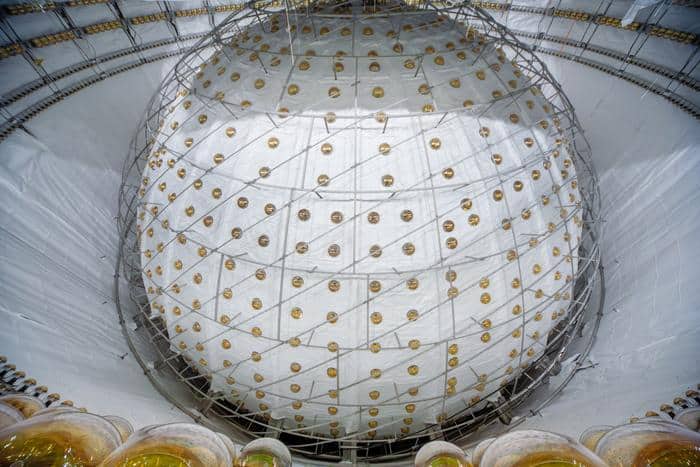
Featured on the cover of Nature, the giant underground observatory measured key neutrino properties with record precision after just two months of data — and put itself on track to crack one of physics' biggest puzzles.
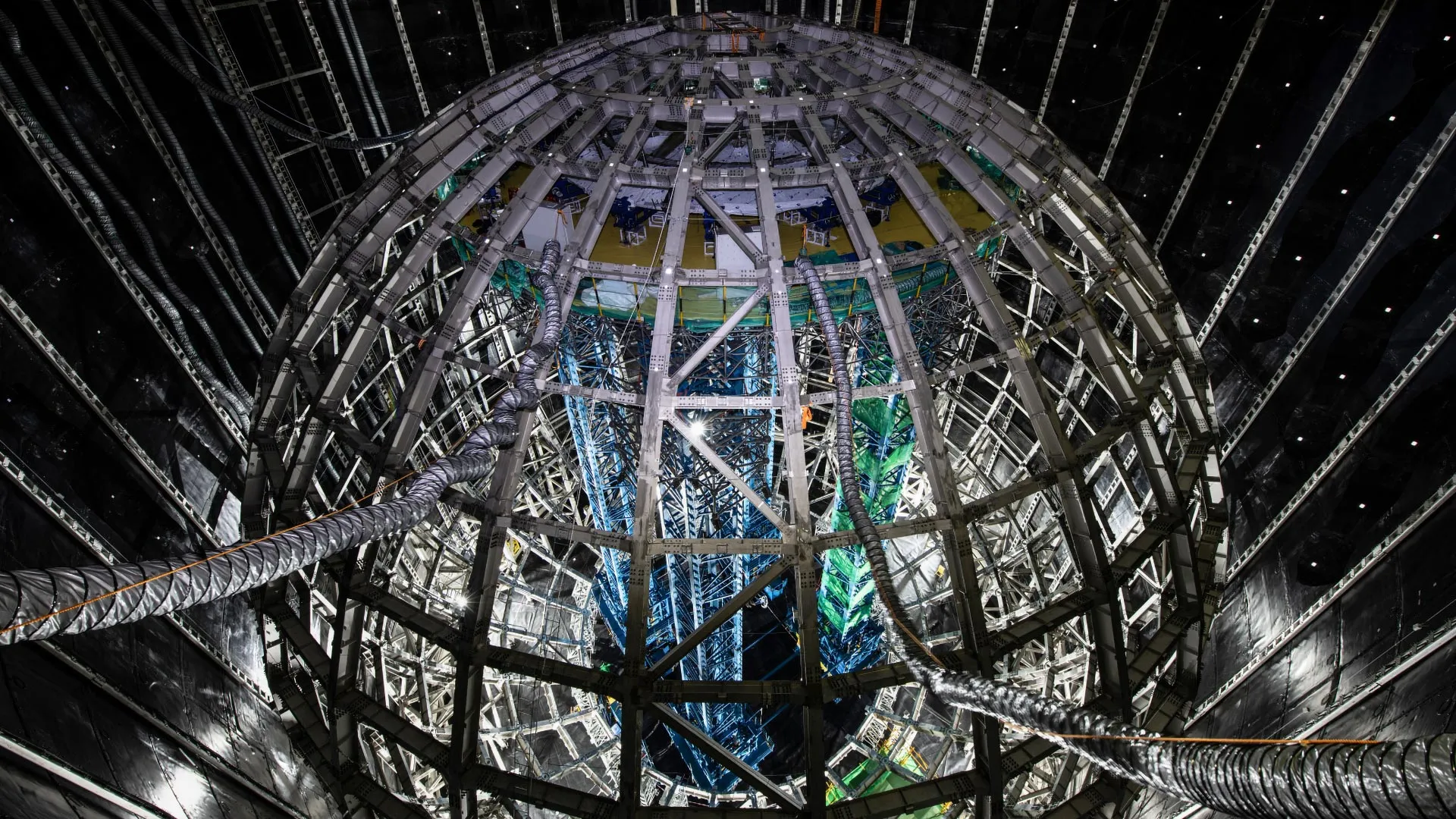
China's JUNO observatory achieves record precision in neutrino measurements, bringing scientists closer to solving the neutrino mass hierarchy puzzle.
China's JUNO detector achieves breakthrough measurements using just 59 days of data, boosting confidence for solving neutrino mass mystery.
JUNO detector reduces measurement uncertainties by factor of 1.6 using just 59 days of data, bringing scientists closer to solving neutrino mass hierarchy mystery.
The JUNO experiment achieved breakthrough results using just 59 days of data, improving measurement accuracy by 60% compared to decades of previous research combined.
JUNO detector delivers most precise measurements of neutrino oscillation parameters using just 59 days of data, advancing the quest to solve fundamental particle mysteries.

New research suggests the mysterious Amaterasu particle and similar cosmic rays may be atomic nuclei heavier than iron that retain energy across vast distances.
New research suggests the most extreme cosmic rays could be ultraheavy atomic nuclei from distant explosions, not protons as previously thought.
A Chinese team reported in Nature the first direct observation of a 1939 prediction: an electron flung from a recoiling atom, a trick that could finally reveal lightweight dark matter.
CERN researchers detect rare particle transformations that disagree with 50-year-old theory, potentially pointing to unknown forces or particles.
Scientists studying rare "penguin decays" found behavior that doesn't match theoretical predictions, suggesting unknown particles or forces may be at work.
Scientists studying rare 'penguin decays' found results that disagree with 50-year-old physics theory, suggesting unknown particles or forces may exist.
Scientists studying rare 'penguin decays' find results that don't match theoretical predictions, suggesting unknown particles or forces may exist.
Penguin decays show behavior inconsistent with Standard Model predictions, with only 1-in-16,000 chance results are random fluctuation.
Scientists studying rare 'penguin decays' detect particle behavior that disagrees with 50-year-old theory, suggesting unknown particles or forces may exist.
Researchers studying rare 'penguin decays' at CERN detected particle behavior that doesn't match theoretical predictions, suggesting unknown forces may exist.

Supercomputer calculations reveal the apparent violation of physics was likely due to limitations in earlier theoretical work, confirming the Standard Model remains intact.

Physicists discover that starting with basic particle collision principles, the mathematics spontaneously produces string theory signatures without assuming strings exist.
Decades-long mystery that hinted at new physics forces resolved after supercomputer calculations show Standard Model remains intact.
Researchers using bootstrap approach discover string theory signatures without assuming strings existed from the start.
Supercomputer calculations reveal that the apparent "rule-breaking" particle behavior was likely a calculation error, keeping the Standard Model intact.
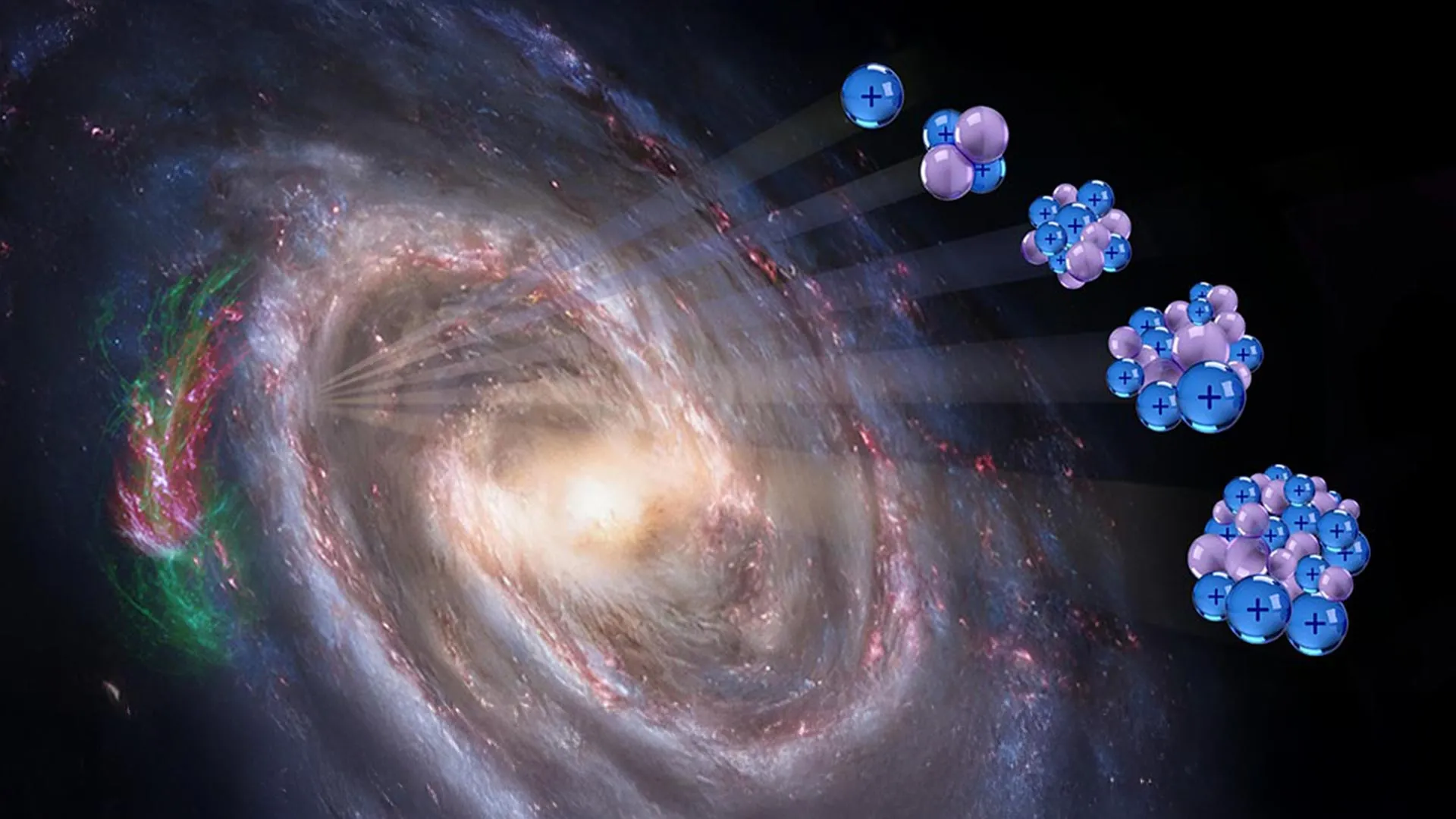
DAMPE space telescope reveals universal pattern governing mysterious high-energy particles from across the galaxy.
DAMPE space telescope reveals that all cosmic ray particles follow the same fading pattern, potentially solving century-old puzzle about their origins.
DAMPE space telescope reveals universal pattern in mysterious high-energy particles, offering new clues about their galactic origins and behavior.
Researchers using the DAMPE space telescope discovered that cosmic ray particles all fade away at the same point, revealing a hidden rule governing their behavior.
DAMPE space telescope reveals universal pattern governing mysterious ultra-powerful particles traveling across the galaxy.
Researchers using the DAMPE space telescope uncovered a hidden rule governing ultra-powerful particles that travel across the galaxy, potentially solving one of physics' longest-standing puzzles.

Scientists identify 'anyons' in one-dimensional systems, exotic particles that exist between the familiar categories of bosons and fermions.
Researchers demonstrate existence of "anyons" in one-dimensional systems, opening new possibilities for tunable quantum particles beyond traditional bosons and fermions.
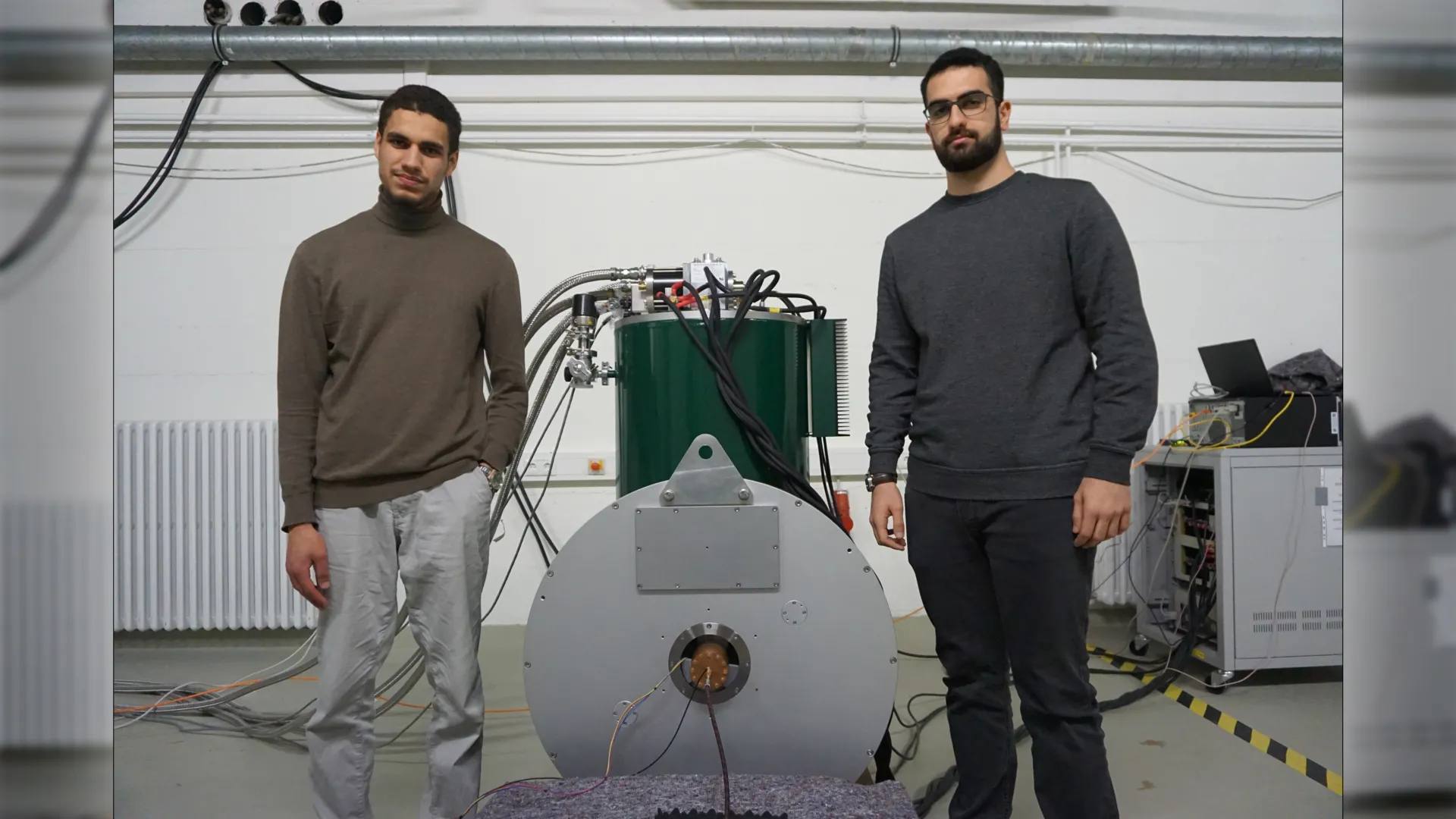
Hamburg university students construct functional axion detector with limited resources, establishing new experimental limits on dark matter properties.
Undergraduate researchers from Hamburg University constructed their own dark matter detector and used it to search for axions, establishing new experimental limits despite working with limited resources.
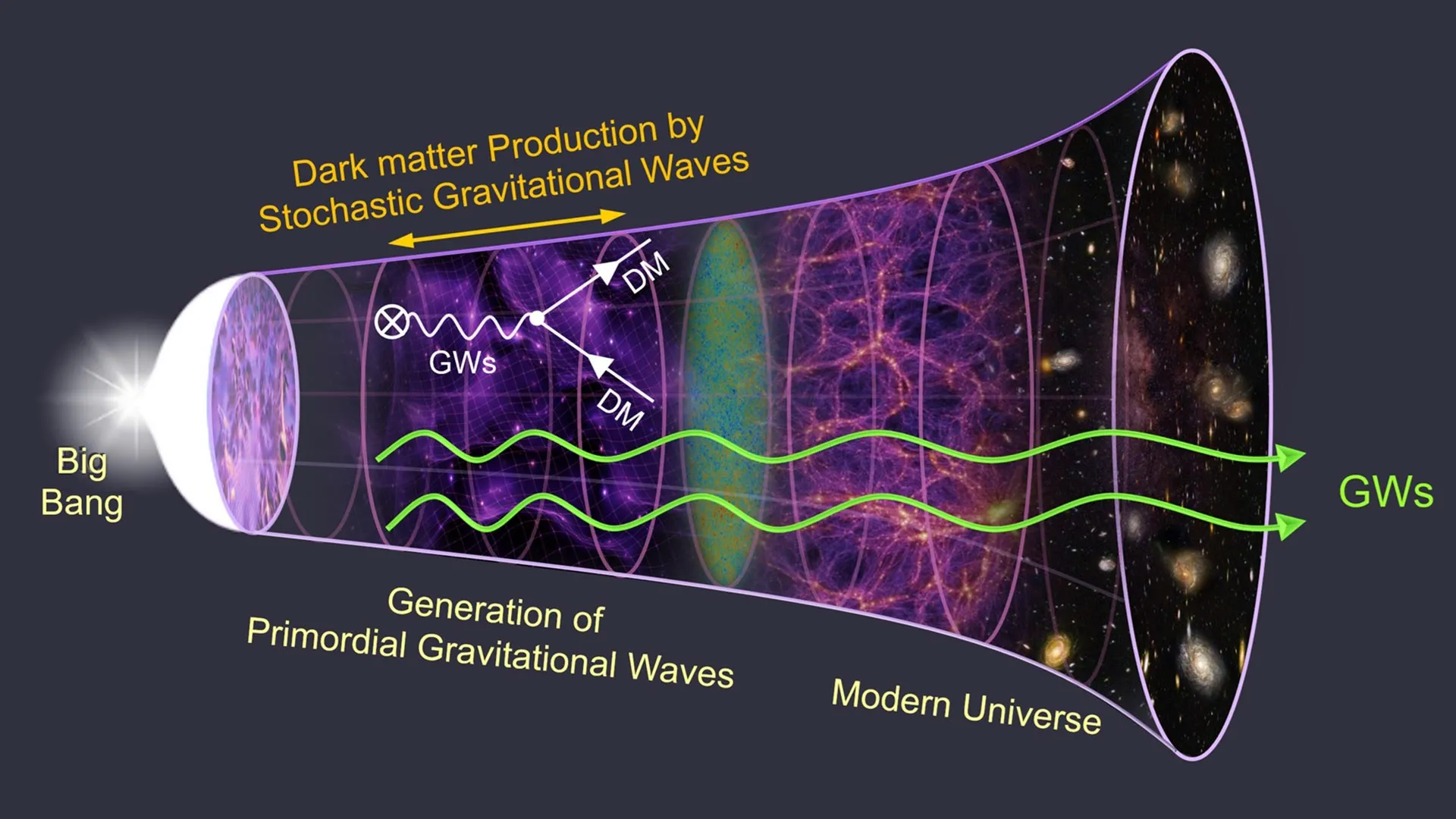
New research suggests ancient ripples in spacetime could have transformed into the invisible particles that shape galaxies today.
New research suggests ancient ripples in spacetime could have transformed into particles that became the invisible substance shaping galaxies today.
New research suggests ancient ripples in spacetime could have transformed into particles that became the invisible substance shaping galaxies today.
Researchers discover that spacetime ripples from the Big Bang may have transformed into particles that became the invisible substance shaping galaxies today.
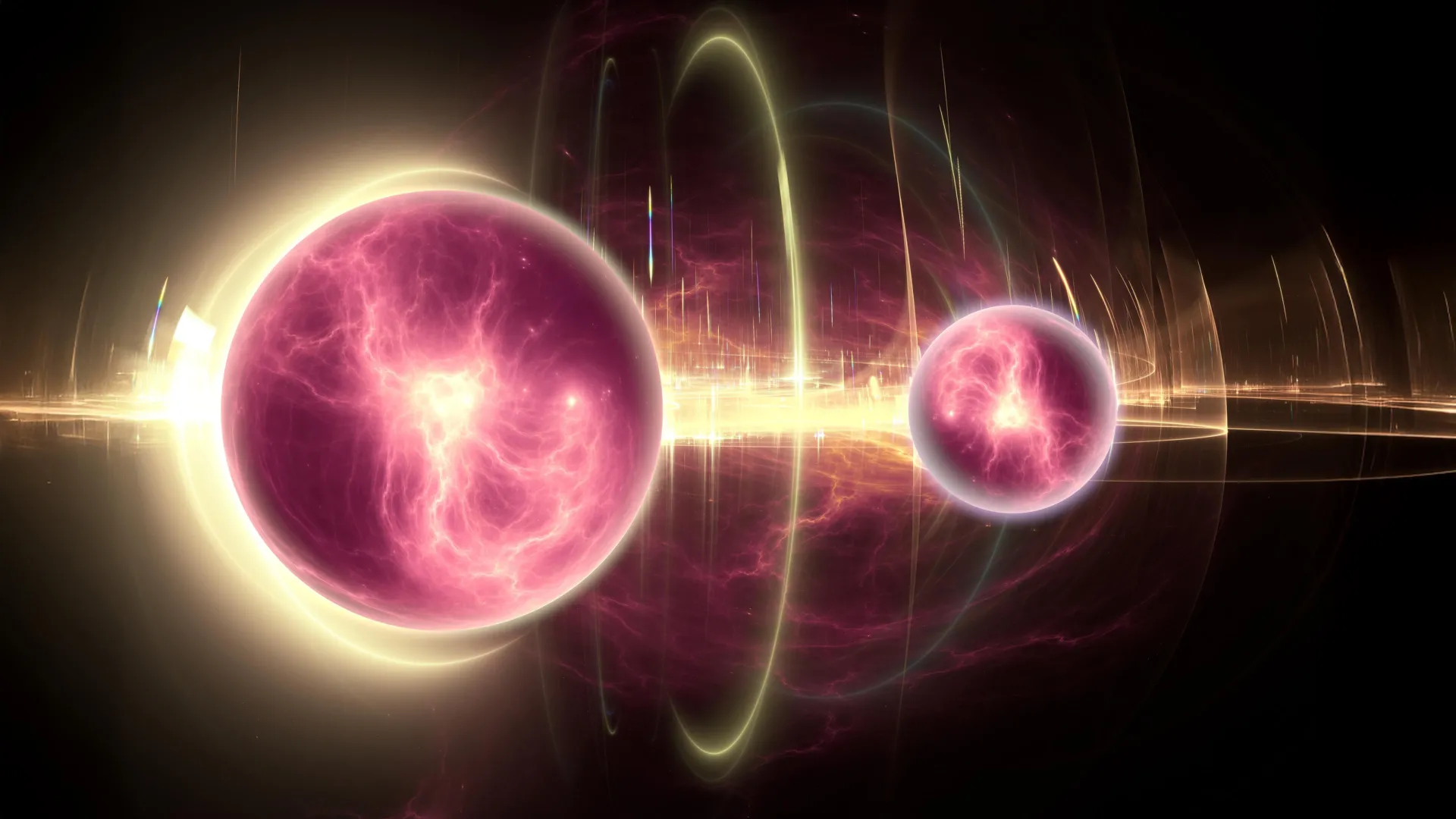
Breakthrough experiment reveals evidence of strange new matter state where fleeting particles get trapped inside atomic nuclei, potentially solving fundamental questions about how particles acquire mass.
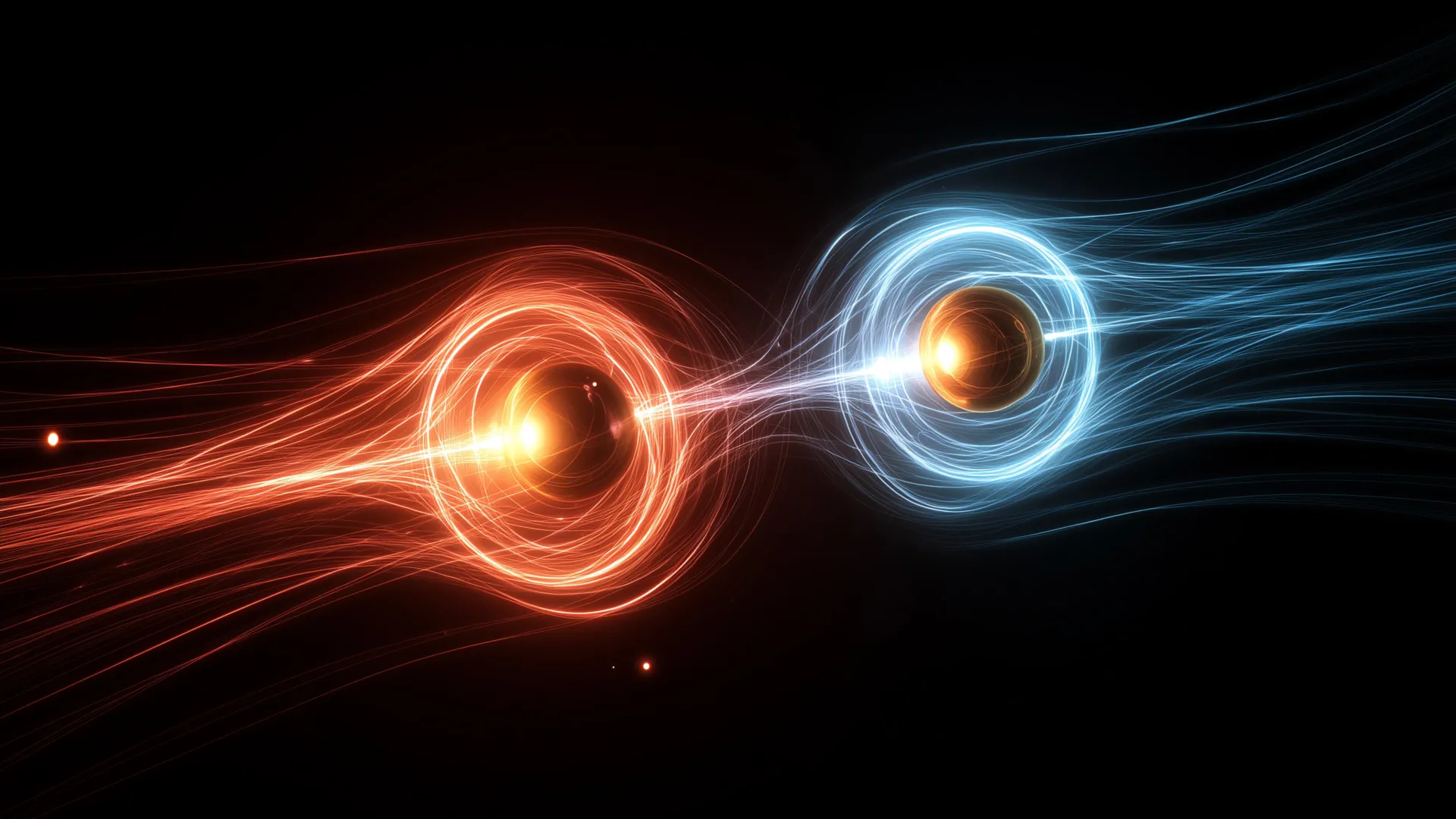
Machine learning breakthrough reveals hidden particle interaction laws with 99% accuracy, overturning long-held scientific assumptions about non-reciprocal forces.
Scientists have used machine learning to uncover entirely new laws of nature in dusty plasma, achieving over 99% accuracy in modeling complex particle interactions.

A 60-year multigenerational collaboration measured the muon's magnetic moment at 127 parts per billion — 30,000 times more precise than the 1965 baseline — revealing a persistent deviation.
Showing the latest 60. More in Physics.