Physicists Discover Exotic Particle That Could Explain Mass Origins
Breakthrough experiment reveals evidence of strange new matter state where fleeting particles get trapped inside atomic nuclei, potentially solving fundamental questions about how particles acquire mass.
An international team of physicists has uncovered evidence for an exotic new form of matter that could finally explain one of the universe's most fundamental mysteries: why particles have mass. The researchers discovered signs of a rare state called an η'-mesic nucleus, where a fleeting particle becomes temporarily trapped inside an atomic nucleus, creating unprecedented conditions for studying how mass is generated at the most basic level of reality.
The breakthrough addresses what physicists consider one of their field's biggest unanswered questions. While everything around us has mass, its origin remains deeply mysterious according to modern theories. Mass doesn't simply come from matter itself, but appears to be tied to the complex structure of the vacuum – the supposedly "empty" space that actually teems with dynamic quantum activity. The new particle state provides a unique laboratory for probing this hidden framework.
The research team, led by senior author Kenta Itahashi, focused on η' mesons, which are unusually heavy particles that exist for less than ten-millionth of a second under normal conditions. "One particle of particular interest is the η' meson," Itahashi explained. "It is unusually heavy compared with related particles, and physicists expect that its mass changes when it exists inside nuclear matter. Observing this phenomenon would provide valuable information about how particle masses are generated in the universe."
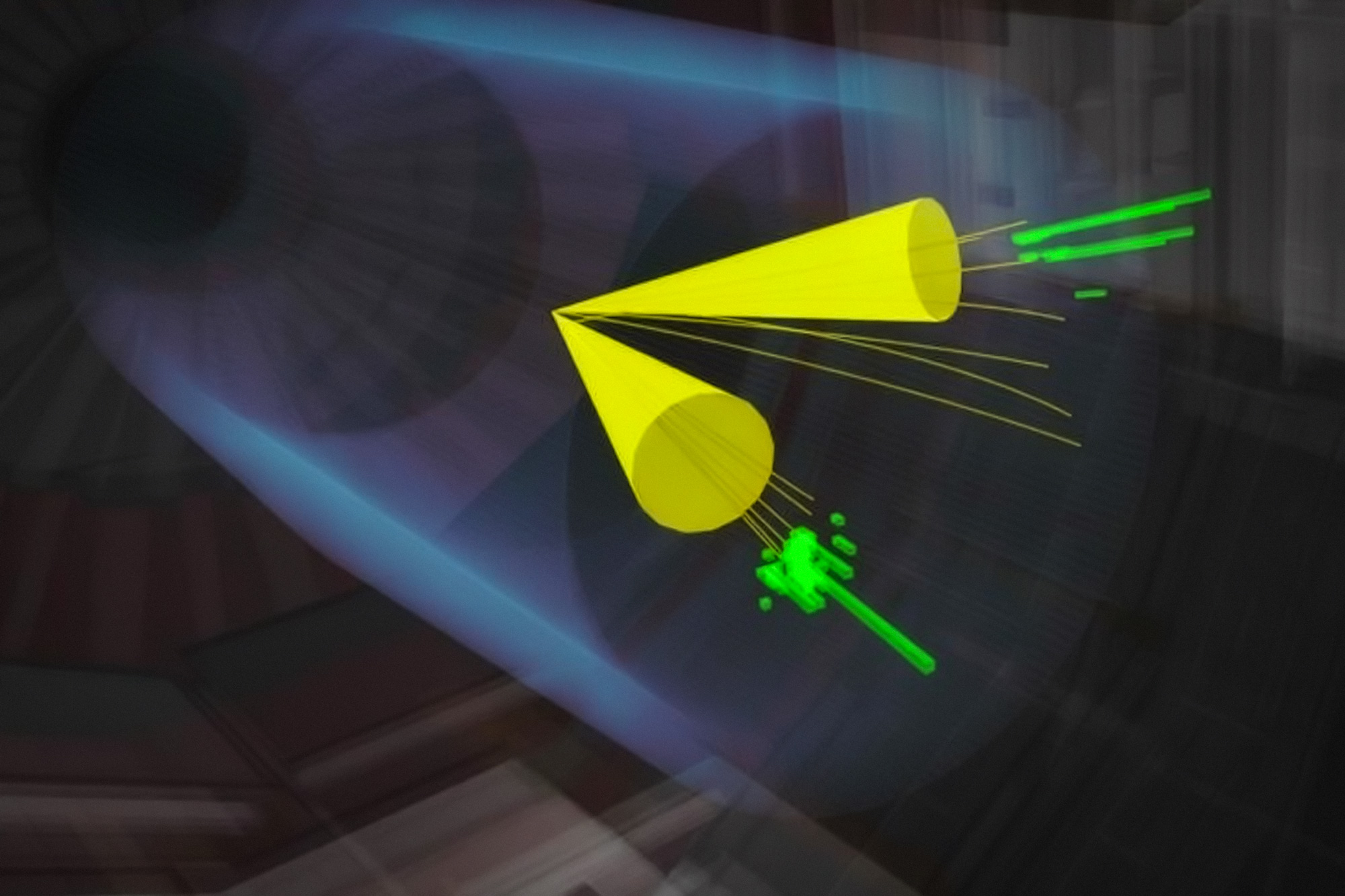
To hunt for these exotic states, the scientists conducted a high-precision experiment at Germany's GSI Helmholtzzentrum für Schwerionenforschung. They directed high-energy proton beams onto carbon targets, exciting the nuclei and producing η' mesons that occasionally became bound to the nucleus. Using sophisticated detection equipment including the Fragment Separator spectrometer and the WASA detector originally developed in Sweden, they measured the excitation energy by analyzing deuterons emitted during the reactions.
The discovery represents a major step toward understanding how the vacuum's structure influences particle properties. When mesons become trapped inside nuclear matter, they experience conditions vastly different from normal space, potentially revealing how mass emerges from fundamental quantum interactions. This exotic matter state could provide crucial insights into why particles weigh what they do and how the universe's basic building blocks acquire their essential properties, potentially revolutionizing our understanding of physical reality itself.