Planck Standard

The physics desk

Physics

Physics from the quantum to the cosmos: particle physics, quantum computing, astrophysics, cosmology and the discoveries that change what is possible.

More physics news

  1. Physics

    For Decades Network Science Assumed Identical Parts Make a Stable System

    The Science paper shows why the effect was missed: the simplified models everyone used, like Kuramoto, strip out the very dynamics that let disorder stabilize a network. It may also explain why huge, diverse ecosystems don't collapse the way 1970s math says they should.

    4 min read

  2. Physics

    Maryland Physicists Stacked a Two-Dimensional Magnet on a Two-Dimensional Ferroelectric and Got a Room-Temperature Multiferroic That Switches Its Magnetism With a Small Voltage, 3,000 Times Without Wearing Out

    Neither long-range magnetic order nor ferroelectric order survives easily in a sheet a few atoms thick, and getting both to coexist at 19°C was thought to be extraordinarily hard. Cheng Gong's team did it by building each order in its own layer and pressing the layers together.

    4 min read

  3. Physics

    High School Physics Says Friction Doesn't Depend on Speed

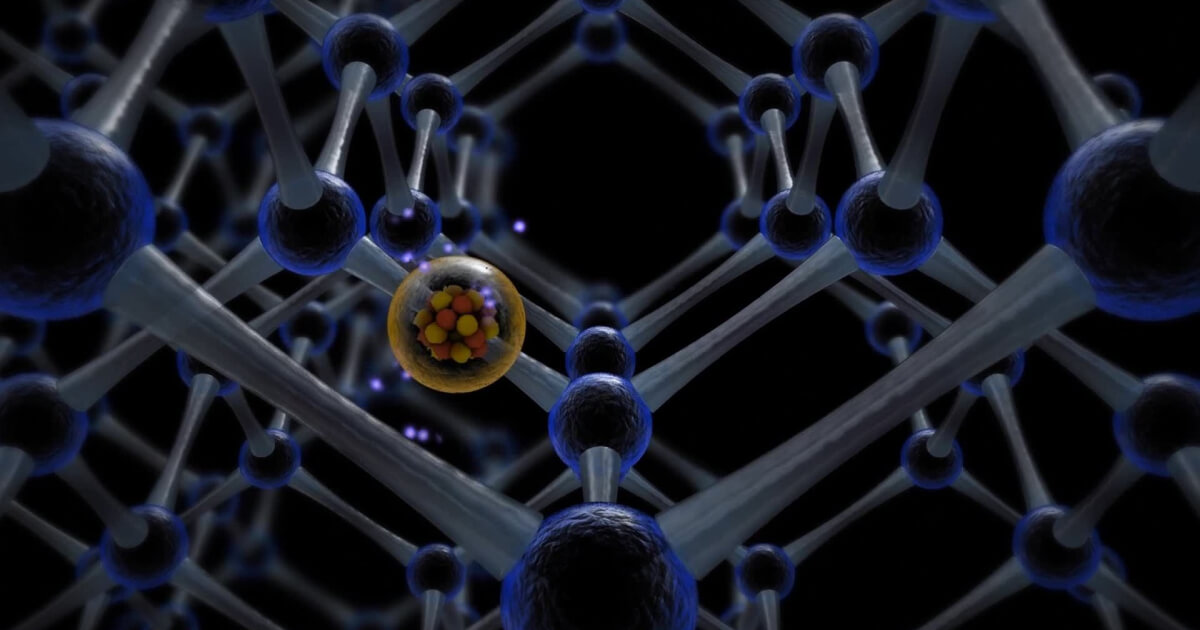
    It is the first experimental realization of ideal Amontons-Coulomb friction. Electron microscopes traced the speed dependence to wave-like crystal flaws called ripplocations, which disappear at high temperature.

    3 min read

  4. Physics

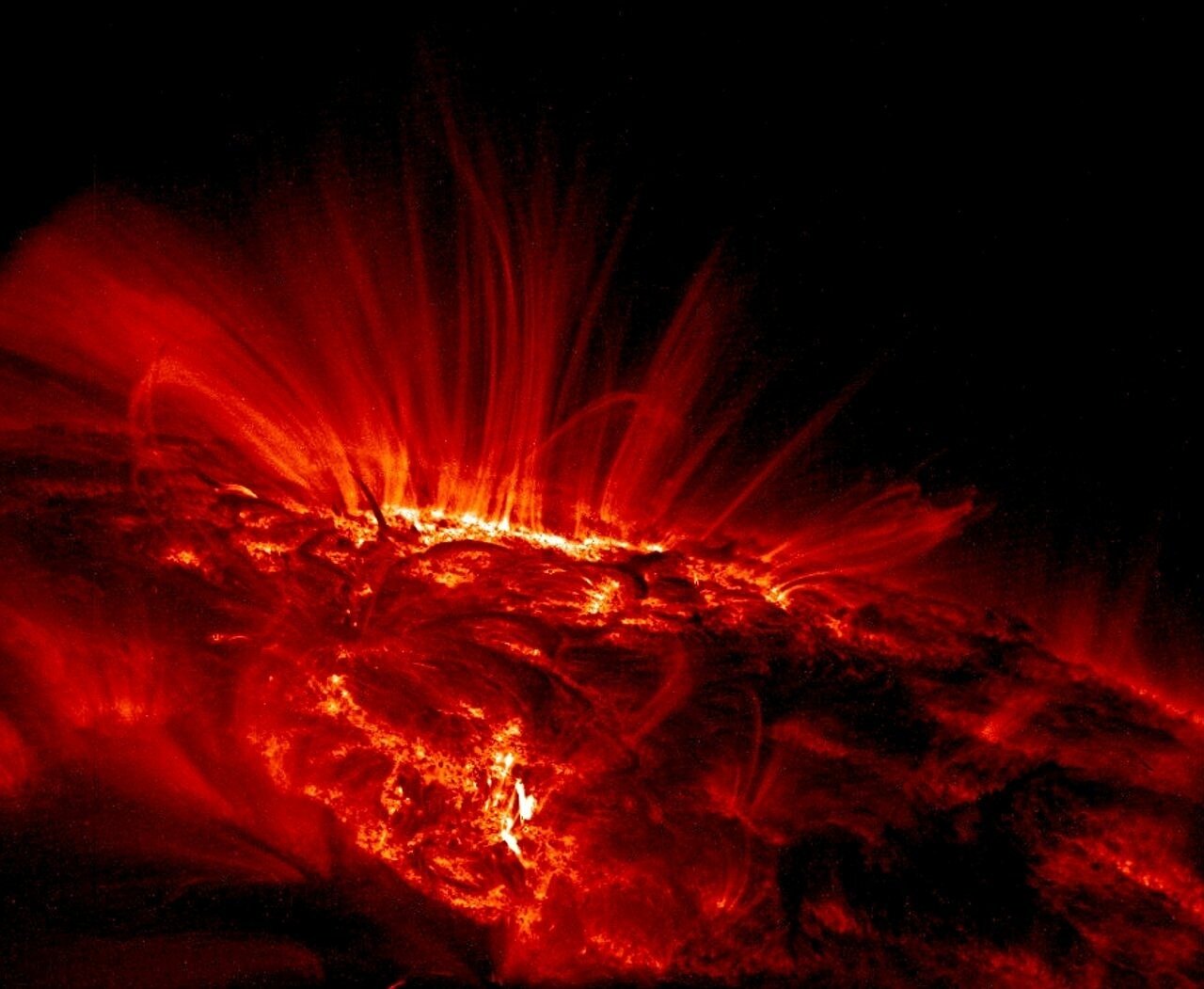
    Today's Solar Storm Warnings Give Earth 15 to 60 Minutes

    ESA's HENON mission, carrying the Imperial College MAGIC magnetometer, launches in early 2027 into a distant retrograde orbit far beyond the L1 point. Its lead scientist calls it 'a step change' and a pathfinder for the larger SHIELD mission.

    3 min read

  5. Physics

    Atoms Normally Shine in Every Direction

    Reported in Physical Review Letters, the trick is timing: match the speed of the atoms' motion to the length of the light pulse they emit together, and up to 89% of the light goes one direction. No mirrors, no lattice, no chiral structure required.

    4 min read

  6. Physics

    A Satellite Engine That Runs on the Air That Is Trying to Drag It Down

    Francesco Romano's doctoral thesis pairs a mirror-like intake with a radio-frequency helicon thruster borrowed from MRI antenna design. It needs no fuel tank and no corrodible cathode, and the math says it could keep a satellite at 190 to 250 kilometers indefinitely, or orbit Mars at 120 kilometers.

    4 min read