Max Planck's Pressurized 'Submarine' Lets Physicists Study Turbulence Superstructures in the Lab
A 3.5-meter chamber filled with sulfur hexafluoride at up to 19 bar can produce several storm-like convection rolls at once, structures too complex to simulate even on supercomputers.

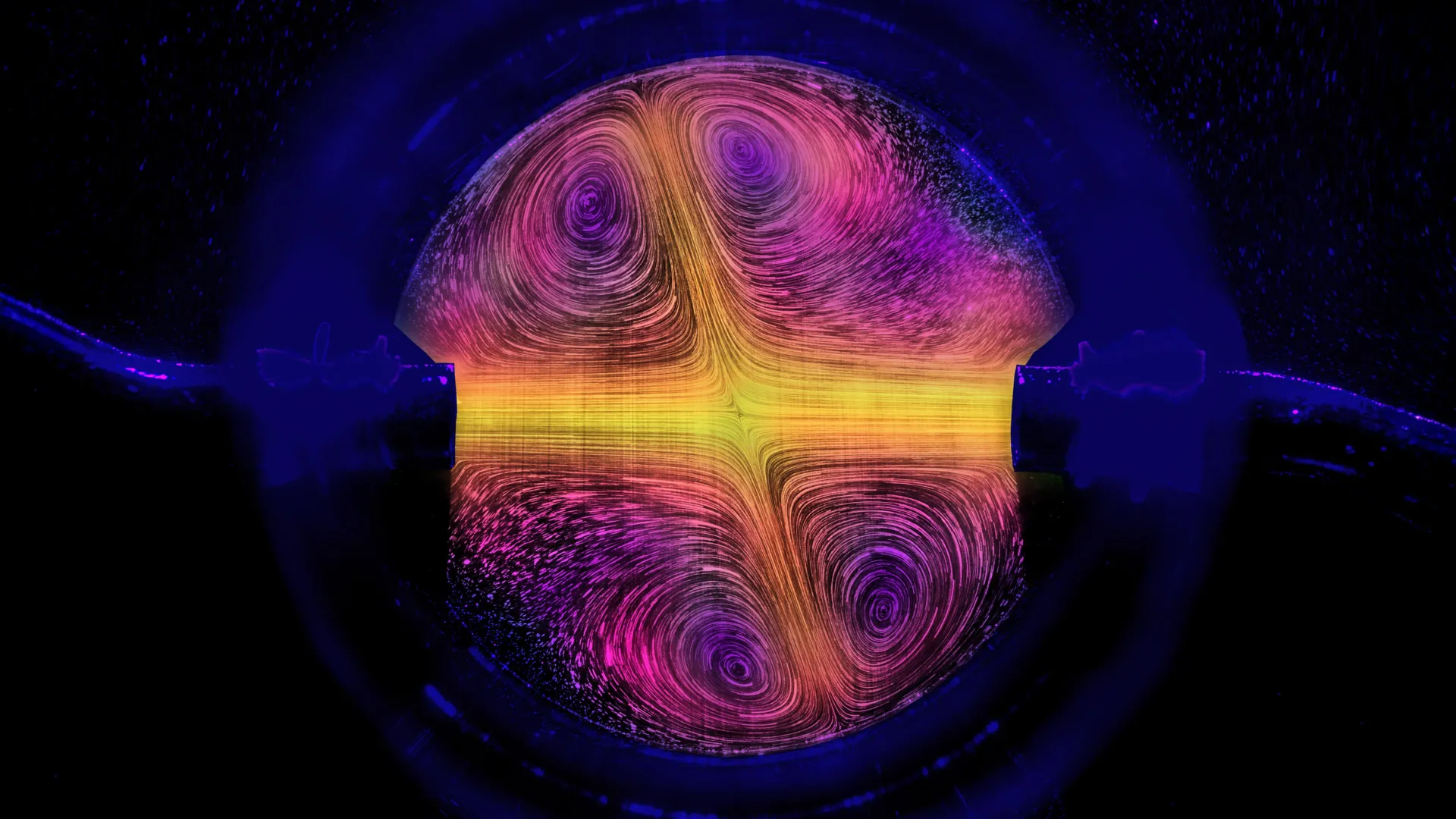
Turbulence looks like chaos, yet in nature it often organizes itself into enormous, orderly patterns. Researchers at the Max Planck Institute for Dynamics and Self-Organization in Germany have built a pressurized chamber that lets them study those patterns, called turbulent superstructures, in the laboratory.
The device is a rectangular convection cell 3.5 meters long and 0.7 meters high, housed in a high-pressure chamber the team nicknamed the "submarine." Heating and cooling plates at the bottom and top regulate temperature very precisely. The working fluid is sulfur hexafluoride, a heavy gas, and the experiments run at pressures up to 19 bar. The high pressure is what allows the team to reproduce the strong turbulence found in nature at laboratory scale, in conditions similar to the atmosphere.
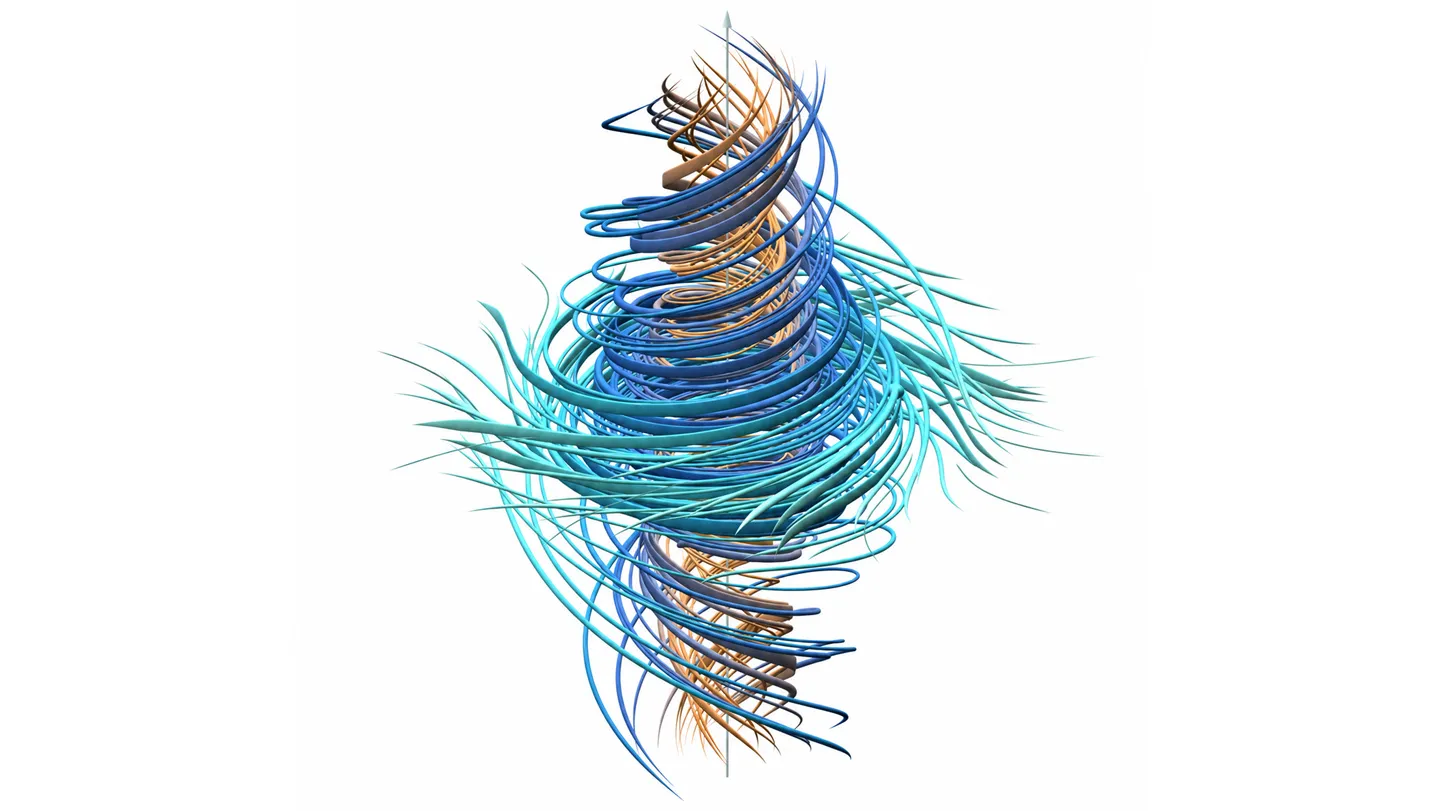
Turbulent flows appear in clouds, oceans and on other planets. Despite their chaotic nature they form large-scale structures that can be calculated and predicted. Among them are periodic superstructures known as convection rolls, and similar patterns show up in the atmosphere as organized cloud formations.
"The challenge is to generate flows with particularly strong turbulence, similar to those found in nature," said Stephan Weiss, who leads the research group. Director Eberhard Bodenschatz said what makes the setup unique is that it can generate multiple turbulent superstructures simultaneously.
Bodenschatz said the measurements reveal structures that, because of their complexity, could not previously be simulated, even on high-performance computers. The team says the approach lets physicists examine these superstructures in the laboratory for the first time, with highly detailed spatial measurements made possible by the pressure chamber.
The institute describes the work as a step toward better descriptions of dynamic phenomena such as clouds and storms. If researchers can see how several superstructures coexist, interact and persist, that could improve the models used to represent them in larger simulations.
The apparatus is described in a paper in Review of Scientific Instruments, "A multipurpose thermal convection setup to study turbulent super structures," with Hiufai Yik as first author (DOI 10.1063/5.0347966). The publication is a description of the experimental setup, so the scientific results that follow from it are still ahead.
Turbulence has resisted a complete theory for more than a century, and experiments that reach nature-like conditions are scarce. A chamber that can hold a long, controlled flow with several rolls at once gives theorists a rare reference point. It also gives the group a general-purpose tool: the paper calls it a multipurpose setup, so it can be reused for different fluids, pressures and temperature differences as new questions come up.