LHCb Finds First Evidence of One of Nature's Rarest Decays After a 42-Year Hunt
The upgraded experiment at CERN saw a beauty particle decay into two muons at 3.2 sigma, matching the Standard Model but opening a narrow window onto the 'Zeptoverse.'
UK physicists have found the first evidence of an extremely rare particle decay at CERN's Large Hadron Collider, ending a search that lasted 42 years. The result, supported by the Science and Technology Facilities Council, is the rarest decay of a "beauty" particle ever seen at the LHC. It brings physicists closer to the "Zeptoverse," a world of distances around a billionth of a trillionth of a metre, where new particles and fundamental forces may be hiding.
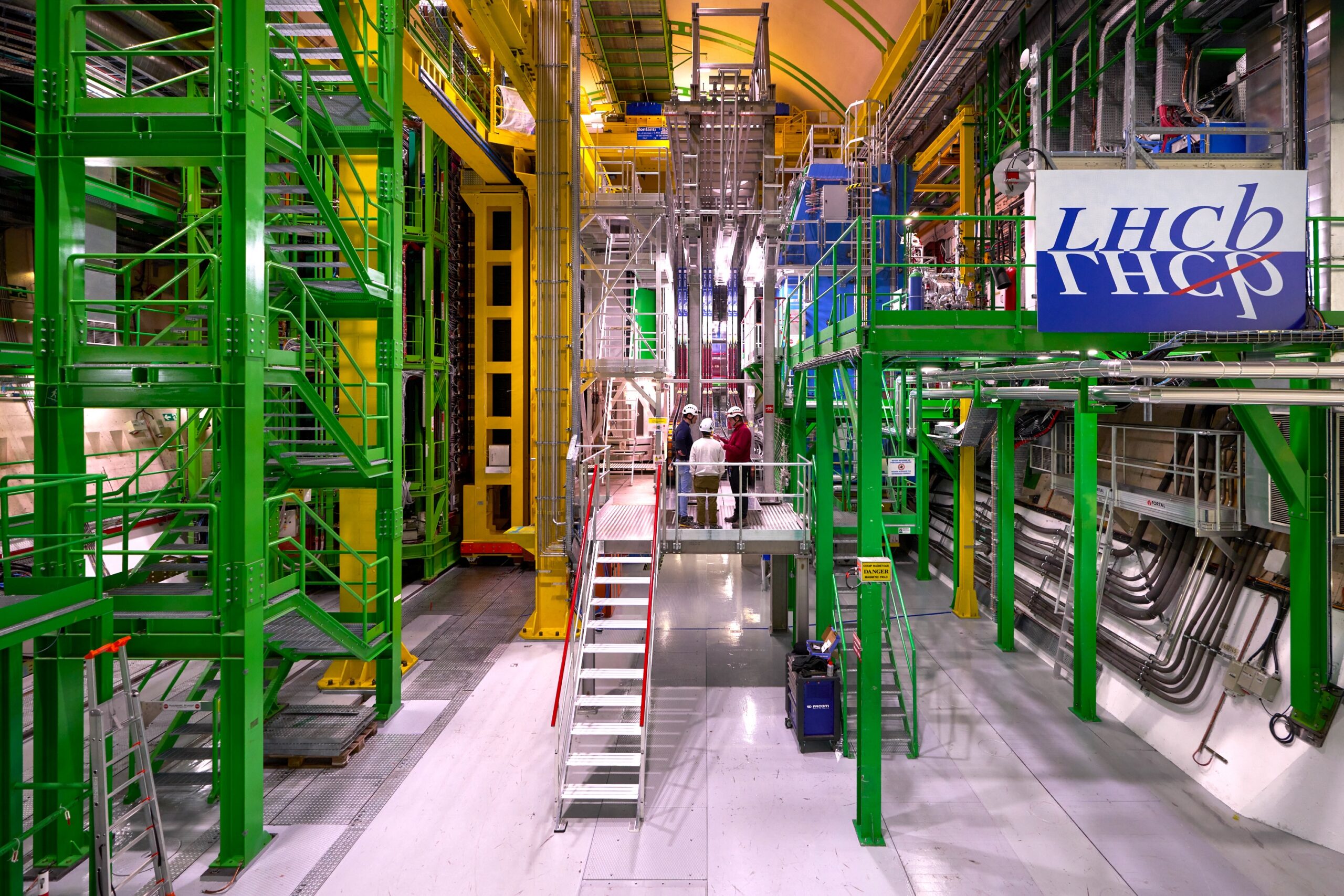
The finding came from the upgraded Large Hadron Collider beauty experiment, known as LHCb, one of the four large experiments at the LHC. LHCb studies short-lived particles containing beauty quarks, heavier relatives of the up and down quarks that make up much of ordinary matter. Beauty quarks are produced in huge numbers in LHC collisions but exist only fleetingly, decaying after about one and a half trillionths of a second.
The team found evidence of a decay called Bd to mu mu, in which a beauty particle turns into two muons, the heavier cousins of the electron. The Standard Model predicts it should happen only about once in every ten billion beauty particles. The result has a statistical significance of 3.2 sigma, enough to count as first evidence. It falls short of the five-sigma level, the gold standard for claiming a discovery in particle physics.
The same analysis delivered the most precise measurements yet of a related decay, Bs to mu mu, which LHCb first observed in 2015. The team combined new data collected in 2024 and 2025 with data from earlier runs between 2011 and 2018. Since the upgraded detector began taking data in 2024, it has been able to record collisions at up to five times its previous rate. Improved particle identification and machine-learning techniques let the physicists pick this rare decay out of the vast number of other collisions.
The new results agree with the Standard Model, the leading theory of fundamental particles and their interactions. But they sharpen the test. Any new particle or force that couples to beauty quarks and muons could shift the rate of these decays, so a precise measurement narrows the places where such physics can hide. The information is particularly valuable as particle physicists consider what machine should follow the LHC.
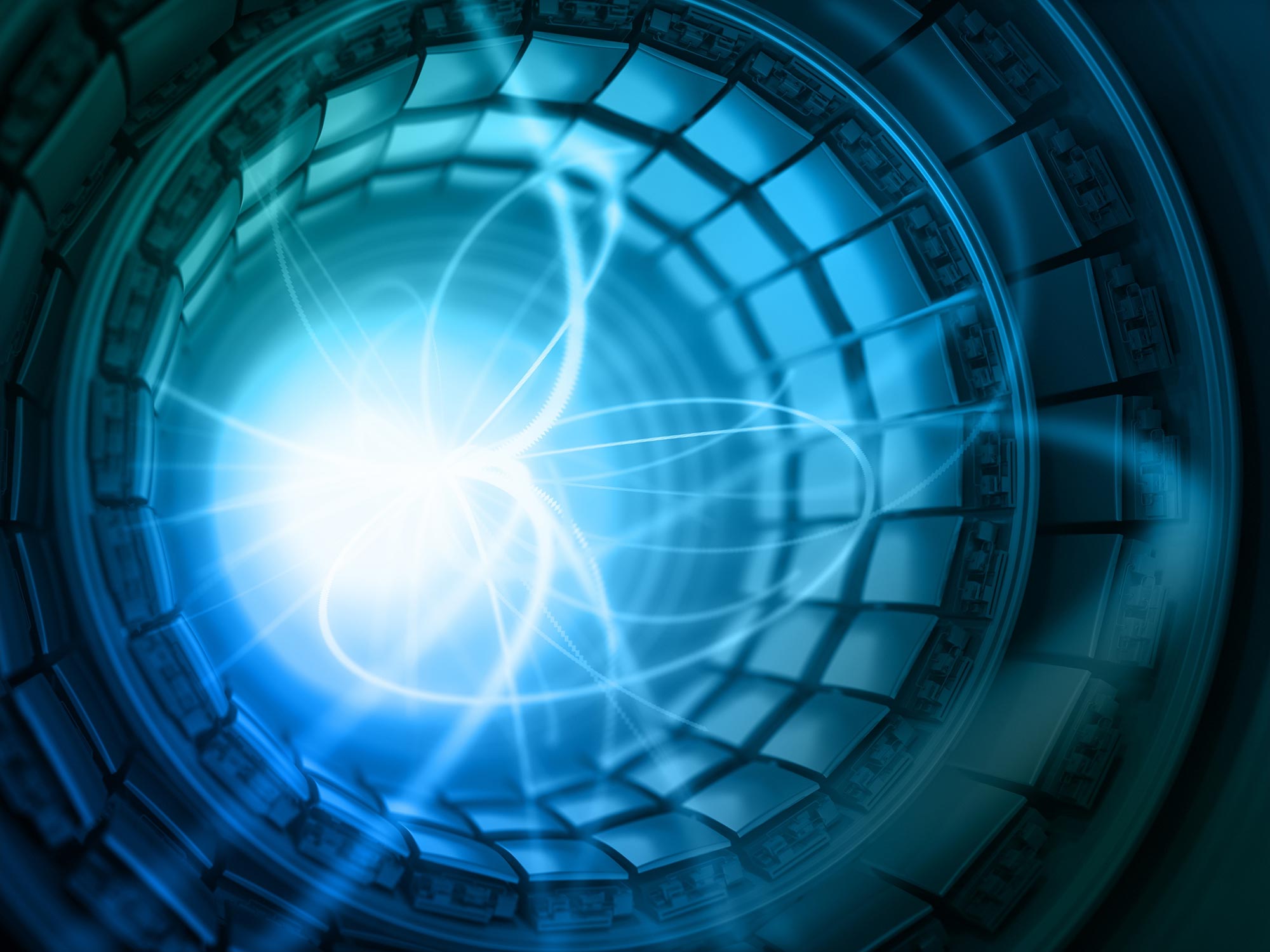
UK physicists led the analysis and have made the largest contribution to the upgraded detector. UK teams built a silicon pixel detector called the Vertex Locator, which sits just five millimetres from the LHC beams and pinpoints where particles are produced and how they decay. They also contributed to the Ring Imaging Cherenkov system, which identifies particle types by the light they emit when passing through a gas faster than light can in that medium.
Dr. Harry Cliff, an Ernest Rutherford Fellow at the University of Cambridge who led the analysis team, said seeing the result for the first time was "a really thrilling moment." "To see something that people had been searching for since before I was born was a real privilege," he said. Prof. Tara Shears of the University of Liverpool, principal investigator of LHCb-UK, credited the "breathtaking precision and speed of the upgraded LHCb detectors" for teasing such a rare signature out of so much data. With more data arriving, the team can now push toward the five-sigma threshold.