LHCb Finds First Evidence of One of Nature's Rarest Decays After a 42-Year Hunt
The upgraded experiment at CERN saw a beauty particle decay into two muons at 3.2 sigma, matching the Standard Model but opening a narrow window onto the 'Zeptoverse.'
Topic
37 stories from Planck Standard. Latest: November 11, 2026.

The upgraded experiment at CERN saw a beauty particle decay into two muons at 3.2 sigma, matching the Standard Model but opening a narrow window onto the 'Zeptoverse.'

A B0 meson turning into two muons happens about once in ten billion decays; the signal sits at 3.2 sigma and agrees with the Standard Model.

The LHCb experiment sees a beauty particle turn into two muons at 3.2 sigma, matching the Standard Model and ending a 40-year hunt's first chapter.

CMS and LHCb both see small, consistent differences in a decay that happens about once in 10 million beauty-particle decays, though neither result is conclusive.

Physicists saw the wake a fast quark or gluon leaves behind in the primordial liquid of the early universe, using millions of lead-lead collisions at the LHC.

The UC Santa Barbara team used a new 'phase-space distance' method with a supervised machine-learning classifier for the first time in a particle search and showed it beats the standard sphericity test. 'It's not a dead end,' said graduate student Danyi Zhang. 'If this thing existed with these properties, we'd have seen it.'

The Nature paper published Wednesday describes the March road test and the next goal: a 10-hour trip from Geneva to Düsseldorf, where a magnetically quiet lab could compare protons and antiprotons 100 times more precisely than CERN can.

Cosmic-ray observatories in Utah and Argentina have to guess how the first collision in the upper atmosphere unfolds. For a few days in July 2025, CERN stopped guessing and photographed it.

The first measurement to track both the energy and the momentum transfer of near-miss lead collisions shows a three-sigma suppression at the smallest scales. It fits gluon saturation, a prediction that has waited decades for a clean test.

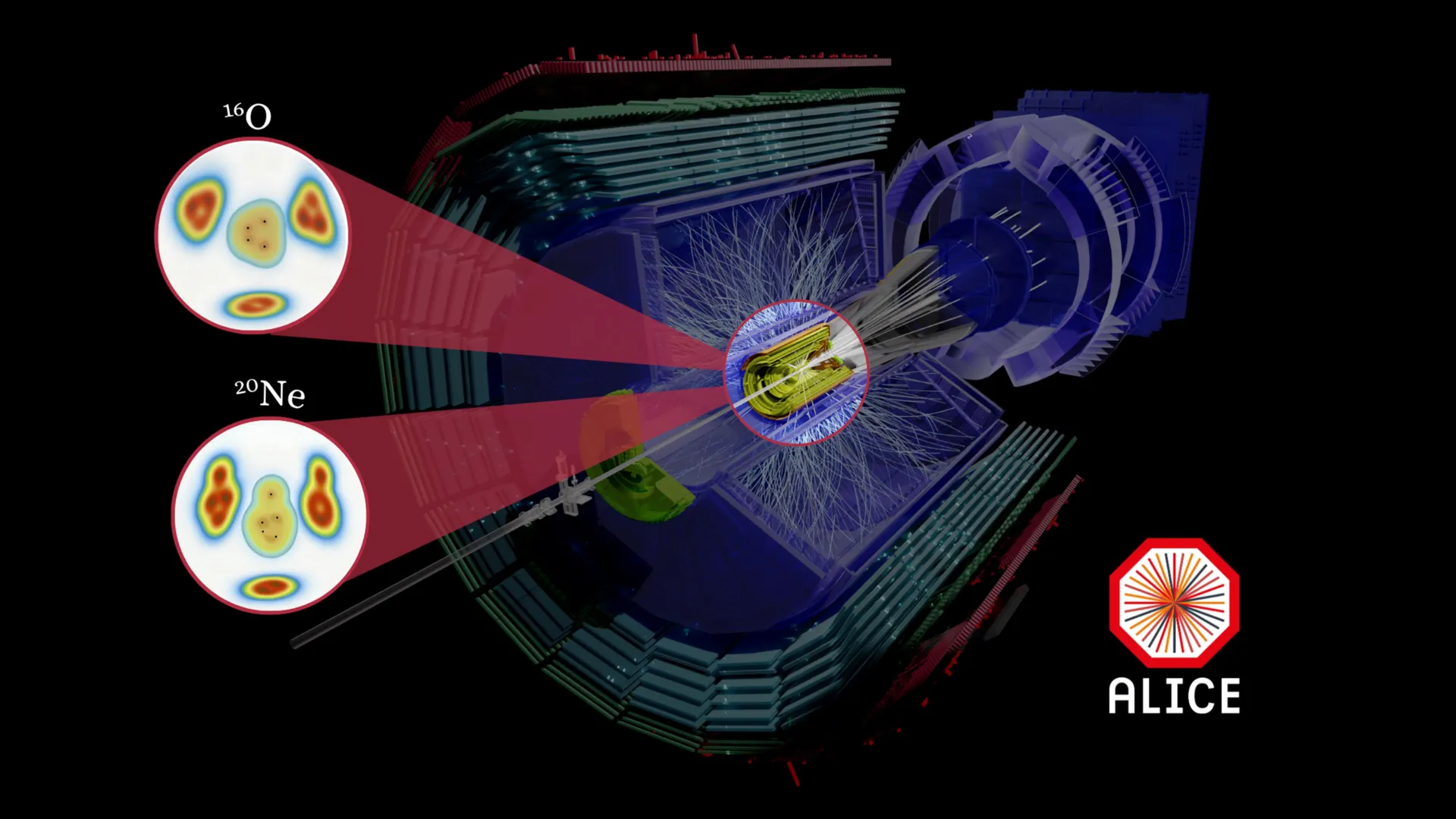
Physicists thought only heavy nuclei like lead could produce quark-gluon plasma. The ALICE collaboration just made it with nuclei a fraction of the size, which means the recipe is not what anyone assumed.

Physicists thought you needed lead — 200 times heavier than a proton — to melt matter into quark-gluon plasma. Oxygen and neon just did it, and ALICE, ATLAS, CMS and LHCb all saw it independently.

CERN researchers detect rare particle transformations that disagree with 50-year-old theory, potentially pointing to unknown forces or particles.

Scientists studying rare "penguin decays" found behavior that doesn't match theoretical predictions, suggesting unknown particles or forces may be at work.

Scientists studying rare 'penguin decays' found results that disagree with 50-year-old physics theory, suggesting unknown particles or forces may exist.

Scientists studying rare 'penguin decays' find results that don't match theoretical predictions, suggesting unknown particles or forces may exist.

Penguin decays show behavior inconsistent with Standard Model predictions, with only 1-in-16,000 chance results are random fluctuation.

Scientists studying rare 'penguin decays' detect particle behavior that disagrees with 50-year-old theory, suggesting unknown particles or forces may exist.

Researchers studying rare 'penguin decays' at CERN detected particle behavior that doesn't match theoretical predictions, suggesting unknown forces may exist.

University of Edinburgh's William Barter and Imperial College London's Mark Smith analyzed 650 billion B meson events recorded between 2011 and 2018 and found the electroweak penguin decay to four particles occurring more often than the Standard Model predicts.

A new analysis of 650 billion B-meson decays at CERN reveals one of the strongest hints in years of physics beyond the Standard Model. A discovery may be within reach.

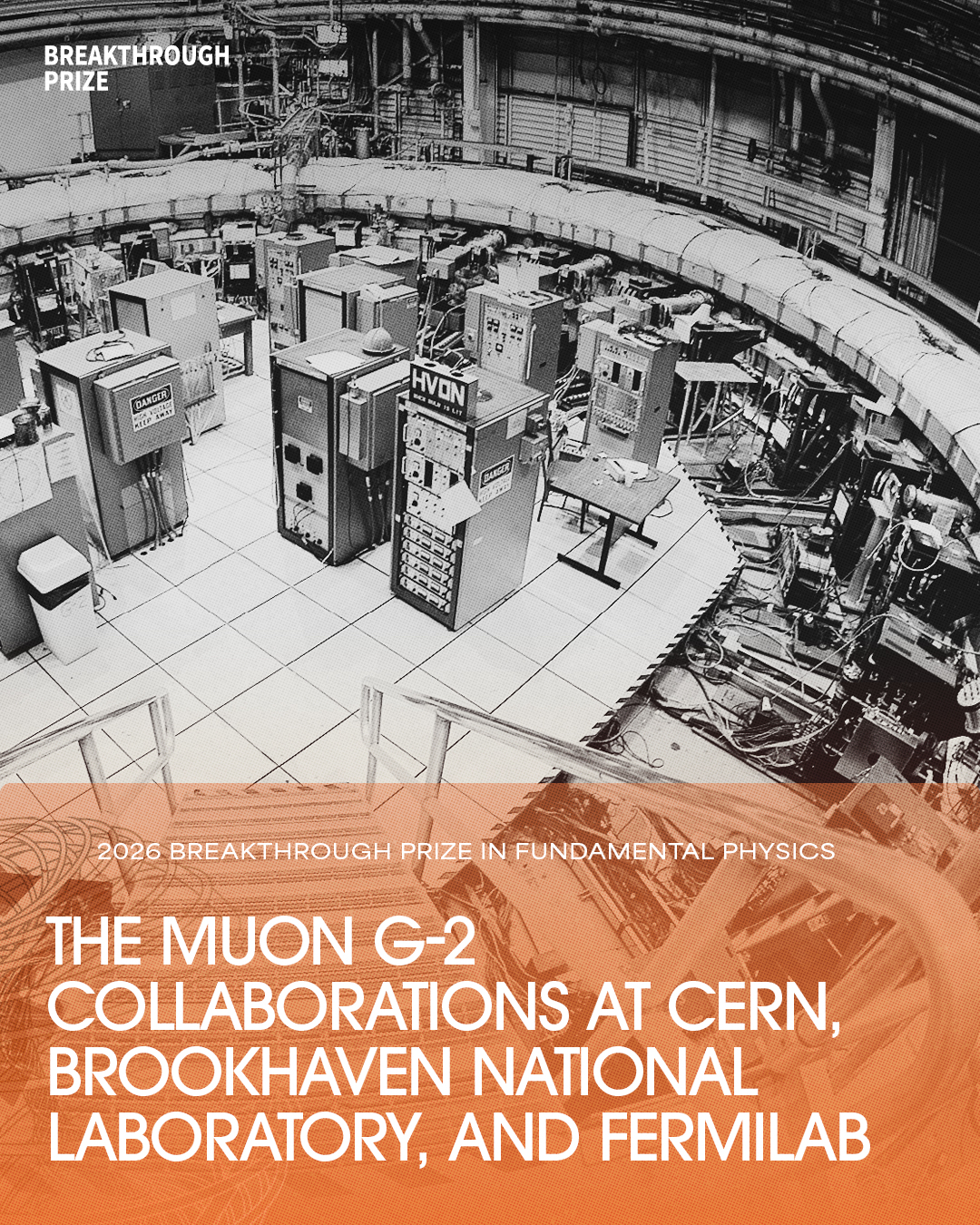
Three generations of scientists at CERN, Brookhaven, and Fermilab shared the $3 million prize for measuring the muon magnetic anomaly to 127 parts per billion precision, with tantalizing hints that new physics may lurk beyond the Standard Model.

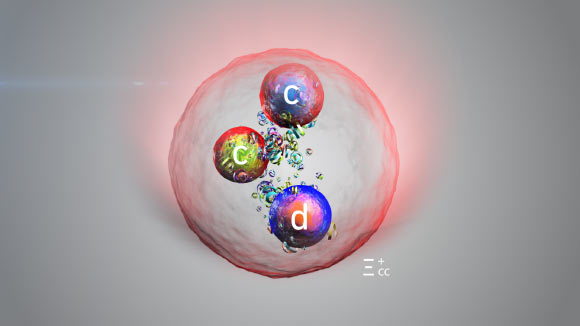
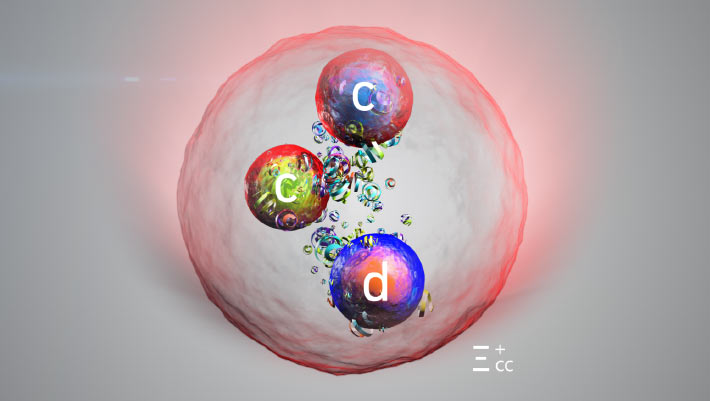
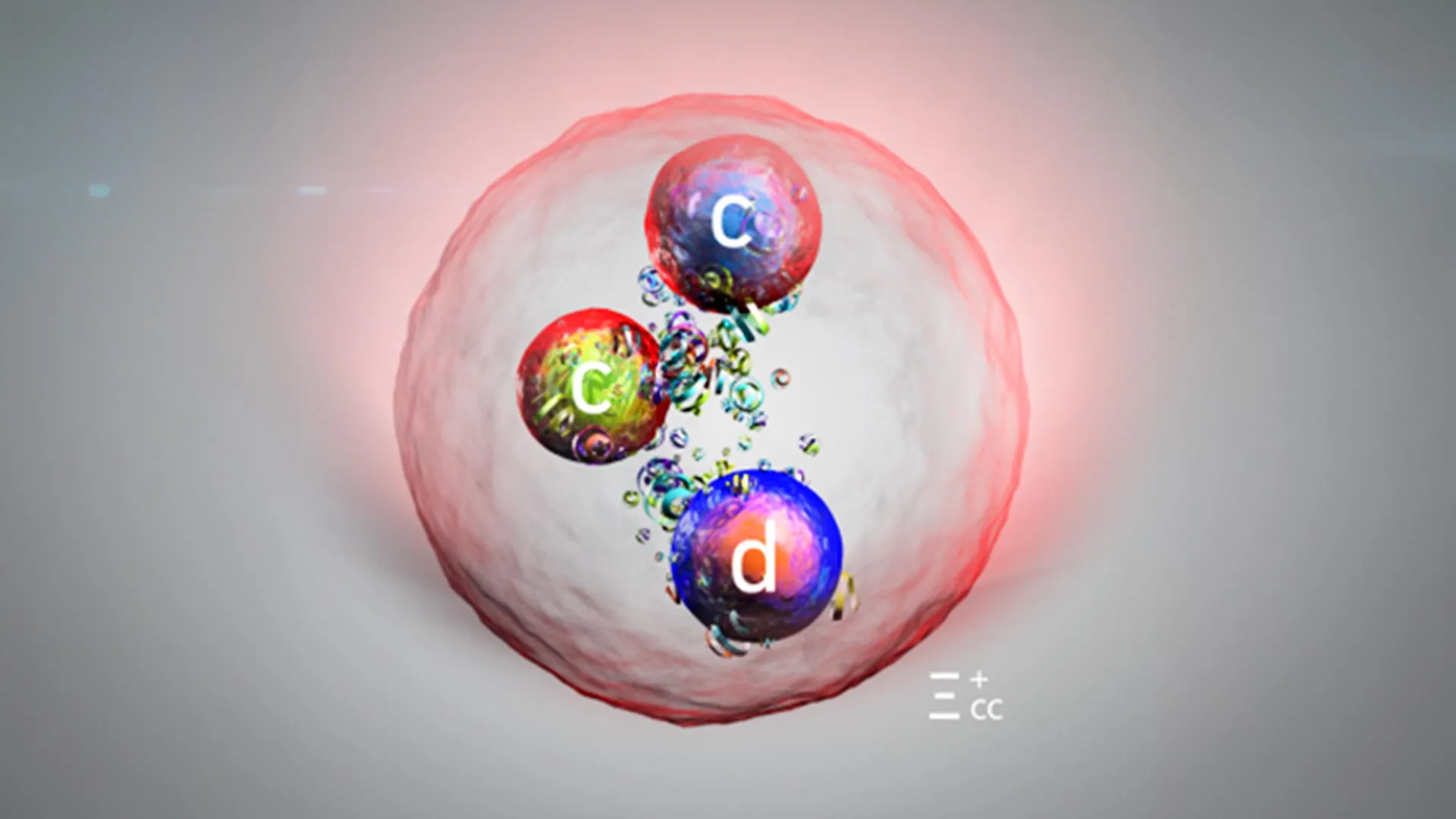
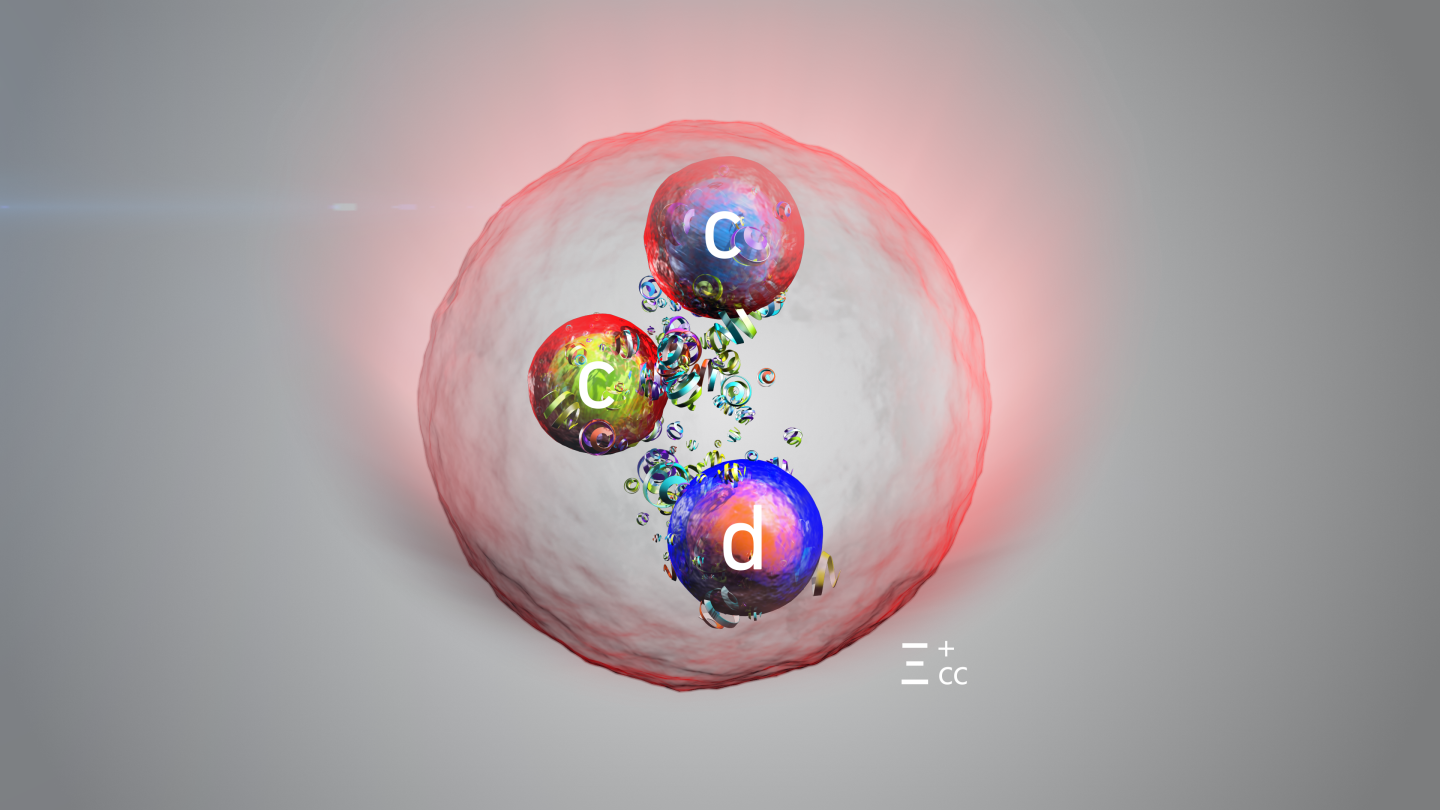
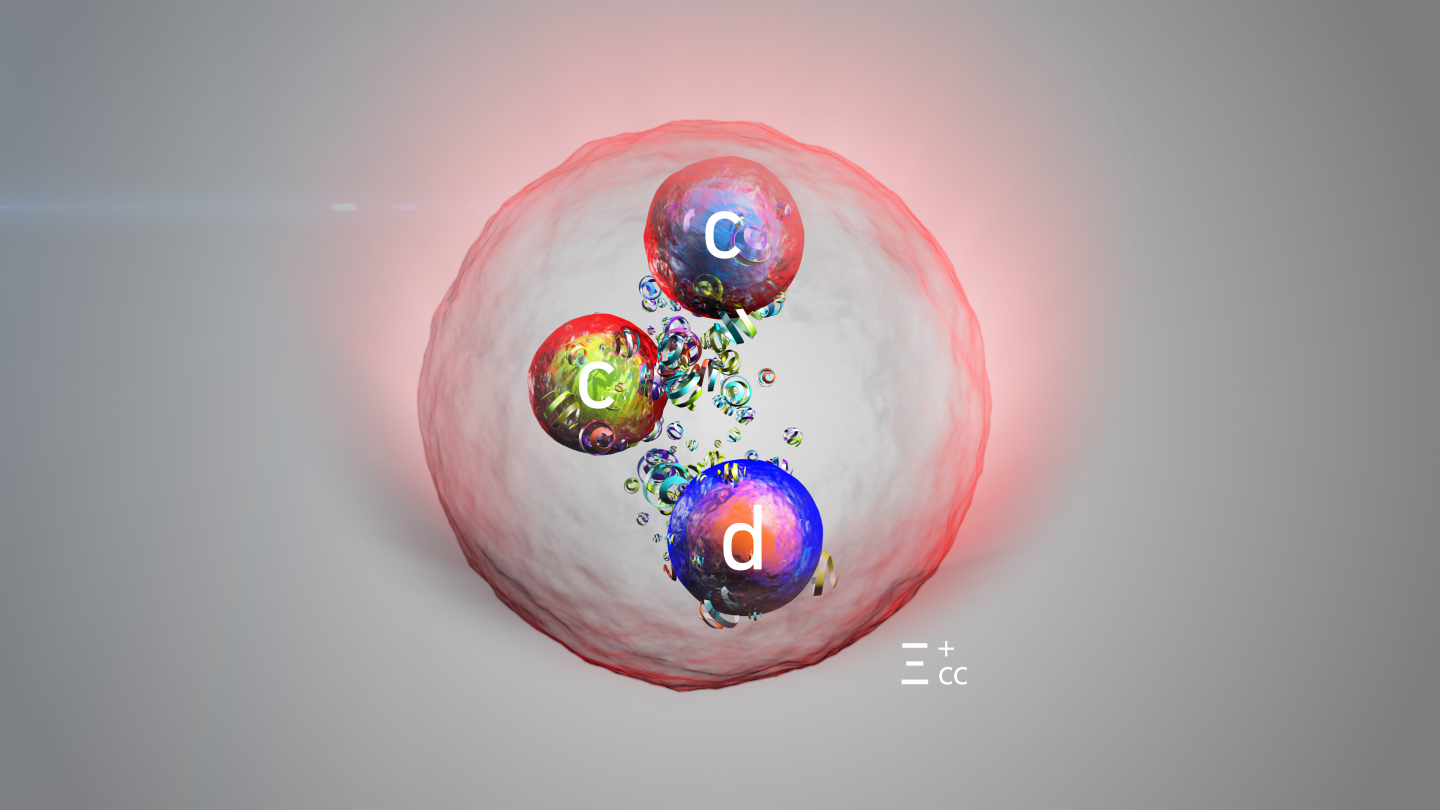
The Ξcc⁺ particle—containing two charm quarks and one down quark—was detected with a 7-sigma confidence level, the first discovery from CERN's upgraded detector.

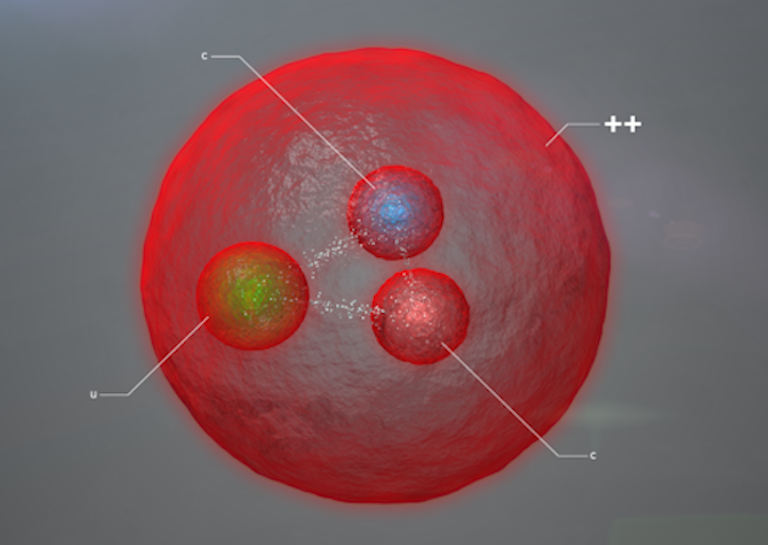
The LHCb experiment announced a 7-sigma discovery of the Xi-cc-plus, completing the doubly charmed isospin doublet and providing physicists with a precision test of quantum chromodynamics.
The LHCb collaboration found the doubly charmed baryon Ξcc⁺ with 7-sigma significance, opening a new window to test quantum chromodynamics with unprecedented precision.

The Xi-cc-plus particle, four times heavier than a proton and containing two charm quarks, was observed with seven-sigma certainty by the upgraded LHCb detector at Geneva.

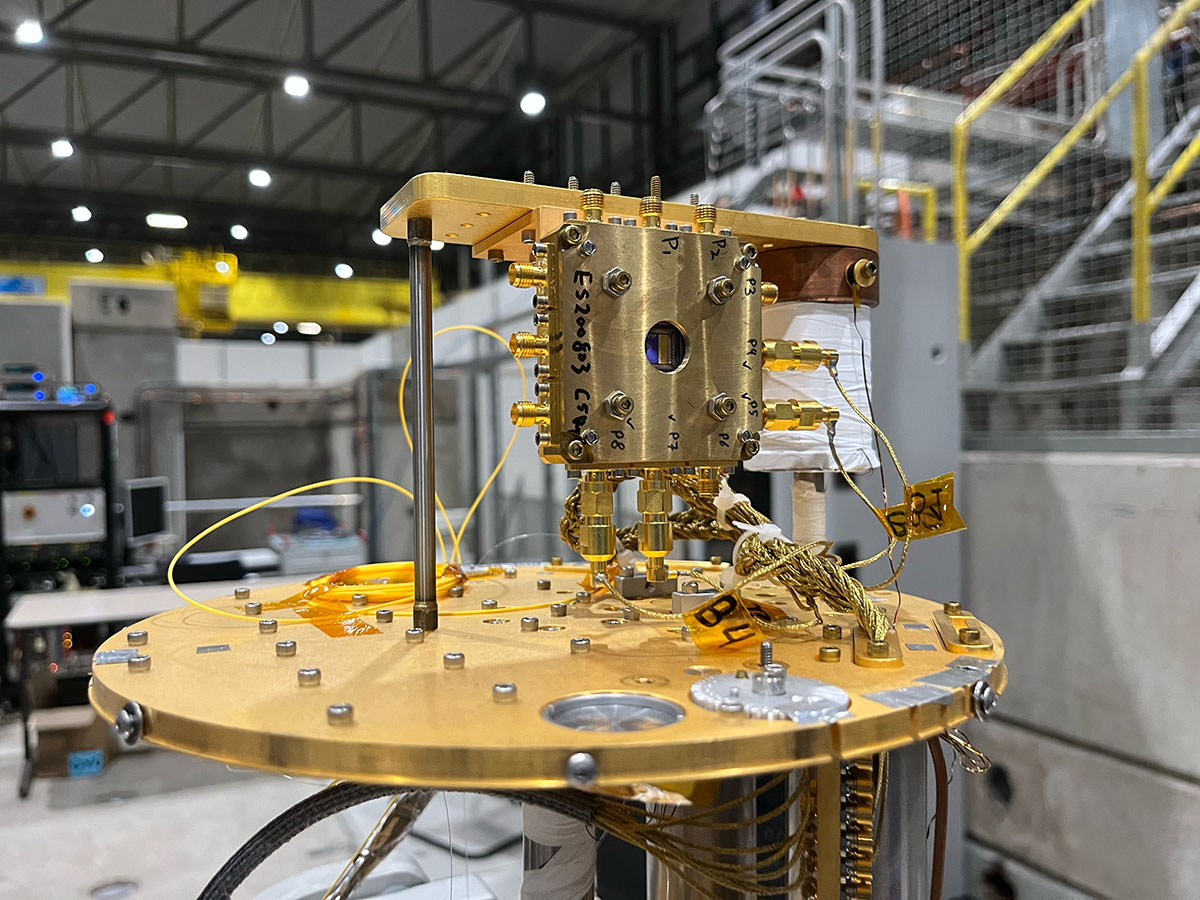
Scientists at Fermilab and Caltech have tested superconducting microwire detectors at CERN that outperform previous designs in detecting individual charged particles — a potential leap forward for ultra-light dark matter experiments.

The LHCb collaboration's discovery of the Ξcc⁺ resolves a 20-year prediction gap in quantum chromodynamics and is the first new particle found since the detector's 2023 upgrade.

The LHCb collaboration at CERN's Large Hadron Collider has confirmed the existence of the Ξcc⁺ baryon — a particle made of two charm quarks and one down quark — in the 80th hadron discovery in LHC history.

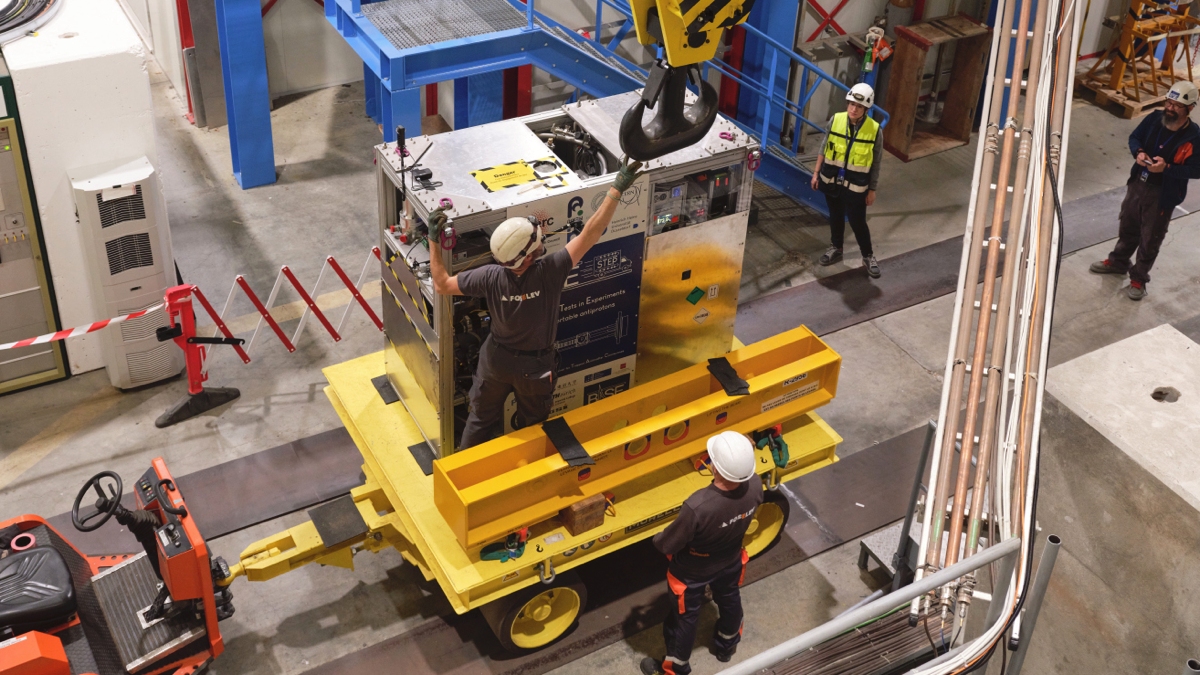
A CERN team trapped 92 antiprotons in a magnetic trap and drove them around the CERN campus in a truck for 30 minutes — a feat once thought impossible — marking a turning point in the quest to understand why matter dominates our universe.

Scientists at the BASE experiment loaded antiprotons into a portable cryogenic trap and drove them across the CERN campus on March 24, completing a milestone that opens the door to conducting antimatter experiments far from any particle accelerator.

The LHCb experiment confirmed the Xi-cc-plus particle — made of two charm quarks and one down quark — at 7-sigma confidence, closing a mystery that began with ambiguous Fermilab hints in 2002.
The LHCb collaboration announces the detection of a baryon made of two charm quarks at 7-sigma statistical significance, becoming the 80th particle ever found at the Large Hadron Collider.
The Xi-cc-plus particle — four times heavier than a proton and built from two charm quarks — was detected at 7 sigma significance using Run 3 collision data and the upgraded LHCb detector.
The LHCb collaboration announced the observation of the Xi-cc-plus baryon — containing two charm quarks and one down quark, roughly four times heavier than a proton — at the Moriond conference on March 17, bringing the total LHC particle zoo to 80 discovered species.
The upgraded LHCb detector at the Large Hadron Collider has observed the Ξcc⁺ (Xi-cc-plus), a doubly charmed baryon predicted by theory but disputed for two decades, with 7-sigma confidence — resolving a long-standing mystery and giving physicists a new probe of the strong nuclear force.

The LHCb experiment has observed the Ξcc⁺ particle — containing two charm quarks — with 7-sigma confidence, opening a precision window on the strong nuclear force that binds all atomic matter.

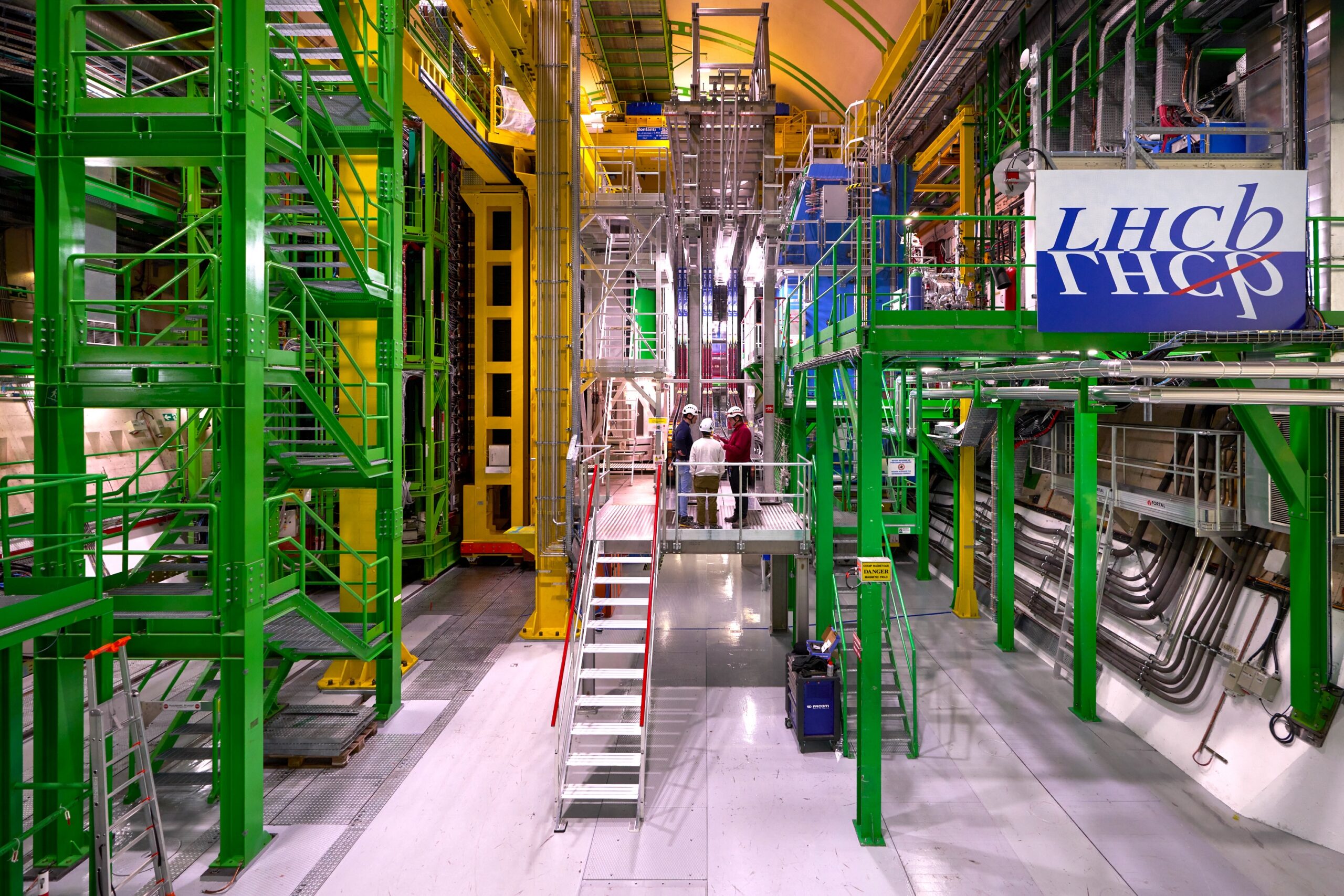
New paper summarizes how hardware and software upgrades kept pace with rising LHC luminosity during Run-3