CERN Discovers New Subatomic Particle at 7-Sigma Confidence — The Doubly Charmed Baryon No One Had Seen Before
The LHCb collaboration announced the observation of the Xi-cc-plus baryon — containing two charm quarks and one down quark, roughly four times heavier than a proton — at the Moriond conference on March 17, bringing the total LHC particle zoo to 80 discovered species.

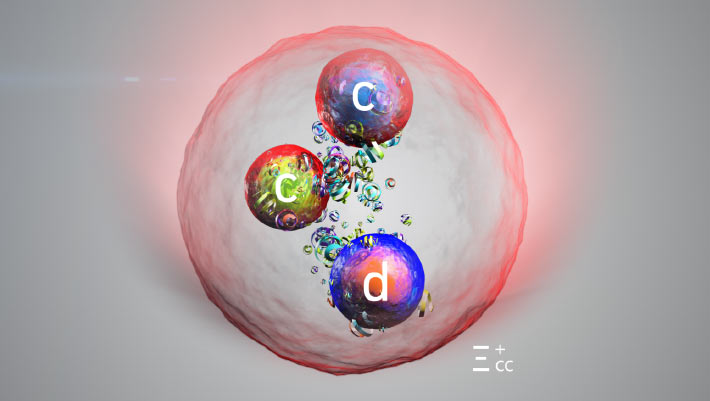
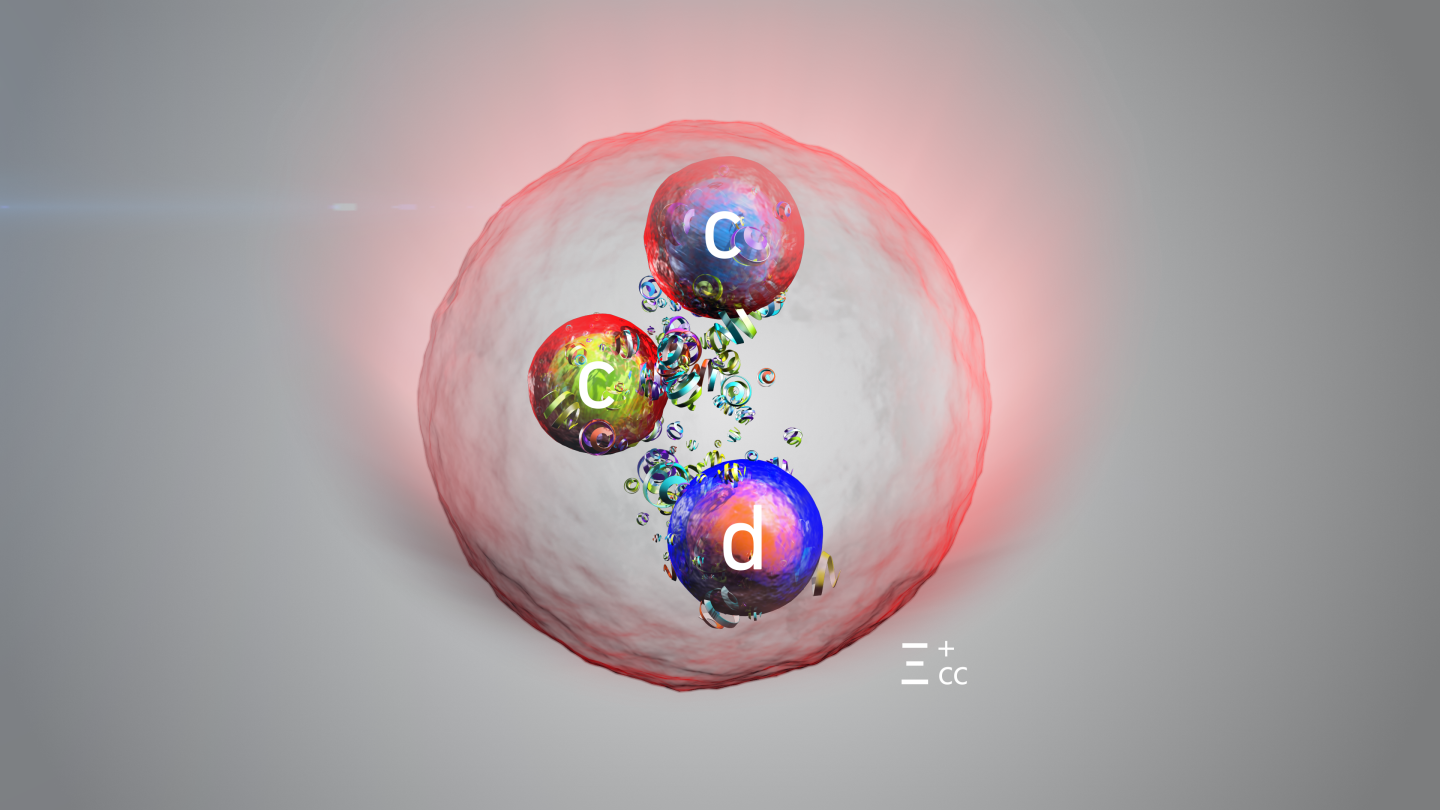
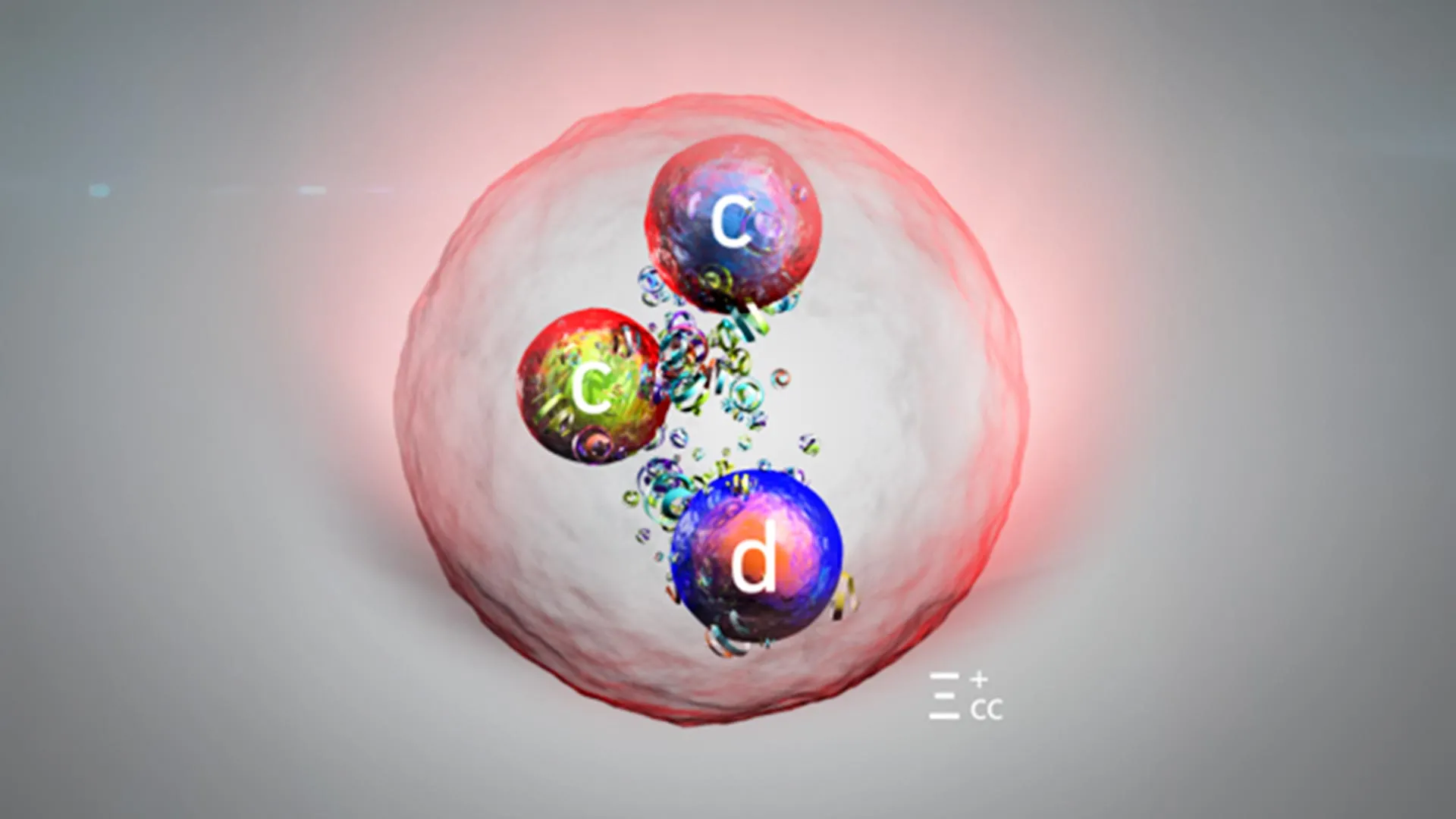
Physicists at the Large Hadron Collider have discovered a new subatomic particle, announcing Monday at the prestigious Rencontres de Moriond conference in La Thuile, Italy, that the LHCb experiment has observed the doubly charmed baryon Xi-cc-plus — a proton-like particle containing two heavy charm quarks and one down quark — with a statistical significance of 7 sigma, far exceeding the 5-sigma threshold conventionally required to claim a discovery in particle physics.
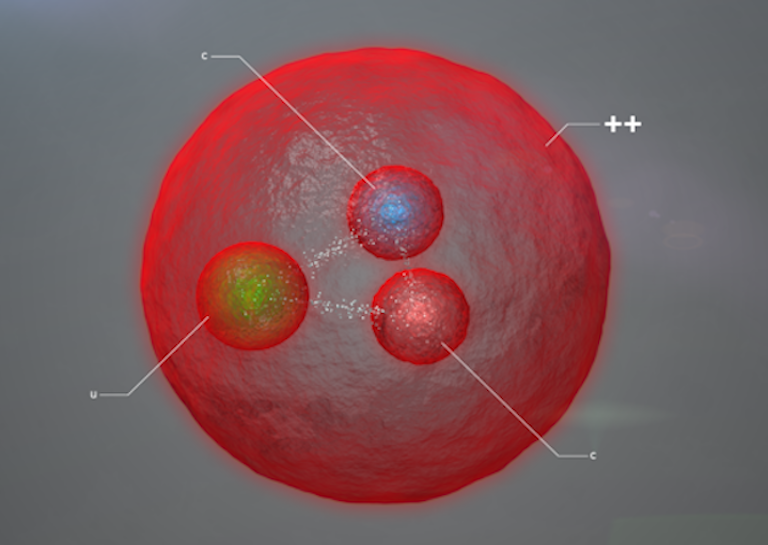
The announcement marks the first new particle identified by the upgraded LHCb detector since its comprehensive overhaul was completed in 2023, and only the second time in the history of particle physics that a baryon carrying two heavy charm quarks has been observed. The previous observation, published in 2017, was of a related particle, Xi-cc-plus-plus, which contains two charm quarks and one up quark rather than a down quark — a substitution that changes the particle's charge from +2 to +1 and dramatically shortens its predicted lifetime.
"This is the first new particle identified after the upgrades to the LHCb detector," said LHCb Spokesperson Vincenzo Vagnoni in a statement released by CERN on Monday. "The result brings the total number of hadrons discovered by LHC experiments to 80."
The Xi-cc-plus is about four times heavier than a proton, with a mass clustering around 3,620 MeV per unit of speed-of-light squared, consistent with theoretical predictions from quantum chromodynamics, the theory of the strong nuclear force. The LHCb team identified a clear peak of approximately 915 signal events in proton-proton collision data collected during LHC Run 3 in 2024, with backgrounds carefully modeled using sideband methods developed during previous LHCb analyses.
Why does this matter beyond the particle physicists celebrating in La Thuile? The discovery provides an exceptionally clean test of QCD, the theory governing how quarks and gluons bind together to form protons, neutrons, and the exotic zoo of composite particles that make up ordinary matter. Most familiar baryons — protons, neutrons, and their cousins — contain only light quarks: up, down, and strange quarks. Doubly charmed baryons, by contrast, have a very different internal structure, with two heavy charm quarks orbiting each other at the particle's core and a much lighter down quark circling the pair. This unusual hierarchy of masses creates a quasi-molecular structure that theorists have long predicted should exist but have had difficulty observing.
The newly discovered particle's lifetime, roughly 50 to 60 femtoseconds according to preliminary measurements, is substantially shorter than the 2017 particle's measured lifetime — consistent with theoretical predictions that swapping an up quark for a down quark reduces the particle's stability through changes in the available decay channels.
The discovery comes at an important moment for the LHCb collaboration, which has used the upgraded detector's higher luminosity and improved tracking to collect data at unprecedented rates since 2023. The experiment was specifically designed to study the physics of heavy quarks — charm, bottom, and beauty quarks — with the long-term goal of understanding why the universe contains more matter than antimatter, one of the deepest unsolved problems in fundamental physics.
Professor Patrick Koppenburg of Nikhef, one of the analysis team leads, told Physics World that the measurement also validates the collaboration's new vertexing and tracking software, which was substantially rewritten for Run 3 operations. "Finding a new particle so cleanly this early in the run is an excellent sign for everything we plan to measure in the next five years," he said.
The result will be submitted to Physical Review Letters for formal peer review in the coming weeks.