Supreme Court Guts Voting Rights Act in 6-3 Louisiana Ruling, Upending Southern House Maps
Justice Samuel Alito's majority opinion strikes down Louisiana's two majority-Black congressional districts. Justice Elena Kagan warns Section 2 has been reduced to 'a dead letter.'
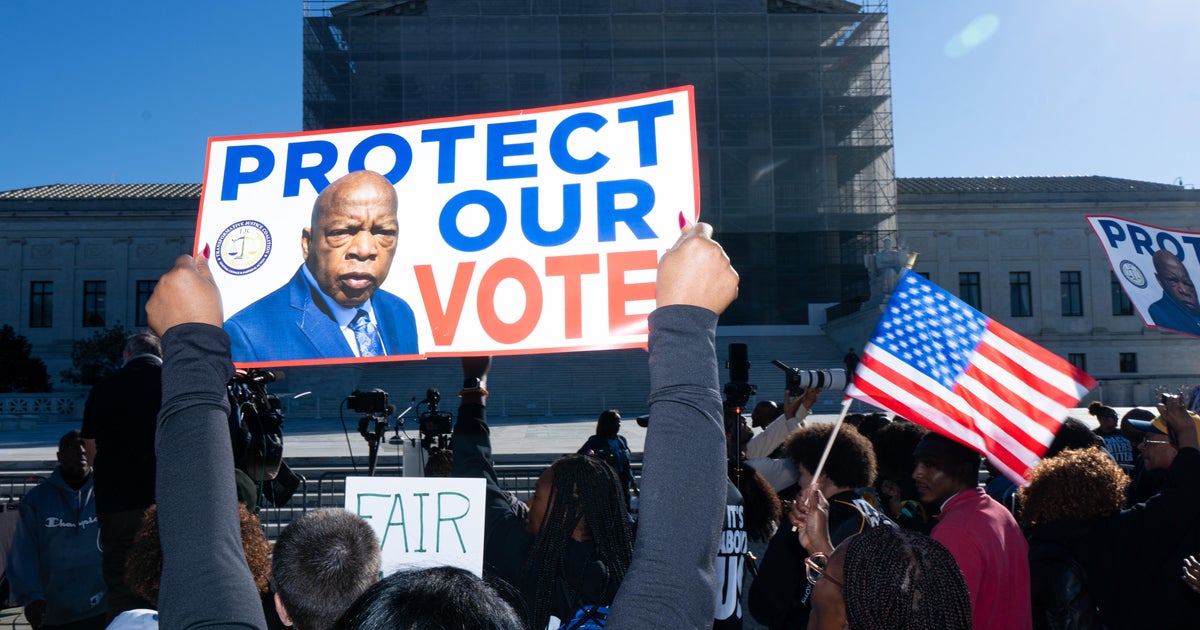
The Supreme Court on Wednesday gutted the central enforcement mechanism of the 1965 Voting Rights Act, ruling 6-3 that Louisiana's congressional map containing two majority-Black districts is an unconstitutional racial gerrymander and that compliance with Section 2 of the landmark civil rights statute can no longer justify the use of race in drawing legislative lines.
Justice Samuel Alito, writing for the conservative majority in Louisiana v. Callais, declared that "Section 2 imposes liability only when evidence supports a strong inference that the State intentionally drew districts to afford minority voters less opportunity because of their race." The opinion overturns decades of precedent under which states had been required, at times under federal court order, to draw additional majority-minority districts where racially polarized voting diluted Black political power. Louisiana had drawn the second Black-majority seat — currently represented by Democratic Rep. Cleo Fields — only after a federal panel found its previous map violated Section 2.
Justice Elena Kagan delivered a blistering dissent joined by Justices Sonia Sotomayor and Ketanji Brown Jackson, accusing the majority of dismantling the heart of the Voting Rights Act under the guise of constitutional principle. "Under the Court's new view of Section 2, a State can, without legal consequence, systematically dilute minority citizens' voting power," Kagan wrote, adding that the ruling "renders Section 2 all but a dead letter" and "eliminates the lion's share" of redistricting claims that had been the law's most effective tool for sixty years.
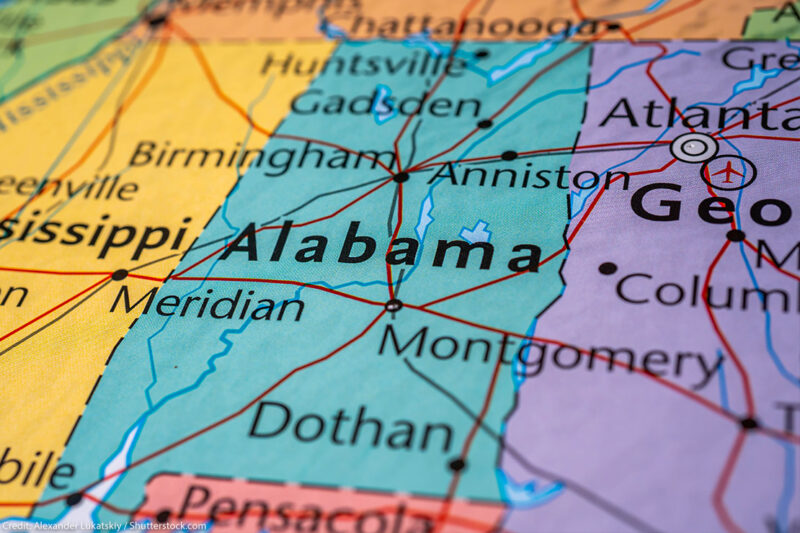
The political consequences are immediate and seismic. Election analysts at the Brennan Center and inside both parties estimate the decision could hand Republicans as many as 19 additional U.S. House seats once Southern legislatures redraw their maps without the Section 2 backstop. Mississippi, Alabama, Georgia, South Carolina, Texas, and Louisiana itself are all expected to revisit their congressional boundaries before the 2026 midterms, in many cases erasing Black-majority districts that have sent Democrats to Washington for a generation. Louisiana's Republican Attorney General Liz Murrill called the ruling "a long-overdue restoration of colorblind law."
Civil rights groups condemned the decision in stark terms. NAACP President Derrick Johnson called it "a green light for the most aggressive racial vote dilution we have seen since the Jim Crow era," while Marc Elias, the lead Democratic election lawyer, said the majority had "effectively repealed the 1965 Voting Rights Act from the bench." Senate Majority Leader Chuck Schumer announced he would convene a vote on a federal voting rights restoration bill before Memorial Day, though the measure stands little chance in a House controlled by Republicans who hailed the ruling.
President Donald Trump praised the decision in a Truth Social post minutes after the opinion landed, writing that "the Supreme Court got it right — race has no place in our maps, and now we will draw them fairly." The Justice Department's civil rights division, which had supported Louisiana's map under the previous administration, was instructed in February to abandon all pending Section 2 enforcement actions. With Wednesday's ruling, those cases are now functionally moribund.
Lower courts must now apply the new standard to a string of pending challenges in Alabama, Florida, Texas, and South Carolina. Several of those maps had been redrawn within the past three years specifically to comply with Section 2 mandates that the Supreme Court has now effectively withdrawn.