Supreme Court Hears Trump Bid to Strip Deportation Protection From 350,000 Haitians and 6,000 Syrians
Justices appeared sharply divided over whether DHS Secretary Kristi Noem complied with the Temporary Protected Status statute. Lower court found Trump revocation was 'partly motivated by racial animus.'
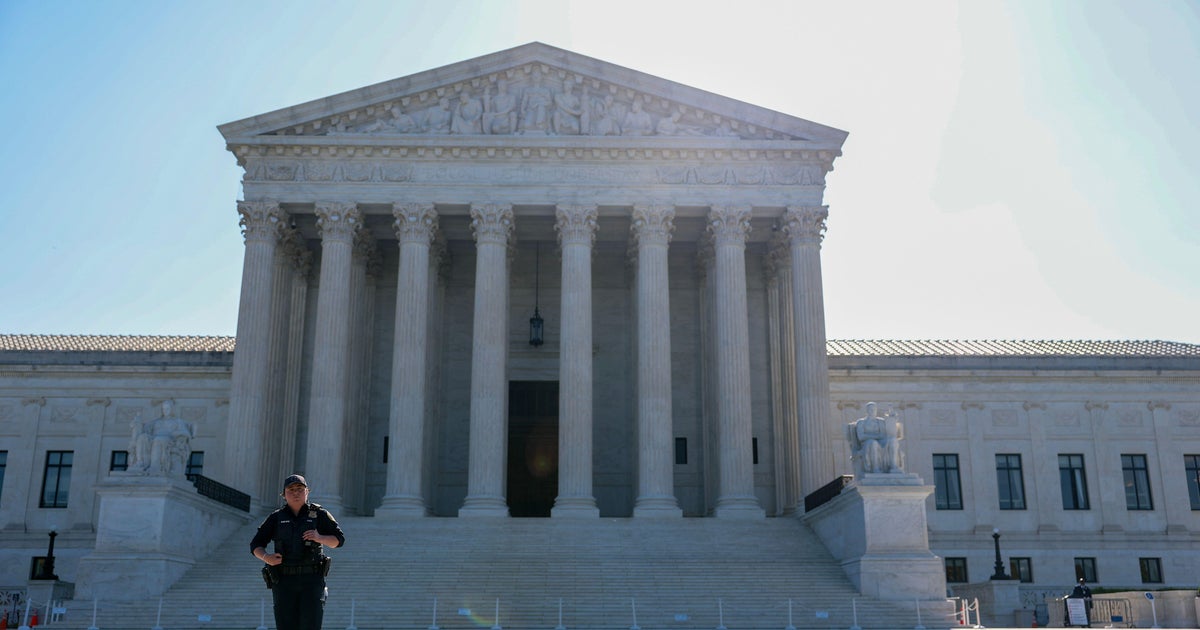
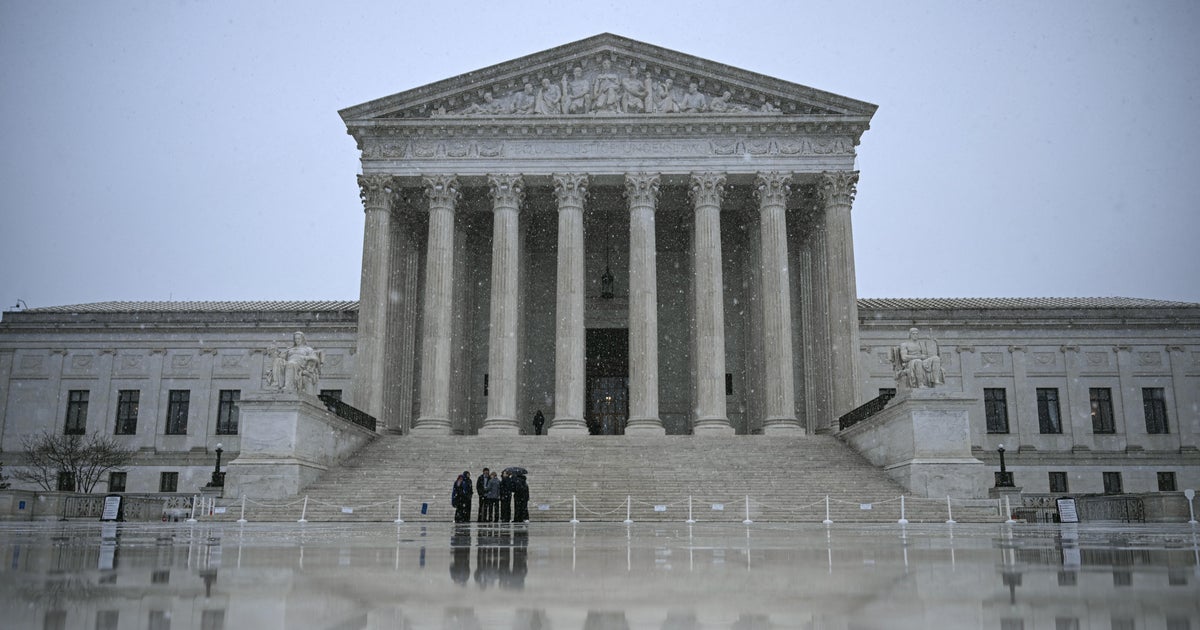
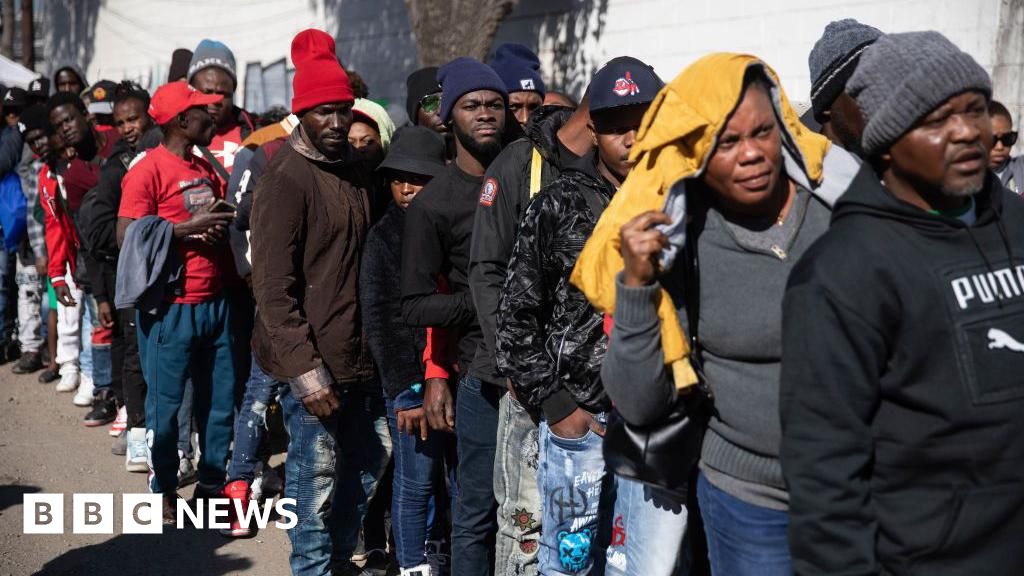
The Supreme Court heard nearly two hours of oral argument Wednesday in a pair of consolidated cases that will determine whether the Trump administration can strip Temporary Protected Status — and the work authorization that comes with it — from roughly 350,000 Haitian nationals and 6,000 Syrian nationals living legally in the United States, some of them for more than two decades.
The cases, Mullin v. Dahlia Doe (Haiti) and Trump v. Miot (Syria), arrived at the high court after the U.S. Court of Appeals for the District of Columbia Circuit upheld a federal district court's preliminary injunction blocking the terminations. They turn on a tightly specific question of administrative law: whether Homeland Security Secretary Kristi Noem complied with the 1990 TPS statute when she announced last year that conditions in both countries had improved enough to permit the safe return of their nationals, despite Level 4 "Do Not Travel" advisories issued by her own State Department warning of kidnapping, terrorism, and civil unrest.
Solicitor General John Sauer, arguing on behalf of the administration, told the court that the statute commits the determination to the secretary's "unreviewable discretion" and that requiring her to consult with the State Department about each TPS designation would "render the executive's foreign policy paralysed by litigation." Several conservative justices appeared receptive. Justice Brett Kavanaugh suggested the State Department travel advisories serve "a fundamentally different purpose" than TPS determinations and may be "of limited evidentiary value." Justice Neil Gorsuch noted that Congress had explicitly given the secretary discretion and said it was "not for us to second-guess that judgment."
But the court's three liberals and, at moments, Chief Justice John Roberts pressed the government hard. "The plaintiffs are not asking the court to second-guess Secretary Noem on policy," Justice Sonia Sotomayor told Sauer. "They are asking whether she followed the procedure Congress set out — and the record shows she did not consult with State on Haiti at all." Justice Ketanji Brown Jackson asked whether the administration's position was that the secretary "could decide tomorrow that everywhere on the planet is safe, and there would be nothing the courts could do." Sauer replied that Congress could of course rewrite the statute.
The Haitian case carries an additional dimension that left several justices visibly uncomfortable. U.S. District Judge Ana Reyes, in granting the injunction, found that the revocation of Haitian TPS was "in part motivated by racial animus," citing Trump administration statements about Haitian immigrants and contemporaneous internal emails — first reported by The New York Times last week — in which senior officials at DHS allegedly discussed how to "frame the country conditions" to support a predetermined conclusion. Justice Amy Coney Barrett, who has two adopted children from Haiti, asked Sauer whether the court was being asked to ignore those findings; Sauer responded that the racial-animus issue was "not before the court at this stage."
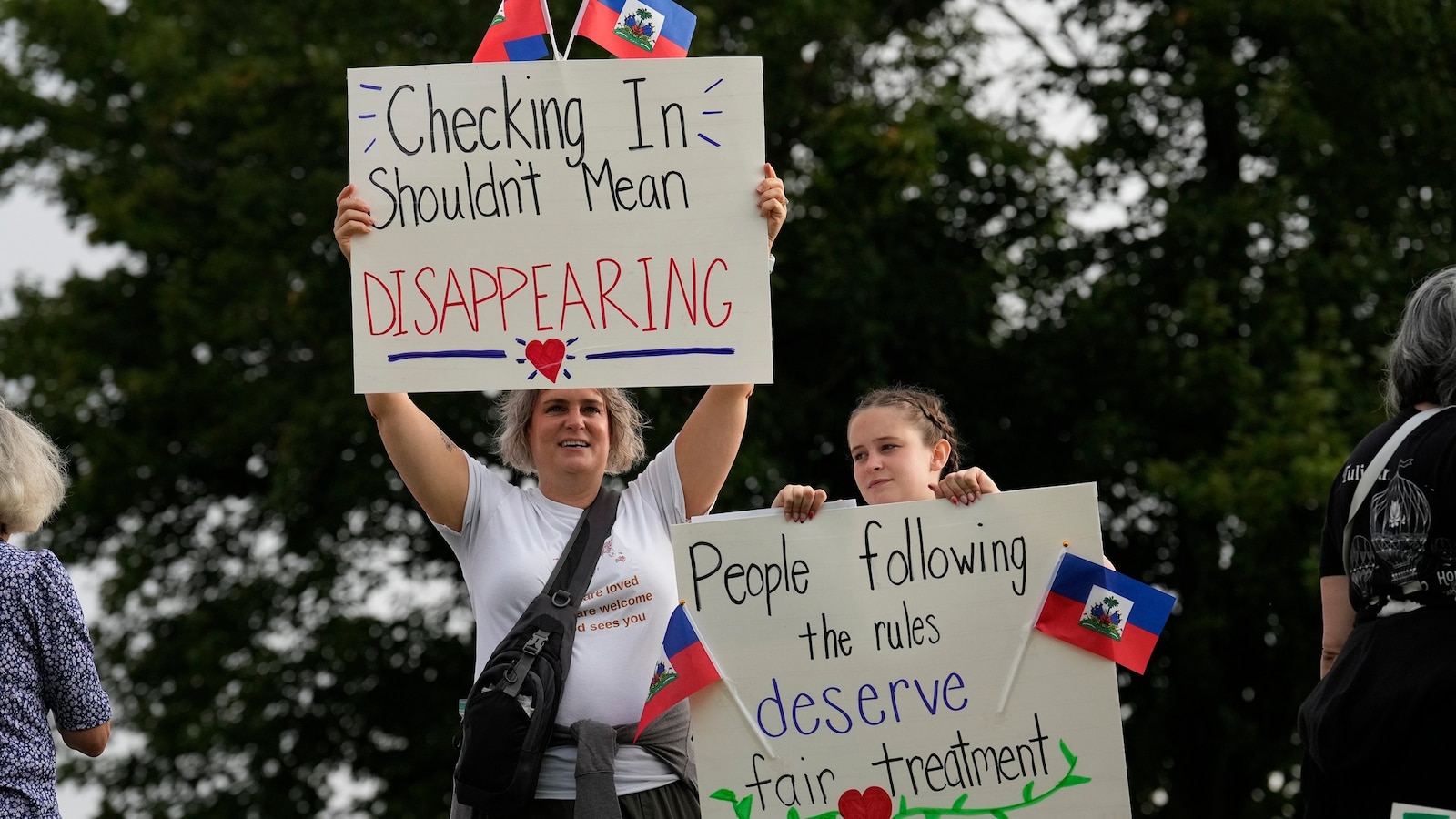
Outside the courthouse, hundreds of TPS holders, advocates, and clergy gathered in a peaceful rally that began before dawn. Marleine Bastien, executive director of the Family Action Network Movement and herself a Haitian-American leader, told reporters that "every person you see here has built a life in America — they are nurses, teachers, members of the National Guard, parents of U.S. citizen children. America is their home." Republican attorneys general from twenty states filed a brief supporting the administration, while a coalition of Democratic attorneys general, the AFL-CIO, and the U.S. Conference of Catholic Bishops sided with the plaintiffs.
A decision is expected by the end of the term in late June. The ruling will affect not only Haitian and Syrian TPS holders but also the broader population of more than 1.3 million people from 17 countries currently shielded from deportation under the program — including large numbers of Venezuelans, Ukrainians, and Sudanese — and could reshape the constitutional architecture of executive discretion in immigration law for a generation.