Physicists Capture First Direct Images of Superconductivity's 'Dancing Pairs,' Rewriting 70-Year-Old Theory
A study in Physical Review Letters shows that paired particles in a near-absolute-zero gas move in coordinated patterns the BCS theory never predicted, opening a path to room-temperature superconductors.

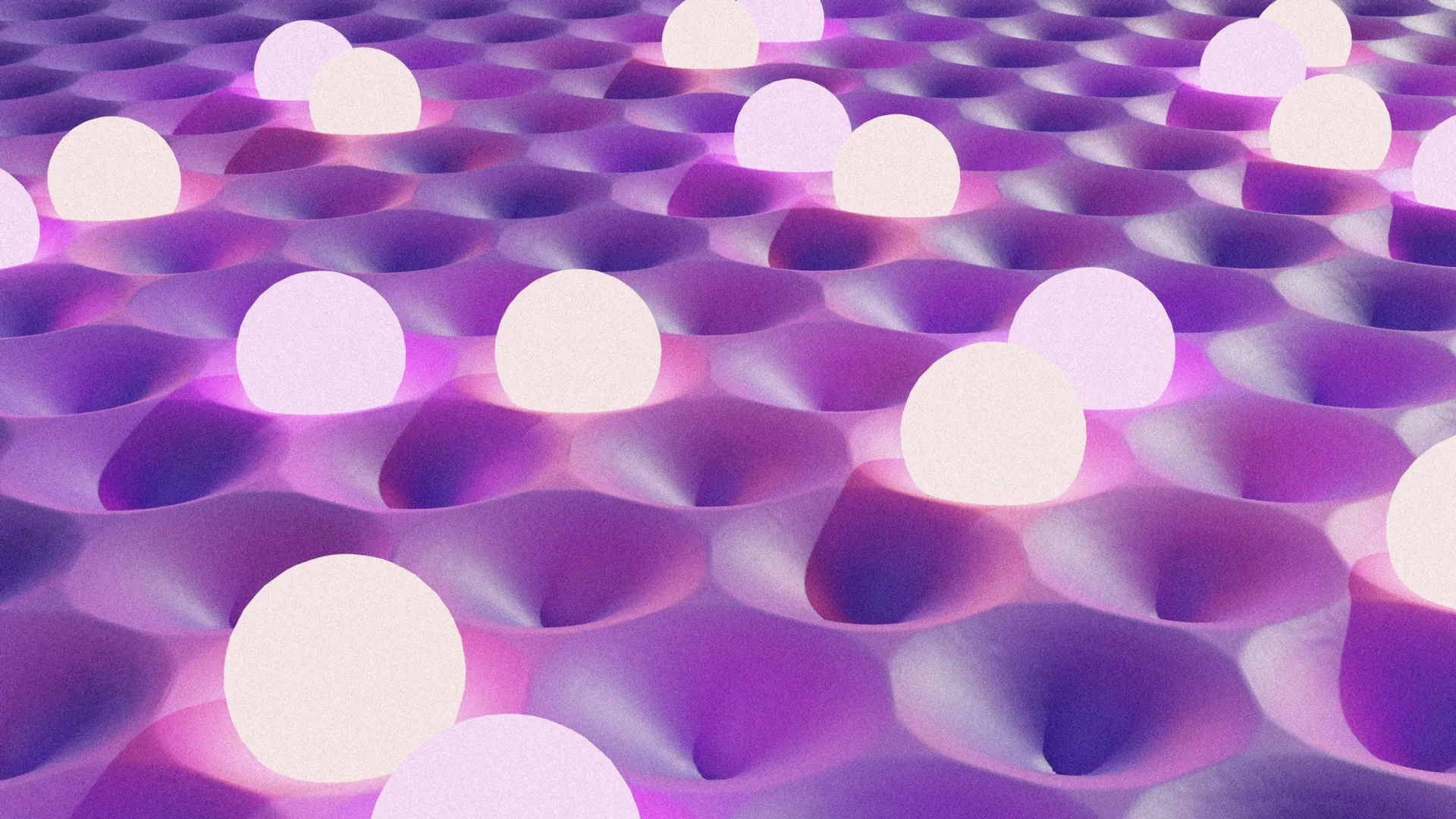
For the first time, physicists have directly imaged the elementary pairs of particles that underlie superconductivity, and what they saw is upending a Nobel Prize-winning theory that has guided condensed-matter physics for seven decades. In experiments published April 15 in Physical Review Letters, an international team led by researchers at the French National Centre for Scientific Research (CNRS) and the Flatiron Institute reported that paired atoms in an ultracold quantum gas do not behave as the textbook 1957 Bardeen-Cooper-Schrieffer (BCS) theory predicts. Instead they move in synchronized, dance-like patterns — each pair's position influenced by its neighbors — a behavior no model of superconductivity had foreseen.
The team built what is effectively a stand-in for a superconductor. They cooled lithium-6 atoms to within billionths of a degree of absolute zero and confined them in a one-dimensional optical lattice, producing a Fermi gas in which the atoms could be tuned to attract one another. In a real superconductor, electrons form so-called Cooper pairs that glide through a metal without resistance; the lithium experiment substitutes neutral atoms for electrons but preserves the underlying physics, allowing the pairing process to be photographed atom by atom using a quantum gas microscope.
"What we see is that the pairs are not behaving like independent objects, which is what BCS theory tells you to expect in this regime," said Tarik Yefsah, the CNRS physicist who led the experimental team, in a statement released by EurekAlert. Shiwei Zhang, the Flatiron Institute theorist who collaborated on the analysis, called the patterns "a hidden choreography that we always assumed was averaged out, but turns out to leave a clear fingerprint when you can resolve individual pairs." The synchronized motion shows up as a measurable correlation between the locations of pairs — the more closely two pairs sit, the more their motions align.
The result challenges, but does not overturn, the BCS framework that won John Bardeen, Leon Cooper, and Robert Schrieffer the 1972 Nobel Prize and that has correctly described conventional superconductors from aluminum to niobium-tin. Where BCS treats Cooper pairs as a uniform sea of independent objects, the new data shows that even in a one-dimensional Fermi gas at strong coupling, pair-pair interactions are large enough to generate emergent collective behavior. The researchers describe the system as occupying a regime between BCS and Bose-Einstein condensation — a so-called crossover regime — where the simplifications of the original theory break down.
The implications stretch beyond the lab. Physicists have spent four decades hunting for materials that superconduct at or near room temperature, a goal whose realization would revolutionize power transmission, medical imaging, and quantum computing by eliminating energy losses in electrical systems. Many of the leading candidate materials — copper-oxide ceramics, hydrogen-rich compounds under pressure, and twisted bilayer graphene — sit firmly in the strongly correlated regime where BCS fails. The CNRS-Flatiron paper offers an experimental window into that regime that previously existed only in computer simulations.
"We don't yet know what room-temperature superconductivity will look like," said Antoine Georges, the Collège de France theorist who reviewed the manuscript for the journal. "But we know it will not look like BCS, and now for the first time we have a direct measurement that tells us how nature departs from the simple picture." Several experimental groups, including teams at MIT, Princeton, and Heidelberg, are already racing to reproduce the synchronized-pair signature in higher dimensions and at different interaction strengths.
The next step, Yefsah said, is to repeat the experiment in a two-dimensional optical lattice, the geometry that most closely resembles the copper-oxide layers in cuprate superconductors. "If the dance survives in 2D, we will have written a new chapter in the theory of superconductivity," he said. "If it changes — that is even more interesting."