Students Build Revolutionary 'Cosmic Radio' to Hunt for Dark Matter Particles
Undergraduate researchers from Hamburg University constructed their own dark matter detector and used it to search for axions, establishing new experimental limits despite working with limited resources.
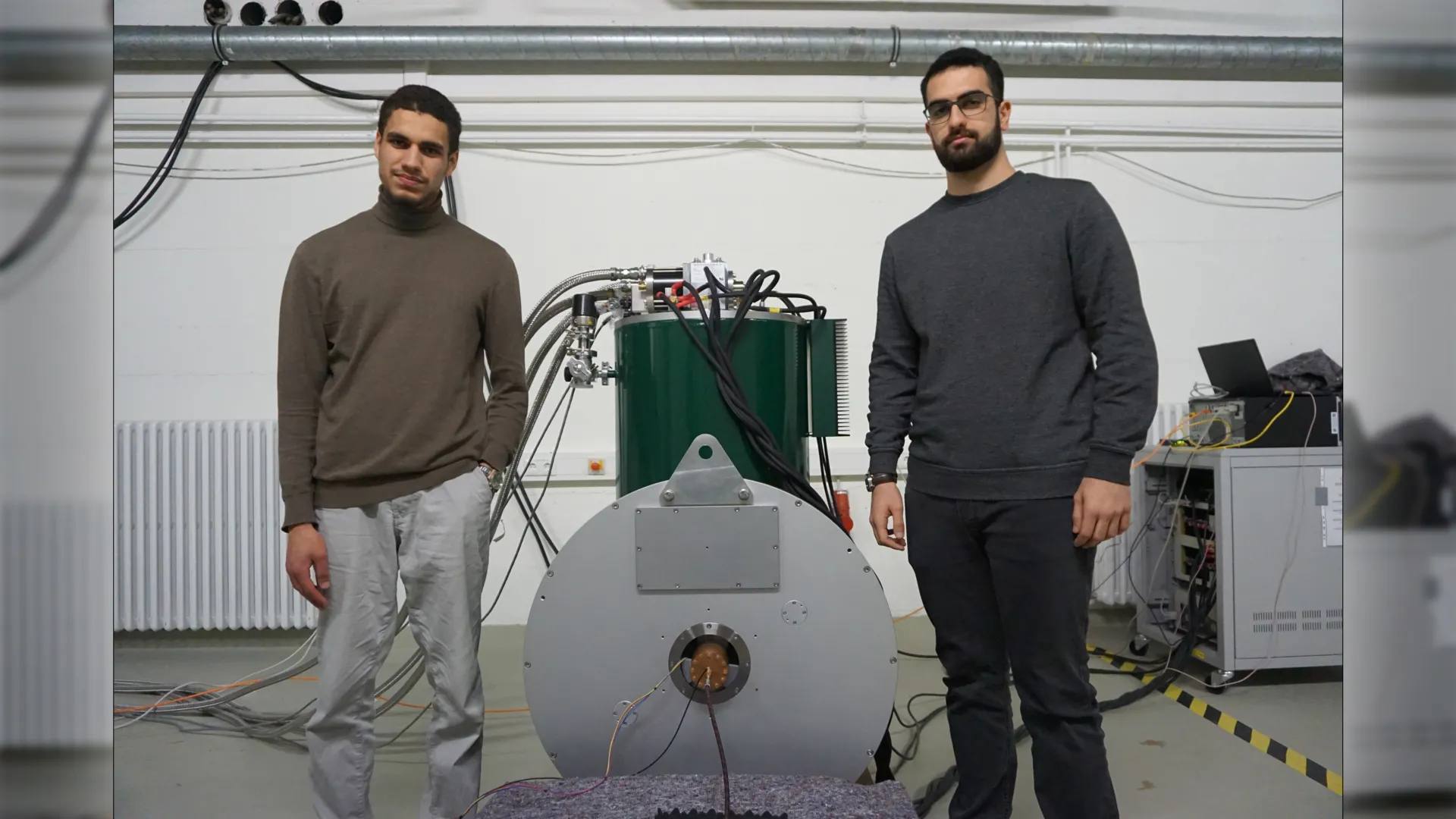
A group of undergraduate students from the University of Hamburg has achieved something remarkable in the world of particle physics by building their own dark matter detector and using it to establish new experimental limits on axion properties. Working with limited resources but considerable creativity, the students designed a stripped-down cavity detector to hunt for axions, hypothetical particles that could make up the mysterious dark matter that comprises roughly 27% of the universe.
The project was funded through a student research grant from the University of Hamburg's Hub for Crossdisciplinary Learning, with additional support from the MADMAX dark matter experiment and the Quantum Universe Cluster of Excellence. According to Nabil Salama, one of the study's authors, the team benefited from being embedded within the research group of the larger MADMAX experiment, which operates on a much more complex scale using similar principles.
The students' detector represents the simplest possible version of a cavity detector for dark matter, built around a resonant cavity made from highly conductive materials along with the necessary electronics, cabling, and measurement tools. As Agit Akgümüs, the study's first author, explained, the benefit of working with dark matter is that it's expected to be present everywhere in the galaxy, meaning experiments can be conducted from any location.
Despite the detector's reduced sensitivity and limited search window compared to larger experiments, the team successfully collected new scientific data and established experimental limits on axion properties that had not been probed before. The work demonstrates that meaningful contributions to fundamental physics research can come from smaller, more accessible experiments when approached with creativity and institutional support.
The results, published in the Journal of Cosmology and Astroparticle Physics, highlight how student-led research projects can advance our understanding of the universe's most fundamental mysteries. The success of this compact approach could inspire similar efforts at other institutions and demonstrate that cutting-edge physics research doesn't always require massive international collaborations or enormous budgets to make meaningful contributions to science.