UC Riverside Study: Decaying Dark Matter Could Have Seeded the Universe's First Supermassive Black Holes
Modeling shows axion-like particles in a narrow mass window can trigger direct collapse of gas clouds into billion-solar-mass black holes — the kind James Webb keeps finding too early in cosmic history.
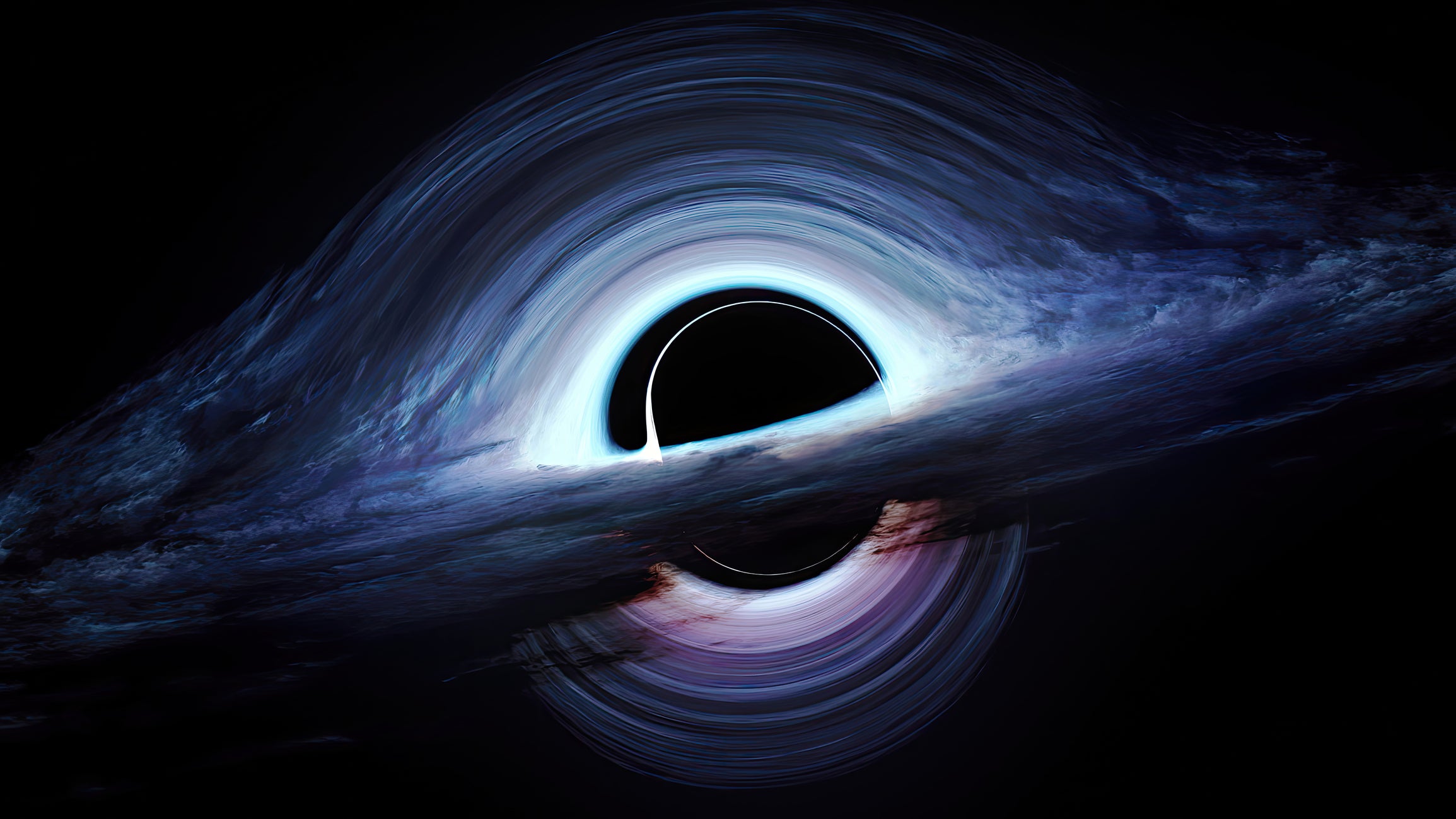
A new theoretical study from the University of California, Riverside proposes that decaying dark matter — specifically axion-like particles in a narrow mass window — could be the missing ingredient that explains how the universe assembled supermassive black holes weighing as much as a billion suns within just a few hundred million years of the Big Bang. The work, led by UCR graduate student Yash Aggarwal and published April 15 in the Journal of Cosmology and Astroparticle Physics, offers a quantitative answer to one of the most persistent puzzles in modern astronomy.
For more than a decade, telescopes have been finding gargantuan black holes in galaxies whose light reaches Earth from less than a billion years after cosmic dawn — a period far too brief, according to standard accretion models, for stellar-mass black holes to have grown to such enormous sizes through normal feeding. NASA's James Webb Space Telescope has sharpened the puzzle by detecting black holes in galaxies as early as 350 million years after the Big Bang, several with masses already exceeding 100 million suns. Conventional theory predicts black holes that early should weigh thousands, not hundreds of millions, of solar masses.
Aggarwal and his collaborators at Sam Houston State University and the University of Oklahoma propose that decaying axions in the mass range of 24 to 27 electronvolts release just enough energy into the primordial gas to suppress molecular hydrogen formation while leaving atomic hydrogen cooling intact. That delicate balance is decisive: when molecular hydrogen forms efficiently, gas clouds fragment into many small clumps that collapse into ordinary stars. When it is suppressed but atomic cooling continues, vast clouds collapse monolithically into a single object that bypasses the stellar stage entirely and forms a so-called direct-collapse black hole with a starting mass of 100,000 solar masses or more.
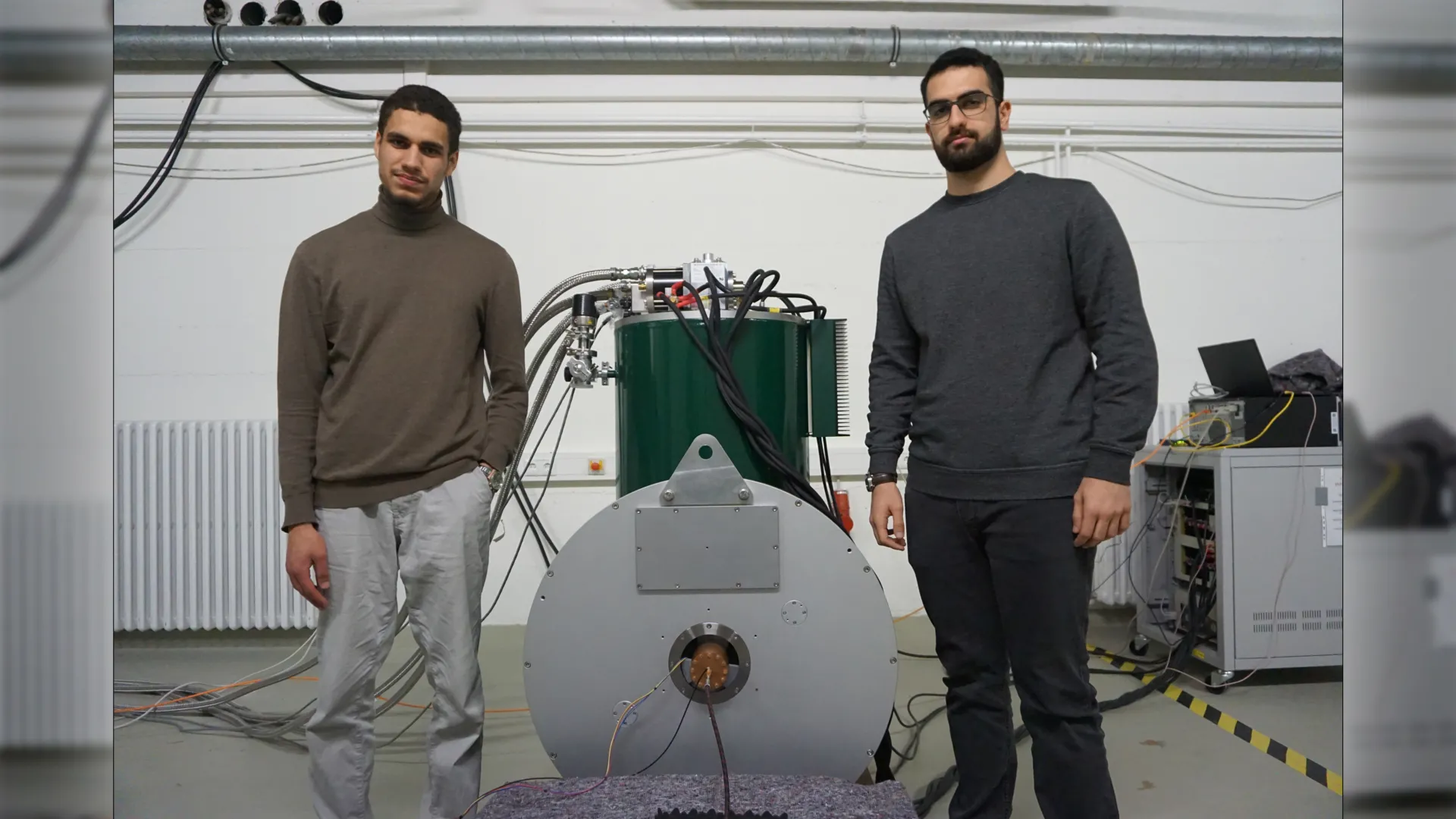
"The seed mass is everything," Aggarwal said in a UCR statement. "If you start with a hundred-thousand-solar-mass seed instead of a hundred-solar-mass stellar remnant, you only need to grow by a factor of ten thousand to reach a billion suns. That you can do in a few hundred million years even with normal Eddington-limited accretion." His advisor, UCR theoretical physicist Hai-Bo Yu, noted that the proposal is testable: the axion mass range it identifies overlaps with parameter space being probed by the ADMX experiment at the University of Washington and by the new MADMAX detector under construction at DESY in Germany.
The paper sits at the intersection of two of the hottest areas in modern physics. Yu's group has spent years developing models of self-interacting dark matter that depart from the standard cold-dark-matter paradigm, and their work is increasingly being deployed to explain anomalies that cold dark matter struggles with — gravitational lensing distortions, ultra-faint dwarf galaxy populations, and now early black-hole growth. The 2026 Breakthrough Prize in Fundamental Physics, awarded to the Muon g-2 collaboration, has helped revive popular interest in axions as a candidate beyond-the-Standard-Model particle.
External researchers responded with cautious enthusiasm. Avi Loeb, the Harvard astrophysicist who first proposed the direct-collapse mechanism in the early 2000s, told Space.com that the UCR paper "puts numbers on something we have long suspected — that you cannot get the early Webb black holes without help from new physics, and decaying dark matter is exactly the kind of help that could fit." Priyamvada Natarajan, the Yale theorist who built the canonical models of black-hole seeding, said the proposal is "the cleanest cross-disciplinary fit between particle physics and high-redshift astronomy I have seen this year."
The next test will come from data, not theory. Webb is expected to release its third large-area survey of the cosmic dawn epoch in late 2026, and the European Extremely Large Telescope, scheduled to see first light next year, should be able to weigh black holes at redshifts higher than any current instrument can reach. If the early universe is even more crowded with billion-solar-mass black holes than current data suggest, Aggarwal said, "the case for new physics in the dark sector becomes very hard to ignore."