
Physics
World's Most Sensitive Lab Search for Axions Finds Nothing and Narrows the Hunt
Germany's ALPS II experiment shot a laser through a wall of magnets to look for the hypothetical particle, and its first results set robust new limits.
Topic
81 stories from Planck Standard. Latest: November 12, 2026.
Germany's ALPS II experiment shot a laser through a wall of magnets to look for the hypothetical particle, and its first results set robust new limits.
University of Ottawa researchers tested a 'tired light' model with changing physical constants against galaxy rotation, cosmic expansion and early-element formation.

A 30-micrometer magnet floating in a superconducting trap reached 138 million revolutions per minute and set preliminary limits on axion-like dark matter.

A Physical Review Letters analysis finds black holes of at least 100 billion solar masses would leave patterns in the cosmic microwave background that astronomers do not see.

JWST images of a galaxy 6.5 billion light-years away more than double the previous count of 44 individual stars brightened by gravitational lensing.

The isolated cloud J1351+0039 holds about 130 million suns of mass and shows no stars in deep optical images.

The 7-billion-light-year-away collision is so massive for its age that some astronomers call it a challenge to the standard cosmological model. A new study finds dark matter that can be excited in collisions fits best, with a caveat.

A neural network sifted a 5.6-trillion-pixel sky survey, and spectroscopy on the Very Large Telescope confirmed 70 of 76 candidates as true cosmic magnifying glasses.
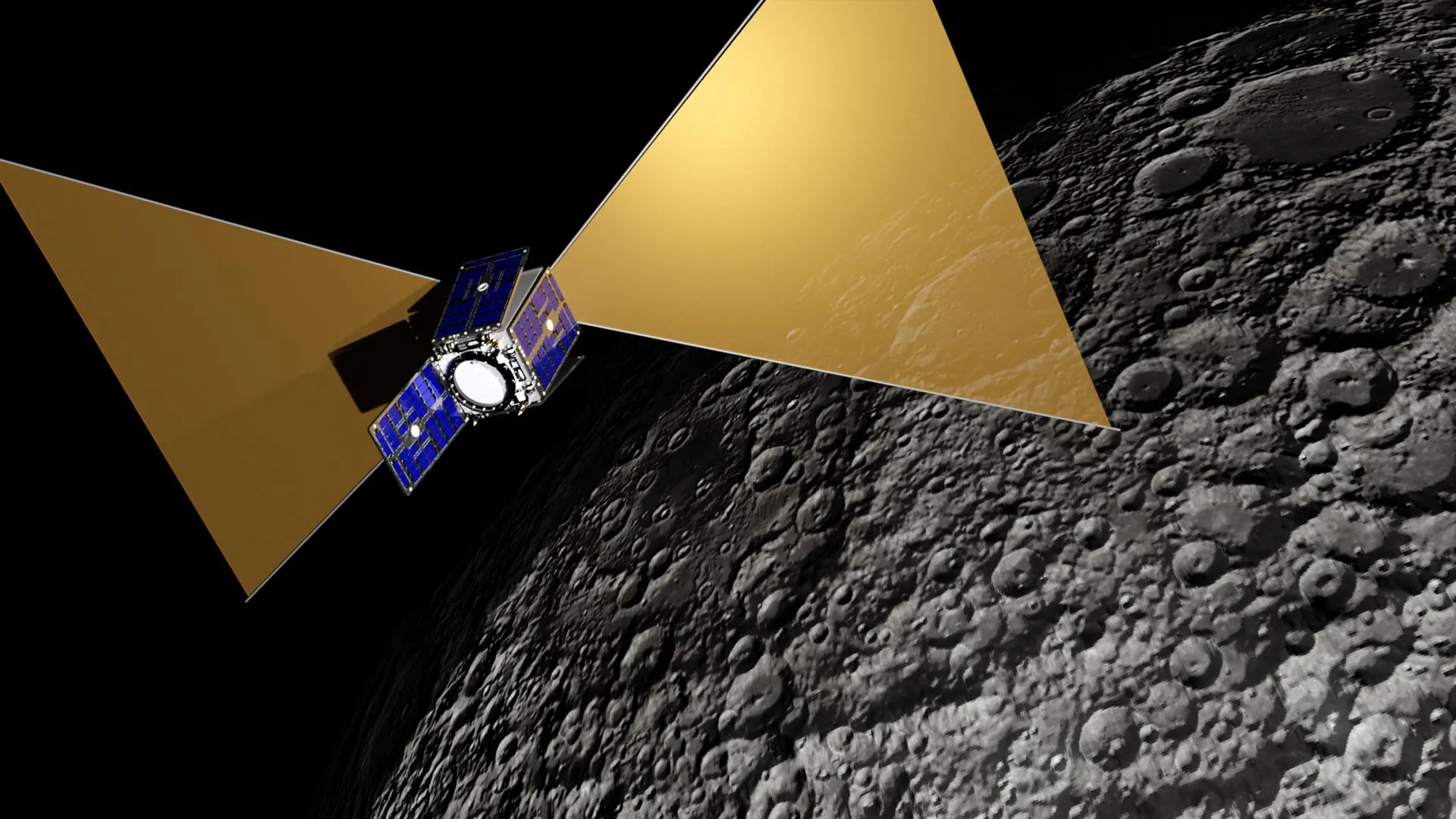
Cambridge-led researchers plan a lunar orbiter to catch a faint hydrogen radio signal from before the first stars, a window Earth's radio noise blocks.

The DarkSide-50 detector under Italy's Gran Sasso mountain found no ultraheavy composite dark matter, but ruled out a wide range of its possible properties.

Galaxies whose brightness differs 400,000-fold share nearly the same central dark matter surface density. A Sejong University physicist derived 170 solar masses per square parsec from gravity alone, inside the observed range.

If dark matter is made of ultralight particles that ripple like waves, those ripples should shift the multiple images of a distant quasar. The simulations matched a real lensed quasar better than standard models.

Stefano Profumo applied the Barbieri-Giudice fine-tuning measure, which asks how wildly a model's prediction swings when you nudge one input, to WIMPs, Higgs-portal particles and several ways the early universe could have made black holes. 'The tuning lives in the specific model, not in the kind of dark matter you started with.'

The INAF-led VST survey reached depths the Rubin Observatory won't hit for years. The satellites around NGC 5084 appear to line up in a plane, the same puzzling arrangement seen around the Milky Way.

Titanium diselenide, strontium ruthenate and hole-doped diamond host low-energy electron waves called plasmons that amplify the faint kick a light dark matter particle would deliver, physicists report in Physical Review Letters. All three can be made today.

Ultra-deep imaging of Cloud-9 with the Gran Telescopio Canarias reached 31.4 magnitudes per square arcsecond and caps any stellar mass at 16,000 suns, against a million suns' worth of hydrogen.

The levitated sensor can register a nudge one-hundredth the width of an atom. Over a month of quiet nights it saw nothing — and that silence rules out a swath of ultraheavy dark matter nine orders of magnitude wide.

Each holds about three million suns' worth of hydrogen inside a halo weighing 3.7 billion solar masses. If the interpretation holds, they are dark matter halos that never lit up.

Hawking radiation should evaporate anything that small in an instant. Three physicists calculated the point where dark matter falling in outruns the radiation leaking out.

The Nancy Grace Roman Space Telescope lifted off on a Falcon Heavy at 7:26 a.m. on August 30. Its 300-megapixel infrared camera surveys the sky about 1,000 times faster than Hubble.

XENONnT pushed the direct detection threshold for neutrinos lower than anyone has managed before. The signal comes from the proton-proton fusion that powers the Sun.

LUX-ZEPLIN found a single high-energy interaction sitting exactly where dark matter should appear and where almost no background should. At 2.6 sigma, it is nowhere close to a discovery.

SuperCDMS SNOLAB has begun taking its first science data. Its shielding includes lead salvaged from ancient ballast on the floor of the Mediterranean.
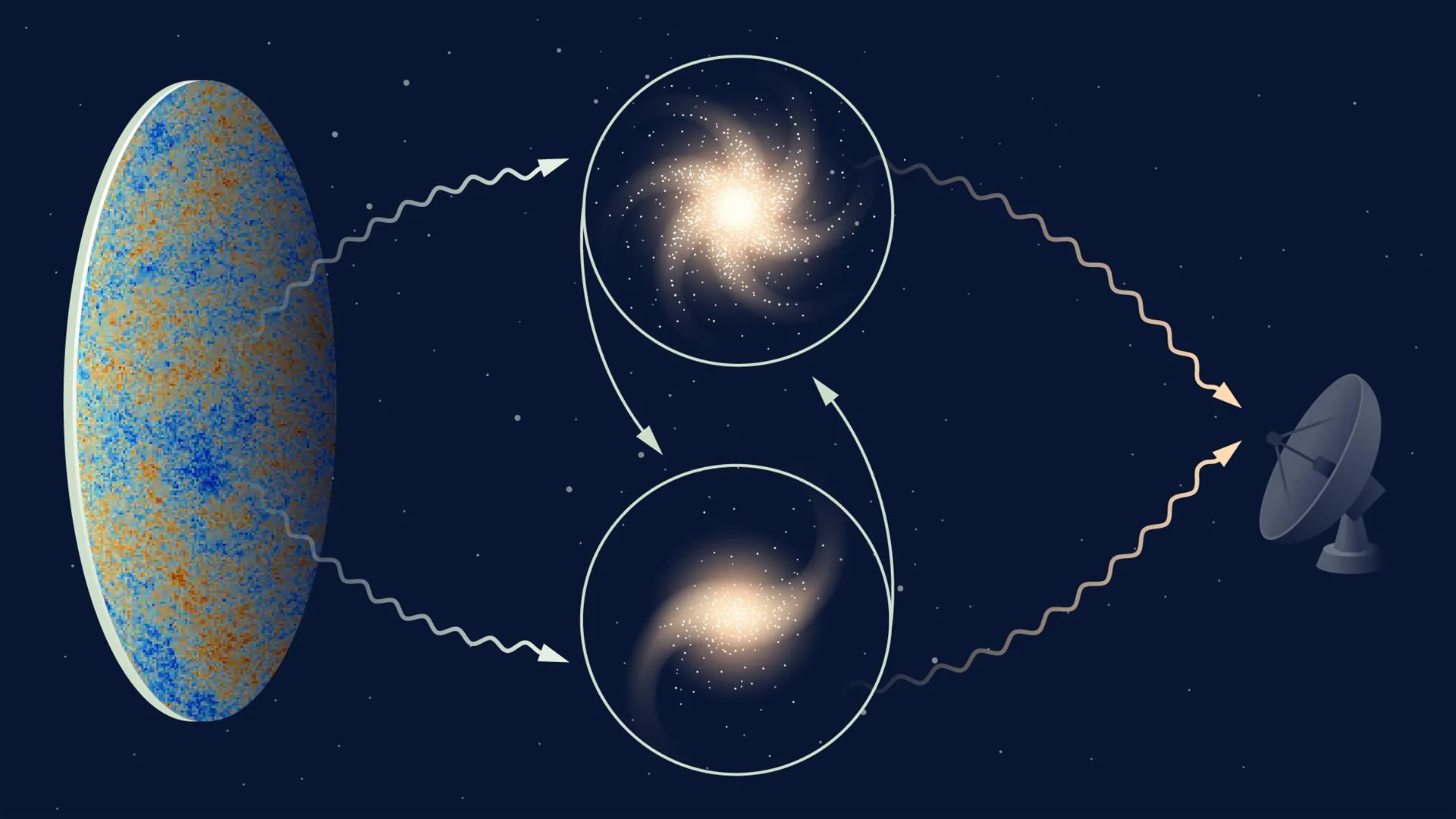
Penn researchers used the Atacama Cosmology Telescope to watch galaxy clusters pull on each other at the largest scale ever measured — and squeezed the room left for modified-gravity alternatives to dark matter.

A University of Washington team found that a galaxy's own lumpy disk can carve the same gaps and kinks astronomers have been reading as fingerprints of dark matter.

Nobody has ever detected a graviton. An NYU physicist found a way to hunt for them anyway — by treating million-light-year filaments of cosmic magnetic field as a detector.

XENONnT found nothing — and that nothing is the tightest limit yet on axion-like particles and dark photons. It is the first detector to reach the boundary where the sun's own neutrinos start masquerading as a signal.

A Japanese team used the cavity between Earth's surface and its ionosphere as a natural resonator, then searched a decade of magnetic-field recordings from a Scottish observatory for the signature of axions.
A new analysis finds that if dark matter particles attract each other through a hidden force, they clump more efficiently but also get lighter as the universe expands — and the net effect slows the growth of cosmic structure rather than speeding it up.

A model proposing that dark matter is made of at least two kinds of particles — a heavier one that sinks toward galactic centers and a lighter one that drifts outward — could resolve puzzles that have frustrated cosmologists for years.
An Imperial College team paired two clouds of ultracold strontium atoms under a single laser, letting them subtract the vibrations that have long blinded such instruments to faint cosmic signals.
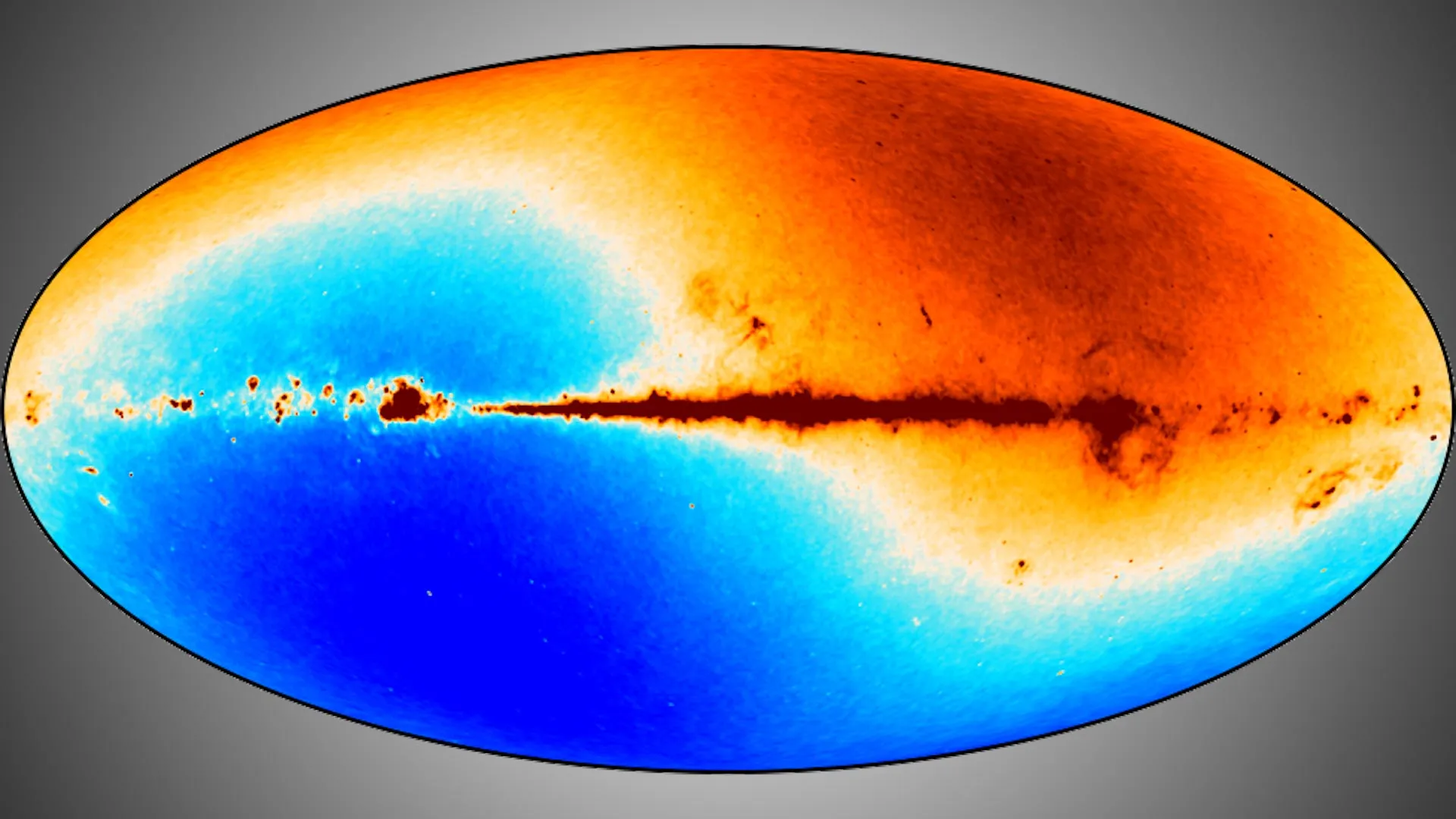
Data from the DESI survey point to a lopsided cosmos, with galaxy patterns stretching across billions of light-years that clash with a bedrock assumption behind modern cosmology.

So dim it nearly escaped detection, the newly confirmed dwarf galaxy And 35 is about 12.5 billion years old and offers a rare window into the universe's first generations of stars — and the nature of dark matter.
Physicists say a collision between two objects lighter than the Sun, detected last November, could point to black holes born in the first instant after the Big Bang — and to the identity of dark matter.
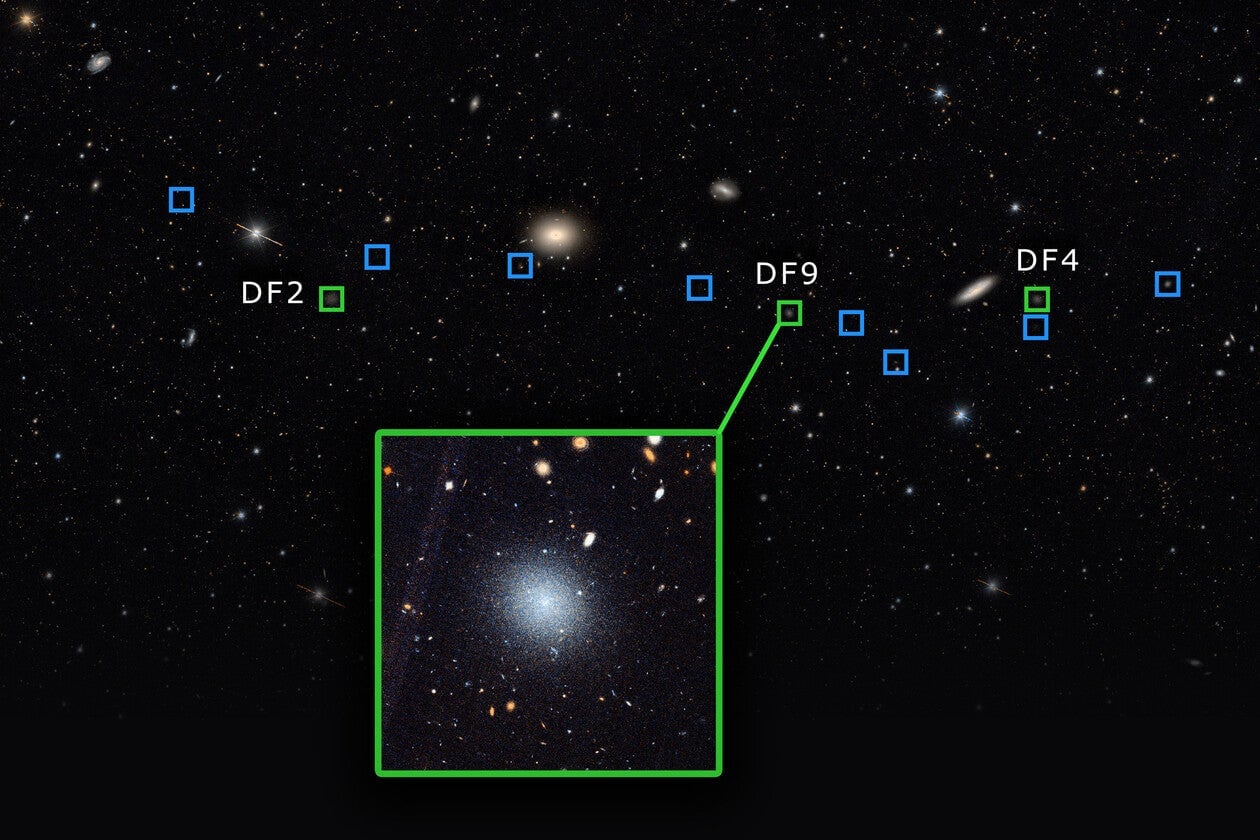
The faint galaxy DF9 joins two earlier oddballs in a straight line of objects that appear to lack the invisible mass thought to bind galaxies together — hinting at a violent birth.

A proposed semiconductor detector would convert theoretical dark-matter particles into light and tune itself simply by changing a magnetic field, potentially opening mass ranges that have long eluded searches.
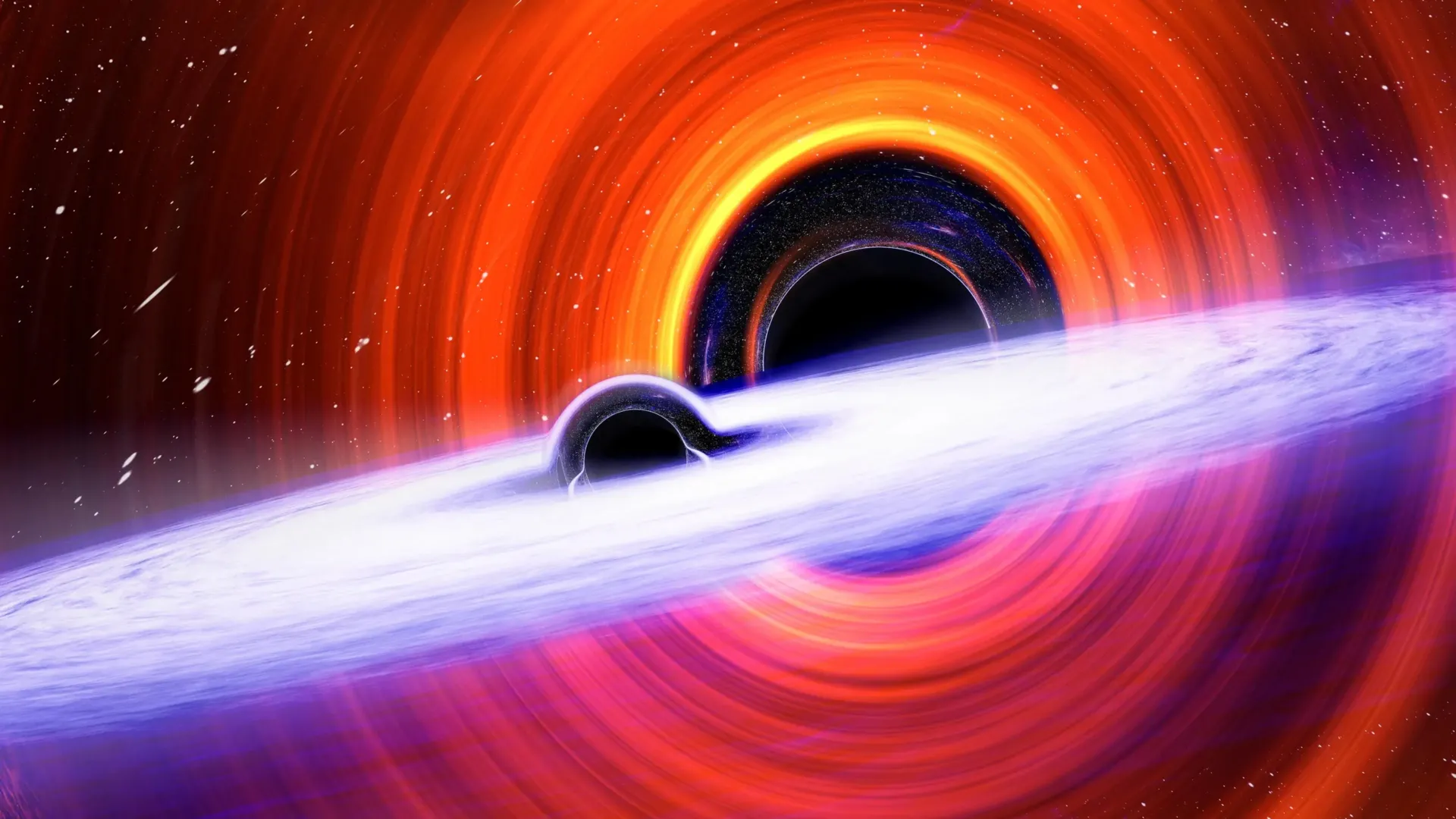
A gravitational wave from an impossibly light object has scientists asking whether primordial black holes could explain dark matter.

Transfer learning slashes the cost of cosmological simulations, yet a Princeton team warns the same shortcut can trick AI into missing real discoveries.
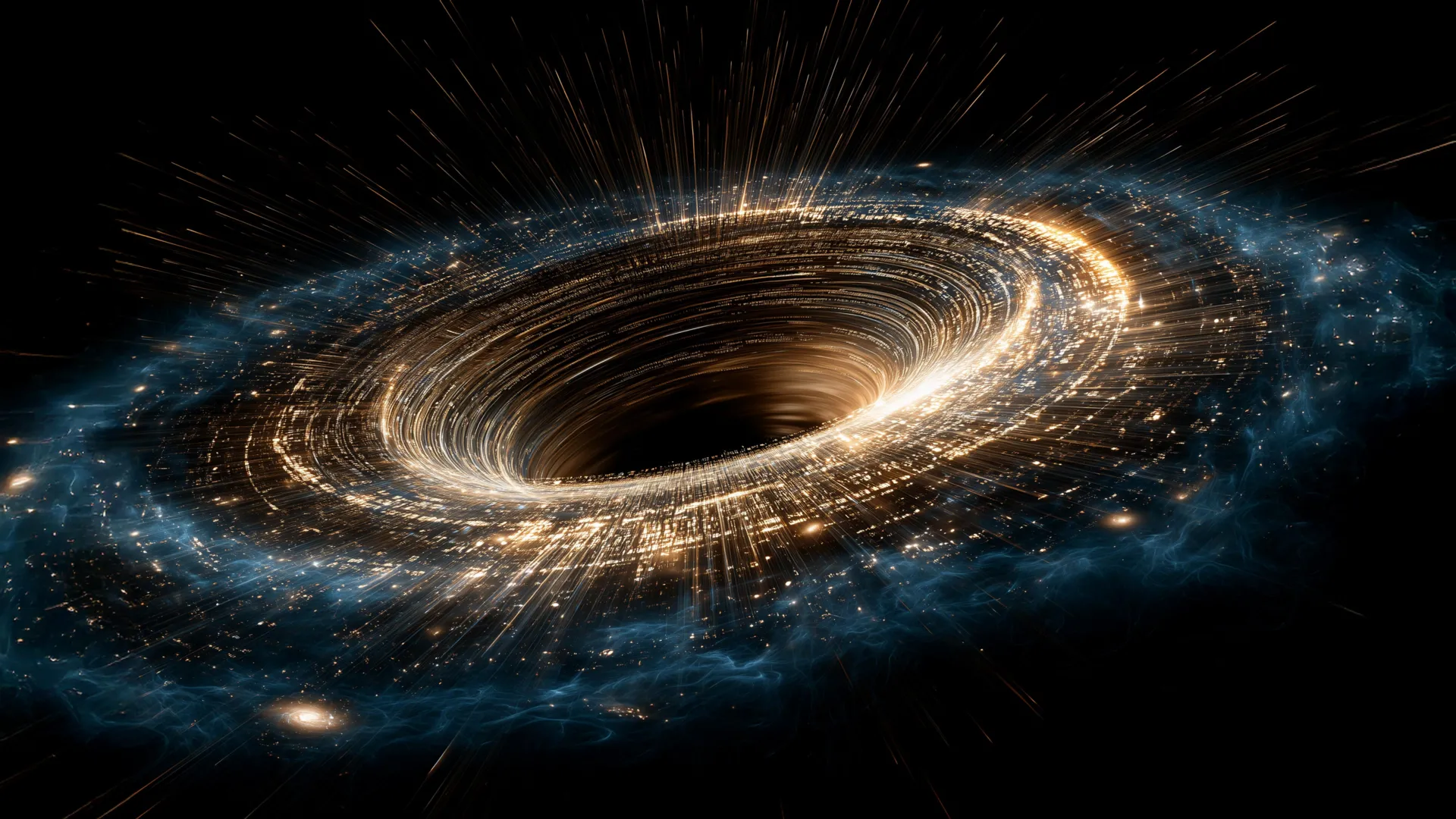
A Leiden University team's 'Quantum Memory Matrix' theory suggests spacetime stores an imprint of every interaction, a single framework its authors say could also resolve the black-hole information paradox.

A superconducting calorimeter at Aalto University detected just 0.83 zeptojoules — a sensitivity that could sharpen quantum computers and even help hunt for dark matter.

Using its largest survey to date, the James Webb Space Telescope traced the vast network of filaments and voids connecting more than 164,000 galaxies back to when the universe was just a billion years old.

A superconducting detector built at Aalto University registered just 0.83 zeptojoules — about the work needed to lift a single red blood cell one nanometer — a milestone for quantum computing and the hunt for dark matter.

A Chinese team reported in Nature the first direct observation of a 1939 prediction: an electron flung from a recoiling atom, a trick that could finally reveal lightweight dark matter.
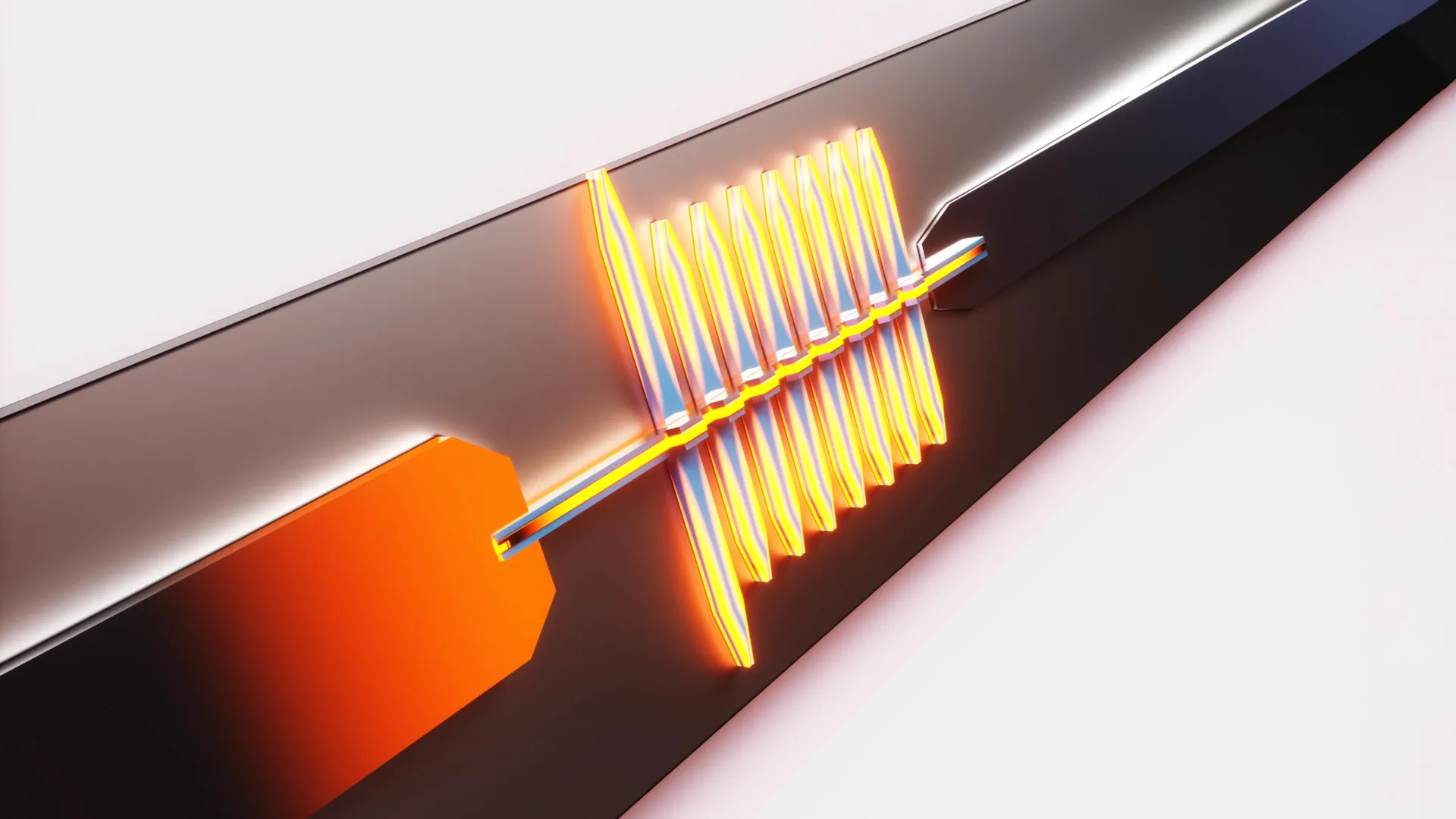
Finnish researchers achieve breakthrough precision that could improve quantum computers and enable detection of elusive dark matter particles from space.
Finnish researchers achieve breakthrough detection of energy below one zeptojoule, opening new possibilities for quantum computing and astrophysics research.
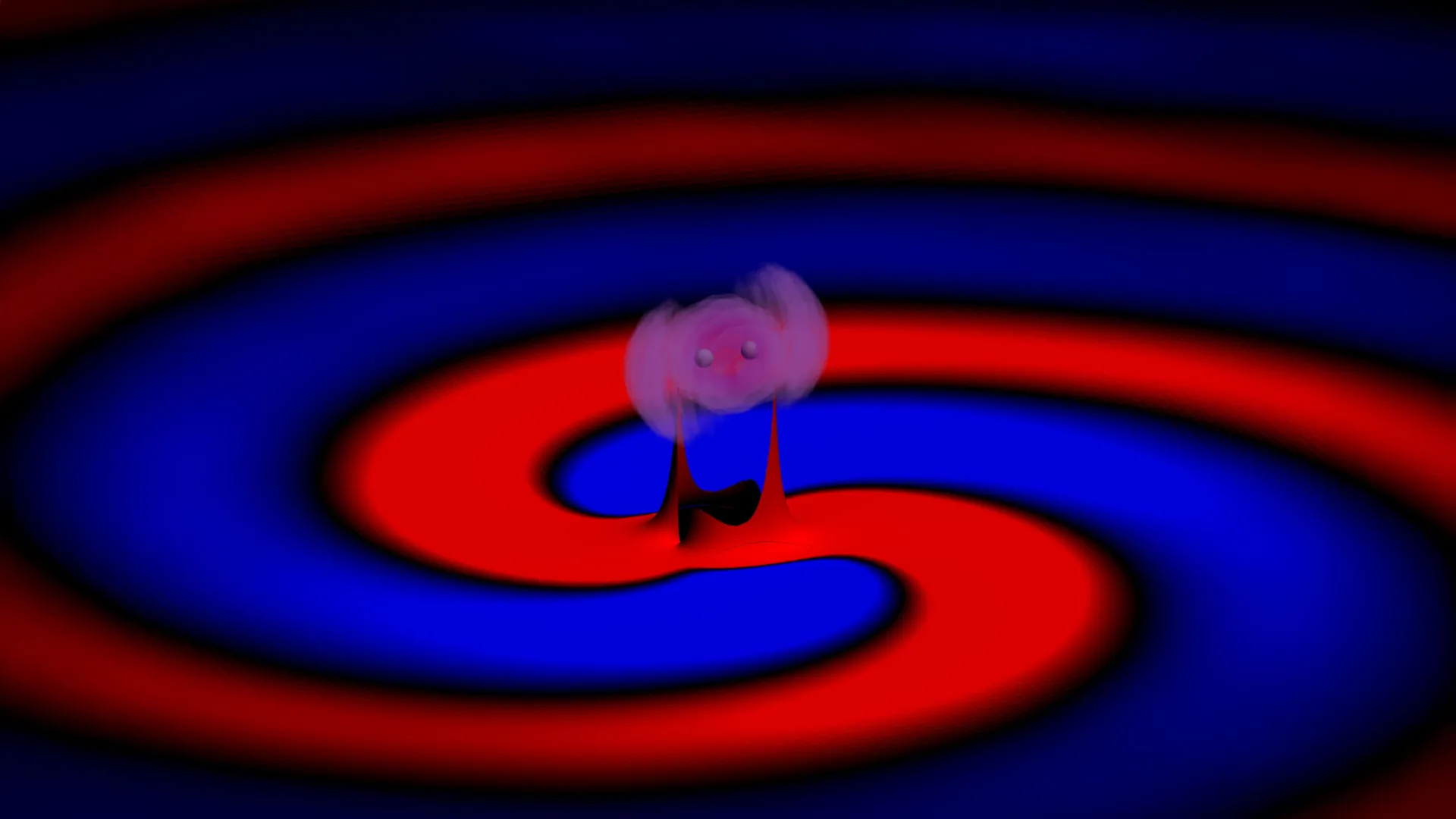
MIT physicists develop new method to detect dark matter interactions hidden within cosmic collisions, with one LIGO signal showing potential evidence.
MIT physicists have developed a new method to search for dark matter signatures in ripples from merging black holes, with one LIGO signal showing promising results.
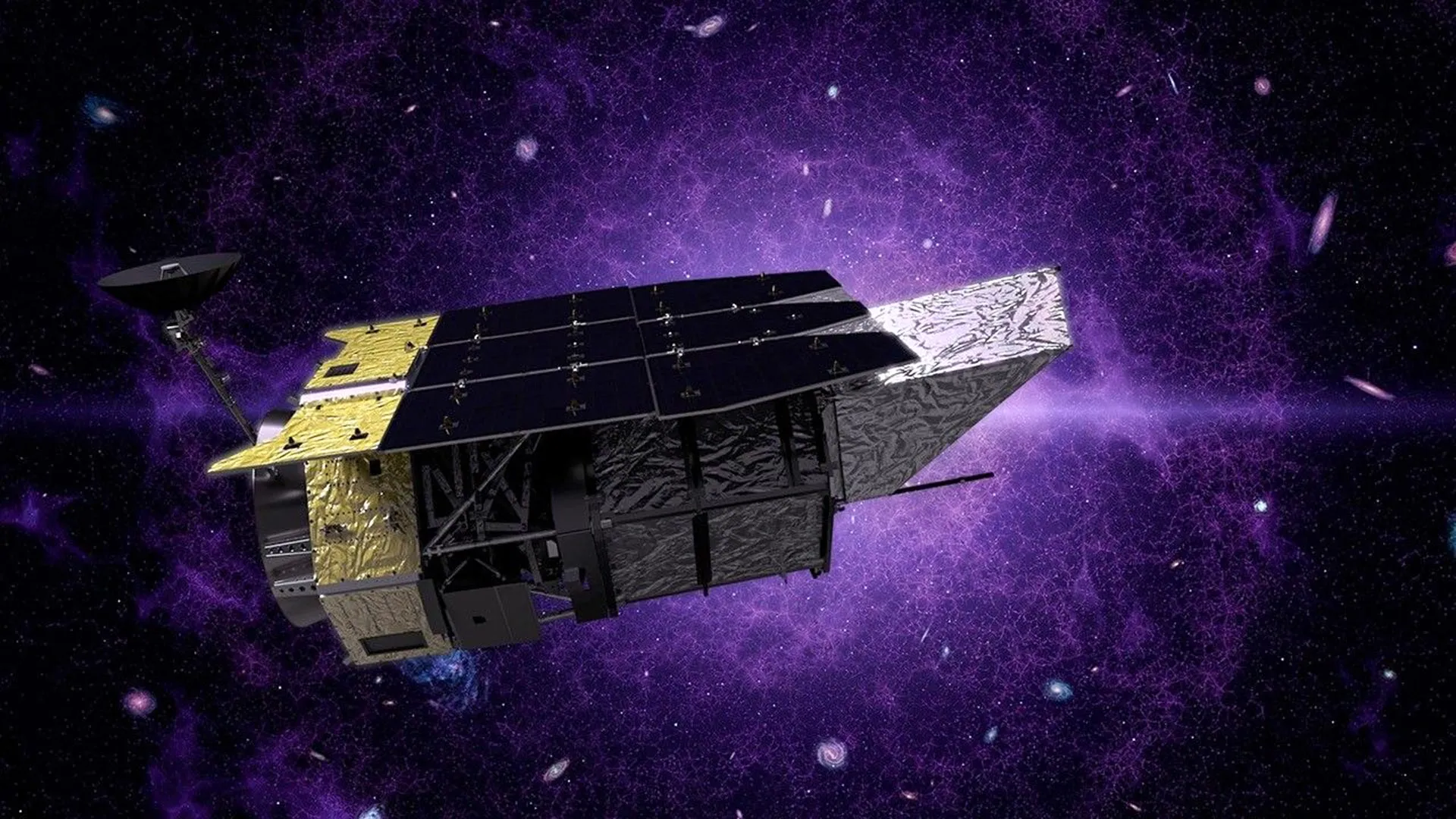
Accelerated timeline brings infrared observatory ahead of original May 2027 deadline to explore dark energy, dark matter, and exoplanets.
MIT physicists detect potential dark matter signature in LIGO data, offering new way to study the universe's most mysterious substance.
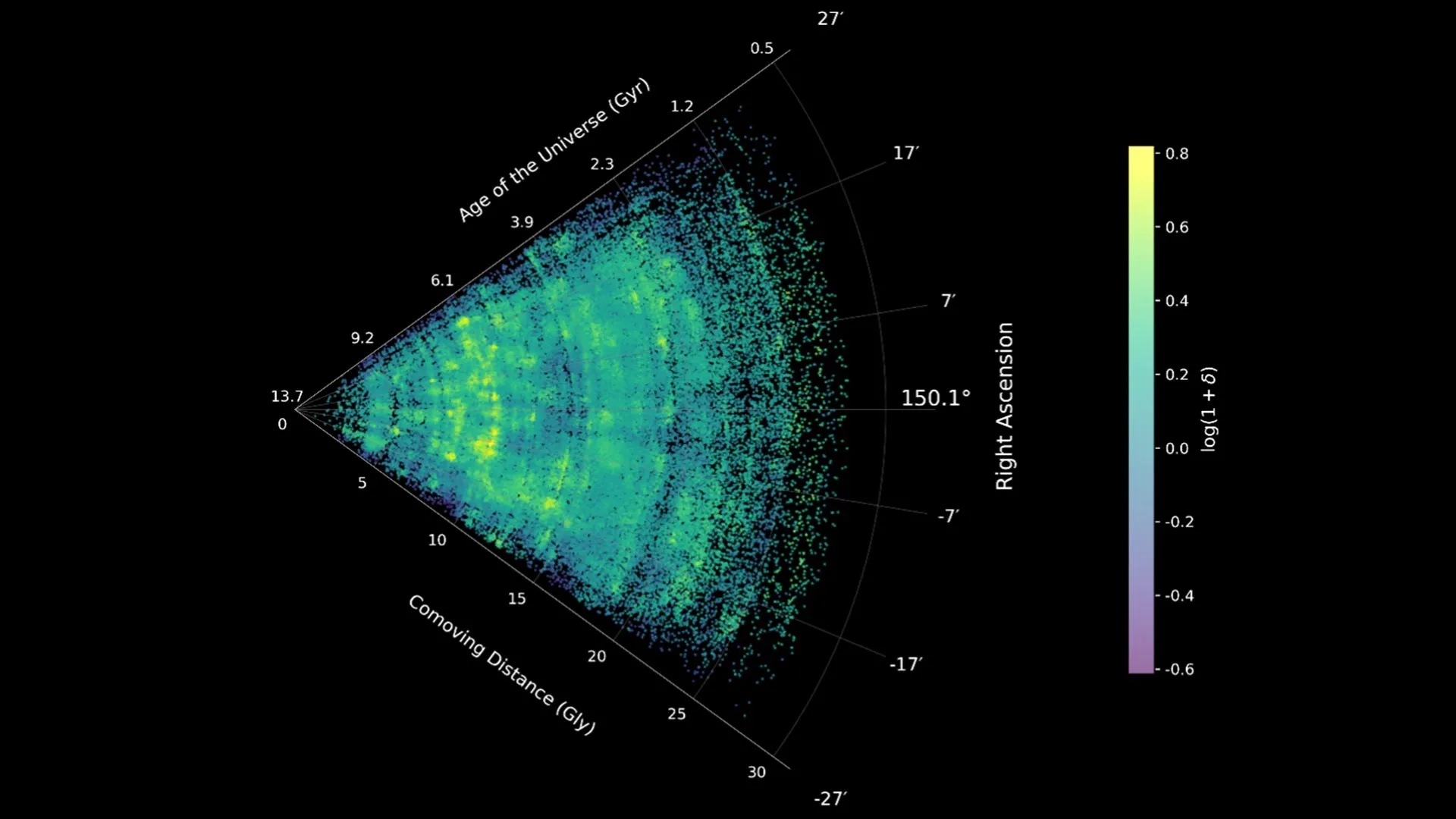
UC Riverside-led COSMOS-Web survey resolves filaments and voids that earlier maps smeared together, revealing that galaxy clusters were assembling much faster than the leading dark-matter simulations predict.
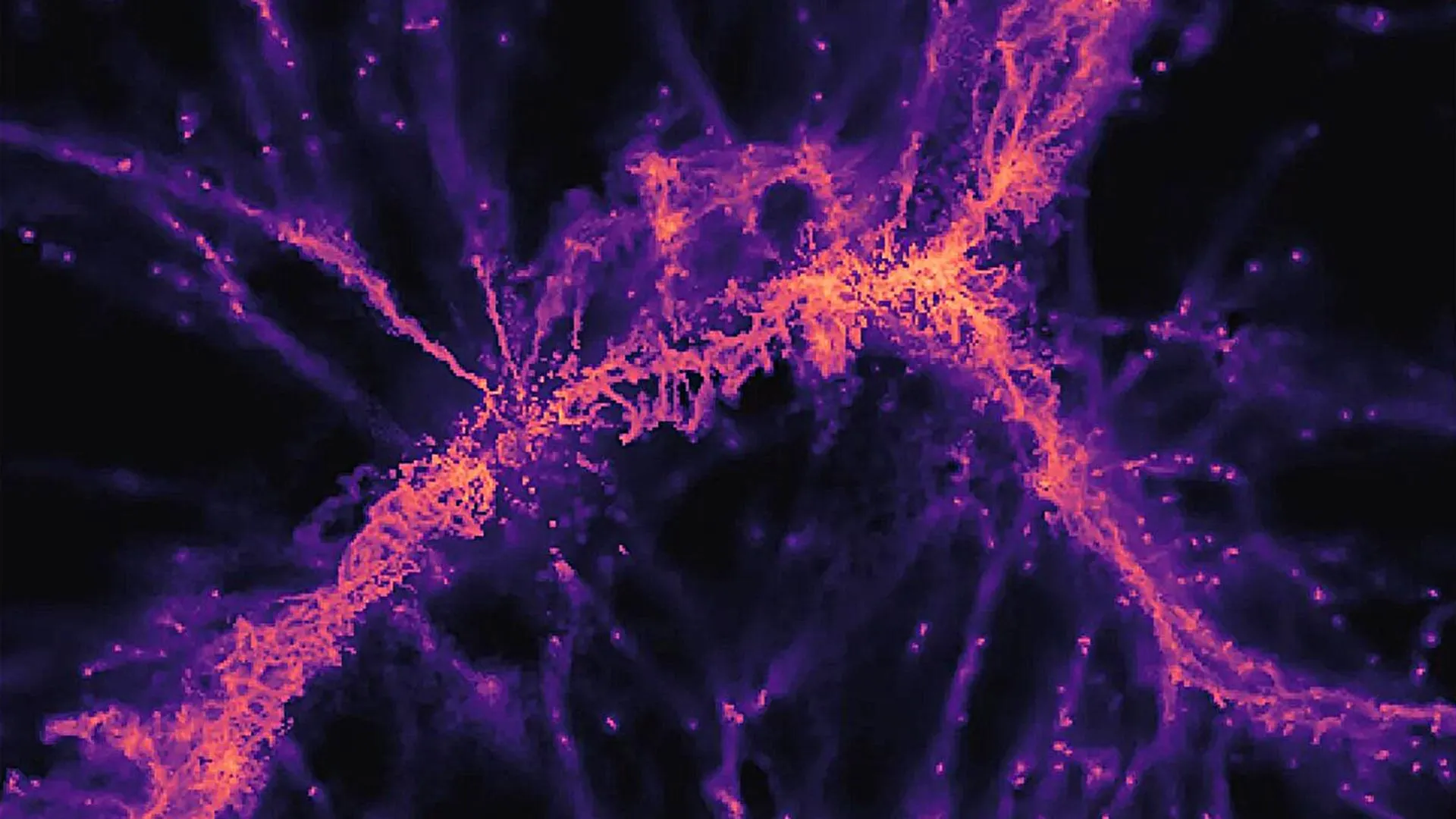
Scientists revealed a 3-million-light-year filament connecting galaxies from 12 billion years ago, offering new insights into how galaxies form and evolve.
Astronomers capture the clearest view of a cosmic filament stretching 3 million light-years, offering insight into how galaxies formed 12 billion years ago.
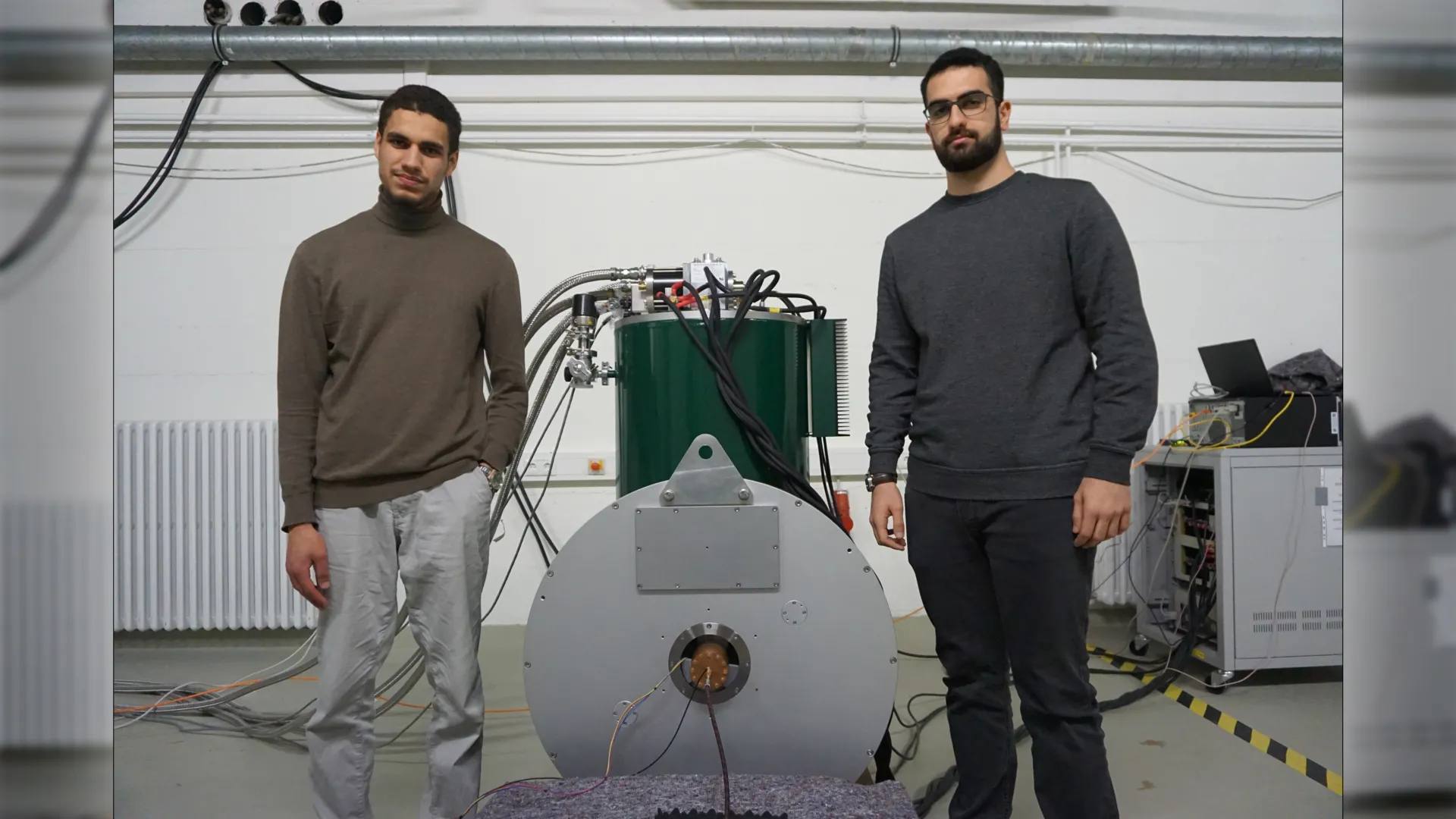
Hamburg university students construct functional axion detector with limited resources, establishing new experimental limits on dark matter properties.
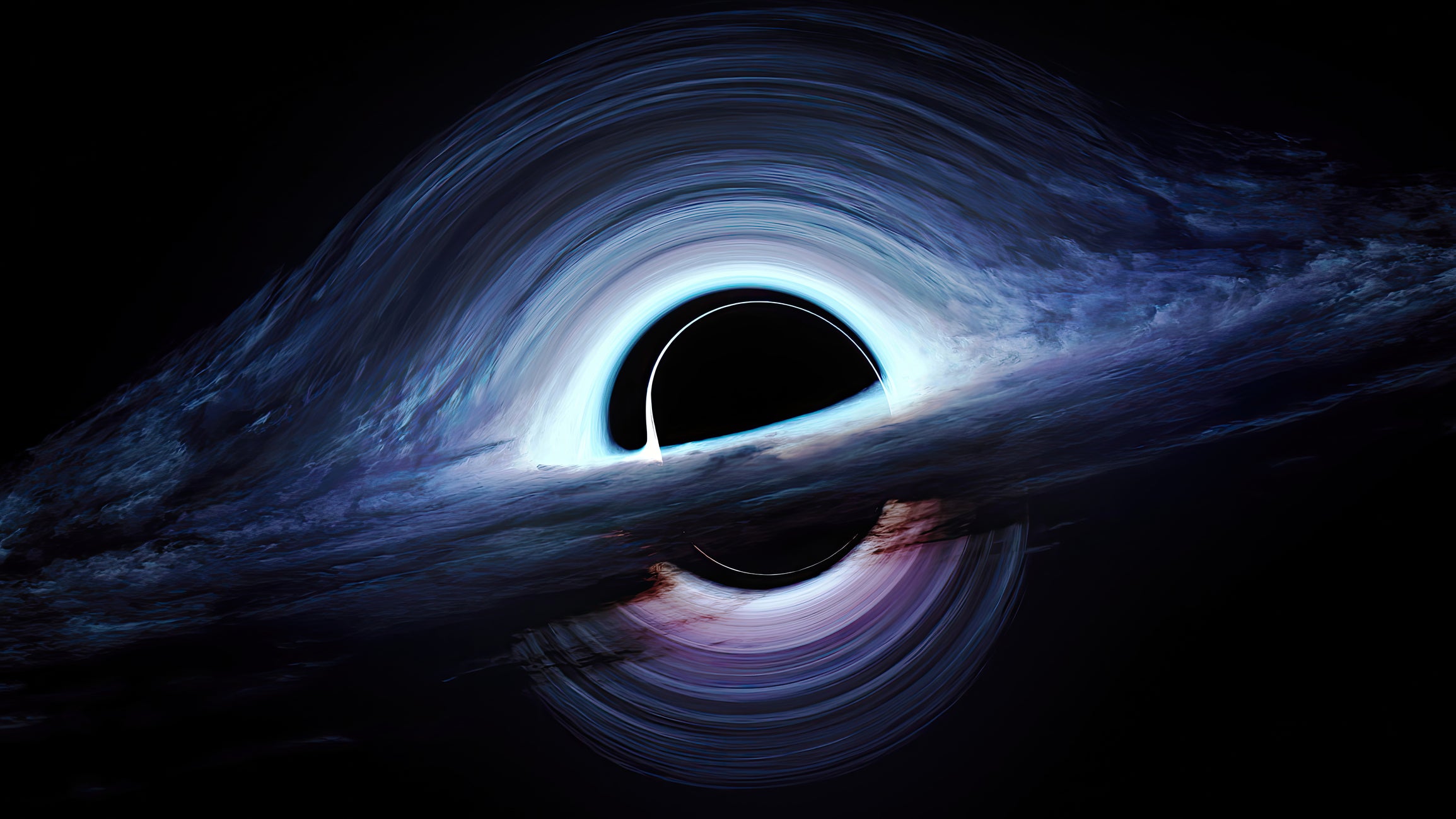
Modeling shows axion-like particles in a narrow mass window can trigger direct collapse of gas clouds into billion-solar-mass black holes — the kind James Webb keeps finding too early in cosmic history.

Hai-Bo Yu's model of dense, million-solar-mass dark-matter clumps explains anomalies in gravitational lensing, stellar streams, and satellite galaxies that have stumped the standard cold dark matter picture.
Undergraduate researchers from Hamburg University constructed their own dark matter detector and used it to search for axions, establishing new experimental limits despite working with limited resources.
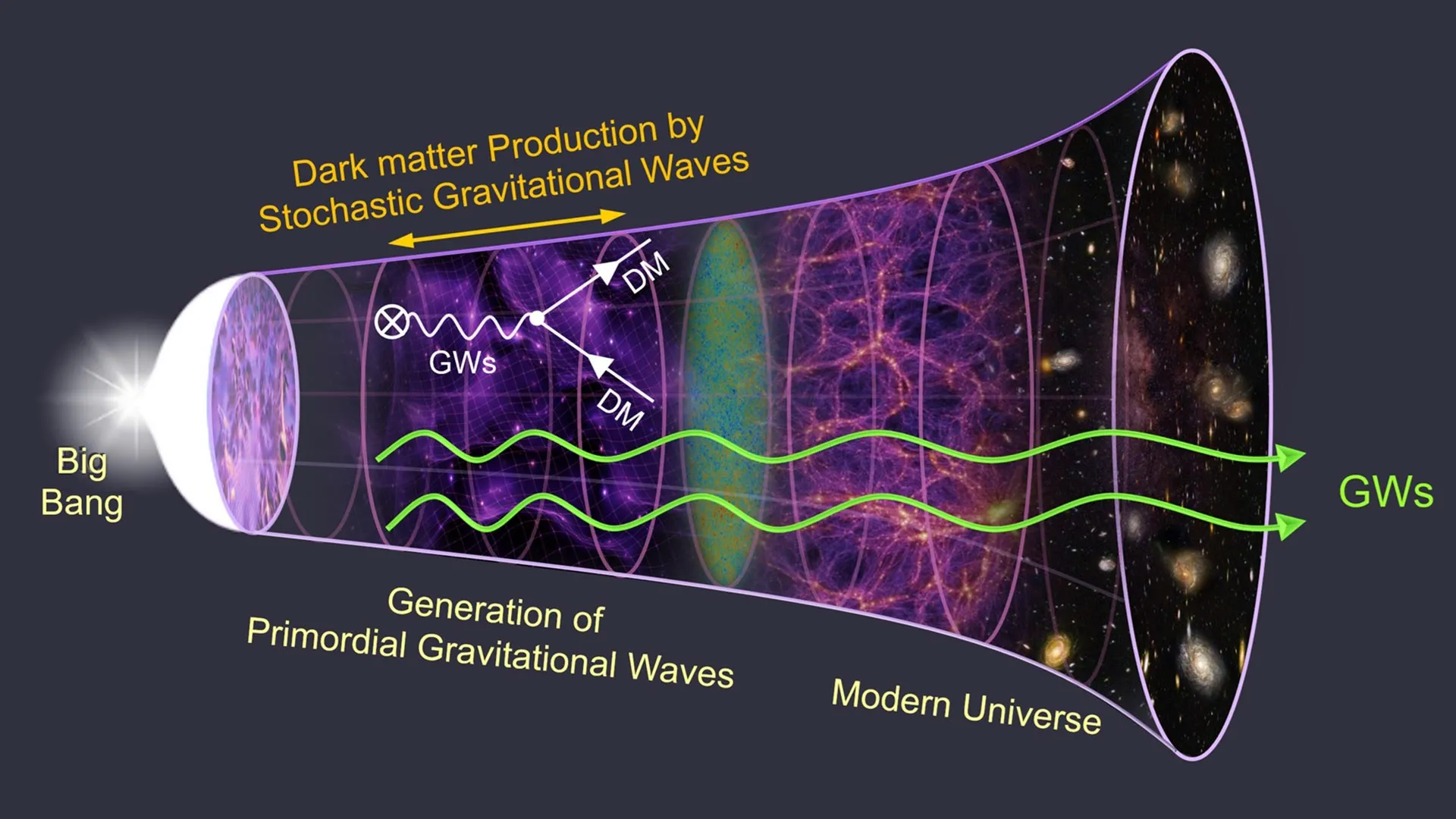
New research suggests ancient ripples in spacetime could have transformed into the invisible particles that shape galaxies today.
New research suggests ancient ripples in spacetime could have transformed into particles that became the invisible substance shaping galaxies today.
New research suggests ancient ripples in spacetime could have transformed into particles that became the invisible substance shaping galaxies today.
Researchers discover that spacetime ripples from the Big Bang may have transformed into particles that became the invisible substance shaping galaxies today.
Showing the latest 60. More in Physics.