First-Ever Direct Image of Cosmic Web Reveals Universe's Hidden Structure
Astronomers capture the clearest view of a cosmic filament stretching 3 million light-years, offering insight into how galaxies formed 12 billion years ago.
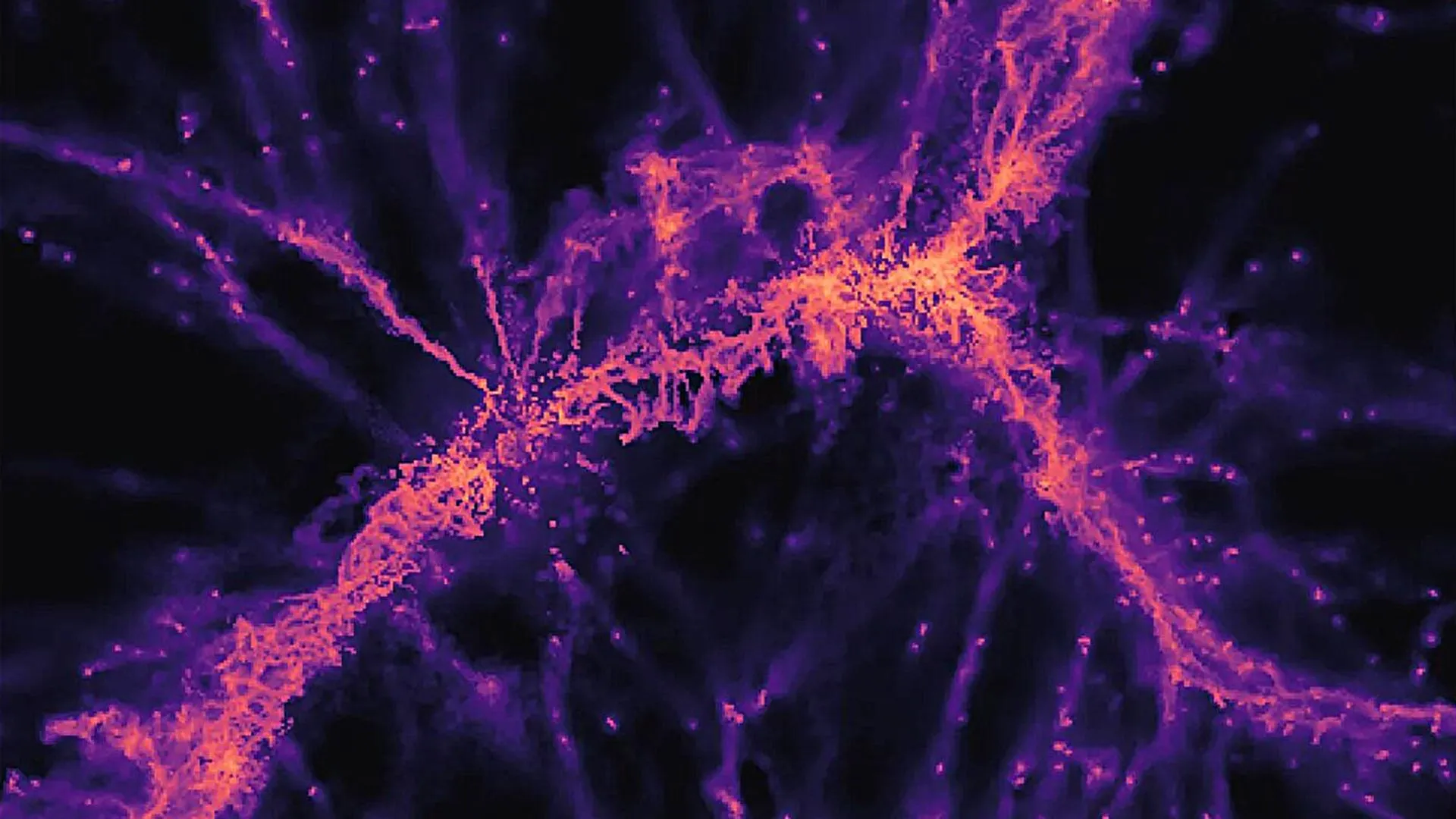
Astronomers have produced the sharpest image ever captured of a cosmic web filament, the enormous hidden structure that connects galaxies across the Universe. The international research team spent hundreds of hours with advanced telescopes to photograph a massive cosmic filament linking two actively forming galaxies from when the Universe was only about 2 billion years old.
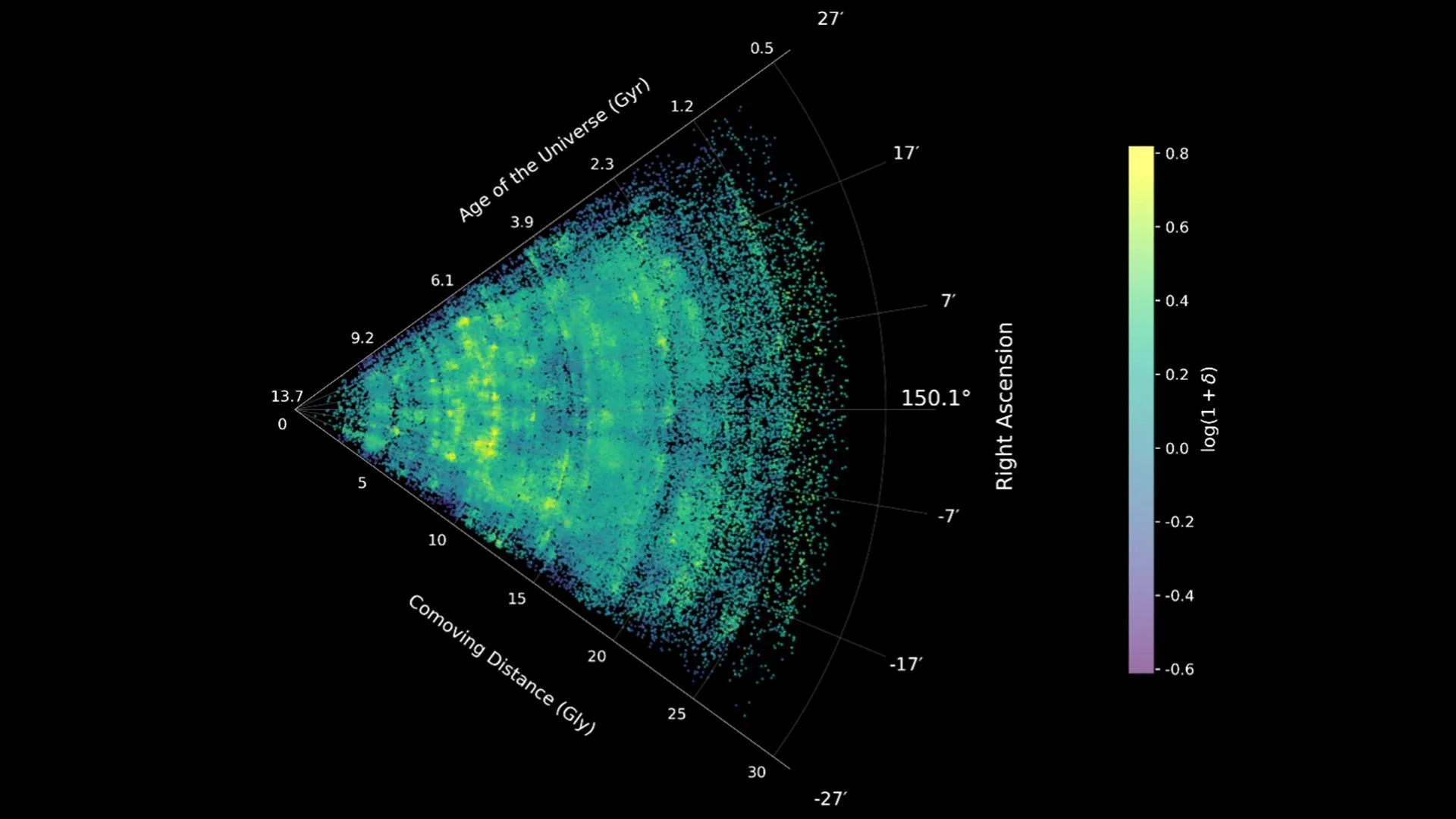
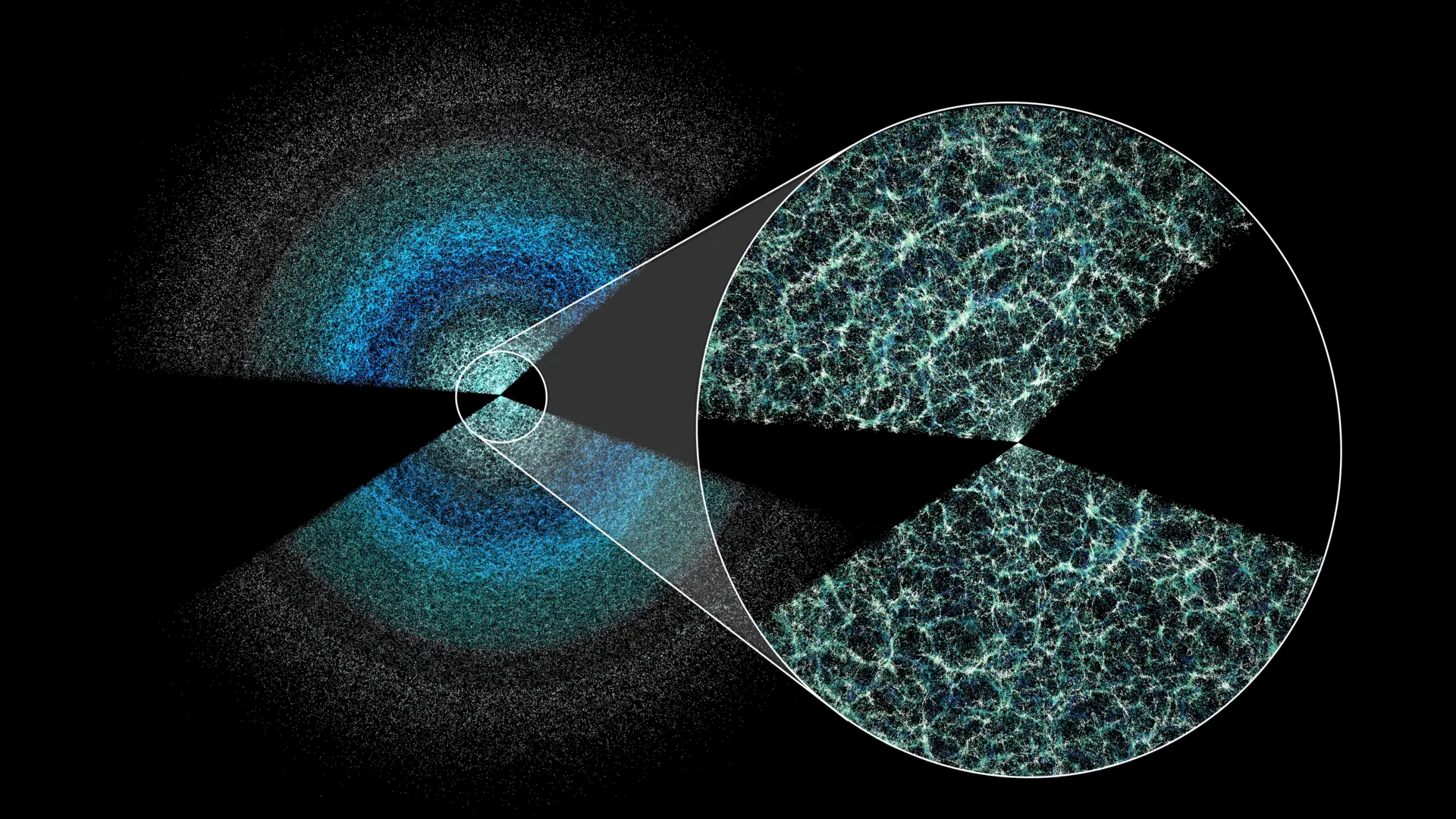
The cosmic web represents one of the largest structures in existence, made up of dark matter filaments that stretch across space and intersect at points where galaxies form. These filaments act as intergalactic highways, channeling gas into galaxies and fueling star formation. However, detecting this gas directly has proven extremely difficult because hydrogen emits only a very faint glow.
Researchers from the University of Milano-Bicocca and the Max Planck Institute for Astrophysics used MUSE (Multi-Unit Spectroscopic Explorer), a powerful instrument mounted on the European Southern Observatory's Very Large Telescope in Chile. The project required one of the most ambitious MUSE observing campaigns ever conducted, gathering data over hundreds of hours to detect the faint filament clearly enough for detailed analysis.
The study, led by PhD student Davide Tornotti, captured a cosmic filament stretching roughly 3 million light-years that connects two galaxies, each containing an active supermassive black hole. The structure appears as it existed nearly 12 billion years ago, providing a direct look at the Universe's early architecture.
The breakthrough offers scientists their first detailed view of how gas moves through the cosmic web and feeds galaxy formation. The findings, published in Nature Astronomy, could help researchers better understand the fundamental processes that shaped the Universe's large-scale structure and continue to influence how galaxies grow and evolve over cosmic time.