Radio Telescope Image Reveals 63,000 Sources, Sharpest Low-Frequency View of the Sky Ever
A Leiden-led team used LOFAR to image one patch of sky 20 times more sharply than before, and processed 400 terabytes of data in just a few months.
Topic
18 stories from Planck Standard. Latest: November 10, 2026.

A Leiden-led team used LOFAR to image one patch of sky 20 times more sharply than before, and processed 400 terabytes of data in just a few months.

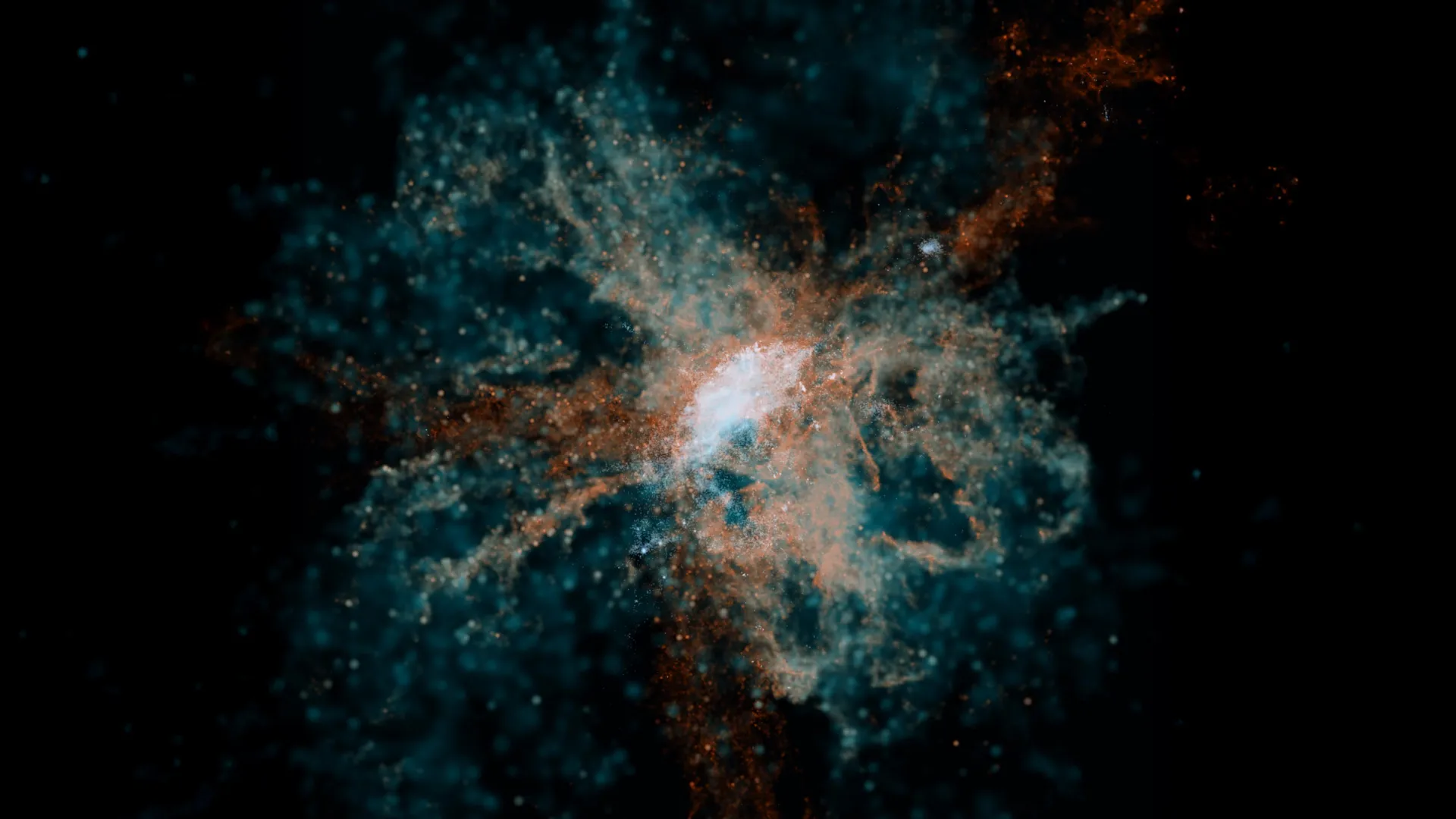
Galaxies with no central bulge, which have never had a major collision, host supermassive black holes as heavy as their stellar mass predicts, pointing to slow, steady feeding.

A University of Arizona-led team found heavy elements being blown out of three early galaxies at up to 250 kilometers per second, showing the young universe was already far less pristine than astronomers assumed.

By stacking data on hundreds of galaxies, Arizona State astronomers found hydrogen glowing along jet paths deep into the gas halos that feed star birth, but not in other directions.

Galaxies whose brightness differs 400,000-fold share nearly the same central dark matter surface density. A Sejong University physicist derived 170 solar masses per square parsec from gravity alone, inside the observed range.

A Missouri team compared star clusters mapped by Gaia and found the mix of large and small stars differs from cluster to cluster — breaking a 50-year assumption and possibly explaining Webb's impossibly heavy early galaxies.

A survey of 1,428 galaxies in James Webb Space Telescope spectra finds that cosmic reionization was driven by a minority of extreme 'leakers,' not by the crowd.

A model proposing that dark matter is made of at least two kinds of particles — a heavier one that sinks toward galactic centers and a lighter one that drifts outward — could resolve puzzles that have frustrated cosmologists for years.

To celebrate the James Webb Space Telescope's fourth science anniversary, NASA unveiled a new view of Centaurus A, peering through the dust that had long hidden the galaxy's violent heart.

Using the XRISM X-ray observatory, astronomers tracked ferocious outflows from the supermassive black hole in NGC 4151 that can strip away the very gas needed to build new stars.
Using the James Webb Space Telescope and a cosmic magnifying glass, scientists measured a dormant giant in a galaxy 10 billion light-years away, smashing the previous distance record fifteenfold.
Using its largest survey to date, the James Webb Space Telescope traced the vast network of filaments and voids connecting more than 164,000 galaxies back to when the universe was just a billion years old.

New images from the Hubble Space Telescope show the galaxy losing its star-forming gas as it races through the dense cluster, a process that is slowly snuffing out its ability to build new stars.

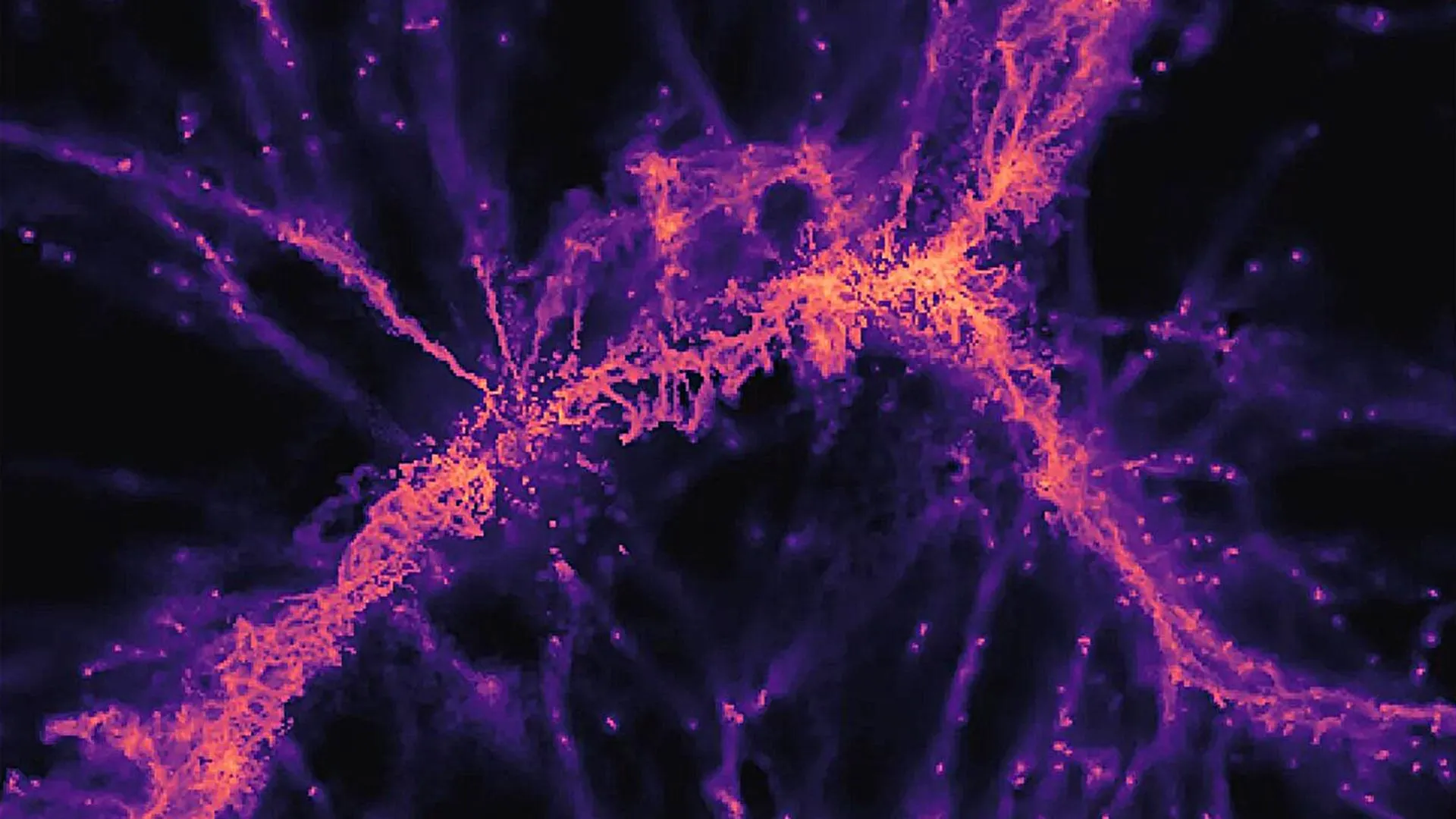
Scientists revealed a 3-million-light-year filament connecting galaxies from 12 billion years ago, offering new insights into how galaxies form and evolve.

Astronomers capture the clearest view of a cosmic filament stretching 3 million light-years, offering insight into how galaxies formed 12 billion years ago.

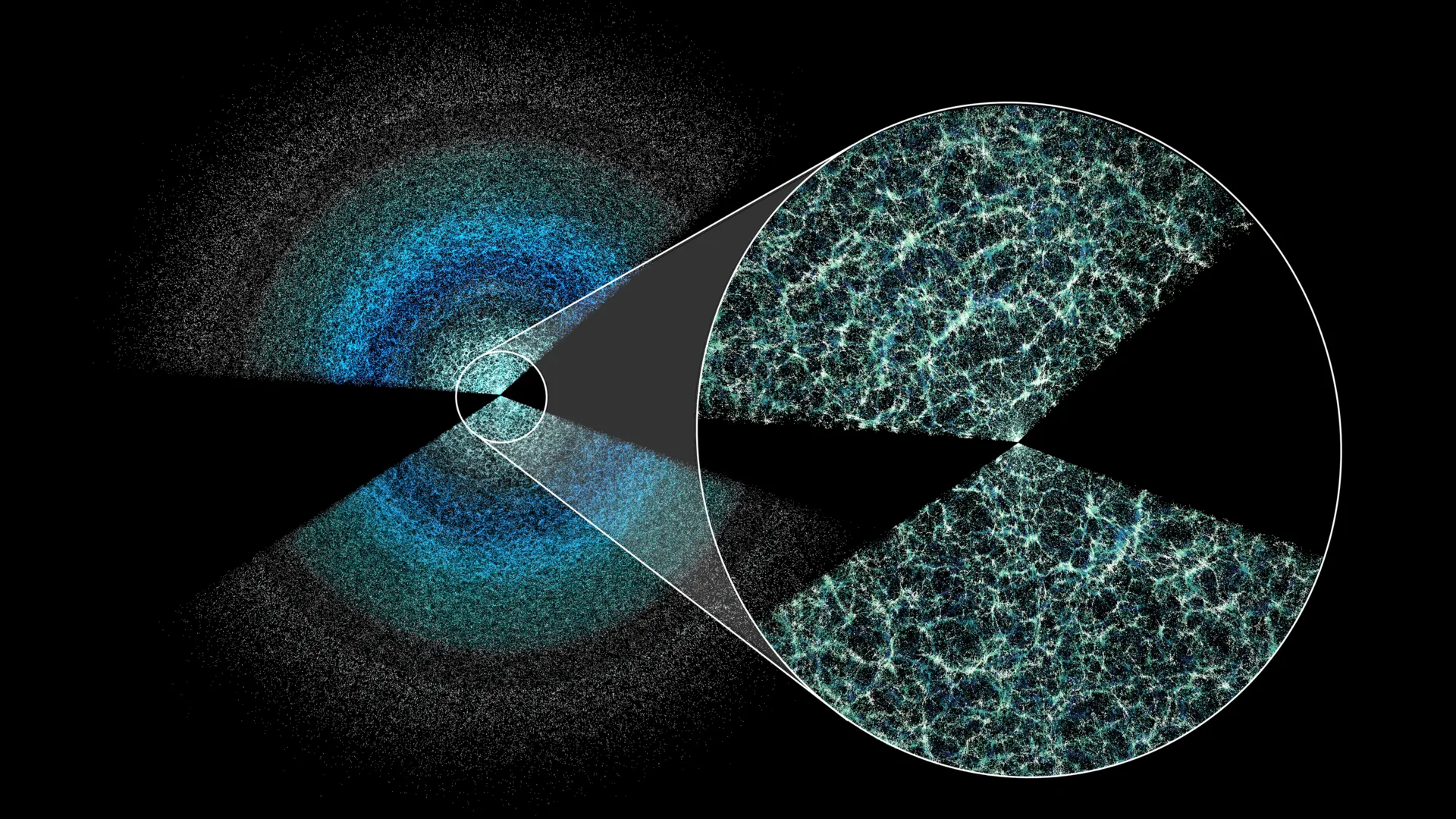
The Dark Energy Spectroscopic Instrument collaboration completed the largest high-resolution cosmic map ever created, ahead of schedule despite wildfire disruptions.

Scientists completed the largest high-resolution 3D map of the universe ever created, gathering unprecedented data that hints dark energy may behave in unexpected ways.

The HETDEX survey has increased the known number of these cosmic structures tenfold, revealing the vast hydrogen reservoirs that powered galaxy formation 10-12 billion years ago.