Massive 3D Map of 47 Million Galaxies Could Unlock Secrets of Dark Energy
Scientists completed the largest high-resolution 3D map of the universe ever created, gathering unprecedented data that hints dark energy may behave in unexpected ways.
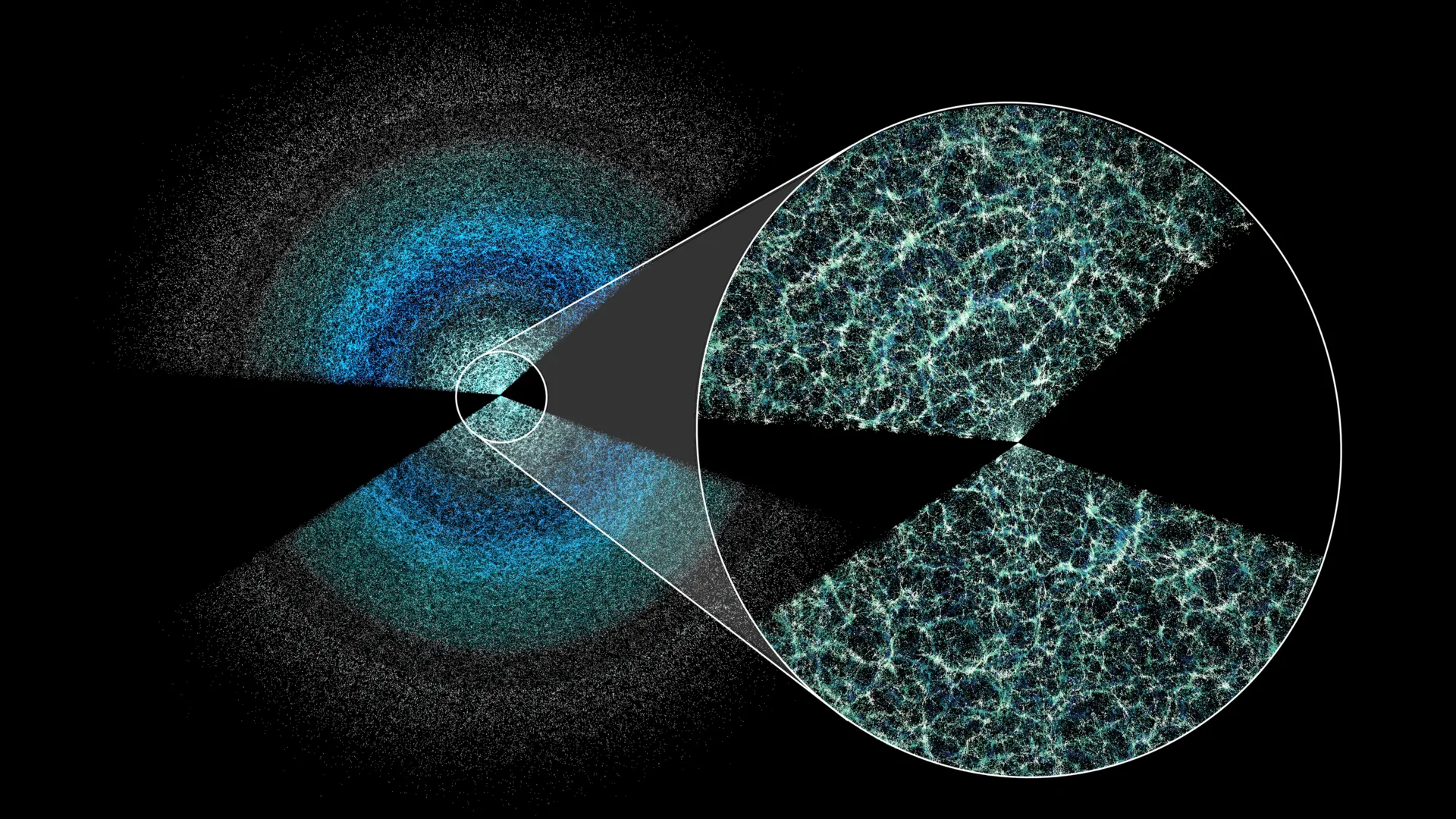
Scientists have achieved a monumental breakthrough in cosmology by completing observations for the full target area of the Dark Energy Spectroscopic Instrument's 3D map of the universe. The project, which wrapped up ahead of schedule and delivered far more data than originally anticipated, now represents the most detailed high-resolution 3D representation of the cosmos ever created. Over five years of observations, DESI recorded more than 47 million galaxies and quasars along with 20 million stars, providing an unprecedented dataset to investigate dark energy, the mysterious force believed to comprise about 70 percent of the universe.
The achievement represents a massive international collaboration involving more than 900 researchers, including 300 PhD students, from over 70 institutions worldwide. The project is led by the Department of Energy's Lawrence Berkeley National Laboratory, with Ohio State University making the largest university contributions to instrumentation, operations, and analysis infrastructure. Scientists from Ohio State played a major role in key discoveries, from analyzing early results to uncovering unexpected changes in how dark energy appears to behave over cosmic time.
Completing the survey within five years required overcoming significant challenges, including a major setback in 2022 when the Contras wildfire disrupted power and internet service at the observatory for months. Despite these obstacles, the team managed to recover quickly and continue operations through creative problem-solving and determination. The high-quality data collected each night was carefully processed to obtain the exciting cosmological constraints that DESI has become known for, according to lead scientist Ashley Ross.
The unprecedented scale and precision of the dataset could lead to major changes in how scientists understand the universe and provide the strongest foundation yet for testing long-standing theories about the balance between dark energy and matter. Early results from the project have already hinted that dark energy may not behave as consistently as the standard cosmological model predicts, potentially requiring revisions to fundamental assumptions about cosmic evolution and expansion.
With the full dataset now in hand, researchers expect to publish groundbreaking results that could revolutionize cosmology over the next several years. The comprehensive map will allow scientists to study how cosmic structure evolved over billions of years and test whether Einstein's theory of general relativity holds true on the largest scales. The project's success demonstrates the power of international scientific collaboration and advanced instrumentation to tackle some of the universe's deepest mysteries, potentially answering fundamental questions about the nature of space, time, and cosmic destiny.