DESI Dark Energy Survey Deepens Challenge to Standard Cosmological Model
New Year 2 data from 7.8 million galaxies shows dark energy may be evolving over time, adding to a growing tension with the prevailing Lambda-CDM model.

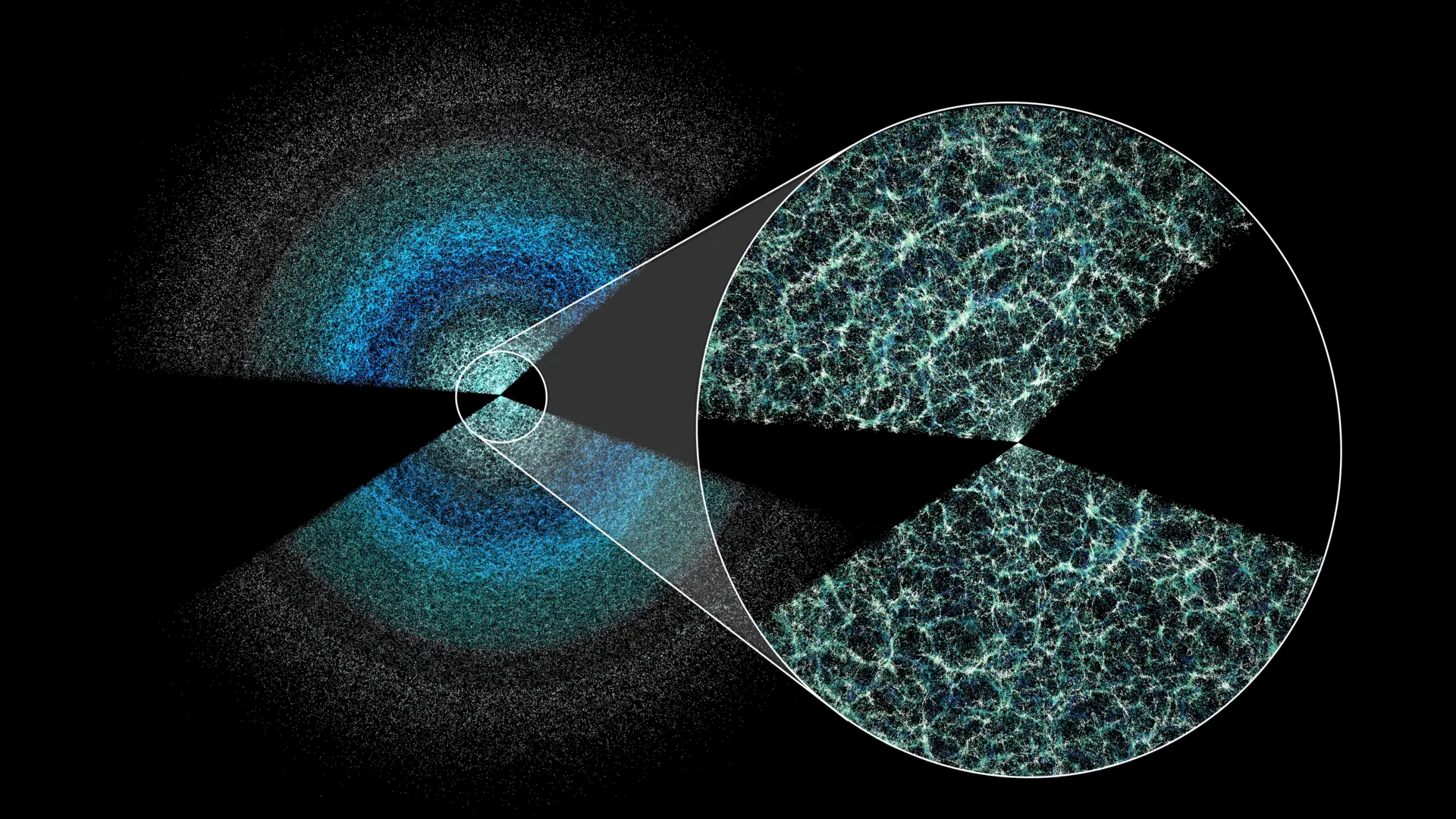
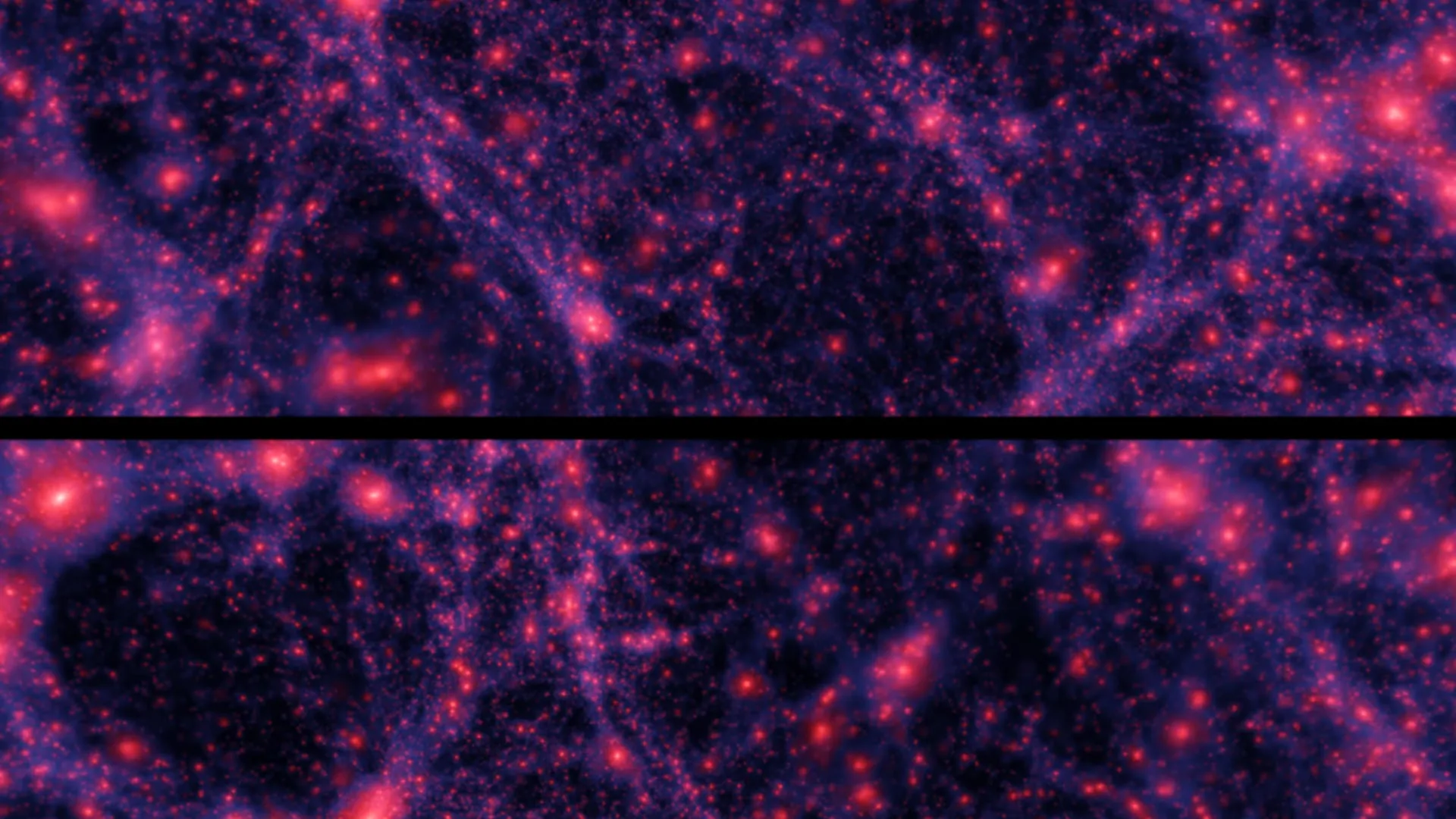
The Dark Energy Spectroscopic Instrument collaboration published its most comprehensive results to date on Wednesday, presenting an analysis of the three-dimensional distribution of more than 14 million galaxies across more than a quarter of the sky that provided the most precise measurements yet of the universe's expansion history and suggested that the nature of dark energy may be more complex than the cosmological constant — a fixed, uniform energy density of empty space — that has anchored the standard model of cosmology for more than 25 years. The results, representing three years of observations from the Nicholas U. Mayall Telescope at Kitt Peak National Observatory in Arizona, showed a preference for dark energy whose strength has changed over cosmic time at a statistical significance of approximately 2.8 sigma.
The standard cosmological model, known as Lambda-CDM for its two main dark components — Lambda representing the cosmological constant dark energy and CDM representing cold dark matter — has been remarkably successful at describing observations of the cosmic microwave background, the large-scale structure of the galaxy distribution, and the expansion rate of the universe as measured through supernova standard candles. But the model's success has always rested on the assumption that dark energy is a constant — the same in density and pressure everywhere and at all times. If dark energy instead varies with time, the model would need to be replaced with a more complex framework, and the implications for fundamental physics could be profound, potentially pointing toward new scalar fields, modifications to general relativity, or other theoretical developments.
DESI measures the expansion history by tracing the pattern of baryon acoustic oscillations — a characteristic scale in the galaxy distribution imprinted by sound waves in the early universe — at multiple epochs corresponding to different redshifts, effectively measuring the expansion rate of the universe at different points in its history. By comparing the oscillation scale at low, medium, and high redshifts, the collaboration reconstructs the history of how dark energy has influenced the expansion over the past 11 billion years. The new analysis combined DESI's galaxy survey with external measurements from the Planck satellite's cosmic microwave background data and supernova surveys, using a joint analysis that broke several degeneracies that limited earlier results.
The 2.8-sigma preference for evolving dark energy is suggestive but not conclusive — the threshold for announcing a discovery in cosmology is typically 5 sigma. DESI collaboration scientists said the 5-year dataset, which will be completed by late 2026, should either confirm the trend and push toward or across the 5-sigma threshold, or, if the signal is a statistical fluctuation, reduce it toward zero. Theorists have been rapidly developing models that could accommodate evolving dark energy, including quintessence fields — dynamic scalar fields pervading space — and modified gravity theories in which gravity behaves differently on cosmological scales than Einstein's general relativity predicts.