Scientists Capture Electrons Forming Strange Patchy Patterns in Quantum Materials
Researchers use advanced microscopy to directly visualize how charge density waves evolve across phase transitions, revealing unexpected persistence of electronic order.
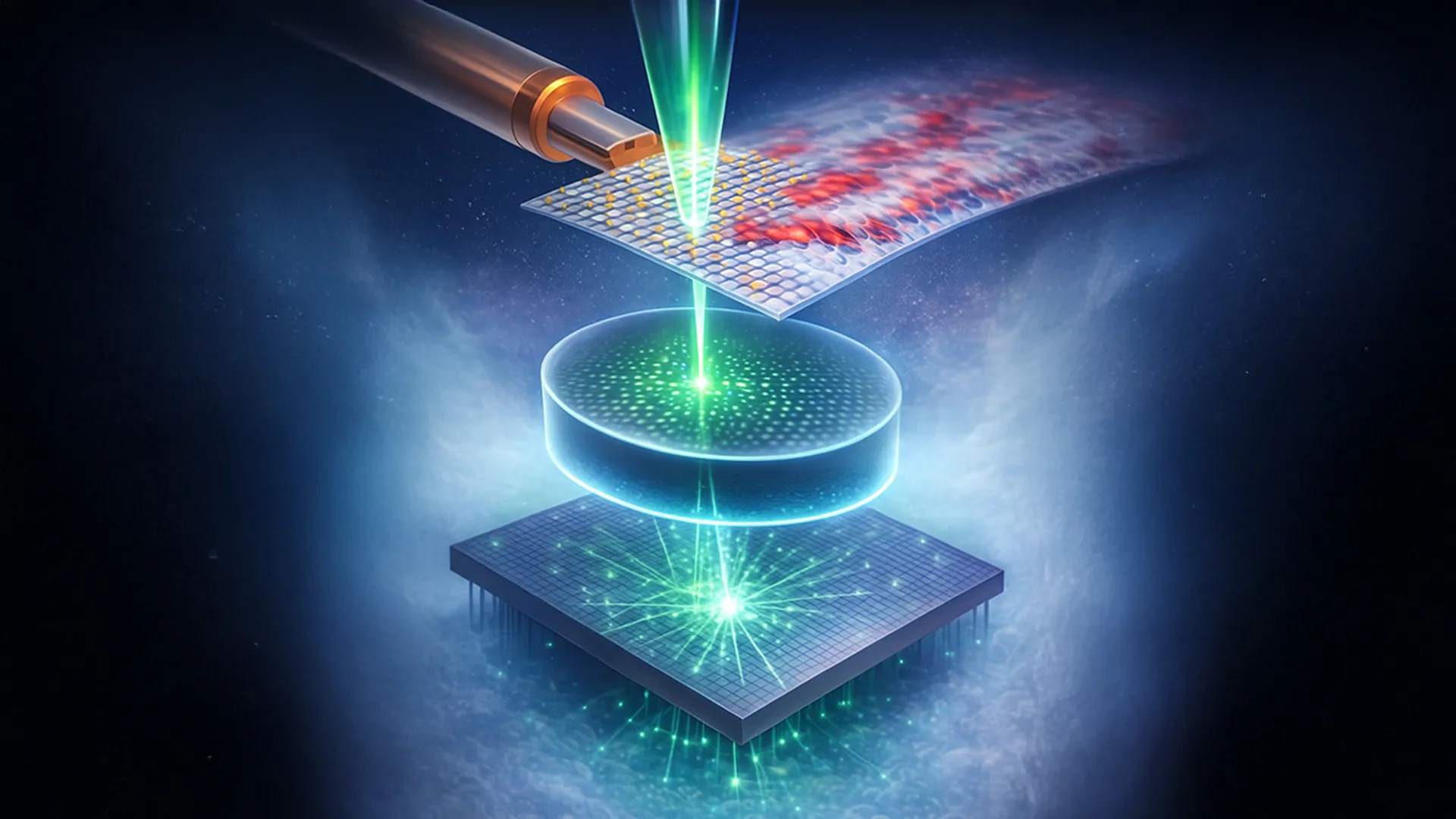
An international team led by Professor Yongsoo Yang at KAIST has achieved a major breakthrough in quantum materials research by directly visualizing how electronic patterns known as charge density waves (CDWs) form and evolve across phase transitions. Using cutting-edge four-dimensional scanning transmission electron microscopy, the researchers discovered that these quantum patterns develop unevenly, creating a patchy landscape influenced by tiny structural distortions in the material.
The study revealed that electronic order in quantum materials rarely forms smoothly or uniformly. Instead, charge density waves appear as complex patterns that vary dramatically from one region to another, resembling scattered ice patches on a freezing lake rather than uniform coverage. This heterogeneous formation challenges previous assumptions about how electronic order develops in quantum systems.
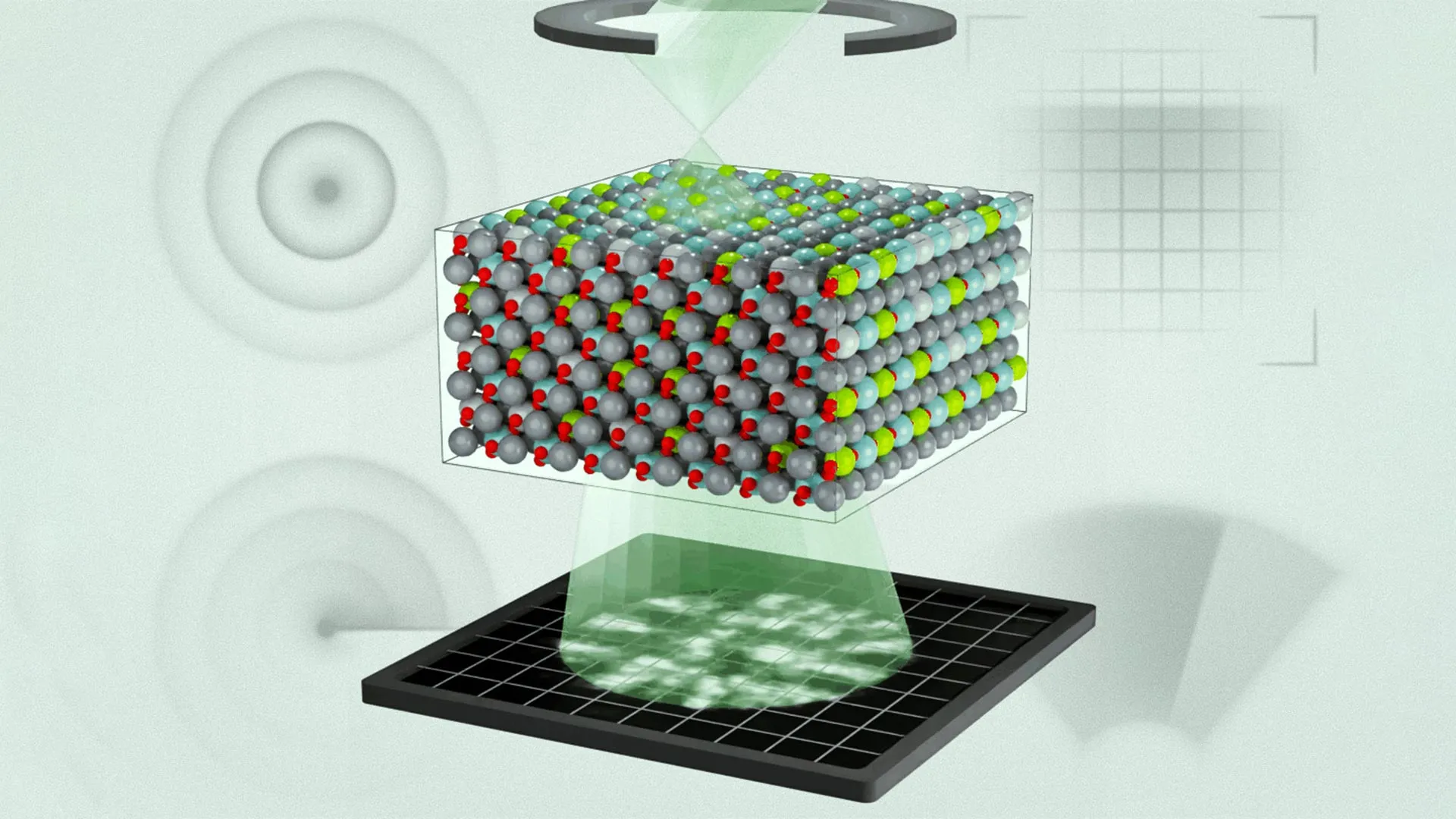
Using a liquid-helium-cooled electron microscope capable of resolving structures smaller than one hundred-thousandth the width of a human hair, the team tracked how CDW patterns change as temperature varies. They found that even minute amounts of strain within the crystal structure—far too small to detect with conventional methods—significantly weaken the amplitude of charge density waves, demonstrating the extreme sensitivity of quantum order to structural imperfections.
Perhaps most surprisingly, the researchers discovered that small pockets of CDW order can persist even above the transition temperature where long-range order typically vanishes. These isolated regions suggest that the phase transition is not a simple, uniform process but rather a gradual loss of spatial coherence, with electronic order fading in patches rather than disappearing all at once.
The work represents the first direct measurement of correlations in charge density wave amplitude and provides unprecedented insight into how quantum order develops and decays in real materials. These findings have significant implications for understanding superconductivity, magnetism, and other quantum phenomena that depend on electronic order, potentially leading to new approaches for controlling and manipulating quantum materials for technological applications.