MIT Scientists Map Hidden Atomic Structure of Revolutionary Electronic Material
Researchers finally reveal the three-dimensional structure of relaxor ferroelectrics, materials that power ultrasound machines and sonar systems worldwide.
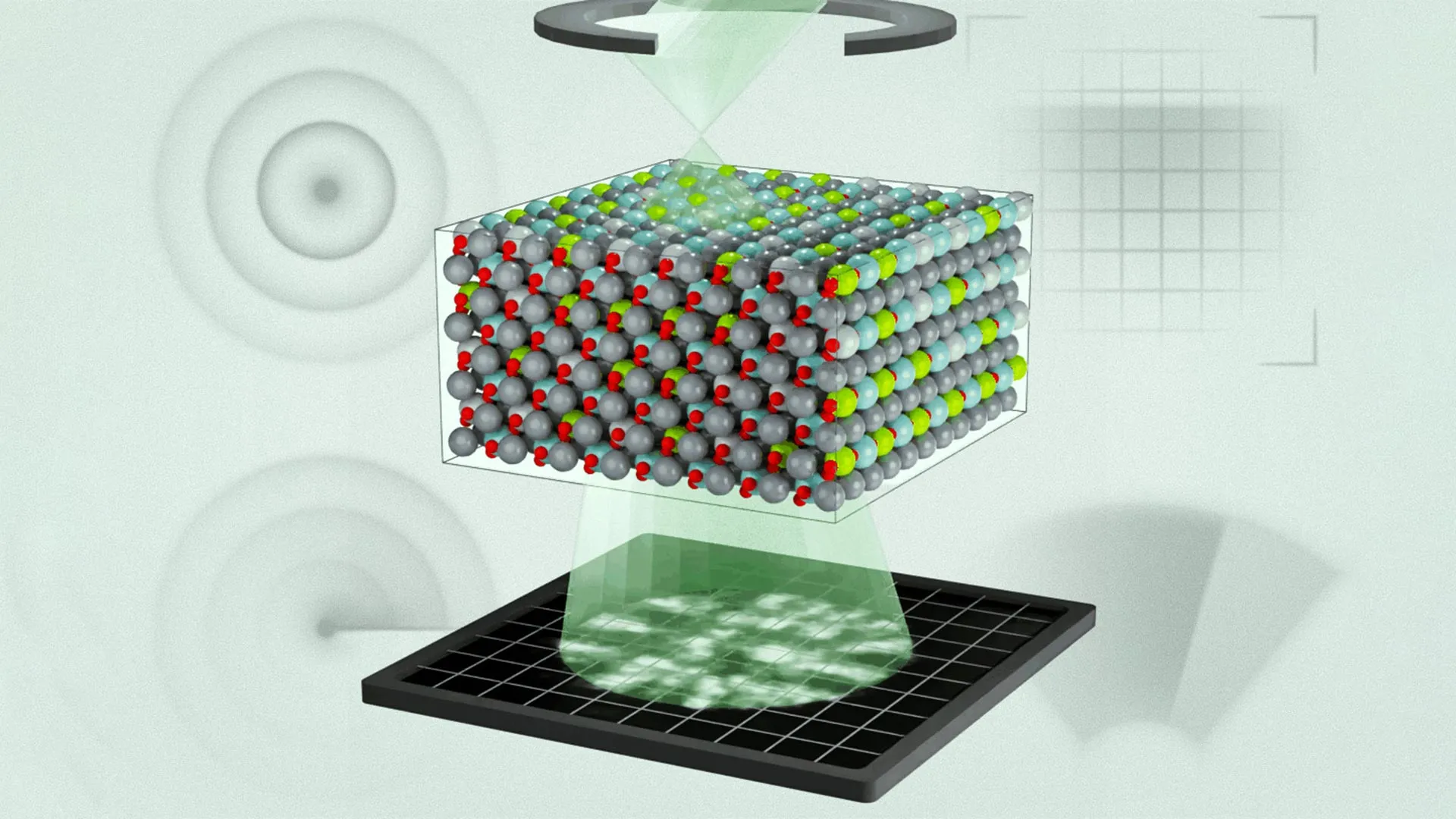
Scientists at MIT have achieved a breakthrough in materials science by successfully mapping the three-dimensional atomic structure of relaxor ferroelectrics, mysterious materials that have powered critical technologies for decades despite their inner workings remaining largely unknown. The research team used cutting-edge imaging techniques to reveal hidden patterns in how electric charges are arranged at the nanoscale within these materials, which are essential components in medical ultrasounds, microphones, and sonar systems. The findings, published in Science, provide the first clear picture of these materials' atomic architecture and challenge long-standing assumptions about their behavior.
Relaxor ferroelectrics have been used in advanced technologies for more than 60 years, yet their internal atomic structure has been extremely difficult to measure directly. This limitation forced scientists to rely on incomplete theoretical models when designing new applications and improving existing technologies. The unusual performance of these materials comes from the complex way atoms are arranged inside them, creating unique electrical properties that make them invaluable for energy storage and sensing applications.
The research team, led by Professor James LeBeau, MIT's Kyocera Professor of Materials Science and Engineering, employed a revolutionary imaging method called multi-slice electron ptychography to examine how electric charges are distributed throughout the material. This technique involves scanning a nanoscale beam of high-energy electrons across the material and recording the resulting diffraction patterns, allowing researchers to create detailed three-dimensional maps of atomic arrangements. The process revealed chemical disorder within the materials that had not been fully considered in previous theoretical models.
The breakthrough required collaboration between experimentalists and theorists to merge new observations with computational simulations. Co-first authors Michael Xu and Menglin Zhu, both postdocs at MIT, worked with colleagues from the University of Alabama at Birmingham, Korea Advanced Institute of Science and Technology, University of Pennsylvania, and Rice University to refine theoretical models based on the experimental findings. This interdisciplinary approach allowed the team to better predict material properties and understand the fundamental mechanisms behind their unique behavior.
The discovery has significant implications for the future development of computing systems, energy devices, and advanced sensors. With a clearer understanding of how these materials work at the atomic level, researchers can now design better models to predict their properties and engineer new materials with enhanced capabilities. The work represents a major step forward in materials science and could lead to more efficient energy storage systems, more sensitive medical imaging equipment, and improved sonar technologies for both civilian and military applications.