MIT Captures First 3D Atomic View of Relaxor Ferroelectrics, Solving a Half-Century Materials Mystery
Multi-slice electron ptychography reveals the polar-domain structure inside lead magnesium niobate, the workhorse of medical ultrasound and sonar.
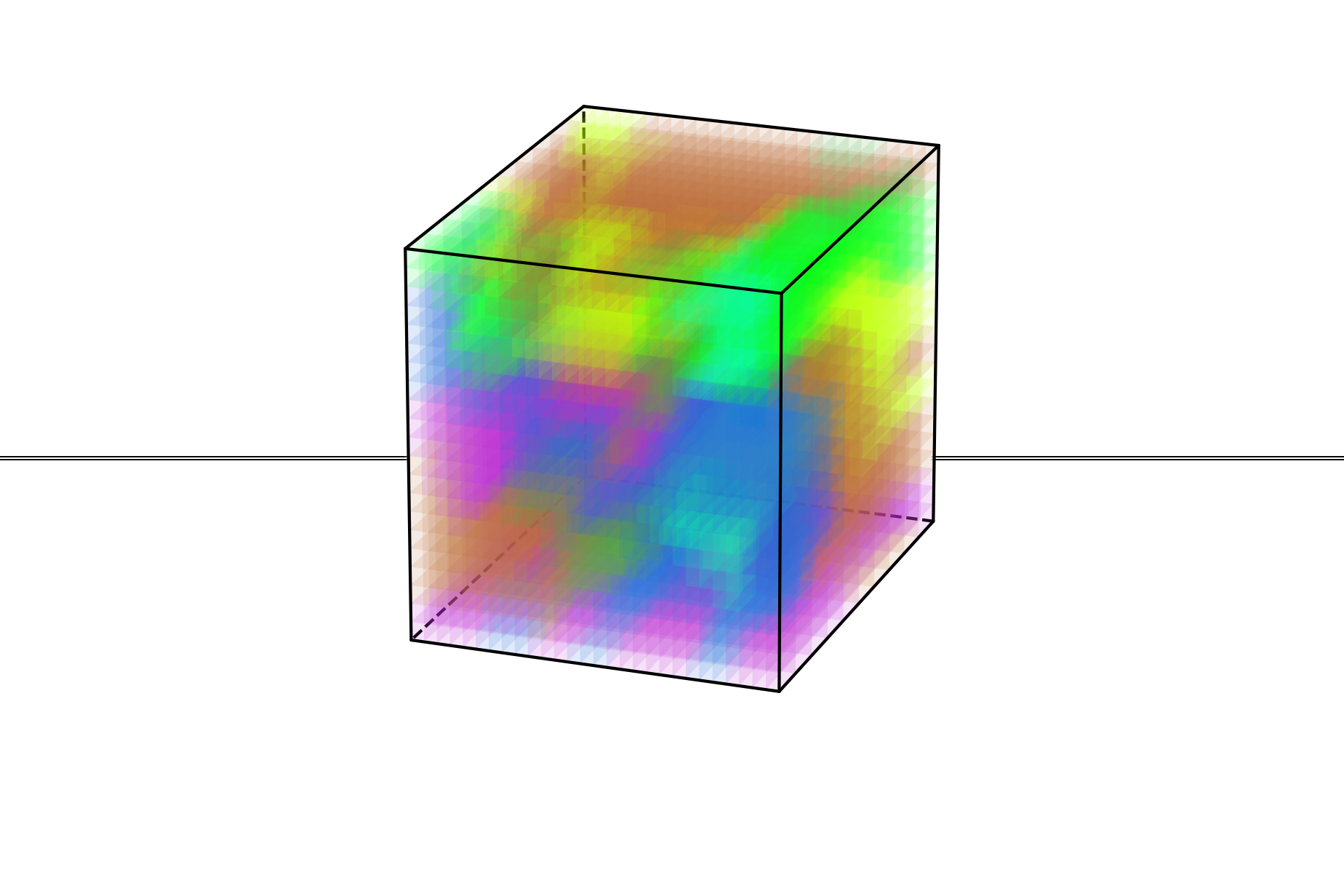
Researchers at the Massachusetts Institute of Technology have, for the first time, mapped in three dimensions the atomic-scale structure of a class of materials called relaxor ferroelectrics — the workhorse compounds inside almost every medical ultrasound transducer, naval sonar array and industrial actuator on the planet. The result, published Friday in Science, ends roughly fifty years of theoretical guessing about how the materials actually work and is expected to accelerate the design of next-generation sensors, energy-storage devices and neuromorphic computing components.
Relaxor ferroelectrics, first identified by Soviet physicists in the 1950s and brought to commercial maturity in the 1980s, exhibit an enormous response to applied electric fields — far larger than ordinary piezoelectrics like quartz — and they keep responding over a wide temperature range. Computer models had long suggested the secret lay in tiny "polar nanoregions," islands of correlated electric dipoles a few nanometers across, but no instrument had ever been able to image the regions directly. "We had a 1950s problem in a 21st-century material," said senior author James LeBeau, the John Chipman Associate Professor of Materials Science and Engineering at MIT.
The breakthrough came from an emerging imaging method called multi-slice electron ptychography (MEP), in which a focused electron beam is rastered across a thin sample and the diffraction patterns it produces are mathematically reconstructed into a true three-dimensional atomic map. The MIT group, working with collaborators at Rice University, Argonne National Laboratory and the University of Illinois Urbana-Champaign, applied MEP to a thin slice of lead magnesium niobate-lead titanate, the alloy used in medical ultrasound probes since the late 1990s.
What they saw resembled neither the orderly aligned dipoles of a classic ferroelectric like barium titanate nor the random soup that some theorists had assumed. Instead, the dipoles inside the alloy organized themselves into a frustrated, knotted three-dimensional network — short chains and loops of polarization woven through one another at the few-nanometer scale. The arrangement explained, almost immediately, two of the field's longest-standing puzzles: why the materials respond strongly to fields in many different orientations, and why their response degrades only modestly with temperature.
"This will rewrite chapters of materials-science textbooks," said co-author Mingda Li, an MIT associate professor of nuclear science and engineering who provided the theoretical framework for interpreting the diffraction data. The team is already extending the technique to other "messy" functional materials — including the lead-free piezoelectrics that the European Union has been pushing manufacturers to adopt and the so-called "morphotropic" alloys that show promise as solid-state actuators in everything from autofocus camera modules to ink-jet printheads. "Once you can see the knot," Li said, "you can start to untangle it on purpose."