Pea-Sized Lab-Grown Brains Learn to Solve a Cart-Pole Task at UC Santa Cruz
The first rigorous demonstration of goal-directed learning in human brain organoids - success rate jumped from 4.5% to 46% - comes with a new open-source toolkit for the field.
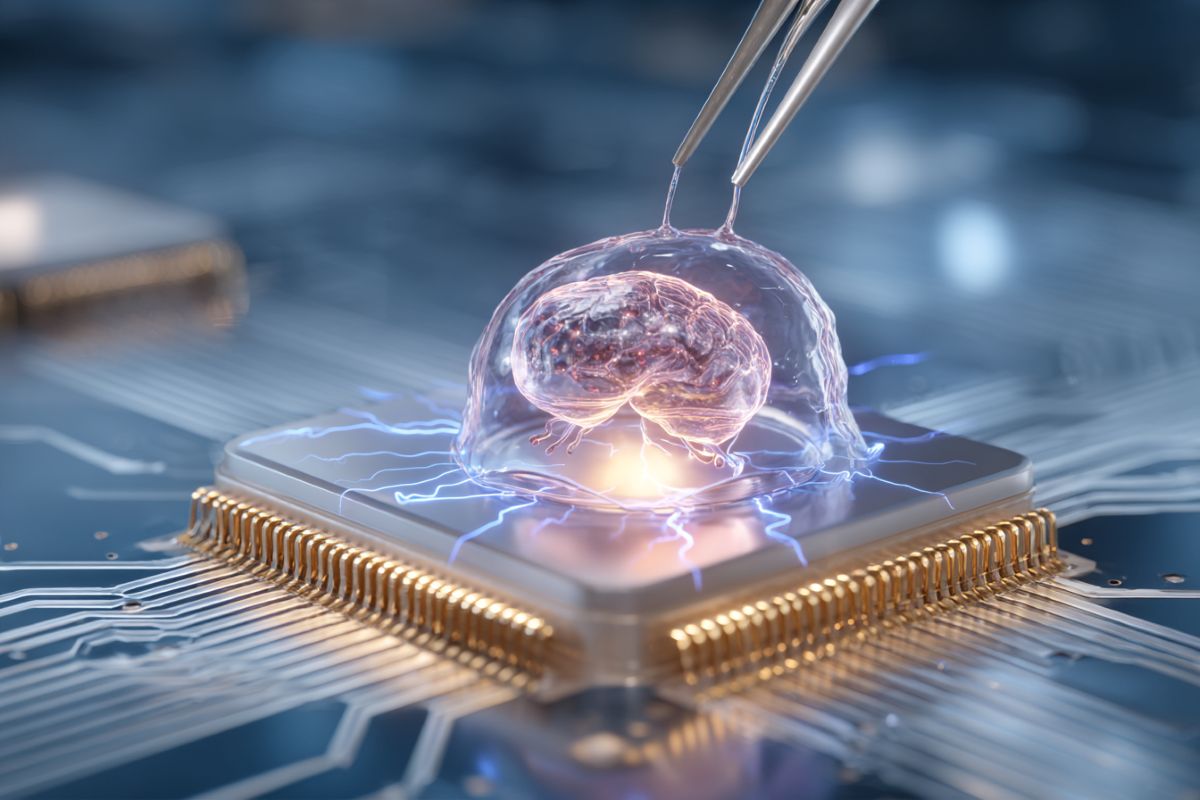
Lab-grown clusters of human neurons no larger than a pea have been taught to balance a virtual pole on a moving cart — a textbook reinforcement-learning task — in what scientists at the University of California, Santa Cruz are calling the first rigorous demonstration of goal-directed learning in brain organoids. The result, reported this week, raises the prospect of using miniature human neural tissue as a research platform for studying how living circuits actually learn, and as a possible substrate for hybrid bio-electronic computing.
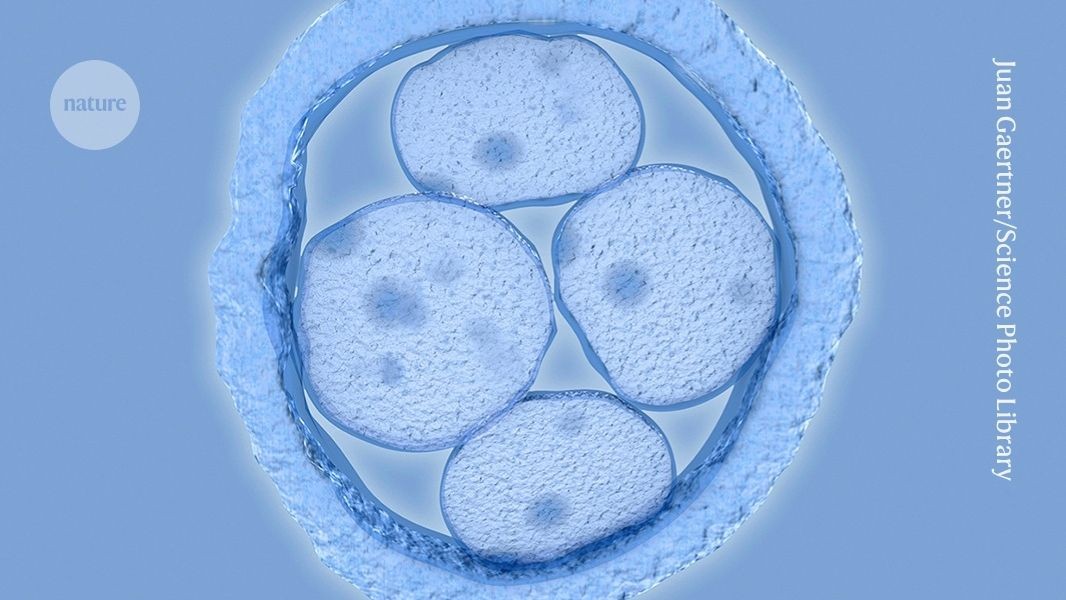
The experiment used so-called cortical organoids — three-dimensional balls of human cells differentiated from induced pluripotent stem cells and grown for several months until they spontaneously develop firing neurons resembling those of the developing cerebral cortex. Each organoid was placed on a multi-electrode array, allowing researchers to deliver electrical inputs that encoded the cart's position and the pole's tilt and to read out activity that drove a virtual motor command. Under random training, the organoids solved the task only 4.5 percent of the time. Under a regimen of consistent, adaptive reinforcement signals, they reached a 46 percent success rate.
"The leap from 4.5 percent to 46 percent is well above noise, well above pure mechanical responsiveness, and well above any prior published number for this kind of system," said Mohammed Mostajo-Radji, a UC Santa Cruz researcher on the project. The team also released BrainDance, an open-source software package that lets any organoid lab run simulation-and-learning experiments without writing custom hardware code — an effort, the authors said, to make the field reproducible after several high-profile demonstrations that other labs could not replicate.
Memory turned out to be a clear limit. After a 45-minute rest, organoids forgot most of what they had learned. The authors interpret that as evidence that the small, single-region tissue lacks the architectural support needed for stable long-term storage; they speculate that more complex "assembloids," which fuse cortical organoids with hippocampal organoids, may be able to consolidate memory across breaks. Plans to test that hypothesis are already under way, the team said, in collaboration with researchers at Stanford University and the Allen Institute.
The work also rekindles ethical debates that have shadowed the field since organoids first showed coordinated electrical activity in 2019. Researchers stress that current organoids contain no sensory input, no motor output, and no vasculature, and are nowhere near consciousness in any defensible sense — but the visible improvement in task performance, paired with the trajectory toward larger and more complex constructs, has prompted bioethicists at Yale, Oxford and the National Institutes of Health to call for new federal guidance. "You don't have to think these things are conscious to want a regulatory framework before they get more capable," said Insoo Hyun of Harvard Medical School, who was not involved in the study.