Atlantic Current AMOC Weakening Faster Than Models Predicted, New Studies Find
Two papers published this spring project a 51% slowdown by 2100 and the first multi-latitude observational confirmation that the Atlantic conveyor is closer to a tipping point.

The vast system of Atlantic Ocean currents that regulates climate across Europe, the eastern United States and West Africa is weakening faster and from more directions than scientists previously believed, according to two studies published in April and early May 2026 that have prompted urgent calls from researchers for governments to begin preparing for a possible future collapse. The Atlantic Meridional Overturning Circulation, known as the AMOC, is the conveyor belt that carries warm tropical water north toward Europe and returns colder water south at depth.
A paper led by Valentin Portmann of ETH Zurich and published in Science Advances projects that the AMOC will weaken by 51 percent, give or take 8 percentage points, by the year 2100 — a slowdown roughly 60 percent stronger than the multimodel average that informed the most recent United Nations climate assessment. A separate study from the University of Miami's Rosenstiel School, published in Nature Climate Change in late April, used moored observational data from four deep-ocean monitoring sites at different latitudes and found a clear, statistically significant decline in the current's strength across the past two decades. 'These are the first measurements that show coordinated weakening at multiple latitudes simultaneously,' said lead author Lisa Beal of the University of Miami. 'Until now we had hints. We now have a coherent picture.'
The consequences of a major slowdown — let alone a full shutdown — would be severe and global. A landmark paper published this spring in Communications Earth & Environment found that if the AMOC collapses outright, it would almost certainly never recover so long as atmospheric carbon dioxide remained above 350 parts per million; current concentrations are above 425 parts per million and rising. A weakened AMOC would push winter temperatures across northern Europe down by several degrees, accelerate sea level rise along the U.S. East Coast by an additional 50 to 100 centimeters above existing projections, and disrupt monsoon rainfall patterns from the Sahel to the Amazon.
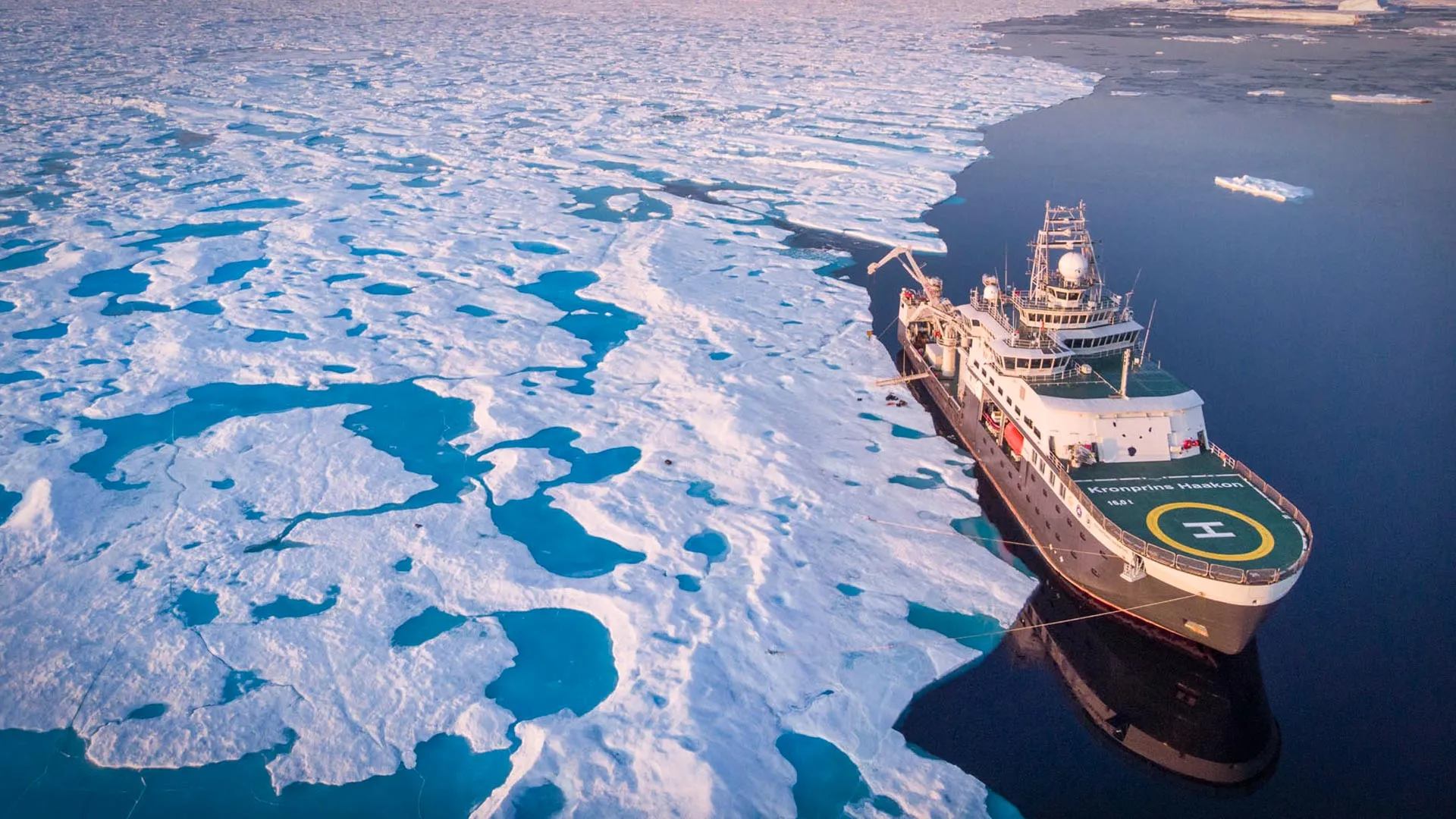
The physical mechanism is well understood: as Greenland's ice sheet melts and the North Atlantic absorbs more freshwater from rainfall and Arctic outflow, the surface becomes less salty and less dense, slowing the sinking of cold water that drives the conveyor. Paleoclimate records show the AMOC has shut down before, during the so-called Younger Dryas event roughly 12,800 years ago, plunging the North Atlantic region into a thousand-year cold snap.
The authors of the new studies are careful to distinguish weakening from collapse, but their tone has sharpened. 'We are not saying the AMOC will collapse next year, or even this century with certainty,' Portmann said in a briefing organized by ETH Zurich. 'But the evidence that we are closer to a tipping point than the central modeling estimate suggested is now substantial. Adaptation planning that assumes a stable circulation is no longer prudent.' European Union climate ministers, meeting in Copenhagen on Wednesday, said the bloc would commission a formal review of coastal infrastructure assumptions by the end of the year, and the U.S. National Oceanic and Atmospheric Administration confirmed it would expand its array of moored observatories in the subpolar gyre starting in 2027.