Papyrus Fragment of Homer's 'Iliad' Found Tucked Inside Egyptian Mummy at Oxyrhynchus
It is the first time a Greek literary text has been found deliberately incorporated into the embalming process — a 1,600-year-old puzzle for archaeologists.

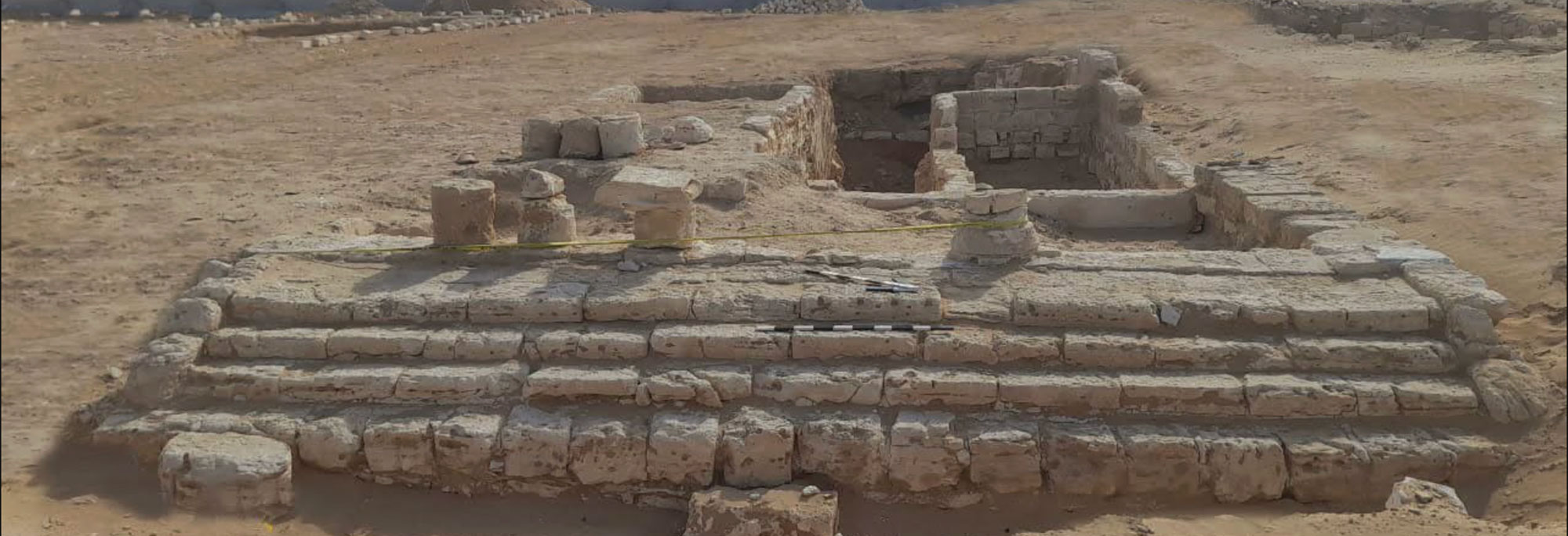
Archaeologists working at the ancient Egyptian site of Oxyrhynchus have unearthed a Roman-era mummy with a papyrus fragment of Homer's Iliad tucked into its abdominal cavity, an arrangement so unusual that researchers say there is no precedent for a Greek literary text being deliberately incorporated into the embalming process. The roughly 1,600-year-old mummy was recovered from Tomb 65 of Sector 22 during a Spanish-led excavation that ran from November to December 2025; analysis of the fragment was published in late April 2026 by the joint mission of the University of Barcelona and the Egypt Exploration Society.
The Iliad passage comes from Book Two, the section ancient readers called the Catalogue of Ships — a long roll-call enumerating the Greek contingents that sailed for Troy. Mission director Esther Pons Mellado of Spain's National Archaeological Museum said the lines are written in a clear bookhand on a sheet of papyrus that had been folded and pressed against the lower torso before the body was wrapped. 'We have found papyri inside Roman-period mummies before,' Pons Mellado said, 'but their contents have always been magical or ritual — protective spells, hymns, name lists. A fragment of Homer used as a deliberate funerary inclusion is something we simply have not seen.'
Why a copy of the Iliad ended up nested in a body cavity is now the central puzzle. One hypothesis, advanced by University of Barcelona Egyptologist Maite Mascort, is that the deceased was a teacher or a literate professional whose family chose Homer's catalog of heroes — a text used for centuries as a school primer — as a kind of symbolic credential for the afterlife. Another possibility is more pragmatic: that the embalmers reached for whatever scrap papyrus was at hand to pad the cavity, and Homer was simply what was lying around in a Greco-Roman administrative town. The text shows clear signs of wear and erasure consistent with reuse.
The tomb itself yielded other significant finds. Several mummies in the chamber had golden or copper foil tongues placed in their mouths, a practice intended to allow the deceased to address the god Osiris during the judgment of the dead. Painted cartonnage masks, ceramic offering vessels and demotic-language inscriptions on the tomb walls suggest the burials belonged to a relatively prosperous family that lived in Oxyrhynchus during the third or fourth century, when the town remained a hub for papyrus production and Greco-Egyptian scholarship.
Oxyrhynchus has long been one of the most important sites in the world for the recovery of ancient texts. Beginning with the 1897 excavations of British scholars Bernard Grenfell and Arthur Hunt, more than half a million papyrus fragments have been pulled from the city's enormous garbage mounds, including previously lost works by Sappho, Sophocles and Menander. Researchers say the new Iliad fragment will be conserved at the Egyptian Museum in Cairo, with imaging and full transcription expected to be published in the journal Zeitschrift für Papyrologie und Epigraphik later this year.