
Physics
KAIST Pins Down Barium Titanate's True Optical Properties After Decades of Conflicting Values
Mueller-matrix ellipsometry on single crystals gives chip designers reliable numbers for a promising material used in optical modulators.
Topic
78 stories from Planck Standard. Latest: November 10, 2026.
Mueller-matrix ellipsometry on single crystals gives chip designers reliable numbers for a promising material used in optical modulators.

A Japanese physicist says a sharp infrared signal long read as molecular change can come from optics alone, and proposes a dilution test to tell the two apart.

Stuttgart physicists turned silicon's strong UV absorption into an advantage, building half-millimeter mirrors from tiny elliptical cavities in a single etching step.

A fingernail-sized photonic chip sorted partially coherent light from two and then three lasers into separate, uncorrelated beams for the first time.

The 461-nanometer laser pairs a linewidth below 30 kilohertz with frequency tuning over 900 megahertz, and it sent an image through water and detected candle smoke.

A lithium niobate converter shifts 393 nm photons from trapped calcium ions to 1550 nm telecom light with 28.8% efficiency and very little noise, a step toward larger quantum networks.

University of Washington researchers built more than 600 nanophotonic cavities on diamond with 99.5% yield, a step toward quantum networks that can be manufactured at scale.

A Caltech and UC Santa Barbara team built a Brillouin ring-laser gyroscope that measures rotation as slow as 37 degrees per hour, using only milliwatts of optical power.

Researchers at the Joint Quantum Institute and partners lock a chip-based comb into a single clean set of 'tick marks' using light solitons, a Nature paper reports.

The Nano Letters demonstration on thin-film lithium niobate is a step toward chip-scale quantum memories that could be manufactured at scale.

University of Vienna physicists report that a light-based quantum processor survived launch on a Falcon 9 and produced photon pairs and interference in space.

Reported in Physical Review Letters, the trick is timing: match the speed of the atoms' motion to the length of the light pulse they emit together, and up to 89% of the light goes one direction. No mirrors, no lattice, no chiral structure required.

Instead of coaxing fragile quantum states into existence, physicists sent bright classical light through a random optical network and counted photons one at a time on the way out, exposing hidden multiphoton quantum behavior with 861 measurable components that survives noise and loss.

The design injects charge through a central core but emits only from side branches thinner than the wavelength of the light itself, so total internal reflection has nothing to work with.

Photons from neutral atoms spaced micrometers apart were routed into parallel channels of a 32-channel waveguide array with almost no crosstalk, a step toward linking quantum computers together.

No external magnets, no magnetic materials — just a germanium metasurface and a well-timed laser pulse that changes the rules while the light is still inside.
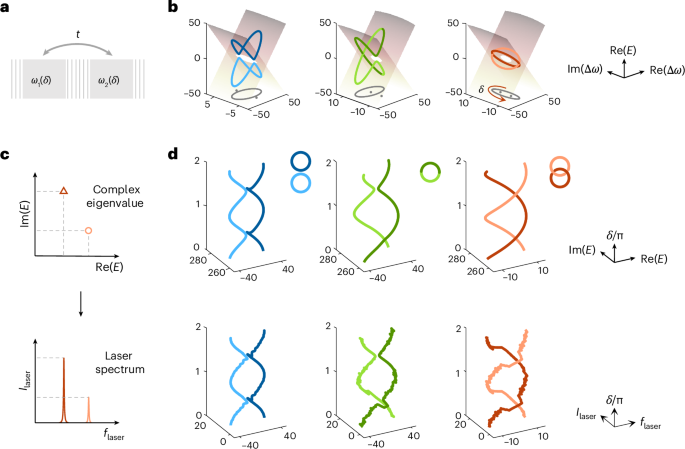
By tuning gain and detuning on an integrated photonic chip, a team watched laser frequencies wind around each other into Hopf links and Solomon links, making an abstract piece of non-Hermitian topology directly visible.

Nearly every quantum material discovered so far needs cooling to near absolute zero. This one sorts photons by their quantum statistics at room temperature.

In a potassium-tantalate-niobate crystal, electric dipoles turned out to be interlacing over and under each other in three dimensions — a structure nobody had ever seen form spontaneously in a solid.

The trick was routing one half of an entangled pair through the lenses three times instead of once. Lihong Wang's group had been stuck at 1.8× since 2023.

The trick replaces a spliced chain of different fiber types with one fiber that compresses its own pulses. The output now spans 0.86 to 2.90 micrometers without getting noisy.

The link held entanglement for 92.8% of a full day on commercial above-ground cable, moving 1,500 entangled photons per second through heat, wind and traffic vibration — conditions lab experiments never face.

A University of Tokyo team built nanoscale optics from the aperiodic monotile that solved a decades-old math puzzle in 2023 — and found diffraction patterns no quasicrystal has ever produced.

Two colors of laser light interfere inside a semiconductor and squirt electrons in a chosen direction. Rotate the light's polarization and the electron beam sweeps like a lighthouse lamp.

The silicon nitride circuit uses two tunable loop couplers to reprogram how fast a light pulse travels — something previous optical chips locked in at the factory.

In crystals a few atoms thick, researchers found that light-generated excitons don't just sit on top of the magnetism — they can sense the spin order and, under the right conditions, help control it.

A gold film thinner than a hair, carved with hundreds of microscopic slits, acts as a statistical filter on quantum states of light — no cryogenic refrigeration required.

NTU Singapore researchers used the classic Poisson spot to generate up to four kinds of exotic, knot-like light patterns at once, a strikingly simple recipe for structures that could power future data storage and computing.

Osaka researchers paired a magneto-optical layer with a phase-change material to steer, switch and store thermal radiation, a step toward circuits that manage heat the way electronics manage current.

By mechanically rotating stacked sheets of hexagonal boron nitride, researchers tuned single-photon emitters across a record range — a step toward practical quantum computers and secure communications.
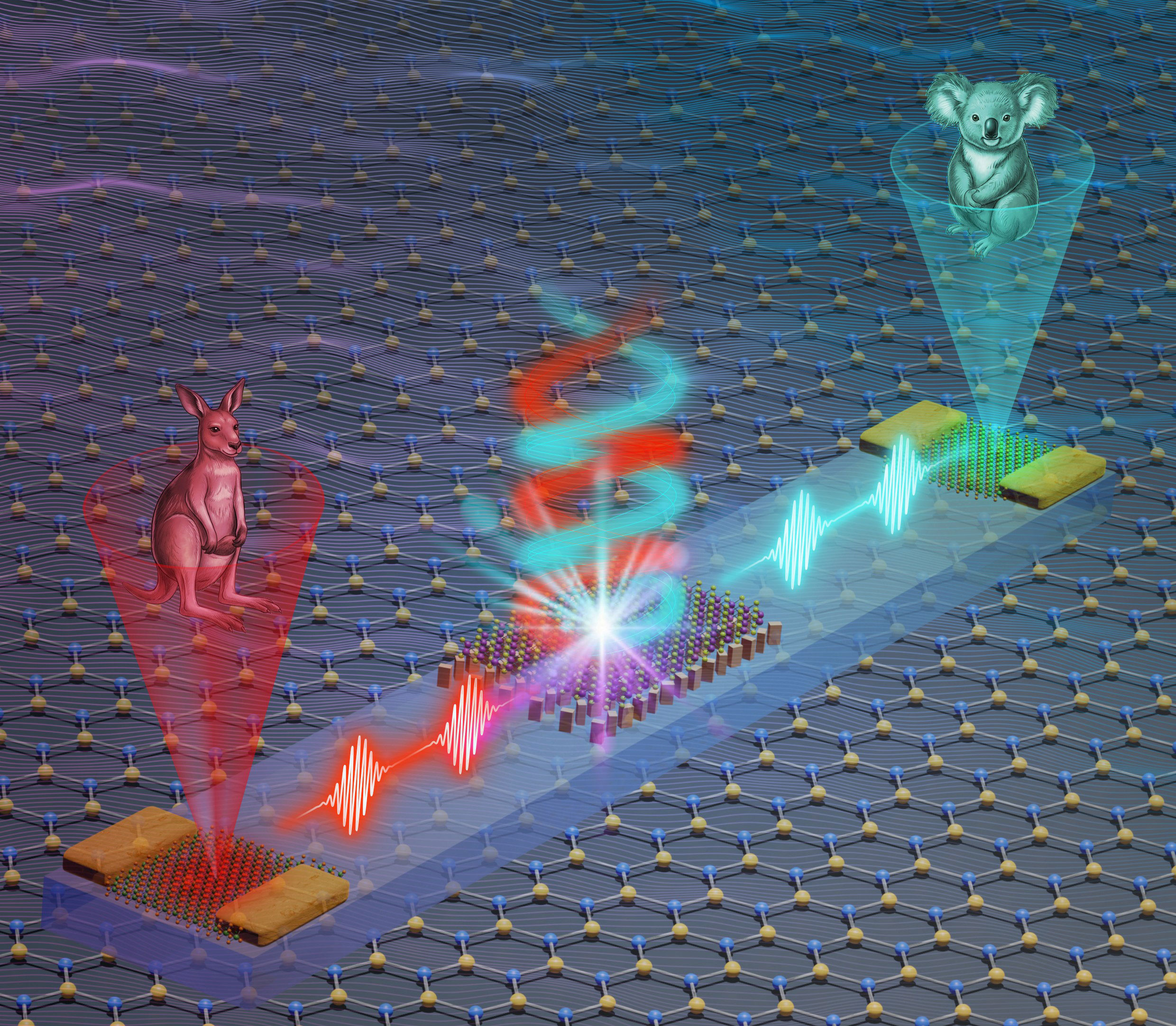
A Monash University team unveiled the first integrated 'valleytronics' circuit, using atom-thin materials to manipulate a quantum property of light and clear a long-standing bottleneck toward faster, lower-energy computing.

EPFL researchers achieve 20-year goal of integrating ultrafast laser technology that could revolutionize medical devices and atomic clocks.
EPFL researchers have developed the first integrated ultrafast laser that matches tabletop femtosecond laser performance, potentially making advanced laser technologies far smaller and more accessible.

An international team has created the first chip that can generate, steer and read light-based signals in a single device at room temperature, a milestone for the emerging field of 'valleytronics.'
EPFL researchers develop chip-scale ultrafast laser that matches tabletop performance, potentially revolutionizing medical diagnostics and atomic clock technology.
After 20-year quest, researchers create chip-scale ultrafast laser matching performance of room-sized systems, opening door to miniaturized precision technologies.

Molybdenum oxychloride demonstrates the strongest light-bending effect ever measured in nature, potentially enabling ultrathin smart contact lenses and AR glasses.
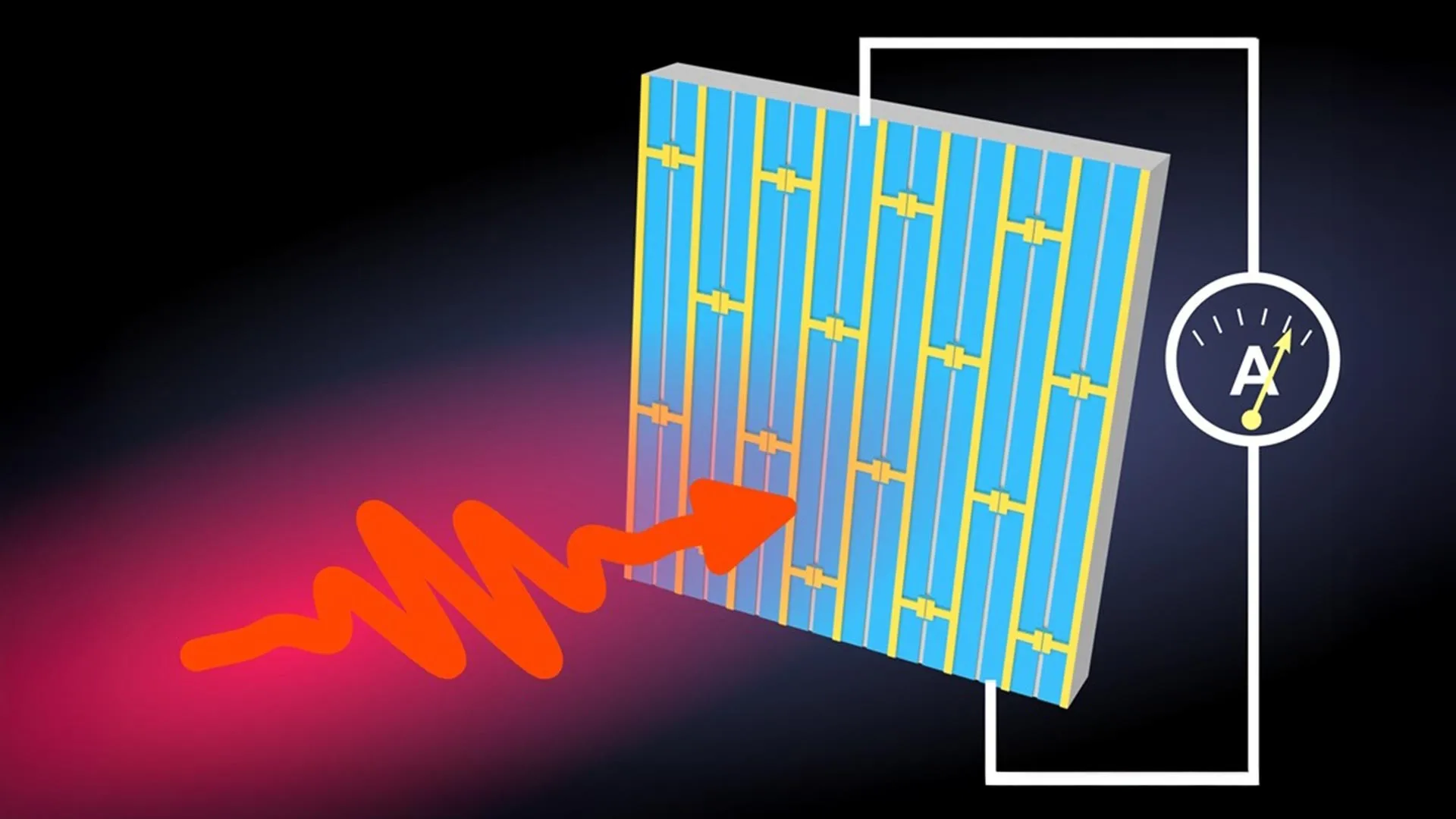
New compact detector increases terahertz radiation detection efficiency by 20 times, promising advances in healthcare and communications.
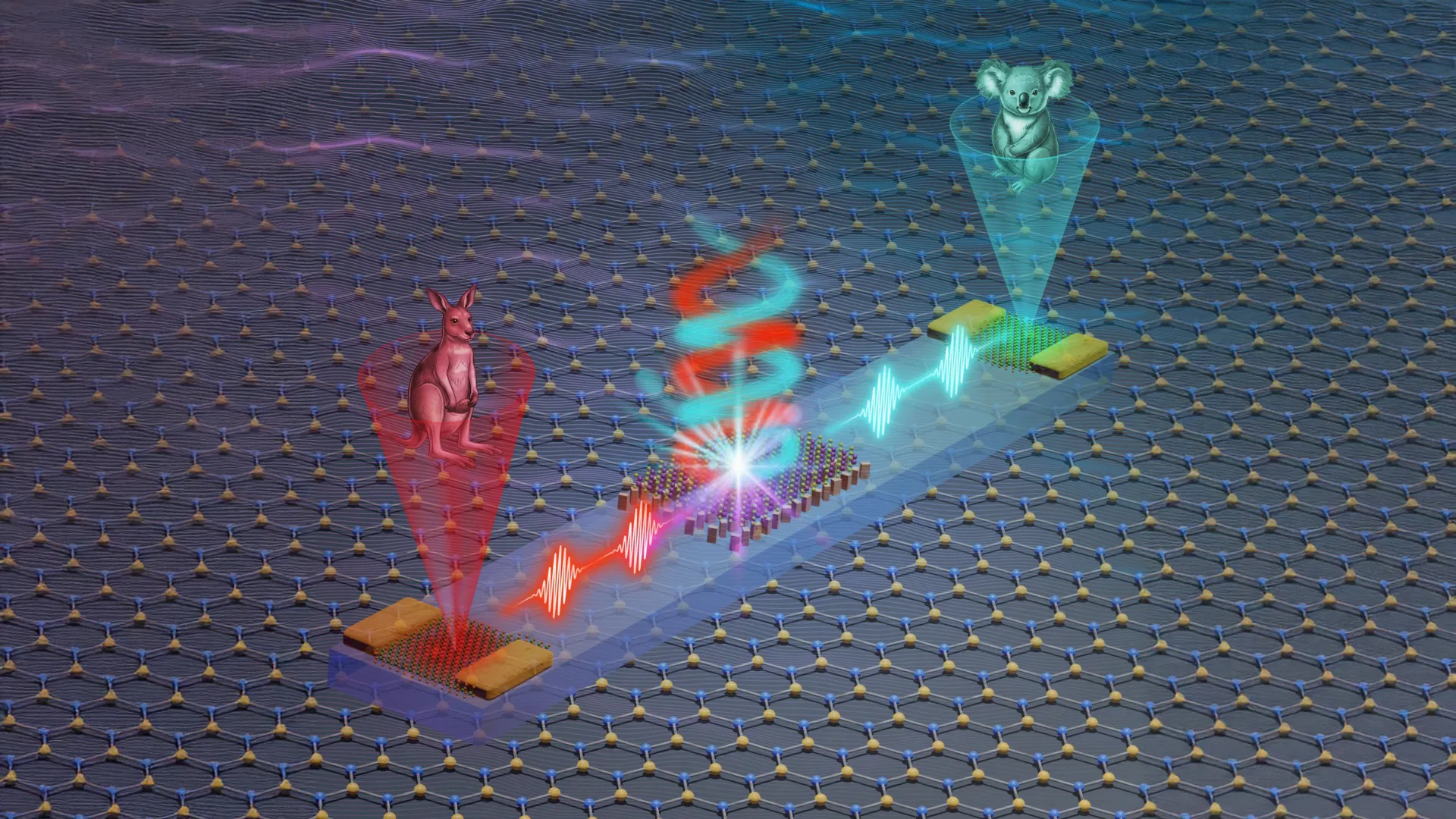
Monash University scientists create integrated device that can generate, steer, and read quantum light signals using valley degree of freedom, operating at room temperature.
Monash University scientists create compact circuit that generates, directs, and reads quantum light signals, marking major leap toward ultra-fast computing.
Monash University scientists created the first fully integrated device that can generate, steer, and read light-based information using quantum valley properties.
Scientists create integrated device that generates, steers, and reads light-based information at room temperature, marking major breakthrough for quantum technologies.
Molybdenum oxychloride exhibits strongest light-bending effect ever measured in natural material, potentially enabling invisible wearable technologies.
The breakthrough device generates, steers, and reads light-based information in a single chip using atomically thin materials and nanoscale structures.
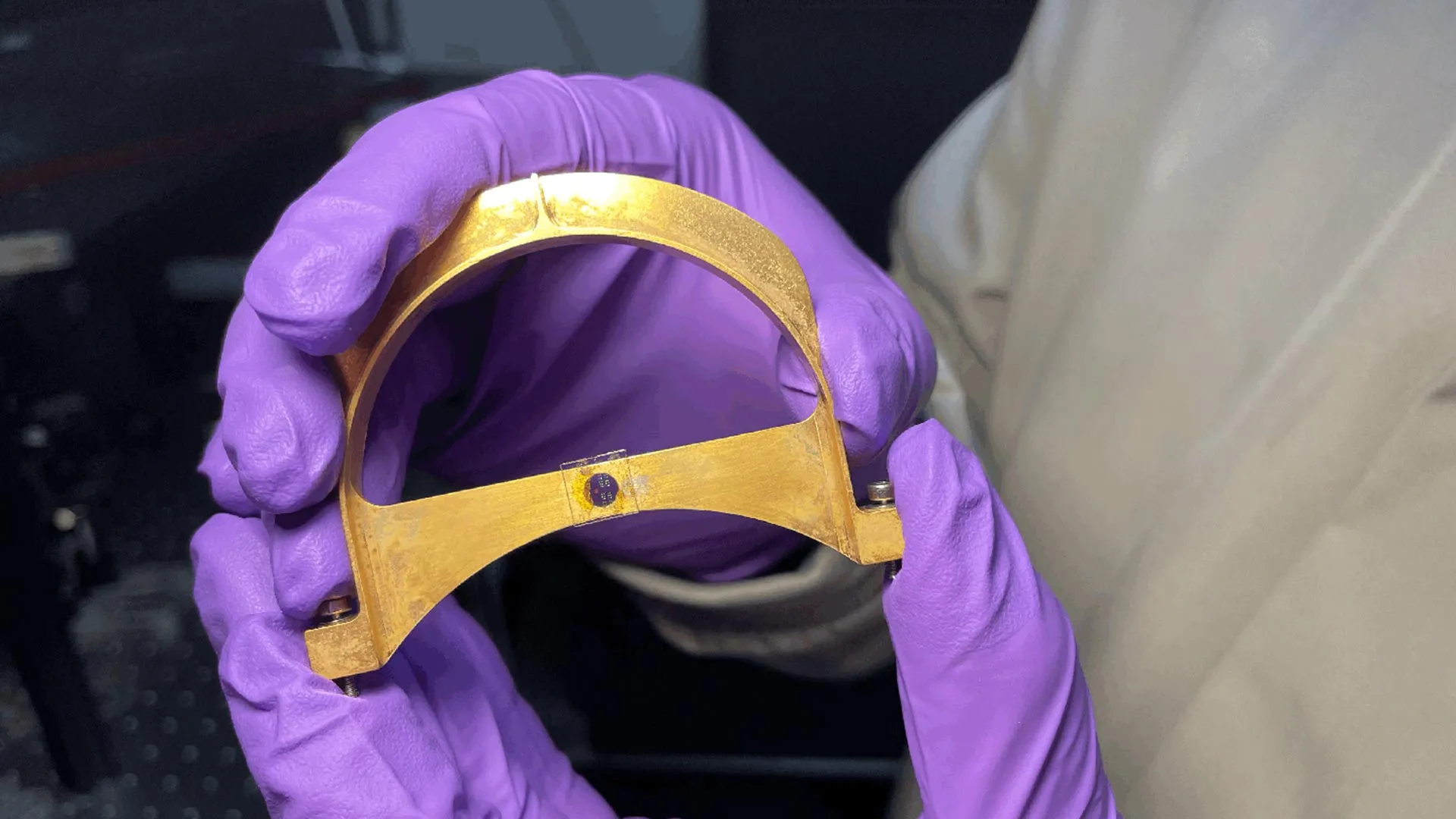
A new room-temperature quantum device uses twisted light to entangle photons and electrons, overcoming one of the biggest hurdles in quantum technology development.
Scientists map optical properties of molybdenum oxychloride, revealing strongest light-bending effect ever measured in natural material.
Stanford researchers develop nanoscale device that creates quantum entanglement without extreme cooling, potentially revolutionizing quantum technology costs and accessibility.
The breakthrough device uses twisted light to entangle photons and electrons without extreme cooling, potentially making quantum technology smaller and more affordable.
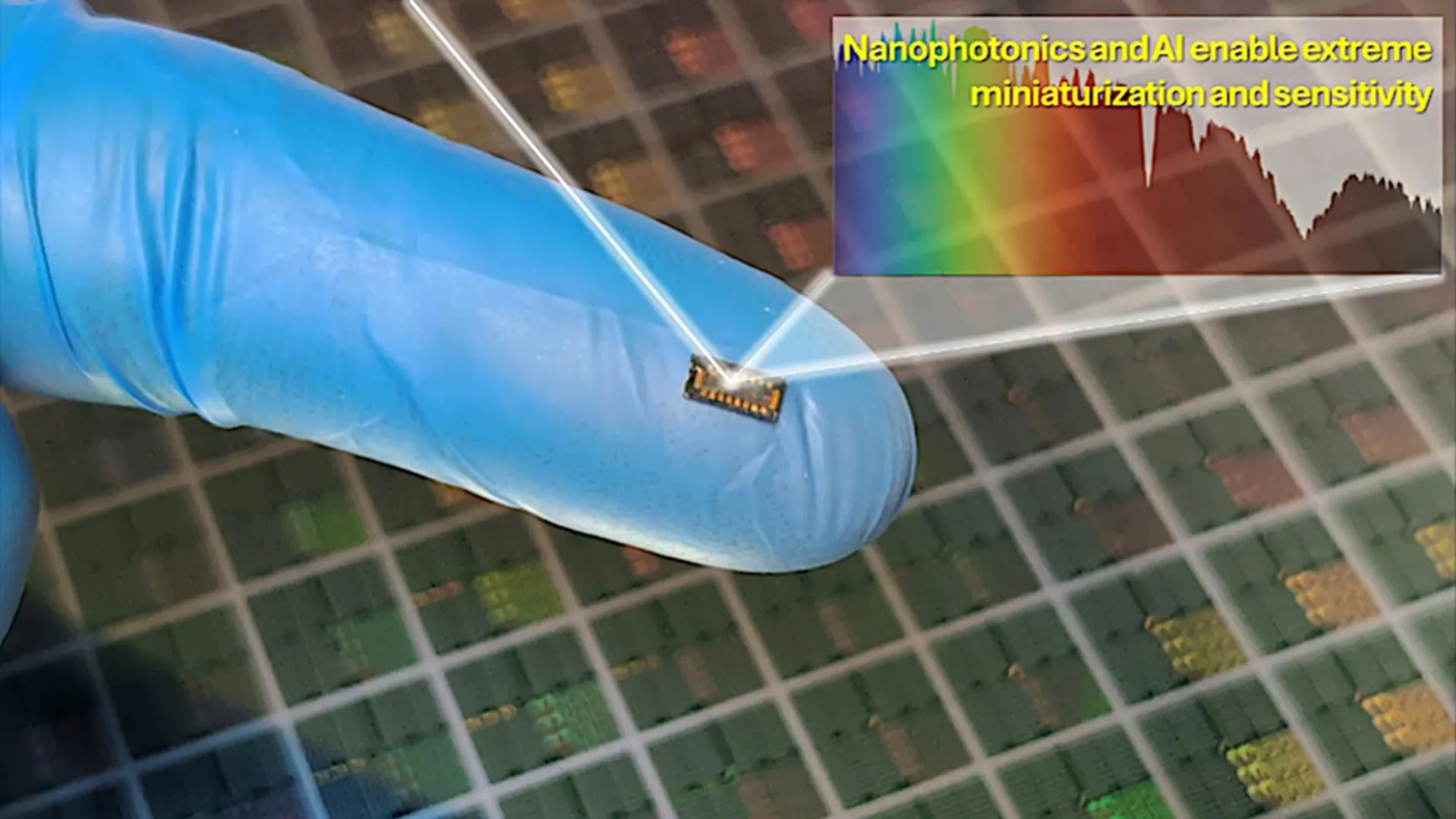
UC Davis researchers achieve lab-quality spectral analysis using silicon sensors and machine learning, eliminating the need for bulky optical equipment.

Revolutionary breakthrough shows light can be confined to extraordinarily small spaces using lossless materials, potentially enabling ultra-efficient photonic chips and quantum technologies.

International team develops mathematical framework explaining why some laser pulses rhythmically grow and shrink like they're breathing.
Physicists have uncovered a new way to confine light in extremely small spaces using purely dielectric materials, avoiding the heat losses that plague current technologies.
Breakthrough in 'singulonics' uses purely dielectric materials to confine light far beyond conventional limits without energy losses from metals.
Physicists at Peking University have uncovered a breakthrough method to confine light in ultra-small spaces using purely dielectric materials, potentially revolutionizing photonic technology.
International research team develops breakthrough model explaining why some laser pulses rhythmically grow and shrink like they're breathing.

By exploiting cyclic-shift symmetry and a photonic quantum Fourier transform, the Takeuchi lab demonstrates 95% fidelity on three photons — clearing the way for multi-photon teleportation and measurement-based quantum computing.

Cambridge researchers use molecular antennas to power insulating nanoparticles, achieving breakthrough in ultra-pure near-infrared light generation.
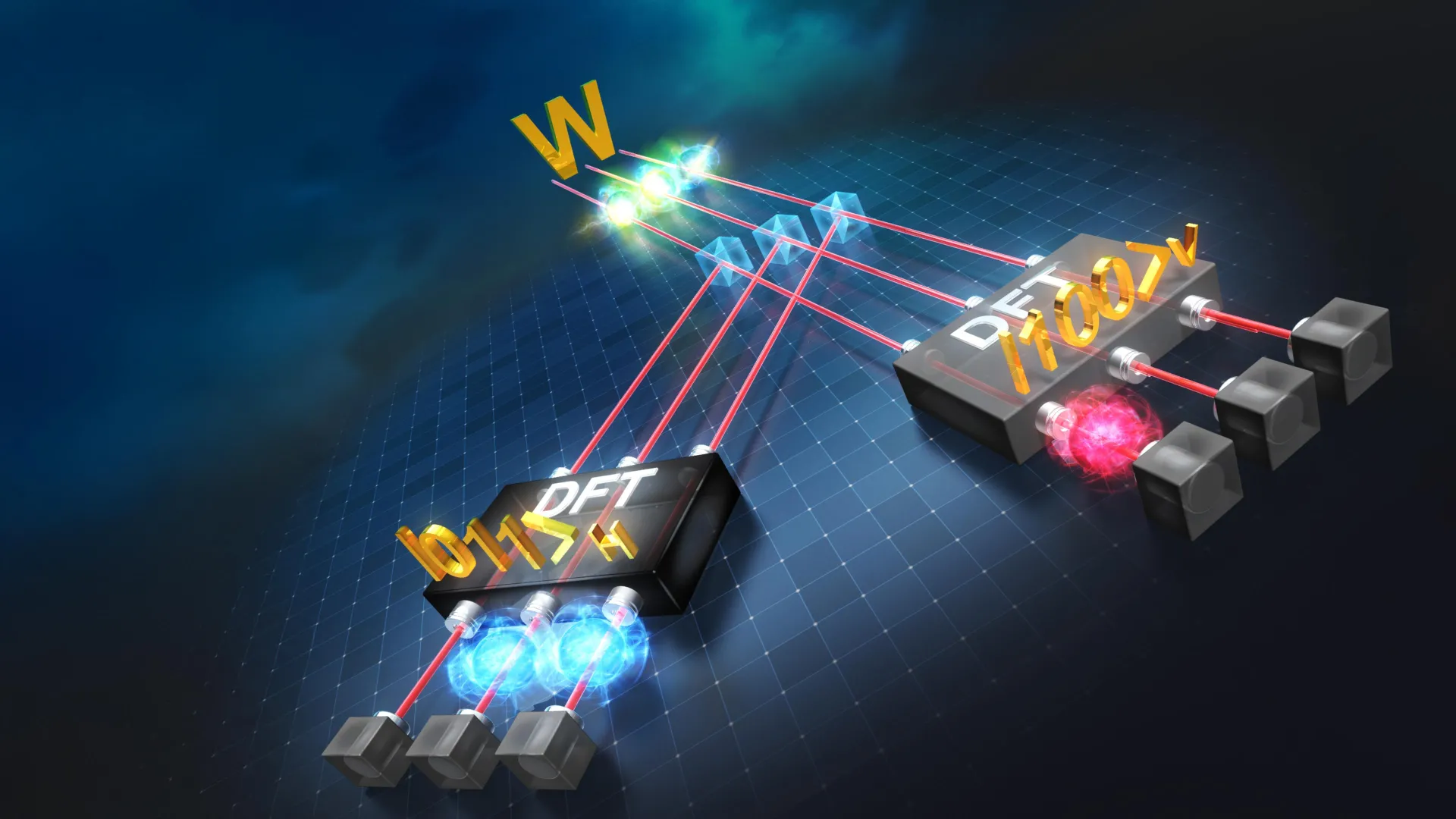
Japanese scientists develop revolutionary method to identify multi-photon quantum entanglement in single measurement, advancing quantum computing.
Japanese researchers develop revolutionary method to instantly identify elusive quantum states that could unlock faster quantum communication and teleportation.
Japanese researchers develop new method that could revolutionize quantum teleportation and computing systems.
Showing the latest 60. More in Physics.