Kyoto Physicists Crack a Decades-Old Quantum Bottleneck With the First Full Entanglement Measurement of a Multi-Photon W State
By exploiting cyclic-shift symmetry and a photonic quantum Fourier transform, the Takeuchi lab demonstrates 95% fidelity on three photons — clearing the way for multi-photon teleportation and measurement-based quantum computing.

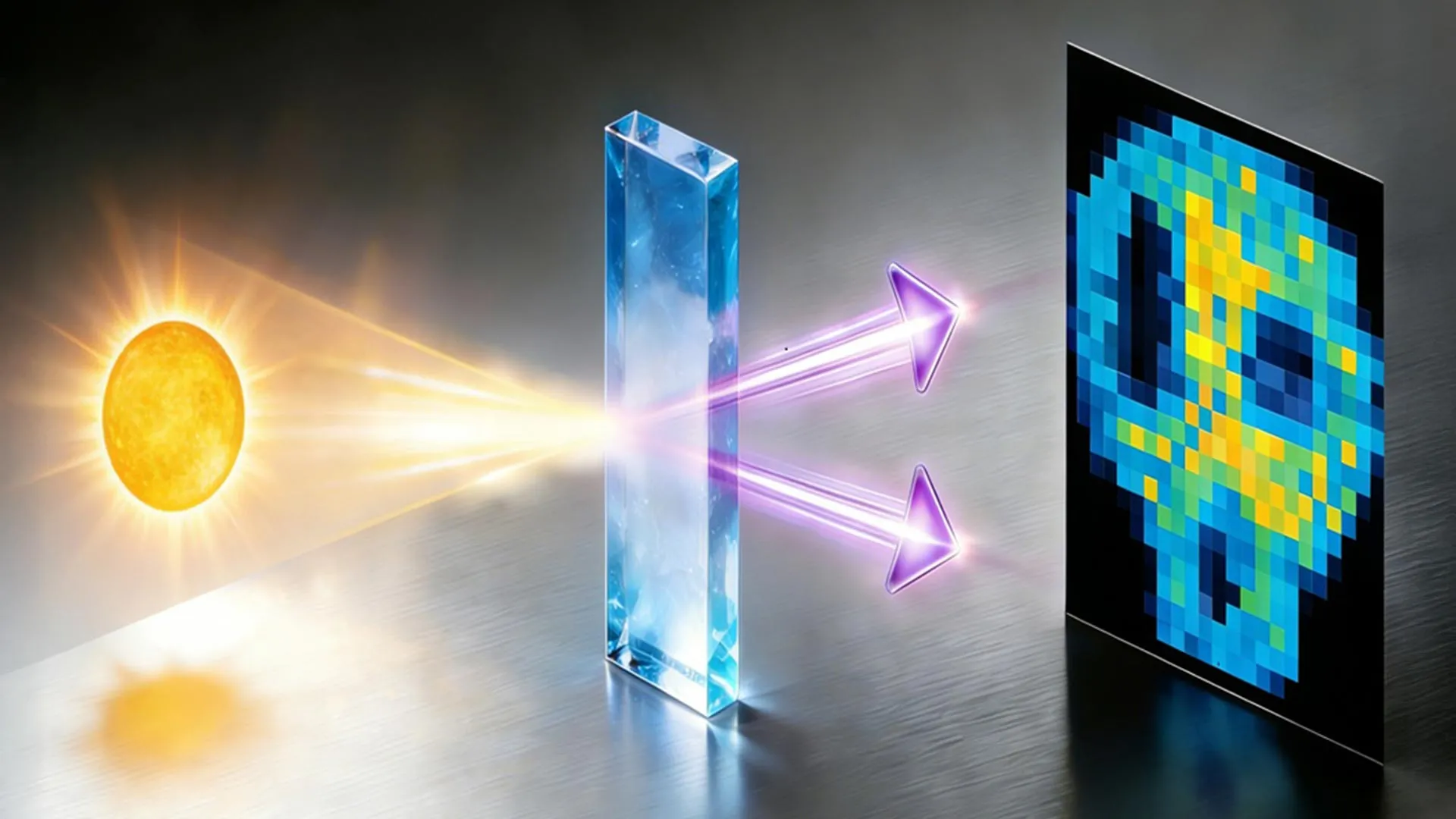
Physicists at Kyoto University and Hiroshima University have built the first photonic quantum circuit capable of performing a complete entanglement measurement on a so-called W state — one of the two fundamental types of three-or-more-particle quantum entanglement — and have demonstrated the technique experimentally with three polarized photons. The result, published this week in Science Advances, removes a long-standing roadblock for multi-photon quantum teleportation and could become a critical building block of measurement-based quantum computers and future quantum networks.
Quantum entanglement is the property by which two or more particles share a single quantum state that cannot be described independently. In systems of two particles, four maximally entangled Bell states have been routinely created, manipulated and measured for decades, and they sit at the heart of every working quantum teleportation experiment and most quantum-cryptography demonstrations. With three or more particles, however, entanglement comes in two inequivalent flavors: the GHZ state, in which all particles are correlated only when measured the same way, and the W state, in which the entanglement is more robust to particle loss but mathematically much harder to characterize. Until now, no one had built a circuit that could perform the analog of a Bell measurement for arbitrary W states.
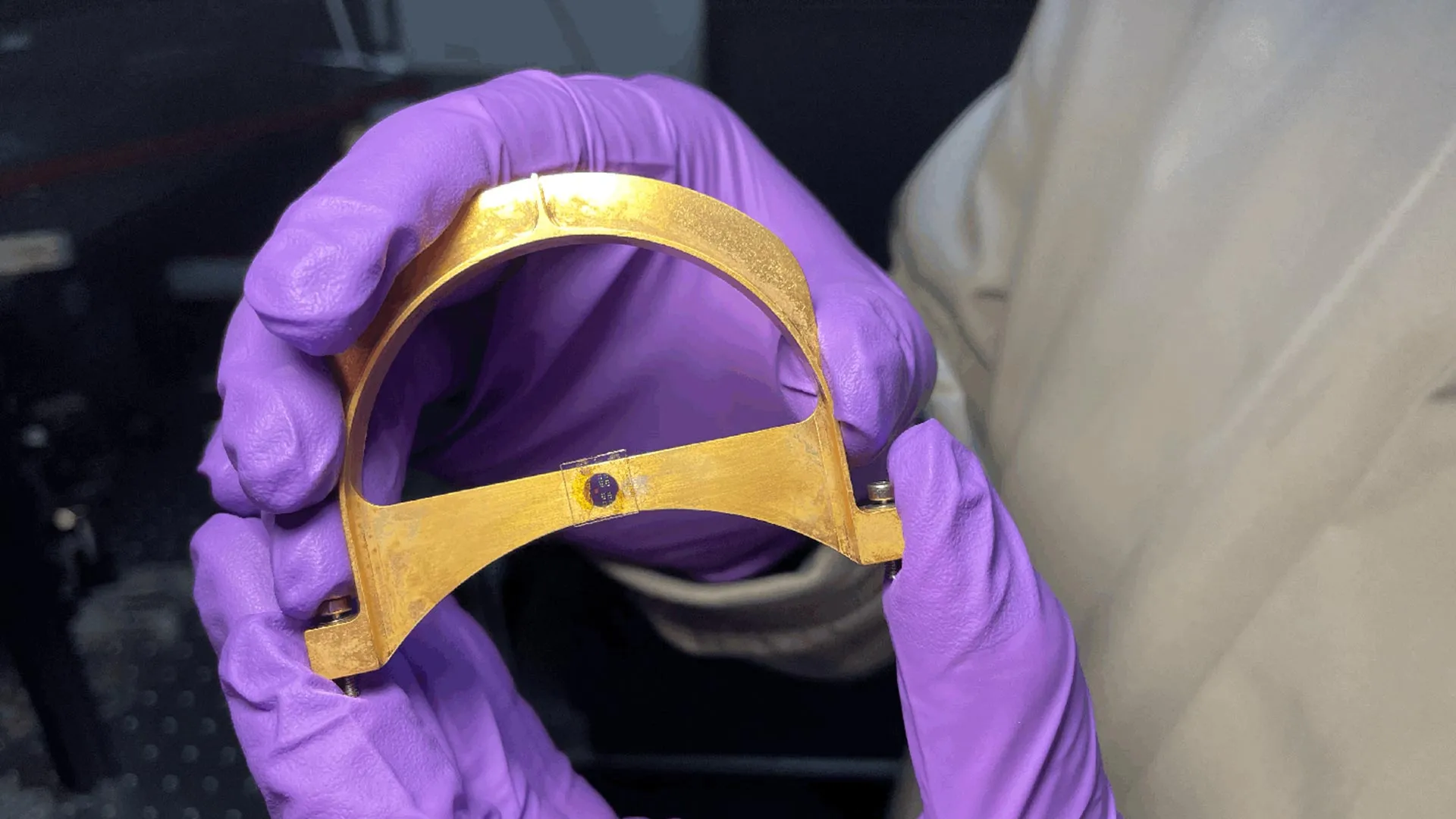
The Kyoto team, led by Professor Shigeki Takeuchi and Associate Professor Holger F. Hofmann of Hiroshima, exploited a feature of W states known as cyclic-shift symmetry — the property that the state looks the same if all of its photons are rotated forward in a cycle. By translating that symmetry into the language of the quantum Fourier transform, the researchers showed mathematically that any W state of any number of photons can be projected onto a basis of distinguishable measurement outcomes. They then built the circuit out of standard linear-optical components — beam splitters, wave plates and single-photon detectors — and verified it experimentally with three single photons prepared in carefully chosen polarization states.
"Our scheme is the first concrete demonstration that the measurement problem for W states has a clean, scalable solution," said lead experimental author Geobae Park. Co-author Ryo Okamoto added that the same circuit works for any number of photons, which is essential for the technique to be useful in real quantum networks. The team reported a measurement fidelity of more than 95% for the three-photon case, well above the threshold needed for fault-tolerant teleportation. The paper's full citation is Park et al., Science Advances 11, eadx4180 (2025), with DOI 10.1126/sciadv.adx4180.
The applications are substantial. Quantum teleportation depends on being able to project an unknown quantum state and an entangled reference state onto a complete set of measurement outcomes; without the W-state circuit, multi-photon teleportation has had to settle for partial, probabilistic outcomes. Measurement-based quantum computing — a leading model in which a large entangled "cluster state" is consumed by single-particle measurements — likewise requires the ability to project onto arbitrary entangled bases. The new technique also unlocks new quantum cryptography protocols that exploit the loss-tolerant nature of W states, a property that becomes critical as quantum networks attempt to span continental distances. Companies racing to build photonic quantum computers, including PsiQuantum and Xanadu, are likely to study the result closely; Takeuchi said his group is now working to scale the circuit to four-photon W states and to integrate it onto silicon-photonics chips with NTT Corporation.