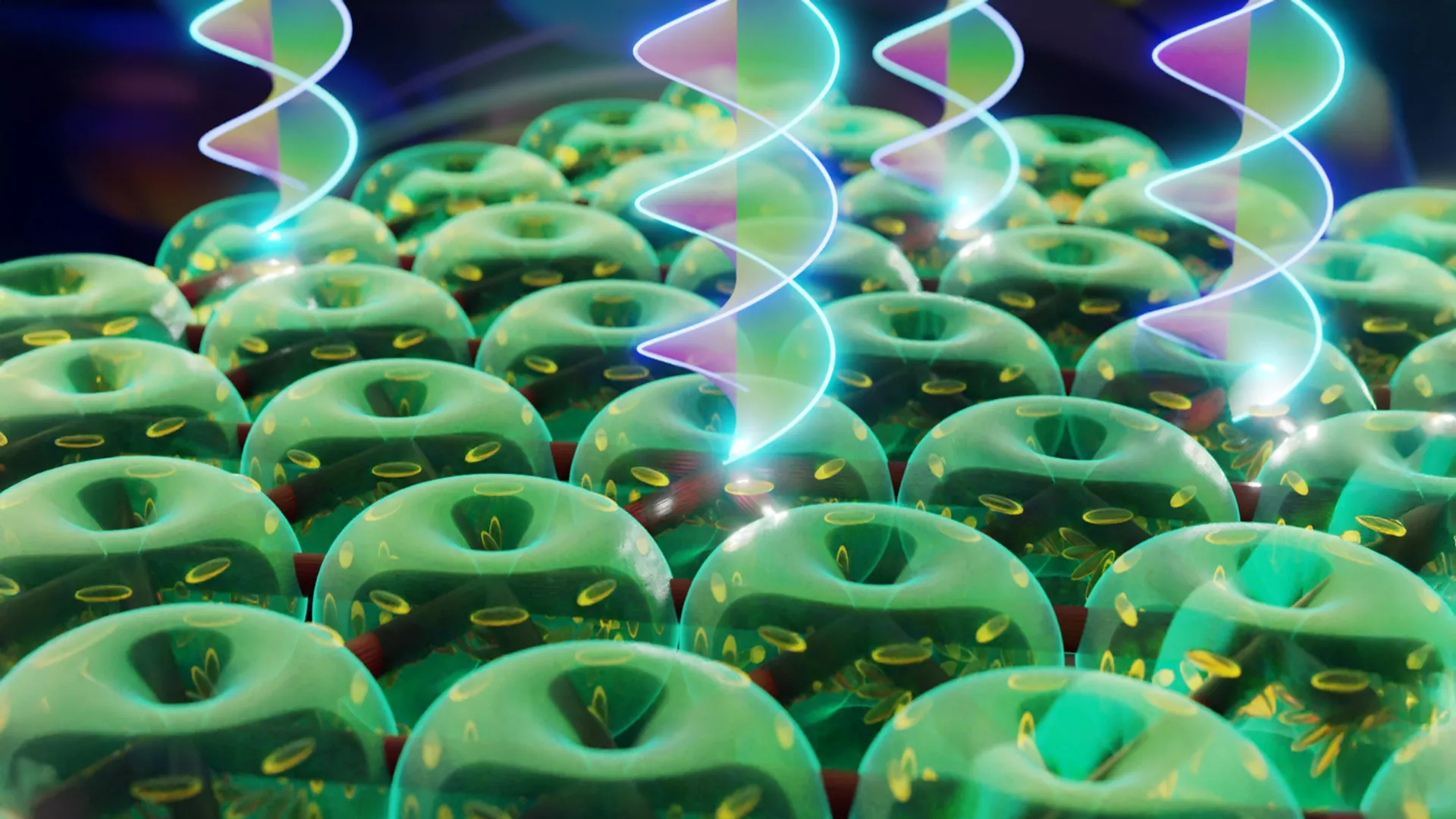
Engineers Build a Material That Can 'Program' Heat — and Remember the Setting With the Power Off
Osaka researchers paired a magneto-optical layer with a phase-change material to steer, switch and store thermal radiation, a step toward circuits that manage heat the way electronics manage current.
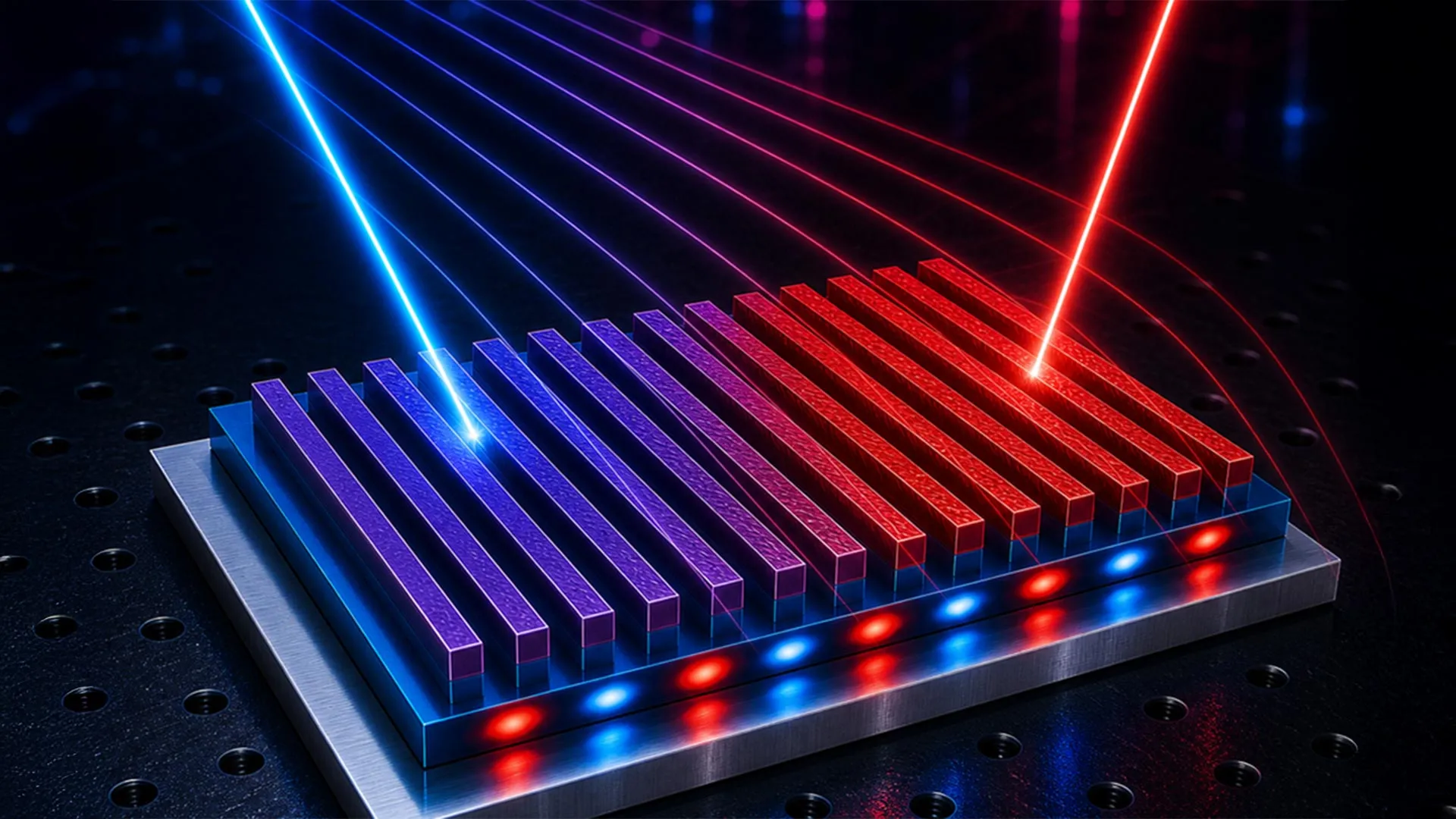
Heat is usually something engineers try to get rid of, not something they can command. But researchers in Japan have built a material that can effectively be "programmed" to control heat — directing where thermal radiation goes, switching it on and off, and even remembering its setting after the power is cut.
The work, from a team at Osaka Metropolitan University and published in the journal Laser & Photonics Reviews, pairs a magneto-optical material with a so-called phase-change material known as GST, a compound that can flip between distinct structural states and hold whichever state it is left in. Together, the two components let the device do something ordinary materials cannot: actively shape the infrared radiation, or heat, that it emits.
Conventional thermal emitters are governed by a principle of reciprocity, which loosely means that heat radiated in one direction is mirrored by heat absorbed from the same direction, leaving little room to steer the flow. The Osaka device breaks free of that constraint, allowing researchers to control the direction of emission, toggle the radiation between modes, and — crucially — retain a chosen configuration without any continuous power. That last feature makes the material behave like a non-volatile memory, the kind that keeps its data when a gadget is switched off.
"We made heat radiation behave in a 'smarter' way," said Dr. Shunsuke Murai of the university's Graduate School of Engineering, one of the researchers behind the design. His colleague, Professor Koichi Okamoto, framed the ambition in terms familiar to anyone who understands electronics: the goal, he said, is "compact devices that can actively control heat radiation, much like electronic circuits control the flow of electricity."
That analogy hints at why the advance could matter beyond the laboratory. If heat can be routed and stored the way electric current is routed and stored, engineers could build smarter infrared sensors that see selectively, energy-conversion systems that harvest waste heat more efficiently, and even photonic memory devices that encode information using light and heat rather than electrical charge. Thermal-communication technologies, which would send signals through carefully controlled infrared emission, are another possibility.
The prototype is an early step, and turning a proof-of-concept material into practical components will take further engineering. But the core achievement — a substance whose thermal behavior can be set, switched and remembered — points toward a future in which heat is no longer just a byproduct to be dissipated, but a signal to be programmed, stored and put to work.