Physicists Recreate Hawking Radiation in a Strand of Fiber — and Find It's Simpler Than Anyone Thought
A tabletop 'black hole' made of light offers the clearest evidence yet for Stephen Hawking's most famous prediction, and a rare window into quantum gravity.

Half a century after Stephen Hawking predicted that black holes should faintly glow, physicists have recreated that ghostly radiation inside an ordinary strand of optical fiber — and discovered that the glow arises through a far simpler process than theorists had assumed.
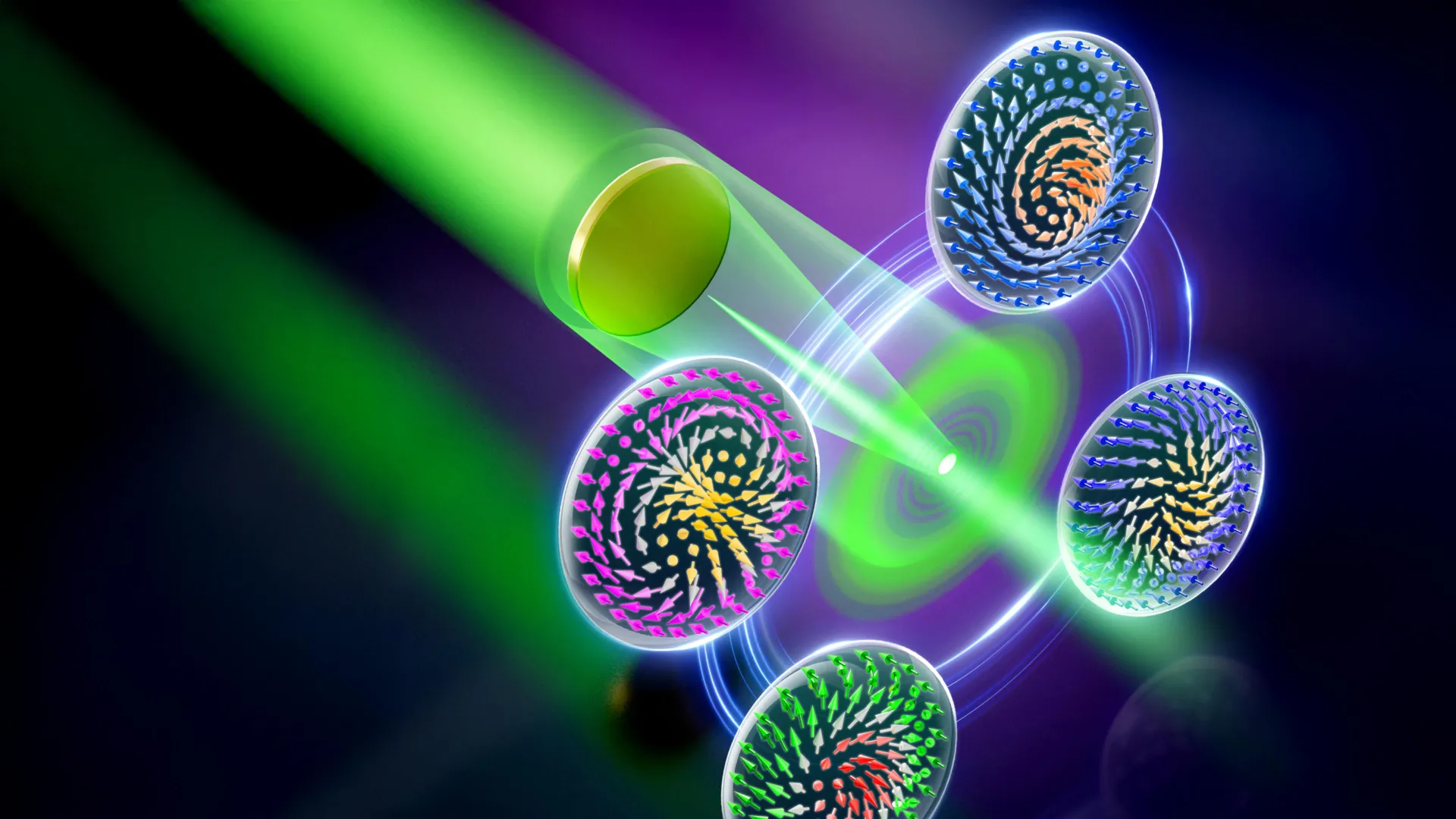
The work, published in the journal Nature under the title 'Backreaction of stimulated Hawking radiation in an optical analogue,' was carried out by an international team from the Weizmann Institute of Science in Israel, Cinvestav in Mexico and Paderborn University in Germany. Rather than a real black hole, the researchers built an analogue: an 'optical horizon' inside a fiber, a boundary that light cannot cross, mimicking the point of no return around a collapsed star.
Hawking's 1974 insight was that the intense conditions at a black hole's edge should pull particles out of the vacuum itself, causing the object to radiate and, over unimaginable spans of time, evaporate. The effect is so faint around real black holes that it has never been directly observed. Analogue systems — fluids, cold atoms and now light in a fiber — let physicists study the underlying physics in a controlled laboratory instead.
The team found theoretical and experimental evidence that the radiation emerges from 'a simple, direct process rather than the complicated cascaded process previously assumed.' In plain terms, the glow appears to come straight from how light behaves at the horizon, without the tangled chain of quantum interactions many models had built in — a cleaner picture that could reshape how the effect is understood.
Crucially, the experiment also captured 'backreaction' — the way the emitted radiation loops back and influences the very system producing it. That feedback is central to one of physics' deepest puzzles: how black holes lose energy and whether information can truly be destroyed, questions that sit at the fault line between quantum mechanics and Einstein's gravity.
The researchers are careful to stress they have not detected radiation from an actual black hole. But by reproducing the phenomenon on a lab bench, and showing it is more universal and more direct than expected, they have handed theorists a rare experimental foothold on quantum gravity — a chance to test ideas about the cosmos's most extreme objects using nothing more exotic than a carefully engineered pulse of light.