Where to Hunt for a Dyson Sphere? New Study Says Aim at Dying and Dim Stars
An astronomer argues that red dwarfs and white dwarfs are the best places to catch an alien megastructure, if one exists, by its telltale infrared afterglow.
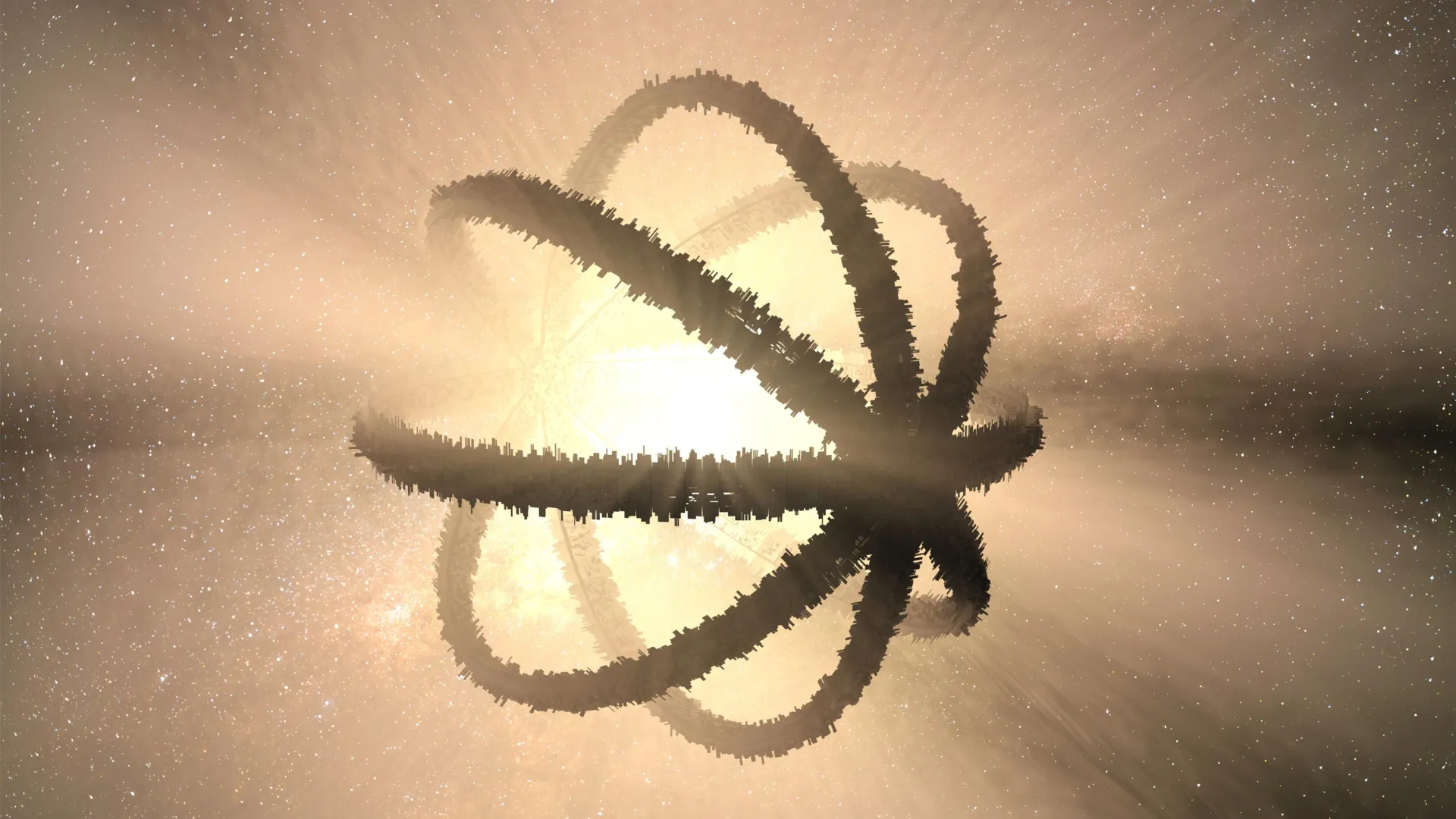
If an advanced civilization ever wrapped a star in machinery to harvest its power, the best place to catch it may not be a Sun-like star at all, but the galaxy's most modest and its most dead ones. That is the conclusion of a new study mapping out where humanity should point its telescopes to hunt for a Dyson sphere.
A Dyson sphere — named for physicist Freeman Dyson — is a hypothetical swarm of collectors that a super-advanced civilization might build to capture nearly all of a star's energy. Such a structure would absorb visible starlight and re-emit it as waste heat, leaving a distinctive infrared fingerprint. The new analysis, by Amirnezam Amiri of the University of Arkansas, argues that two kinds of stars make the search dramatically easier.
Red dwarfs, the small, cool stars that vastly outnumber all others in the Milky Way, top the list. They burn their fuel so slowly they can shine for trillions of years, giving any civilization time to build, and a swarm orbiting close in — between 0.05 and 0.3 astronomical units — would need far less material than one girdling a larger, hotter star. A shell around a red dwarf could suppress its temperature from around 3,000 kelvin to as low as 50 kelvin, a jarring signature no natural process easily explains.
White dwarfs, the dense embers left when stars like our Sun die, are the study's second target. Only about the size of Earth, they are so compact that a collector could sit just a few million kilometers above the surface, slashing the raw tonnage of material required to encircle them. Their small size makes any surrounding structure's heat glow stand out sharply against the background.
Amiri lays out three observable tells: an infrared excess from re-radiated heat; an 'unusually clean' spectrum lacking the dusty emission that normally accompanies stars; and irregular, 'non-natural' flickers in brightness as an uneven swarm passes across the star. Together, those features could separate an engineered object from the many natural phenomena that mimic parts of the signal.
The idea is not purely academic. An earlier survey, Project Hephaistos, sifted through some five million stars and flagged seven intriguing infrared-bright candidates; five survived closer scrutiny after one was traced to a background black hole. The study, slated for the journal Universe with a preprint on arXiv, does not claim any megastructure has been found. But it sharpens the search — telling astronomers not just what to look for, but exactly which stars to stare at.