Quantum Breakthrough Uses Twisted Light for Room-Temperature Computing
Stanford researchers develop nanoscale device that creates quantum entanglement without extreme cooling, potentially revolutionizing quantum technology costs and accessibility.
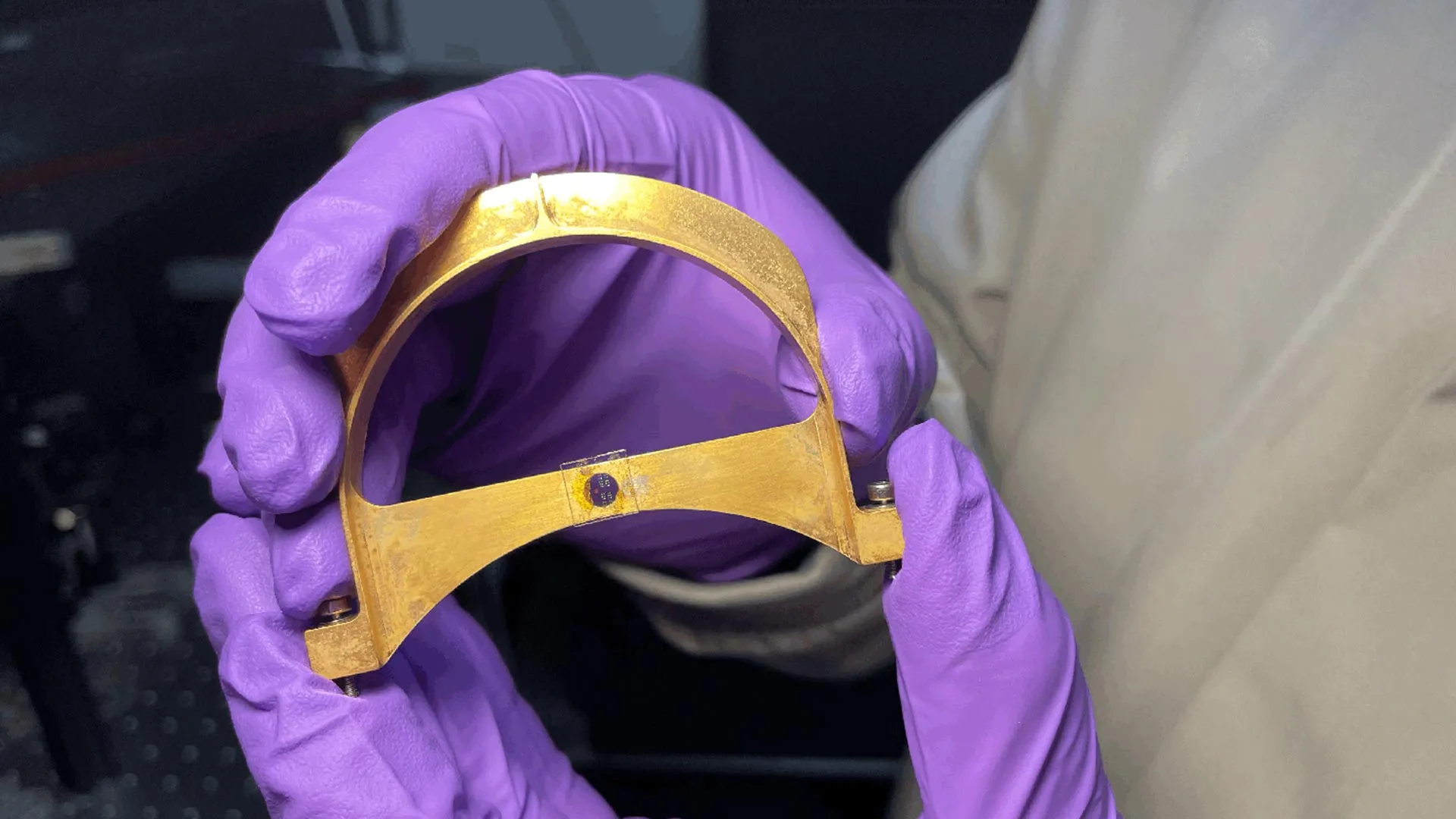
Researchers at Stanford University have achieved a major breakthrough in quantum computing by developing a nanoscale optical device that operates at room temperature while creating quantum entanglement between photons and electrons. The advance could dramatically reduce the cost and complexity of quantum technologies, which currently require expensive cooling systems that maintain temperatures near absolute zero.
The new device combines a thin layer of molybdenum diselenide with specially patterned silicon nanostructures to generate what researchers call "twisted light." This twisted light enables quantum entanglement between photons and electron spins at normal room temperatures, eliminating the need for the costly cryogenic cooling systems that have been a major barrier to practical quantum technology deployment.
"The material in question is not really new, but the way we use it is," explains Jennifer Dionne, a professor of materials science and engineering at Stanford and senior author of the study published in Nature Communications. The silicon nanostructures create photons that spin in a corkscrew fashion, which can then impart quantum spin properties to electrons that serve as the foundation for quantum computing operations.
The device relies on molybdenum diselenide, a member of the transition metal dichalcogenide family valued for its unique optical and quantum properties. The patterned nanostructures are incredibly small, roughly comparable to visible light wavelengths and invisible to the naked eye, yet they enable precise manipulation of photon behavior to create controllable quantum states.
This breakthrough addresses one of the most significant challenges facing quantum technology adoption: the enormous cost and complexity of maintaining ultra-low temperatures required by current quantum systems. By demonstrating that quantum entanglement can be achieved at room temperature, the research opens new possibilities for smaller, more affordable quantum devices that could be deployed in a much wider range of applications, from secure communications to advanced computing platforms.