
Physics
Penn Engineers Make Quantum 'Skyrmions' That Outlast the Entanglement Behind Them
A chip-scale experiment shows a topological pattern surviving after the photons' entanglement is destroyed, hinting at more resilient quantum networks.
Topic
27 stories from Planck Standard. Latest: November 2, 2026.
A chip-scale experiment shows a topological pattern surviving after the photons' entanglement is destroyed, hinting at more resilient quantum networks.

The links moved quantum states between chips with 99% average accuracy and survived three warm-and-cool cycles, a step toward building quantum computers out of modules.

A strontium ion carries the link and a calcium ion stores it, stretching entanglement across a fiber-connected network from milliseconds to more than ten seconds.

Shandong University physicists verified entanglement on six links across 20 kilometers of fiber each, closing a loophole that tampered measurement equipment could exploit.

Physicists used entangled lambda hyperons to measure how often a strange quark turns into an up quark. The numbers still add up to one — and still disagree slightly with the older kaon measurements.

A 50-year-old idea says migrating birds sense Earth's field through entangled electron pairs in their eyes. An OIST team has produced the control theory an experimentalist would need to check it, and it gets within 1% of the theoretical optimum.

The trick was routing one half of an entangled pair through the lenses three times instead of once. Lihong Wang's group had been stuck at 1.8× since 2023.

The link held entanglement for 92.8% of a full day on commercial above-ground cable, moving 1,500 entangled photons per second through heat, wind and traffic vibration — conditions lab experiments never face.

University of Chicago researchers discovered an elegant way to generate complex entangled quantum states without complicated hardware, potentially advancing quantum computing and sensing technologies.
University of Chicago researchers have developed a surprisingly straightforward approach to generate complex entangled quantum states using common laboratory equipment.
University of Chicago researchers discover surprisingly straightforward method to generate complex entangled states without sophisticated hardware.
University of Chicago researchers discover surprisingly simple method to generate powerful quantum entanglement without complex hardware.
University of Chicago researchers have discovered a surprisingly straightforward way to generate powerful entangled quantum states using small atomic energy modifications, potentially advancing quantum computing and sensing technologies.
University of Chicago researchers discover that small changes to atomic energy levels can generate complex entangled states without complicated hardware.
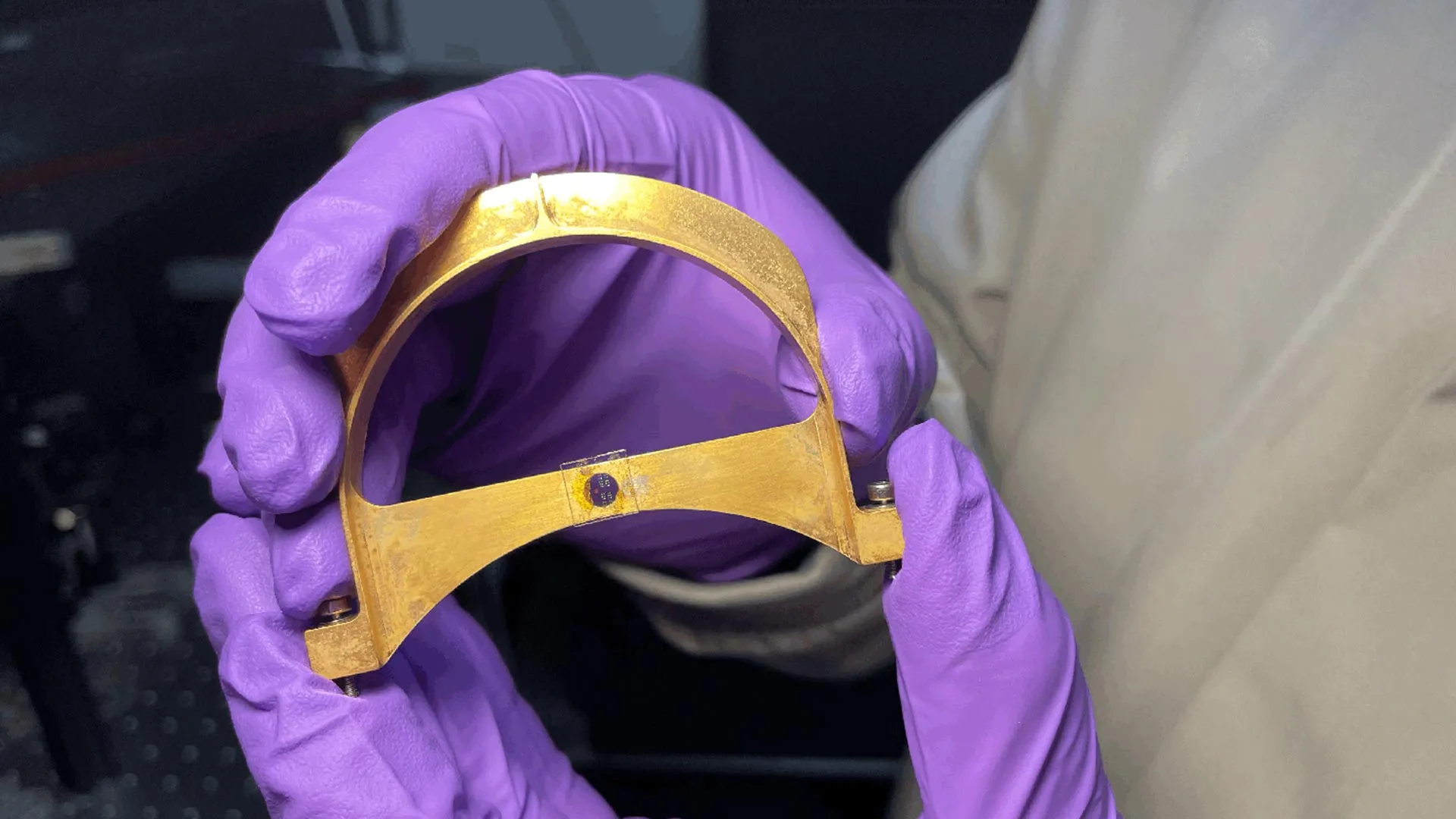
Stanford researchers develop nanoscale device that creates quantum entanglement without extreme cooling, potentially revolutionizing quantum technology costs and accessibility.
The breakthrough quantum system operates without extreme cooling by using twisted photons to entangle light and electrons, potentially enabling smaller and cheaper quantum technologies.

By exploiting cyclic-shift symmetry and a photonic quantum Fourier transform, the Takeuchi lab demonstrates 95% fidelity on three photons — clearing the way for multi-photon teleportation and measurement-based quantum computing.

A Max Planck and University of Ottawa team violated Bell's inequality and reconstructed a hidden image using only sunlight focused on a nonlinear crystal — overturning a textbook assumption about coherence and quantum optics.
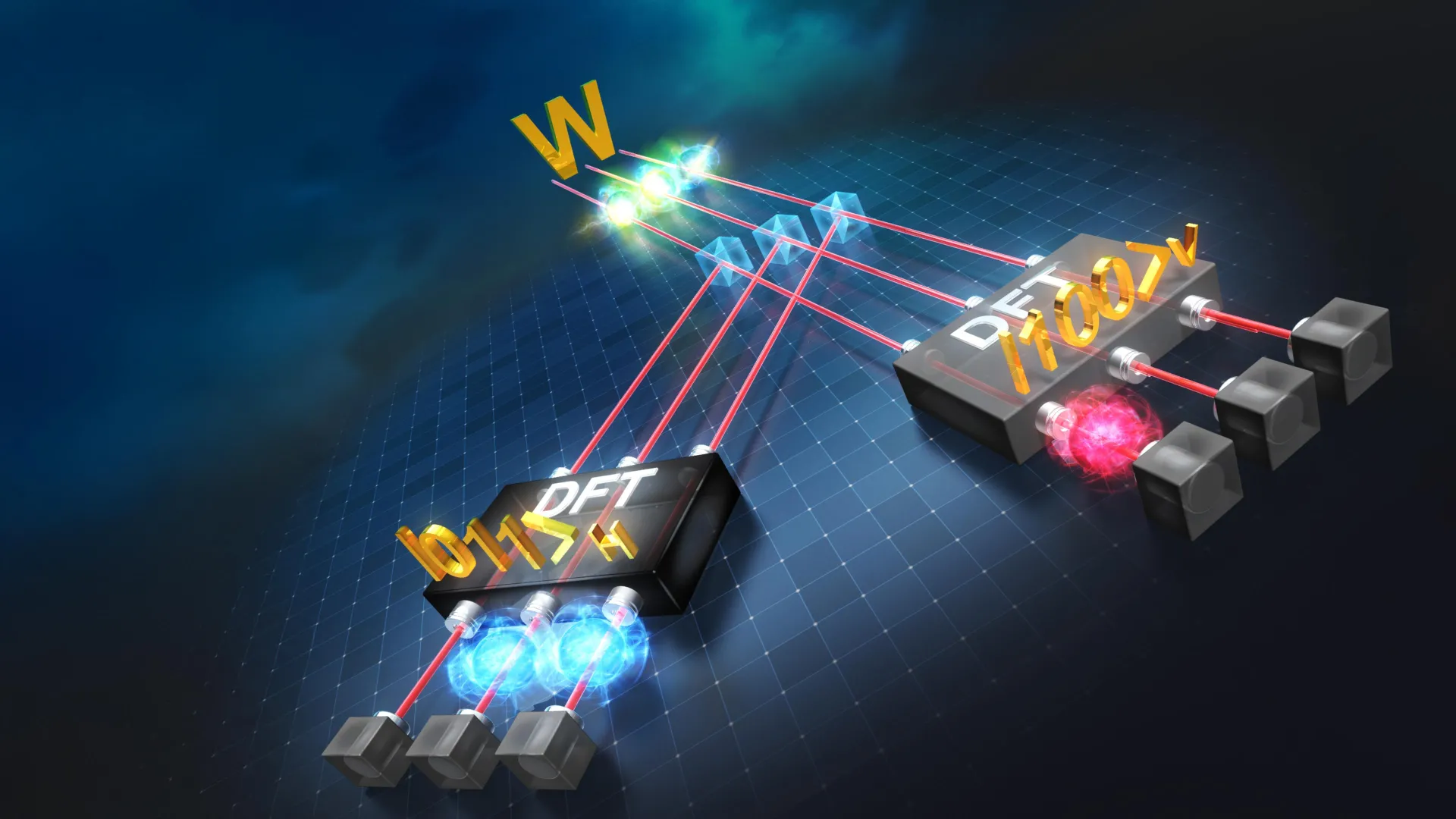
Japanese researchers develop revolutionary method to identify complex quantum entangled states in single measurements, advancing quantum computing and teleportation.

Scientists achieve quantum teleportation between separate devices over open-air link, marking crucial step toward practical quantum internet.
International research team achieves first-ever quantum teleportation between separate quantum dots over open-air link, marking key step toward quantum internet.
International team successfully teleports polarization state across open-air link in breakthrough for quantum communication networks. Achievement marks crucial step toward quantum internet.
Breakthrough demonstrates photon state transfer between independent quantum dots, marking crucial step toward quantum internet infrastructure.

New quantum system at Chalmers University could finally protect quantum information from destructive environmental interference while enabling large-scale quantum computers.

Swedish researchers propose revolutionary quantum system combining giant atoms and superatoms to protect quantum information while enabling large-scale computation.

Researchers in South Africa and China found that entangled photons carry over 17,000 distinct topological signatures across 48 dimensions — a free resource sitting in standard quantum optics setups.

UC Santa Barbara's Stephen Wilson led the discovery of a triangular lattice antiferromagnet exhibiting 'double frustration,' where magnetic and bond frustration coexist and interact, providing a new handle for accessing and controlling the exotic entangled quantum states needed for quantum computing.