Scientists Achieve First Photon Teleportation Between Separate Quantum Dots Over 270 Meters
International team successfully teleports polarization state across open-air link in breakthrough for quantum communication networks. Achievement marks crucial step toward quantum internet.

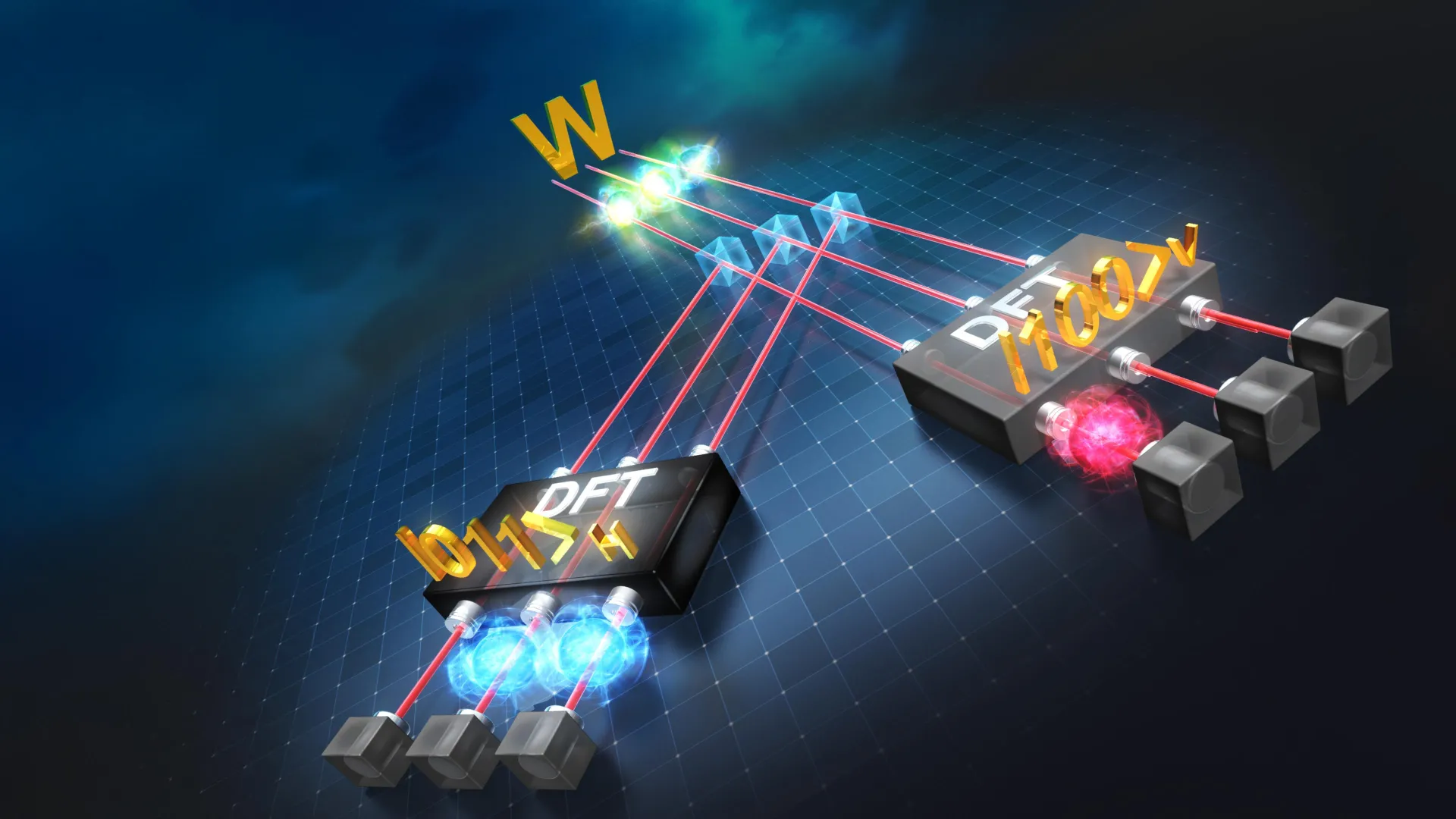
An international research team has achieved a historic milestone in quantum physics by successfully teleporting the polarization state of a single photon between two separate quantum dots connected by a 270-meter free-space optical link. The breakthrough, led by scientists from Paderborn University in collaboration with Sapienza University of Rome, represents the first successful quantum teleportation between independent quantum emitters and marks a critical advancement toward building practical quantum communication networks.
The experiment involved transferring the complete quantum properties of one photon to another physically separated photon through quantum entanglement, effectively "teleporting" its information without moving the particle itself. This process utilized semiconductor quantum dots as sources of entangled photon pairs, with researchers spending approximately ten years developing the sophisticated optical measurement and analysis techniques required for the achievement. The work demonstrates that quantum dots could serve as fundamental building blocks for future quantum internet infrastructure.
"The experiment impressively demonstrates that quantum light sources based on semiconductor quantum dots could serve as a key technology for future quantum communication networks," explained Professor Klaus Jöns, head of the 'Hybrid Photonics Quantum Devices' research group at Paderborn University. "Successful quantum teleportation between two independent quantum emitters represents a vital step towards scalable quantum relays and thus the practical implementation of a quantum internet."
The breakthrough overcomes a significant technical challenge that has long limited quantum communication systems. Previously, entangled photons had to originate from the same source, severely restricting the potential for building distributed quantum networks. The new approach allows independent quantum emitters to establish entanglement across significant distances, enabling the construction of quantum relays that could eventually span continents.
The research team's success builds on nearly a decade of strategic planning and technological development. "This result shows that our long-term strategic planning has paid off," Professor Jöns noted, adding that "the combination of excellent materials science, nanofabrication and optical quantum technology was the key to our success." The findings, published in Nature Communications, provide a foundation for developing ultra-secure communication systems that could revolutionize everything from financial transactions to national security communications by making them theoretically impossible to intercept or decode.