Stanford Built a Neural Network Out of Atoms and Light. It Held Seven Times More Memories
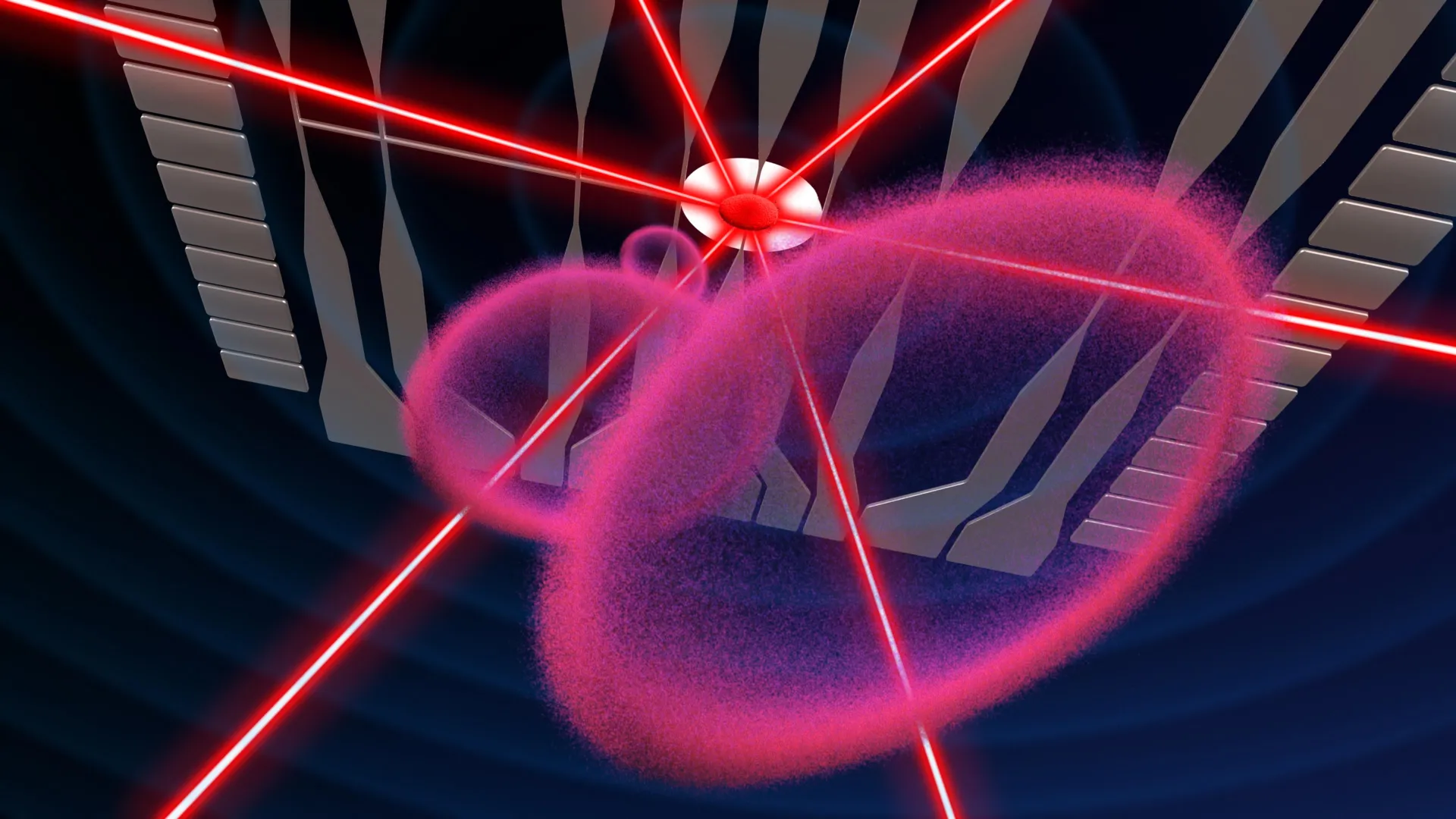
Ten thousand ultracold atoms in a mirrored cavity behaved like a spin glass, and the photons bouncing between them acted as synapses that rewired themselves.
Topic
39 stories from Planck Standard. Latest: September 5, 2026.

Ten thousand ultracold atoms in a mirrored cavity behaved like a spin glass, and the photons bouncing between them acted as synapses that rewired themselves.

A Graz-led team used time-resolved photoemission orbital tomography to reconstruct an exciton's wave function frame by frame — the first instants of light turning into electricity inside an organic semiconductor.

An Okayama University team adapted Mössbauer spectroscopy to use ultraviolet laser light instead of gamma rays, and mapped every seat the nucleus can take.

A Chinese-led team put niobium diselenide inside a terahertz 'dark' cavity and raised its critical temperature without touching it, driving it, or shining anything on it.

Reading two quantum signals at once cut thermal drift by roughly a factor of ten. Over 2.3 days, the prototype beat a standard rubidium clock by about 200-fold.

The trick was routing one half of an entangled pair through the lenses three times instead of once. Lihong Wang's group had been stuck at 1.8× since 2023.

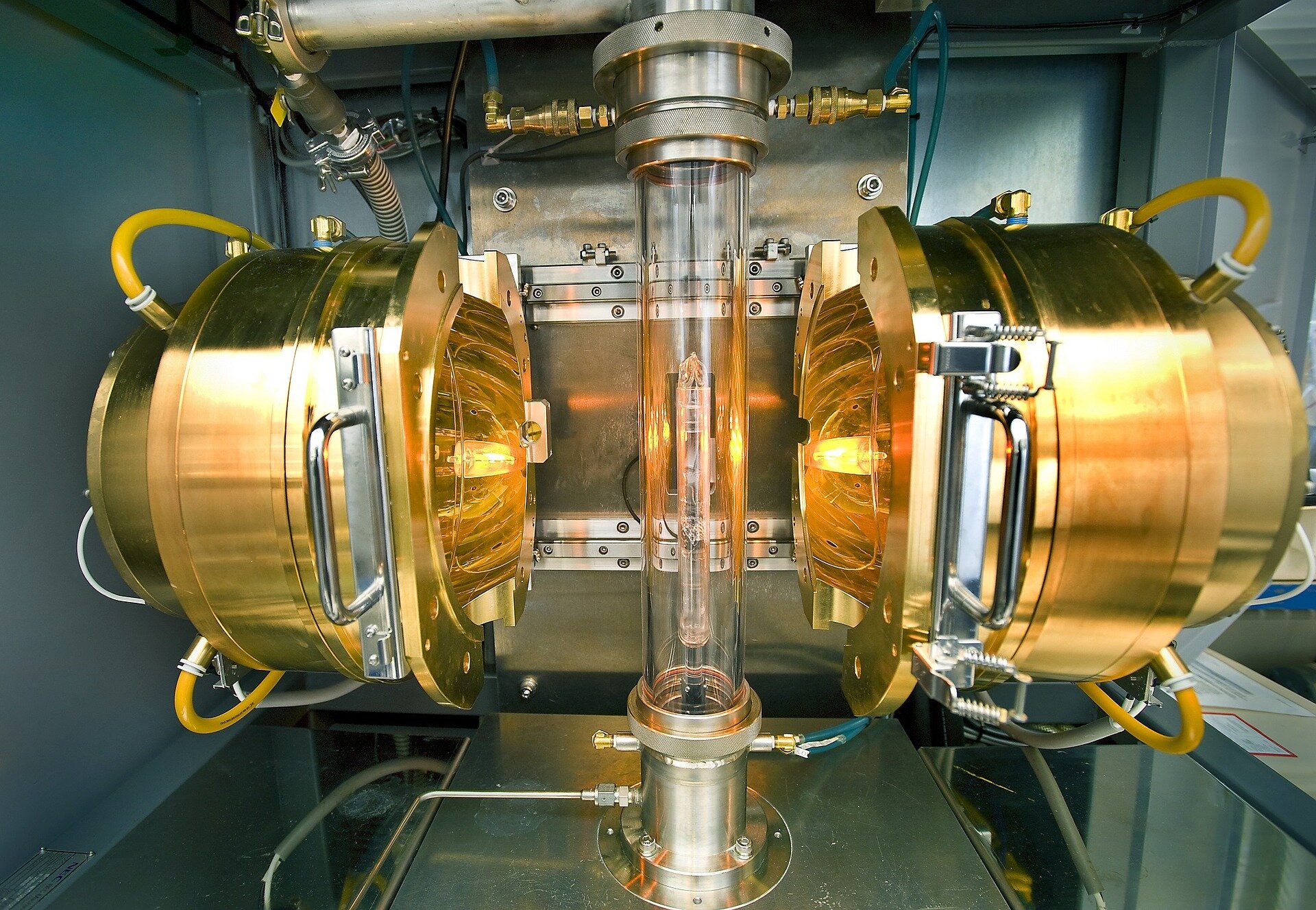
The MAIUS-B apparatus cooled rubidium and potassium into the fifth state of matter simultaneously under microgravity, at record particle flux. The enabling trick was a miniaturized laser system that doubled the optics without growing the payload.

A University of Birmingham experiment shows the flow of time can arise from a quantum system's own behavior, no external clock required. The setup could let scientists test ideas about the Big Bang in the lab.

A tabletop 'black hole' made of light offers the clearest evidence yet for Stephen Hawking's most famous prediction, and a rare window into quantum gravity.

University of Vienna researchers kept magnons alive for 18 microseconds — long enough to carry quantum information — by chilling ultrapure crystals to a whisker above absolute zero.

A McGill University team coaxed electrons to sprint through a crystal just a few atoms thick, releasing tunable packets of quantum vibration that could power a new class of 'sound lasers.'

A Vienna-led team kept the tiny magnetic waves alive for 18 microseconds, showing their fragility was never a law of nature — just a matter of material purity.

McGill physicists forced electrons through an atom-thin crystal near absolute zero and got precise bursts of quantum 'sound' — in a regime existing theory says should stay silent.

An upgraded quantum facility aboard the International Space Station is chilling atoms to near absolute zero, exploiting weightlessness to build matter waves impossible to make on Earth.

By mechanically rotating stacked sheets of hexagonal boron nitride, researchers tuned single-photon emitters across a record range — a step toward practical quantum computers and secure communications.

A Monash University team unveiled the first integrated 'valleytronics' circuit, using atom-thin materials to manipulate a quantum property of light and clear a long-standing bottleneck toward faster, lower-energy computing.

Physicists in India and Japan watched electrons abandon their particle-like behavior and move as a near-perfect 'Dirac fluid,' breaking the Wiedemann-Franz law by more than 200 times.
A superconducting detector built at Aalto University registered just 0.83 zeptojoules — about the work needed to lift a single red blood cell one nanometer — a milestone for quantum computing and the hunt for dark matter.
Using terahertz laser pulses, a German-led team caught angular momentum reversing direction as it moved through a crystal — a quantum effect they say could sharpen control of next-generation memory and quantum materials.

A Chinese team reported in Nature the first direct observation of a 1939 prediction: an electron flung from a recoiling atom, a trick that could finally reveal lightweight dark matter.

The breakthrough quantum system operates without extreme cooling by using twisted photons to entangle light and electrons, potentially enabling smaller and cheaper quantum technologies.

Researchers stabilized an elusive intermediate crystal phase by stacking engineered silver particles like nanoscale LEGO bricks, revealing promising quantum properties at room temperature.
An Aalto University team coupled a time crystal made of magnons in superfluid helium-3 to a tiny mechanical oscillator, a step toward ultra-sensitive quantum sensors and better quantum memory.
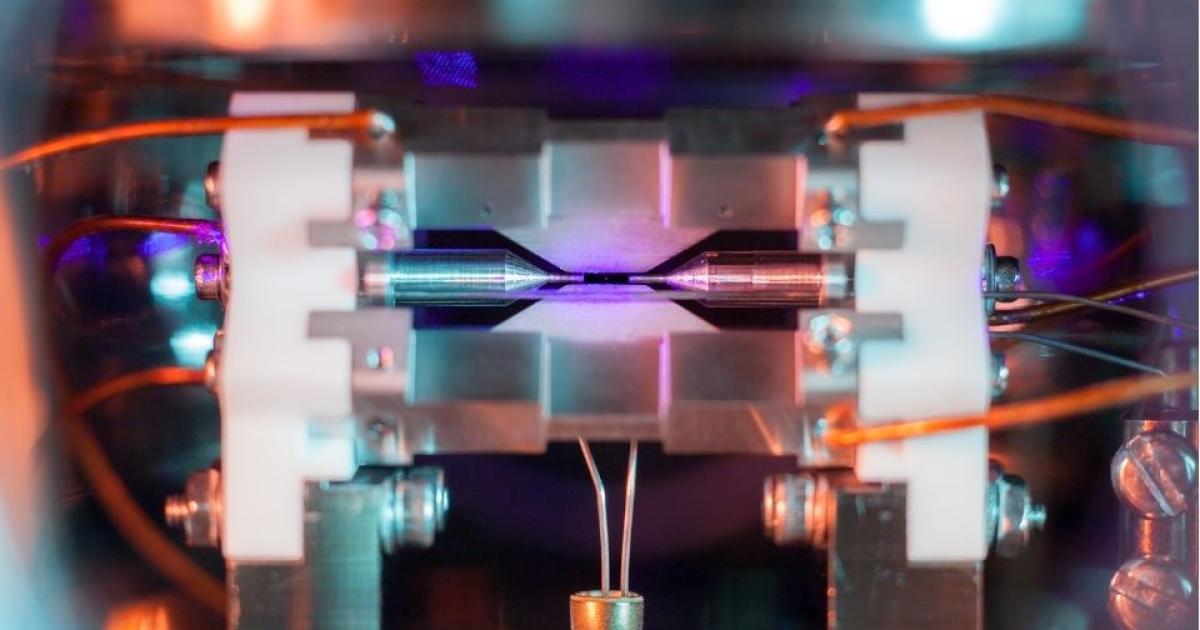
By combining two precisely controlled forces on a single trapped ion, researchers demonstrated an elusive way to manipulate quantum uncertainty that could expand quantum sensing and computing.

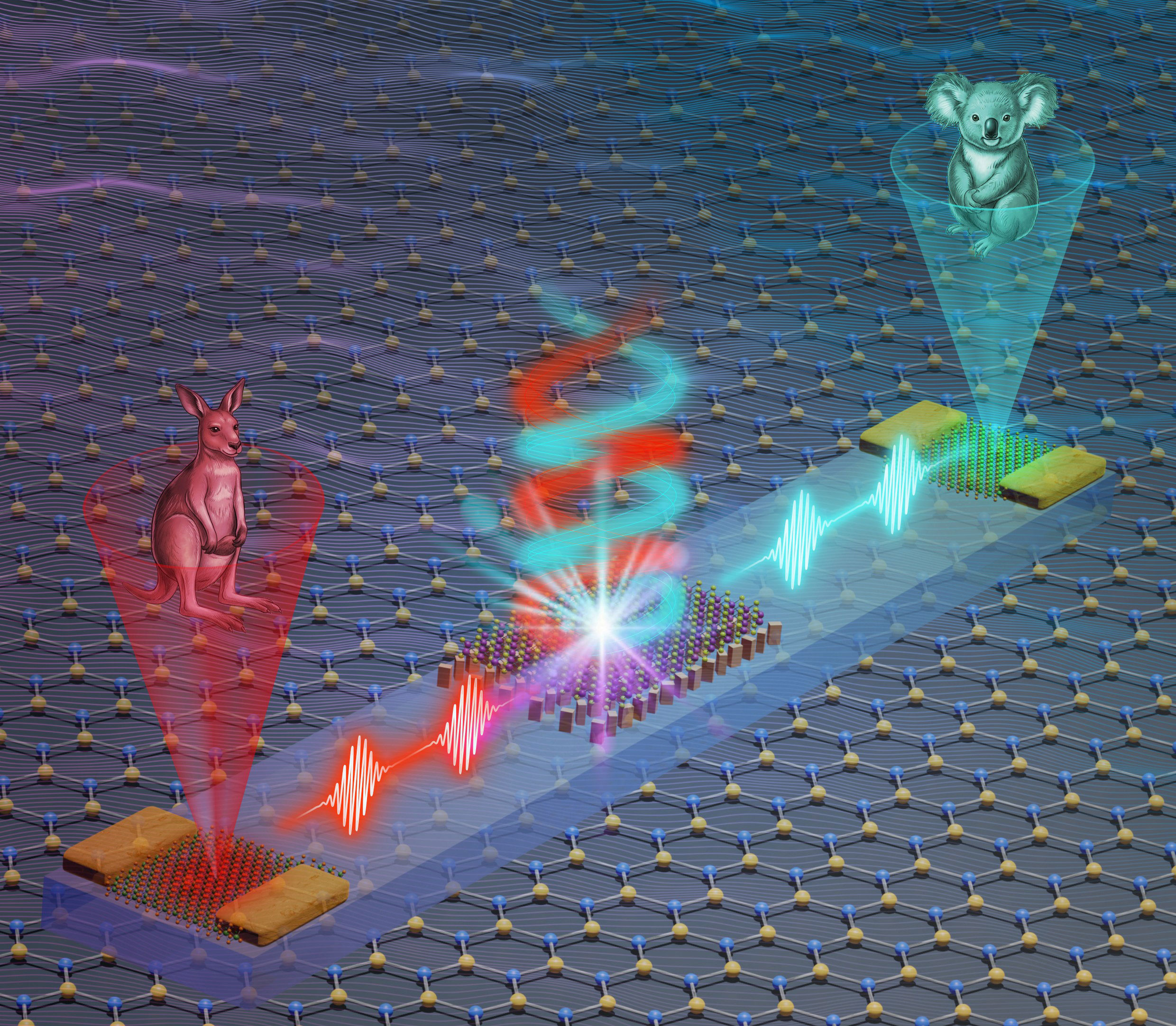
Bo Zhen's team at the University of Pennsylvania reports in Physical Review Letters that hybrid light-matter quasiparticles trapped in atomically thin semiconductors interact strongly enough to perform all-optical switching, the missing ingredient for photonic processors that could replace electrons in artificial-intelligence accelerators.

The Jülich team and Nvidia threw 23,000 GH200 Superchips and 2 petabytes of memory at the calculation, pushing the 'quantum simulation horizon' two qubits further — and raising the bar that real quantum hardware will eventually have to clear.

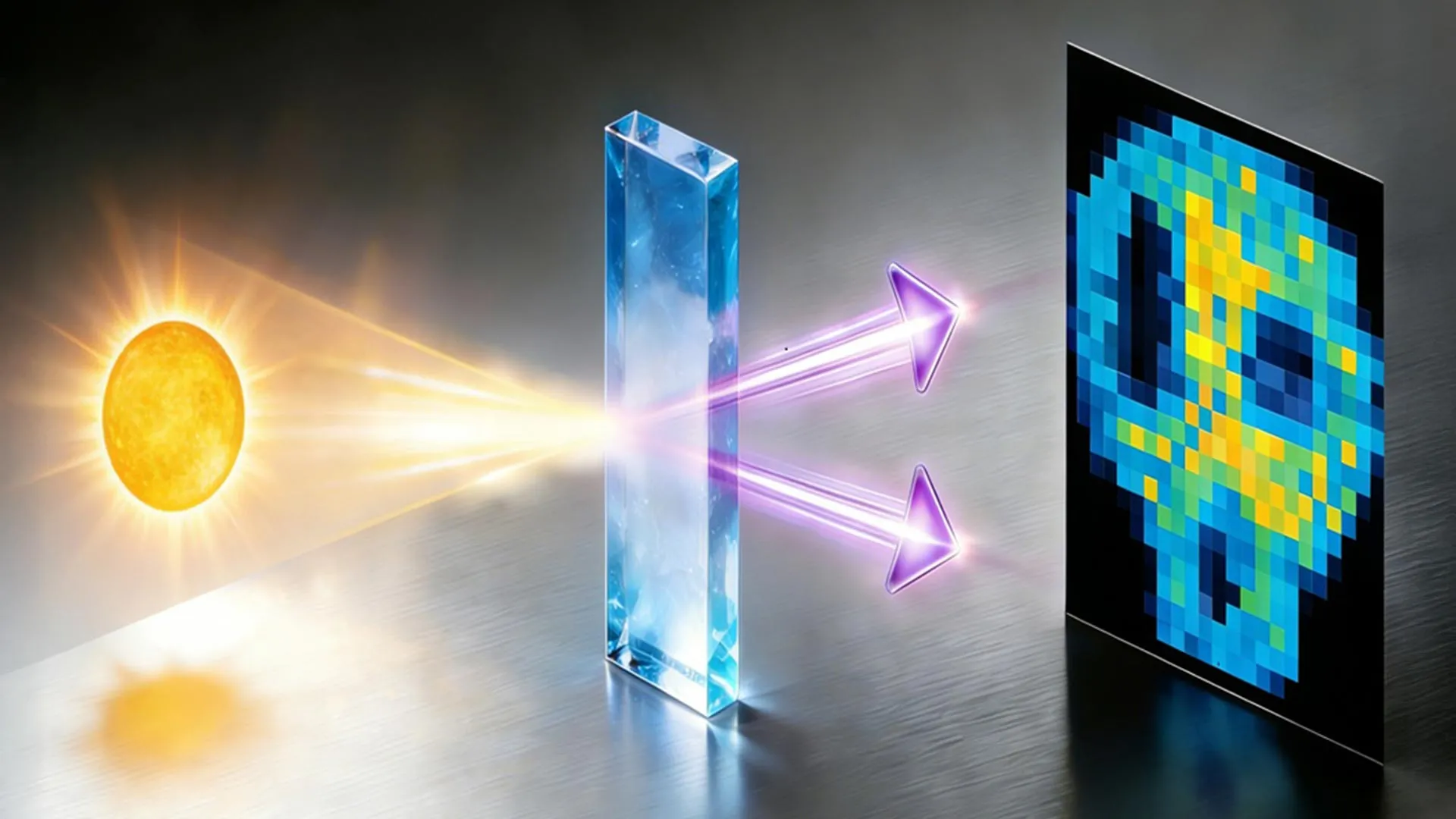
Chinese researchers generate quantum-linked photon pairs using only natural sunlight, achieving 90.7% imaging quality comparable to laboratory lasers.
By exploiting cyclic-shift symmetry and a photonic quantum Fourier transform, the Takeuchi lab demonstrates 95% fidelity on three photons — clearing the way for multi-photon teleportation and measurement-based quantum computing.

A Max Planck and University of Ottawa team violated Bell's inequality and reconstructed a hidden image using only sunlight focused on a nonlinear crystal — overturning a textbook assumption about coherence and quantum optics.

The Nature Physics paper demonstrates an interaction 100 times faster than conventional approaches and opens a new toolkit for quantum simulation, sensing and computing.

Using a single trapped ion and two precisely tuned, non-commuting laser drives, the team produced an interaction more than 100 times faster than conventional squeezing — and switchable between squeezing, trisqueezing and quadsqueezing in real time.

Magnons in superfluid helium-3 self-organized into a state that ticked for 108 cycles before a tiny mechanical membrane was used to read it out and tune its frequency — closing the gap between a theoretical curiosity and a real quantum component.
Scientists at India's IISc found that electrons in single-layer graphene conduct heat and electricity in opposite directions near the Dirac point, shattering the Wiedemann-Franz Law.

A 60-year multigenerational collaboration measured the muon's magnetic moment at 127 parts per billion — 30,000 times more precise than the 1965 baseline — revealing a persistent deviation.
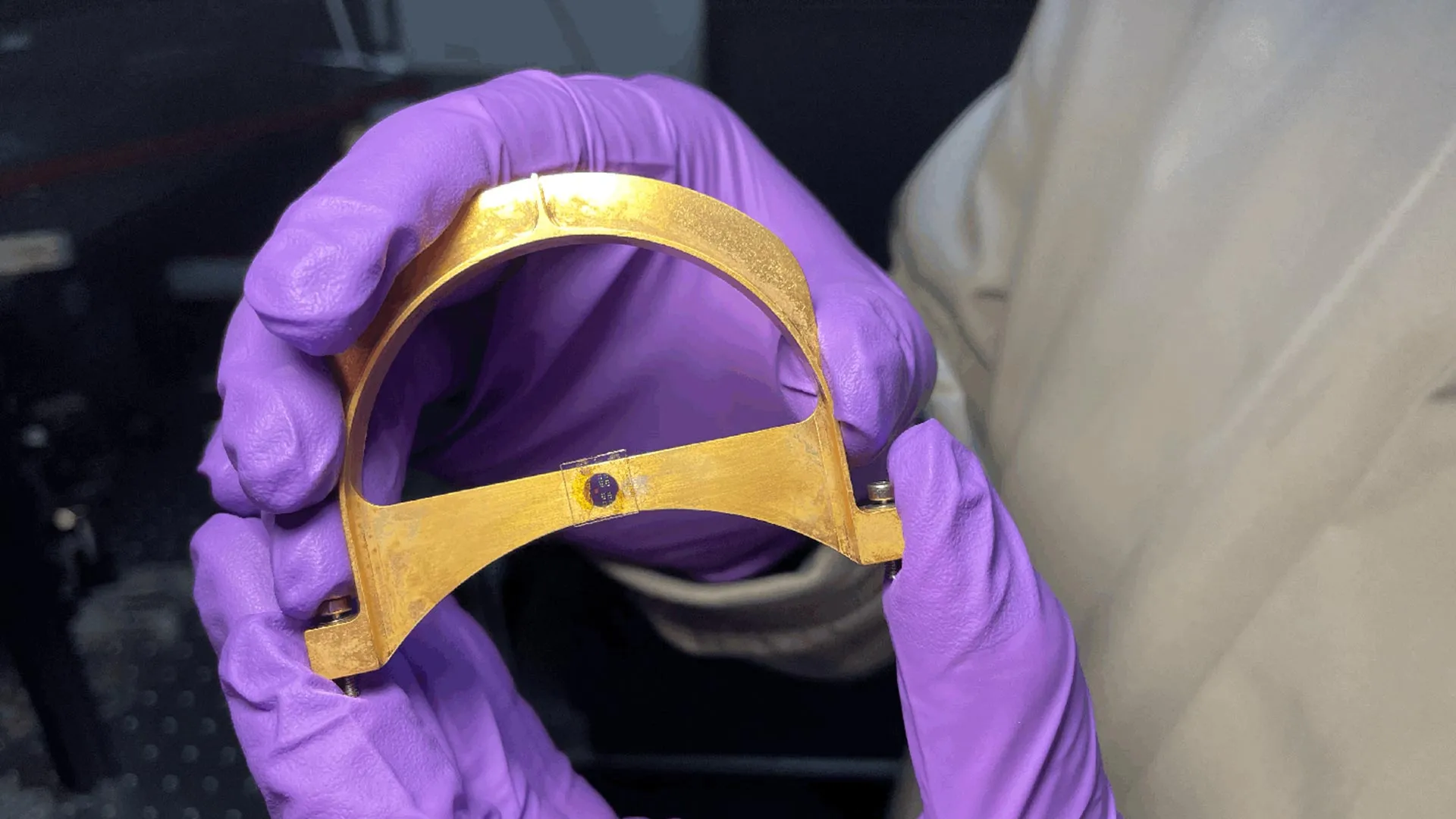
Researchers successfully grew the mineral in laboratory conditions by understanding atomic-level defects. The discovery could revolutionize how high-tech materials are manufactured.
Stockholm University researchers suggest that gravitational waves subtly alter light emitted by atoms, offering a path to ultra-compact detectors using cold-atom systems.
Revolutionary breakthrough could enable ultra-compact detectors using cold-atom systems, offering new way to observe cosmic events.
New hollow cavity design boosts brightness by 20 times and nonlinear signals by 25 times, overcoming major limitation of ultra-thin materials.

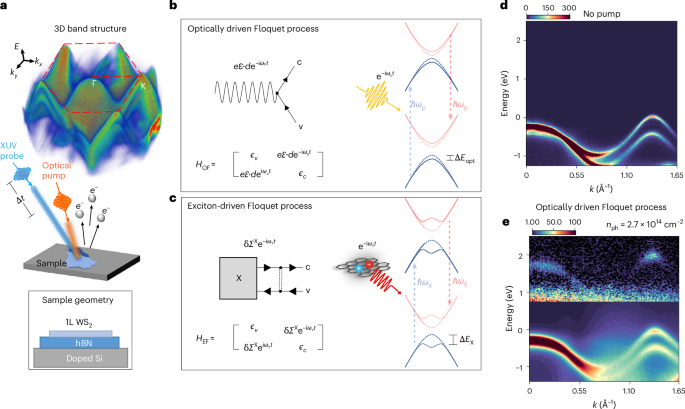
A global team at OIST and Stanford found that bound electron-hole pairs in atomically thin semiconductors reshape a material's quantum properties far more efficiently than laser light, at a fraction of the energy cost.