Scientists Finally Crack 200-Year Dolomite Mystery Using Quantum Breakthrough
Researchers successfully grew the mineral in laboratory conditions by understanding atomic-level defects. The discovery could revolutionize how high-tech materials are manufactured.

After more than two centuries of failed attempts, scientists have finally succeeded in growing dolomite crystals in laboratory conditions, solving one of geology's most enduring puzzles. The breakthrough came from researchers at the University of Michigan and Hokkaido University in Japan, who discovered that the mineral's growth stalls due to tiny atomic defects that are naturally washed away over geological timescales. Their findings, published in Science, could transform manufacturing processes for advanced technological materials.
Dolomite is a widespread mineral found in iconic geological formations including the Dolomite mountains in Italy, Niagara Falls, and Utah's distinctive Hoodoos. Despite being abundant in rocks older than 100 million years, the mineral rarely forms in modern environments, creating what geologists have long called the "Dolomite Problem." Previous laboratory attempts to synthesize the mineral under conditions thought to match natural formation had consistently failed, leaving scientists puzzled about the fundamental processes behind its creation.
The research team's breakthrough came from understanding dolomite's unique crystalline structure, which consists of alternating layers of calcium and magnesium atoms. During crystal growth, these elements often attach randomly rather than in the precise order required, creating structural defects that block further development. At natural growth rates, forming a single well-ordered layer could take up to 10 million years. However, the scientists discovered that these defects are not permanent features.
The key insight involved recognizing that incorrectly placed atoms are less stable and more likely to dissolve when exposed to water. In natural environments, cycles such as rainfall or tidal changes repeatedly wash away these flawed areas, clearing the crystal surface for properly arranged layers to form. The researchers used precise atomic simulations and targeted electron beam pulses to mimic this natural "reset" process, achieving record-breaking crystal growth rates in controlled laboratory conditions.
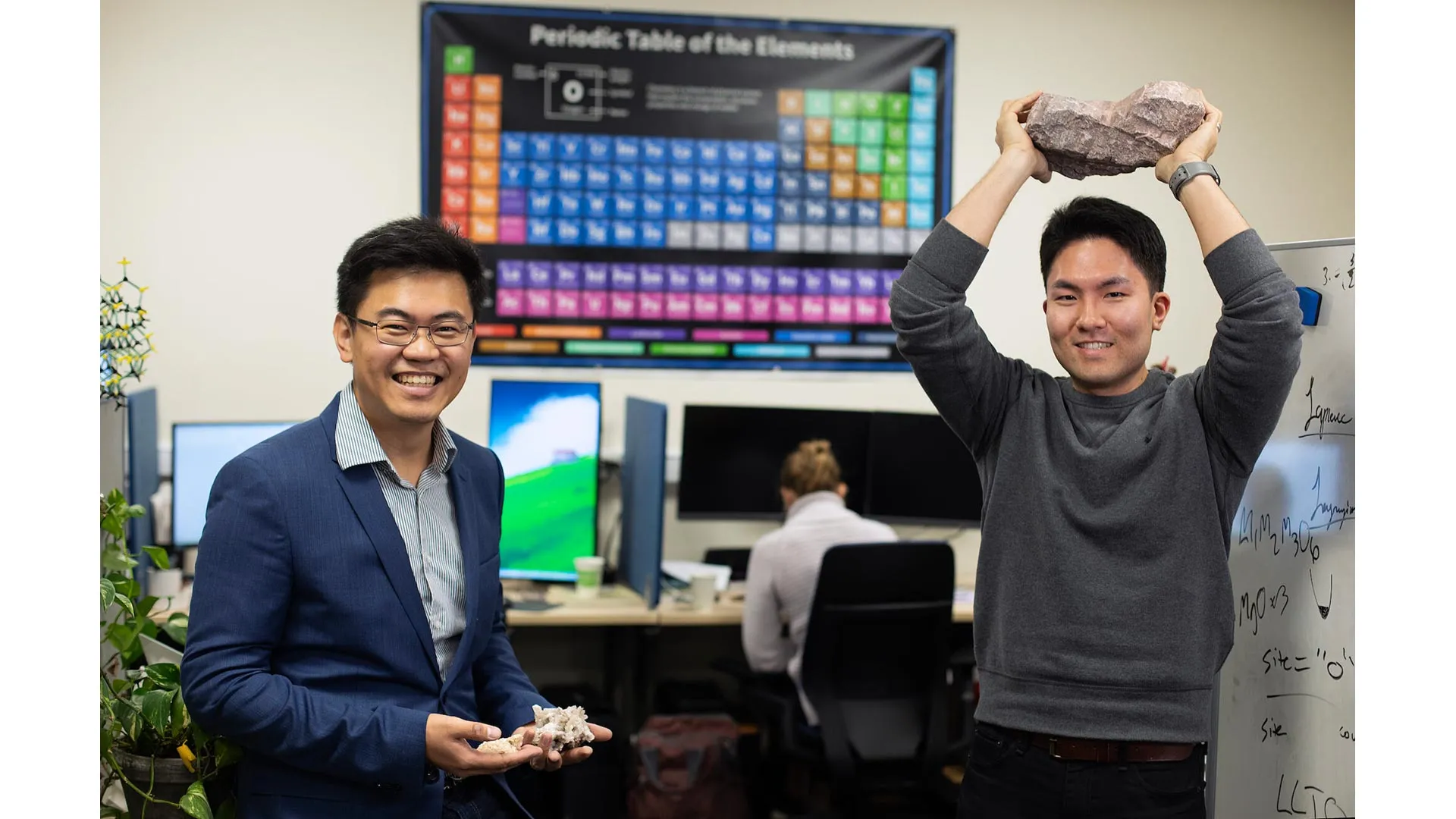
"If we understand how dolomite grows in nature, we might learn new strategies to promote the crystal growth of modern technological materials," said Wenhao Sun, the corresponding author and professor of Materials Science and Engineering at the University of Michigan. The research team developed specialized software through the university's Predictive Structure Materials Science Center that calculates atomic energy interactions and predicts crystal behavior based on structural symmetry. This computational approach could be applied to manufacturing other materials where precise atomic arrangement is critical for performance, potentially revolutionizing industries from electronics to renewable energy storage.