Two Atoms Stay Bound Despite Enough Energy to Break Apart, Quantum Study Shows
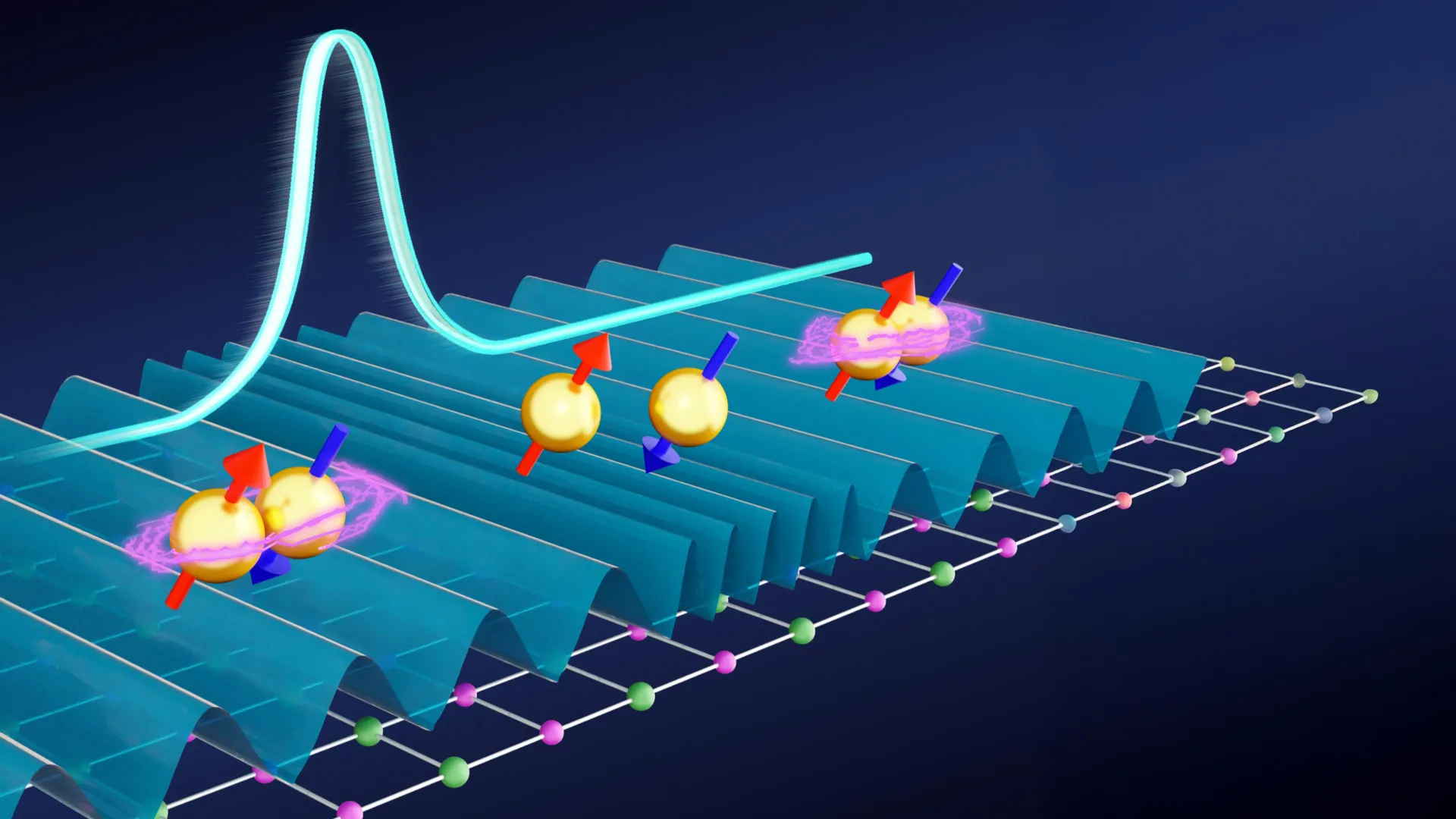
German physicists observed a long-predicted "bound state in the continuum" in ultracold lithium, where quantum interference blocks the molecule from decaying.
Topic
42 stories from Planck Standard. Latest: November 9, 2026.

German physicists observed a long-predicted "bound state in the continuum" in ultracold lithium, where quantum interference blocks the molecule from decaying.

Oxford researchers used strontium ions in a hybrid qubit-oscillator system to watch a particle's tunneling switch off completely when magnetic-like flux is present.

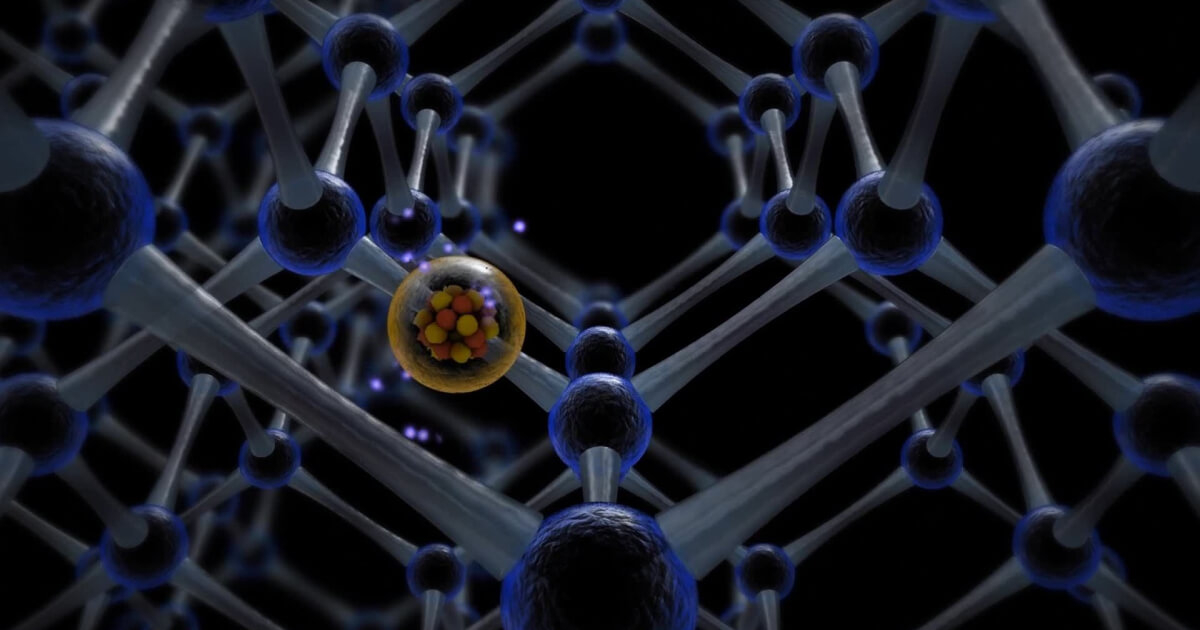
Screening 183,000 materials turned up a compound that exfoliates into a flat-band 2D lattice with electron density over 100 times that of twisted-graphene systems.

A Cornell-led team found the states by accident while chasing twisted graphene, in a device where two three-layer sheets relaxed into a rhombohedral stack.

The Nature Physics result makes the uranium compound the leading candidate for a topological superconductor, a long-sought material for quantum computing.
A 12-hour microscope study in Nature Physics overturns the assumption that fibers form inside dense protein droplets, and shows fibers and glass are rival ways for droplets to age.

INRS researchers briefly switched off superconductivity with a laser and watched the pseudogap appear in its place, challenging the idea that it is a stepping stone to superconductivity.

Bristol-led team measured resistance in a thin film at the European Magnetic Field Laboratory and pinned the pairing on spin fluctuations, but says only half the puzzle is solved.

A Nature Physics paper turns a long-suspected 'Planckian' bound into a mathematical proof: no process, however much energy is pumped in, can settle a quantum system into a thermal state faster than temperature and two fundamental constants allow.

Rutgers and IBM researchers measured and reset qubits in real time nearly 5,000 times and found a sharp switch from chaotic to controllable behavior at a 50-50 balance.

A German team saw the signature gap of strong coupling in a single pass of light through fiber cooled to 4 kelvin, with no cavity needed.

Konstanz and Max Planck physicists report in Nature Physics that a particle in a gooey liquid can yield extra energy when measured twice.

Researchers traced the main source of errors in parallel control to a microwave side effect and fixed it with a calibration scheme that scales.

Qubits stood in for a magnetic field and ion vibrations for matter, in a Nature Physics experiment that simulates lattice gauge theory, the framework used in particle physics.

Mid-circuit measurements cut the depth needed to prepare colliding particles, and a heavy particle appeared in the simulated energy density in a Nature Physics paper.

Max Planck researchers in Hamburg used trillionth-of-a-second electrical pulses to drive current past the usual limit, reaching the intrinsic threshold where the pairs of electrons that carry the current are torn apart.

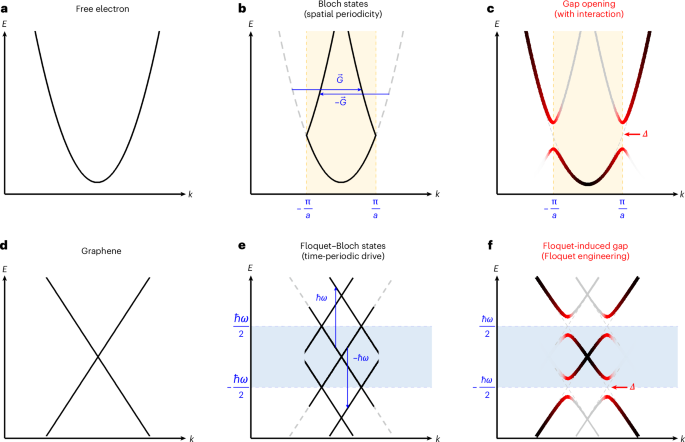
The Erlangen, Munich, Technion and Central Florida team reports in Nature Physics that it can set the size and direction of the current by adjusting the polarization and timing of the two beams, the first time anyone has controlled electrons within a light-made Floquet state rather than just observing it.

For decades 'slide electrification' has been blamed entirely on ions swapping at the liquid-solid boundary. The new Nature Physics experiments show electrons must also be jumping directly, a process previously thought to happen only when two solids rub.

Marko Lončar's lab 'dressed' a silicon-vacancy spin with phonons instead of microwave pulses. The technique works inside the phononic cavities that would link nodes of a chip-scale quantum network, letting sound do both jobs at once.

Livermore physicists shocked diamond above 1 trillion pascals and hotter than the surface of the Sun. The measurements finally match quantum simulations — and suggest a route to tripling fusion energy gain.

Two laser pulses — one to scramble the electrons, one to read them out — settled a long-running argument about how a second charge pattern forms in erbium tritelluride.

Tsinghua researchers imaged individual Zhang-Rice singlets in a copper-oxide crystal, then watched them merge into larger structures as they added charge — the missing step between a single hole and superconductivity.

A paradox physicists have argued about since the 1980s dissolves once you stop asking where the particle went and start asking what it turned into, a team from Ghent, Cambridge and Oxford reports in Nature Physics.

A single atomic layer of tungsten diselenide, a few degrees above absolute zero, and a beam of light gave physicists their first read on the inner life of a Wigner crystal.

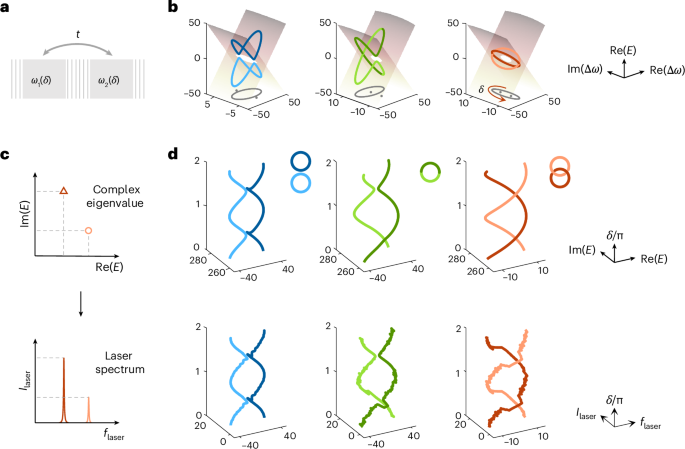
By tuning gain and detuning on an integrated photonic chip, a team watched laser frequencies wind around each other into Hopf links and Solomon links, making an abstract piece of non-Hermitian topology directly visible.

Time-resolved X-ray microscopy at BESSY II caught antiferromagnetic skyrmions tracking an applied current exactly — and rebounding off each other when they collided.

A specially shaped mirror sweeps a laser's focal point down the beam axis at the vacuum speed of light, defeating the 'dephasing' ceiling that has capped plasma accelerators. Electrons hit 396 MeV where the limit predicted 185.

Heat normally spreads in every direction at once. In boron arsenide, UCLA engineers watched it move in focused beams along the crystal's own axes — a result that could let chip designers route heat the way fiber optics route light.

Sodium-rubidium molecules destroy each other when they collide. A Hong Kong team built an invisible repulsive wall around them and got the first NaRb Bose-Einstein condensate — plus a self-bound quantum droplet.

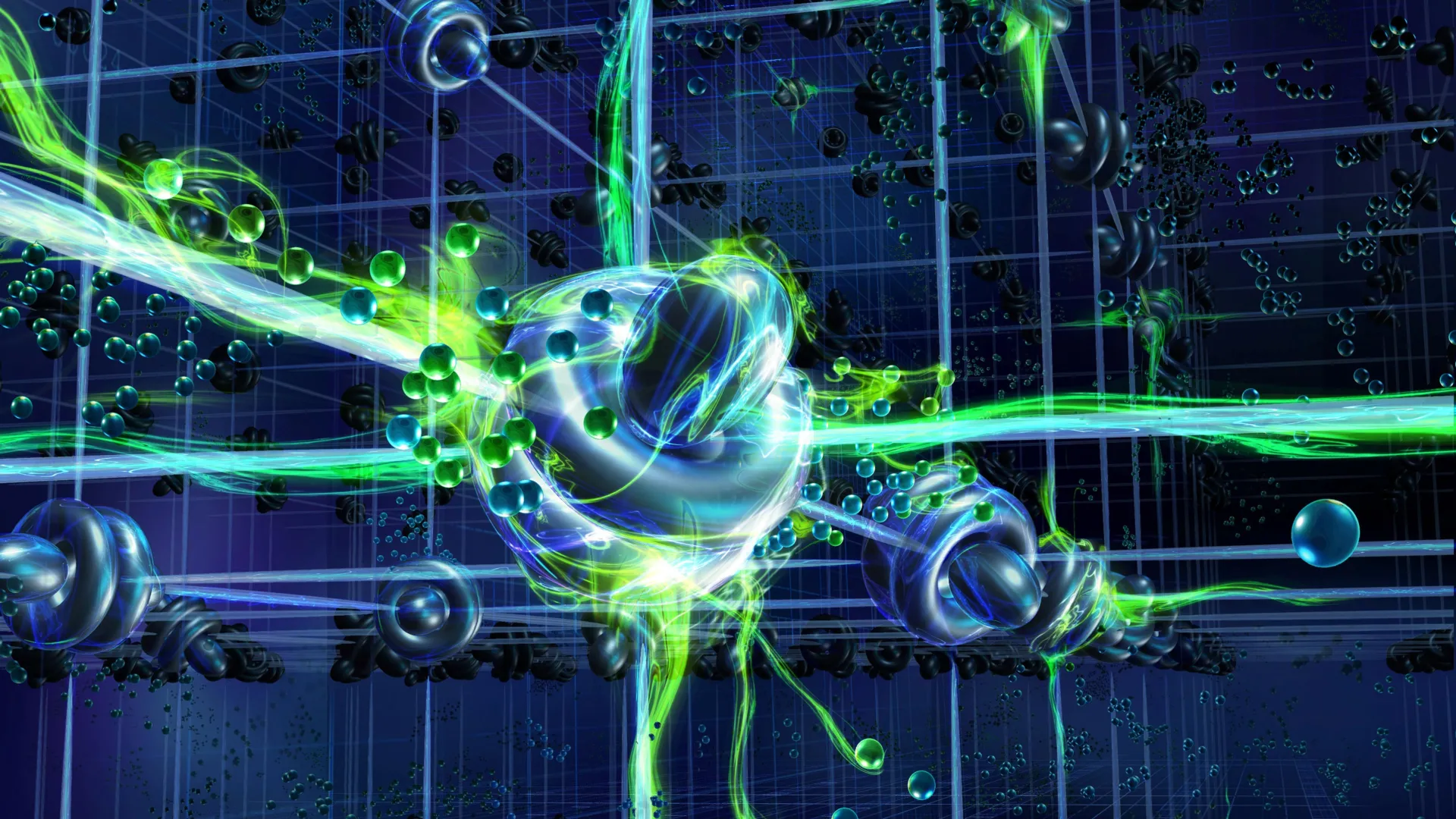
A centimeter-sized 'strange metal' crystal at TU Wien showed groups of at least nine entangled entities acting together, the first time deep quantum entanglement has been measured in a macroscopic solid.

UMass Amherst physicists found that strongly magnetized particles can defy entropy, reshaping a liquid mixture into the same elegant curve every time it is disturbed.
Using terahertz laser pulses, a German-led team caught angular momentum reversing direction as it moved through a crystal — a quantum effect they say could sharpen control of next-generation memory and quantum materials.
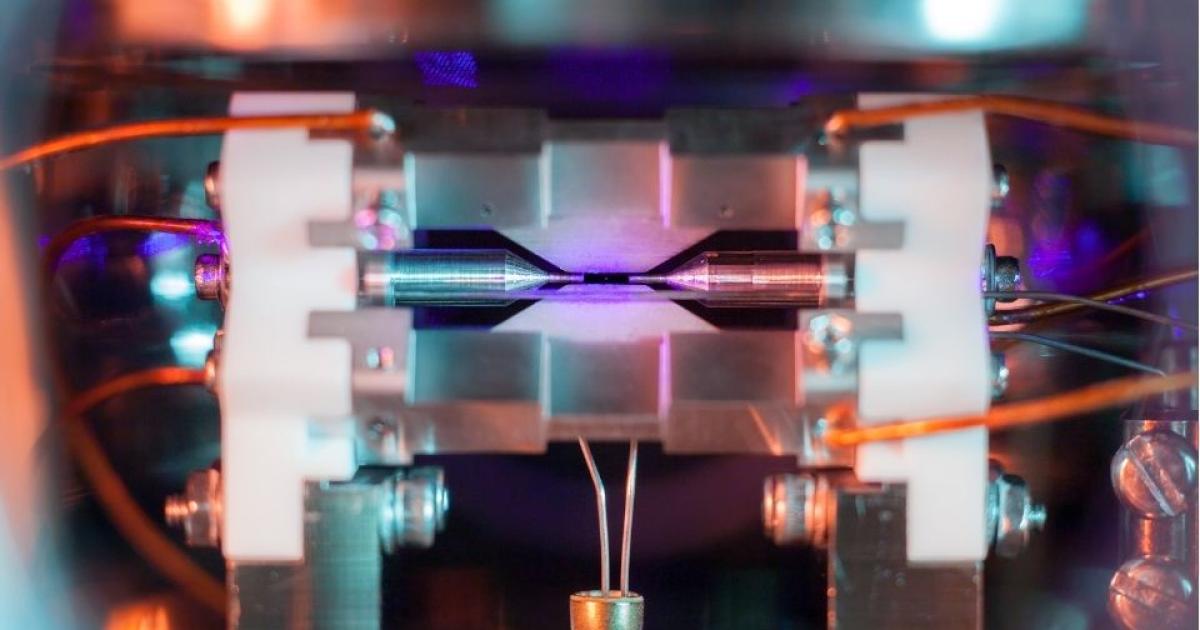
By combining two precisely controlled forces on a single trapped ion, researchers demonstrated an elusive way to manipulate quantum uncertainty that could expand quantum sensing and computing.

By layering two non-commuting forces on a single calcium ion, the team can flip a quantum oscillator between standard squeezing, trisqueezing and quadsqueezing in microseconds, unlocking a new toolkit for quantum sensing, simulation and bosonic error correction.

Researchers at Dresden's HZDR and Berlin's Fritz Haber Institute fired terahertz laser pulses at bismuth selenide and directly observed angular momentum being passed between atomic vibrations — with the direction of rotation flipping mid-transfer, a long-predicted 'Umklapp process.'

The Nature Physics paper demonstrates an interaction 100 times faster than conventional approaches and opens a new toolkit for quantum simulation, sensing and computing.
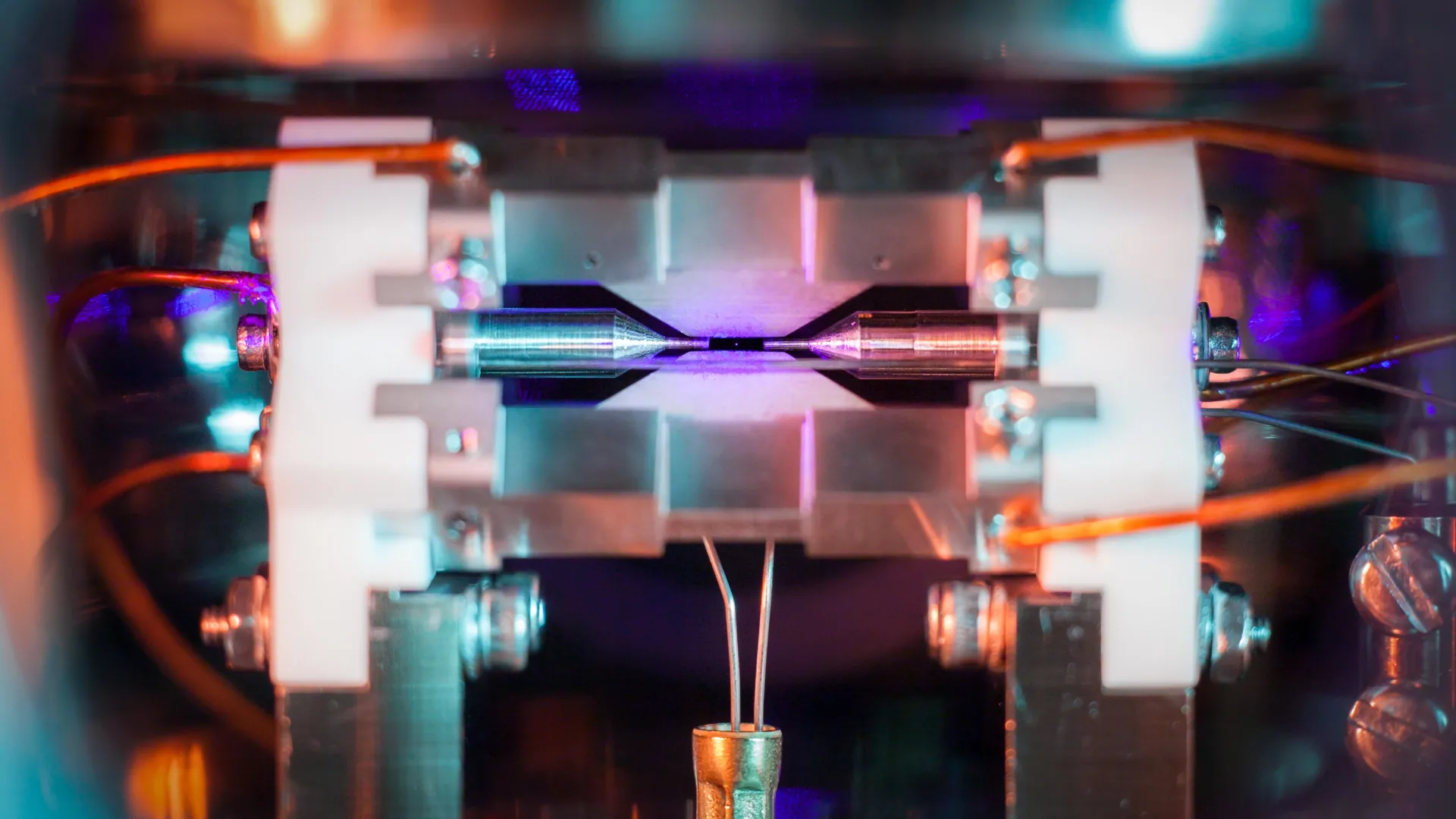
Using a single trapped ion and two precisely tuned, non-commuting laser drives, the team produced an interaction more than 100 times faster than conventional squeezing — and switchable between squeezing, trisqueezing and quadsqueezing in real time.

Using a single trapped ion and two non-commuting forces, the Oxford team generated a fourth-order squeezed state more than 100 times faster than conventional methods — a demonstration that promises to make exotic quantum behaviors usable in real machines.

Oxford researchers create powerful new method to control quantum systems using trapped ions, making previously hidden quantum behaviors visible and potentially revolutionizing quantum technology.

Scientists demonstrate first-ever fourth-order quantum effect using trapped ions, opening new frontiers for quantum technology applications.

A study in Nature Physics reveals that strong electron interactions can produce topological behavior — bridging two previously separate fields of quantum physics in a finding with implications for quantum computing and sensing.

Using ultrafast laser pulses, physicists captured graphene's electrons reshaping into entirely new quantum states in real time — confirming a two-decade-old theoretical prediction and opening a path to reconfigurable quantum devices.