Physicists Prove Quantum Mechanics Caps How Fast Any System Can Reach Thermal Equilibrium
A Nature Physics paper turns a long-suspected 'Planckian' bound into a mathematical proof: no process, however much energy is pumped in, can settle a quantum system into a thermal state faster than temperature and two fundamental constants allow.

A car windshield defrosting in winter and a hot drink cooling on a desk are both heading toward thermal equilibrium, the point where an object matches the temperature of its surroundings. How long that takes depends on ordinary things such as surface area, material and airflow. A new paper in Nature Physics shows that at the quantum scale, where qubits live, there is a hard floor on that time that no engineering can beat.
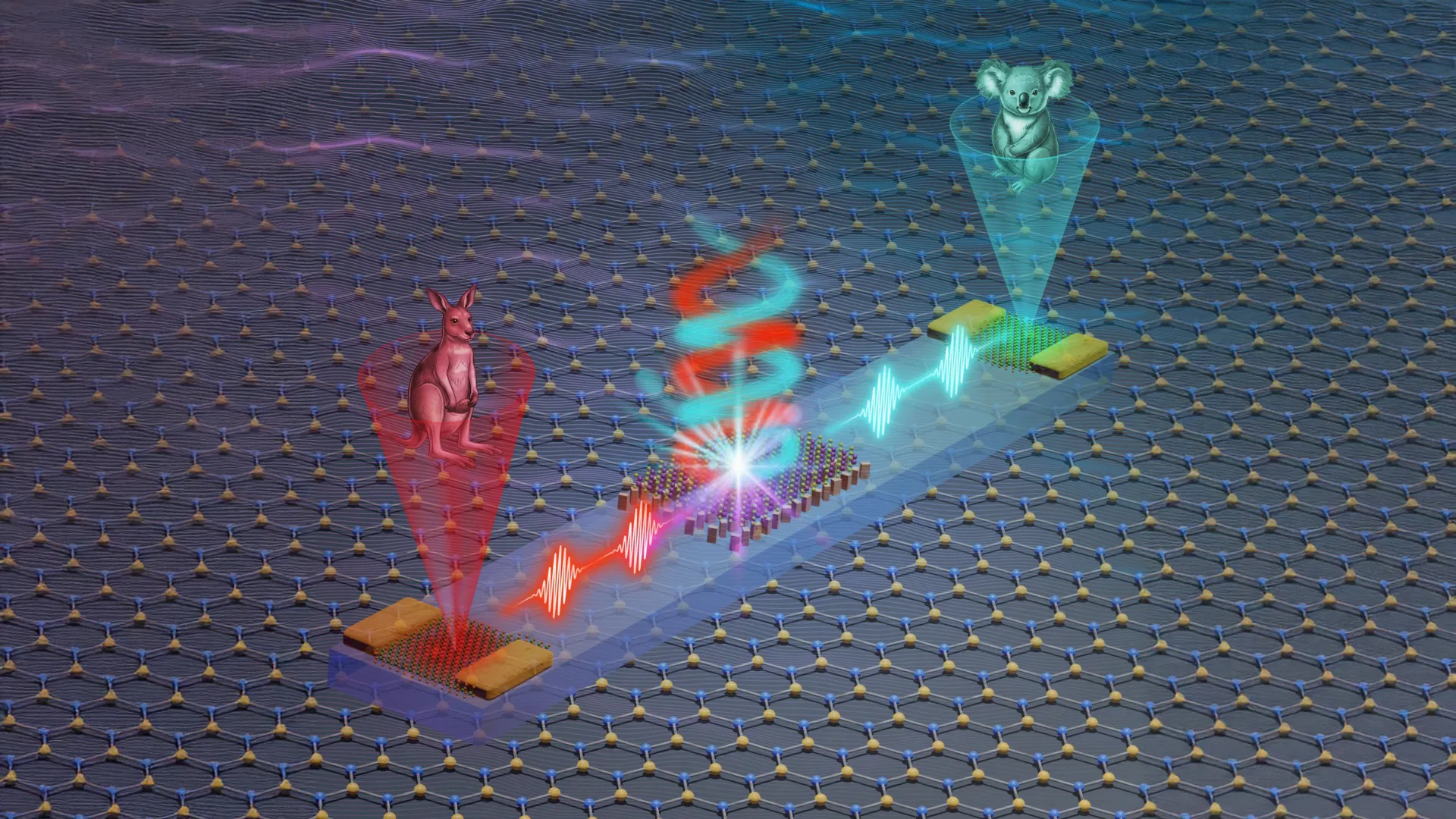
The study, led by Paolo Abiuso of the Austrian Academy of Sciences, proves that quantum mechanics sets a fundamental speed limit on how quickly any process can bring different quantum systems into thermal equilibrium. What makes the finding significant is that the boundary is universal. No matter how much energy is applied or how strongly a system is manipulated, the process cannot be forced to go faster.
Physicists had seen hints of this so-called Planckian limit for years in superconductors and other quantum systems, and many suspected a universal bound existed. What was missing was a general mathematical proof. Abiuso and colleagues built a universal framework that treats thermalization as a machine capable of driving different quantum systems into their corresponding thermal states, and they used quantum information theory to calculate how fast that can happen.
The result depends on only three things: temperature and two constants of nature, the reduced Planck constant and Boltzmann's constant. In the authors' words, the bound follows from the observation that the thermalization machine cannot violate the Heisenberg limit, the fundamental limit on how precisely quantum properties can be measured. The ratio of those two constants sets a natural timescale of about 7.6 picoseconds at one kelvin, shrinking in proportion as the temperature rises.
That means that at higher temperatures the minimum time for a system to reach equilibrium can be shorter, but it can never drop below the limit set by that temperature. At extremely low temperatures, the rule changes. There the limit is set instead by the energy difference between a system's two lowest energy states.
To illustrate the proof, the team applied its equations to a theoretical model of interacting quantum particles and examined its behavior mathematically. The work is theoretical, and it does not describe a new lab measurement. Its value lies in giving experimentalists and engineers a firm boundary to design around.
The authors say such universal speed limits could help researchers develop quantum technologies, including better quantum computers, where resetting qubits to a known thermal state is a routine and time-consuming step. The paper, titled "An information-theoretic proof of the Planckian bound for thermalization," appears in Nature Physics (DOI: 10.1038/s41567-026-03397-y).