Physicists Extend a Magnetic Wave's Life 100-Fold, Clearing a Path to Penny-Sized Quantum Computers
Researchers led by the University of Vienna kept 'magnons' alive for 18 microseconds — long enough to carry quantum information — and found the only real limit is how pure the crystal is.
Physicists have coaxed a fleeting magnetic ripple into surviving nearly 100 times longer than before, a leap that could turn one of nature's shortest-lived phenomena into a workhorse for ultra-compact quantum computers — potentially machines no bigger than a penny.
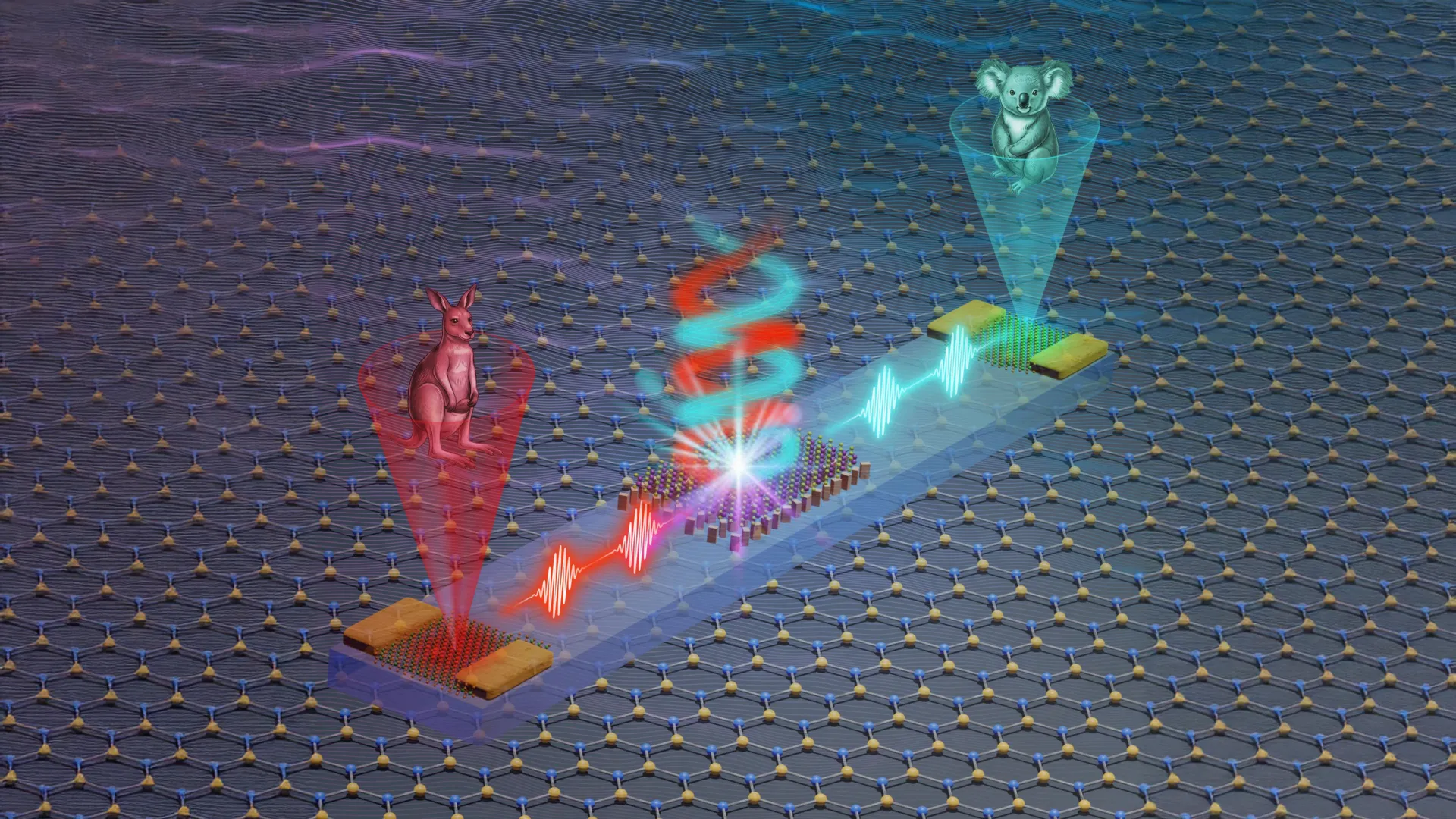
The ripples, called magnons, are collective waves of magnetism that travel through certain materials as billions of tiny atomic magnets tip in unison. Physicists have long eyed them as carriers of quantum information because they can shuttle signals with almost no electrical resistance. The problem has been longevity: magnons typically vanish within hundreds of nanoseconds, far too quickly to be useful. In the new work, an international team extended their lifetime to about 18 microseconds — roughly a hundredfold improvement.
Crucially, the researchers found that the barrier was not a fundamental law of physics but the quality of the material itself. 'The purer the crystal, the longer the magnons survived,' the team reported, meaning that further gains can come from better materials science rather than some new theoretical breakthrough. That distinction matters, because it turns an open scientific mystery into an engineering problem that industry knows how to attack.
To achieve the record, the group used short-wavelength magnons, which are less sensitive to defects in a crystal, and cooled ultra-pure spheres of yttrium iron garnet to 30 millikelvin — a hair above absolute zero. At that temperature the thermal jostling that normally destroys the delicate waves is effectively frozen out, letting the magnons ring on far longer.
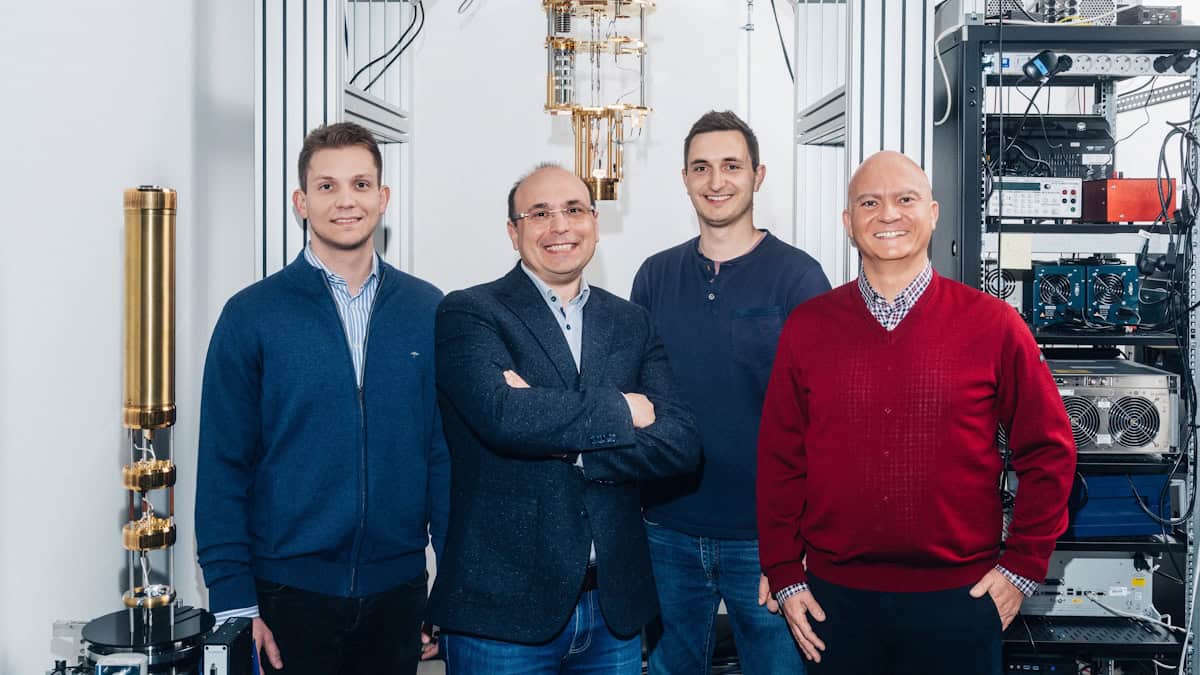
The effort was led by Andrii Chumak of the University of Vienna, working with the University of Colorado, Colorado Springs, and partners in Germany, the United States and Ukraine. Doctoral researcher Rostyslav Serha carried out the key experiments, with coauthor Kaitlin McAllister among the collaborators. Their results were published in the journal Science Advances.
If the technique scales, magnons could serve several roles at once inside a quantum machine: as a form of quantum memory, as a 'quantum bus' linking hundreds of qubits, and even as a universal translator between otherwise incompatible quantum systems. Because magnetic materials can be shrunk to microscopic dimensions, researchers say the approach hints at a route to powerful quantum processors small enough to hold in the palm of a hand.
The distinction between a physical limit and an engineering one is what has researchers optimistic. Because the ceiling on magnon lifetimes appears to come down to crystal purity, the field can now borrow decades of hard-won expertise in growing flawless semiconductors and magnetic materials rather than waiting for a new theory. If manufacturers can produce ever-purer yttrium iron garnet, the team argues, magnon-based components could steadily improve in the same predictable way that silicon chips did.