Einstein Probe May Have Caught a Black Hole Shredding a White Dwarf Star
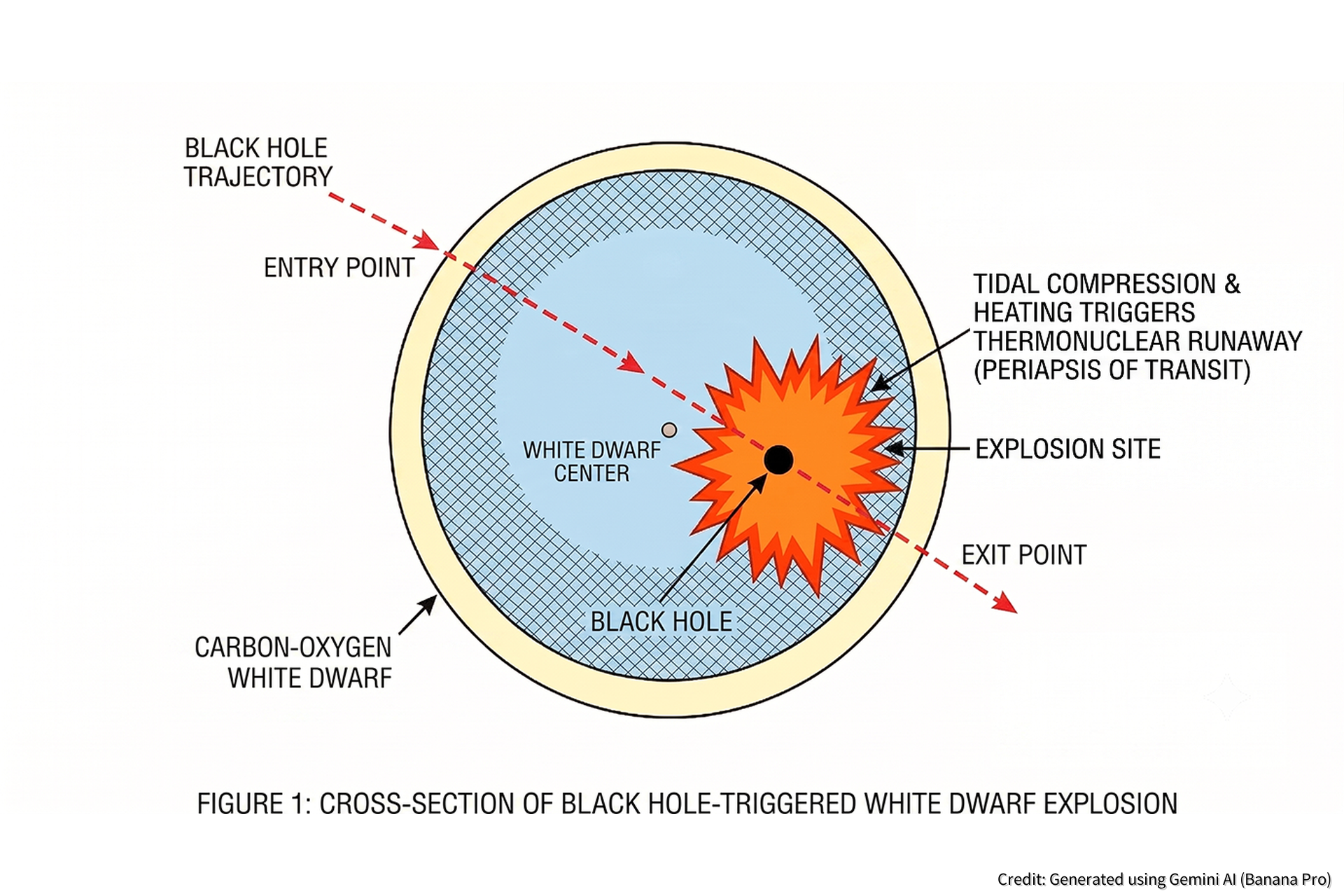
An extraordinarily bright X-ray flare could be the first direct evidence of a long-sought intermediate-mass black hole tearing apart and devouring a dead star.
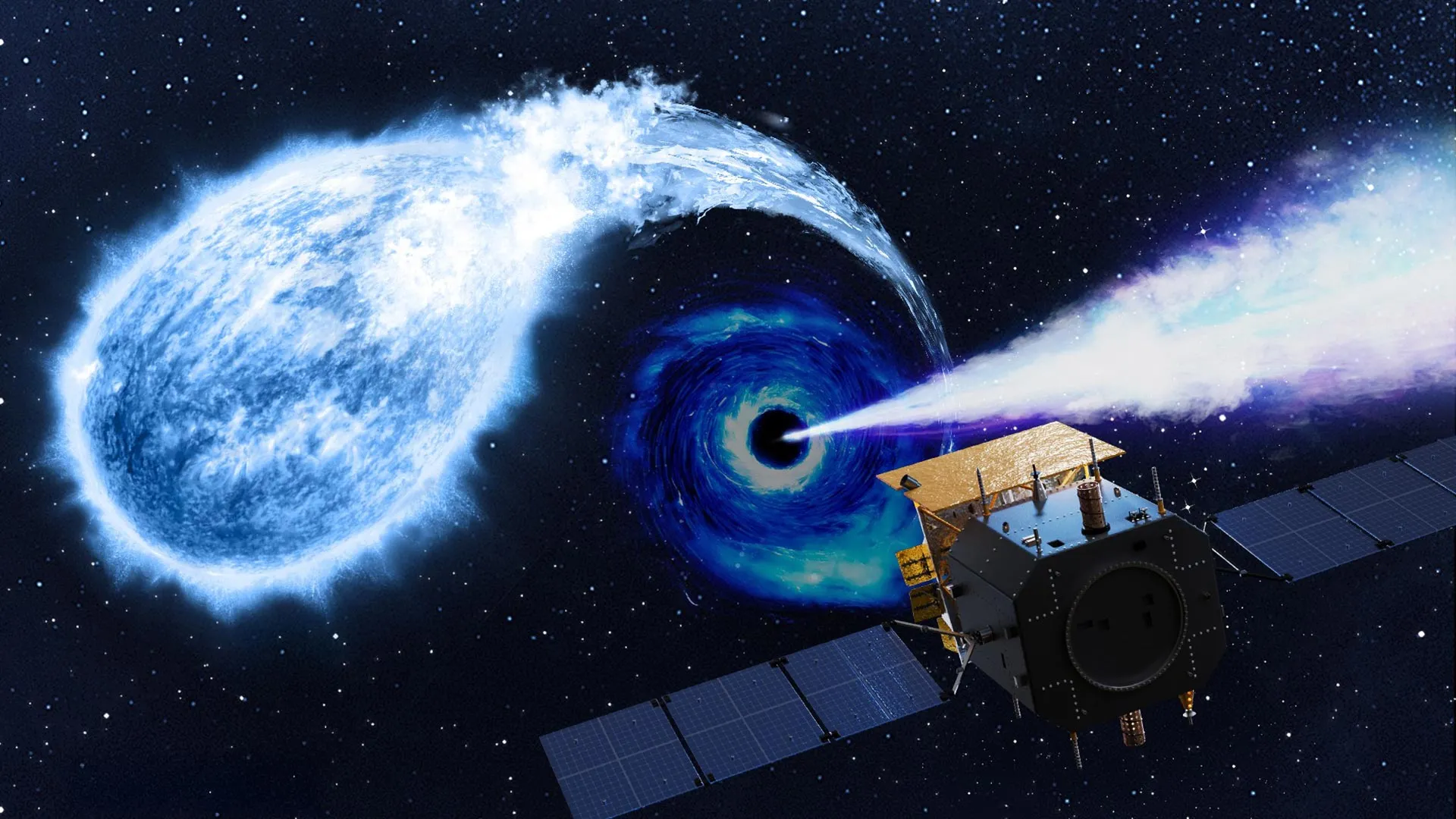
Astronomers may have witnessed one of the rarest events in the cosmos: a medium-sized black hole ripping apart a white dwarf star and swallowing it. The catch came from China's Einstein Probe space telescope, which on July 2, 2025, detected an exceptionally bright burst of X-rays that has now been analyzed in detail and reported as potential first-of-its-kind evidence.
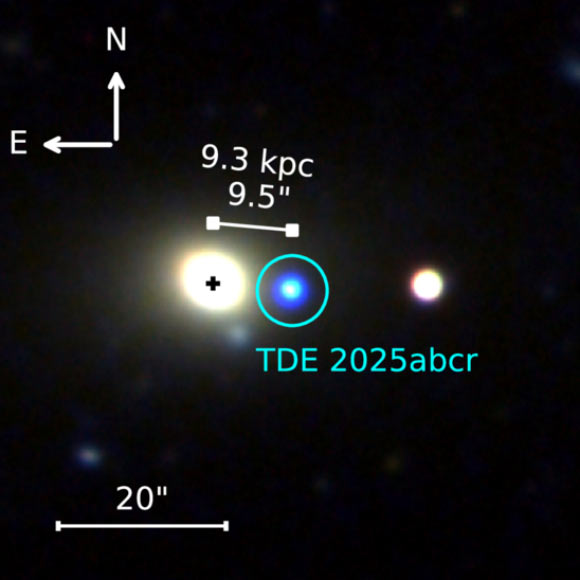
The source, designated EP250702a (also catalogued as GRB 250702B), briefly blazed with a luminosity of roughly 3 × 10⁴⁹ ergs per second — among the brightest instantaneous outbursts ever recorded. What made it strange was the order of events: the X-ray emission began before the accompanying gamma-ray burst, an inversion that does not fit the profile of an ordinary cosmic explosion.
"This early X-ray signal is crucial. It tells us this was not an ordinary gamma-ray burst," said Dr. Dongyue Li of the National Astronomical Observatories of China, who led the study published as the cover article in Science Bulletin. The research was coordinated through the Einstein Probe Science Center at the Chinese Academy of Sciences, with contributions from the University of Hong Kong and scientists across several countries.
The flare's behavior pointed to a "tidal disruption" — the violent process in which a star wanders too close to a black hole and is torn apart by tides, its shredded material heating up and glowing as it spirals in. The brightness faded by more than 100,000 times within about 20 days, and the X-rays shifted steadily from high energy to low energy, a fingerprint consistent with debris from a destroyed dense star. The event occurred in the outer reaches of a distant galaxy rather than at its center, suggesting the culprit was not a giant supermassive black hole.
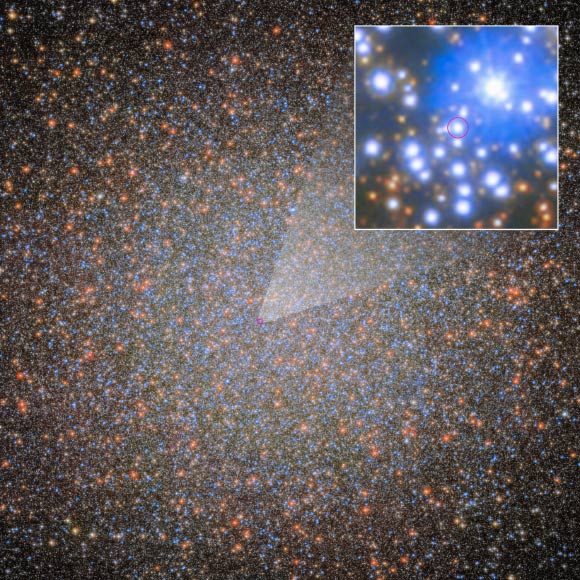
That detail is what excites astronomers most. Intermediate-mass black holes — heavier than those formed by a single collapsing star but far smaller than the supermassive giants at galaxy cores — have long been theorized but rarely, if ever, caught in the act. If confirmed, EP250702a would offer a direct look at this elusive "missing link" population and help explain how black holes grow across the vast range of sizes seen in the universe. Researchers cautioned that further observations are needed to rule out alternative explanations, but the case stands as one of the most compelling candidates yet.
The Einstein Probe, a joint mission led by the Chinese Academy of Sciences with European partners, was built precisely for catching such fleeting flashes. Its wide-field X-ray "lobster eye" optics, inspired by the structure of a crustacean's eye, scan vast swaths of sky and trigger rapid follow-up the instant a new source erupts. That capability is what allowed astronomers to register the unusual early X-ray rise before the gamma-ray burst — a sequence that older telescopes might have missed entirely. As survey instruments grow more sensitive, scientists expect to uncover more of these rare disruptions and finally pin down how common intermediate-mass black holes really are.