Oxford Physicists Achieve First "Quadsqueezing," a Fourth-Order Quantum Effect Generated 100 Times Faster Than Expected
By combining two precisely controlled forces on a single trapped ion, researchers demonstrated an elusive way to manipulate quantum uncertainty that could expand quantum sensing and computing.
Physicists at the University of Oxford have demonstrated an elusive quantum effect known as "quadsqueezing" for the first time, generating it more than 100 times faster than conventional approaches and opening a new avenue for quantum sensing, simulation and computing.
Squeezing, in quantum physics, refers to techniques that redistribute the unavoidable uncertainty in a quantum system — sharpening precision in one property at the expense of another. Quadsqueezing is a fourth-order version of that idea, a more intricate manipulation of a quantum oscillator that has long been predicted but proved difficult to realize in the laboratory. Achieving it cleanly gives scientists a finer tool for steering quantum systems into states that are otherwise out of reach.
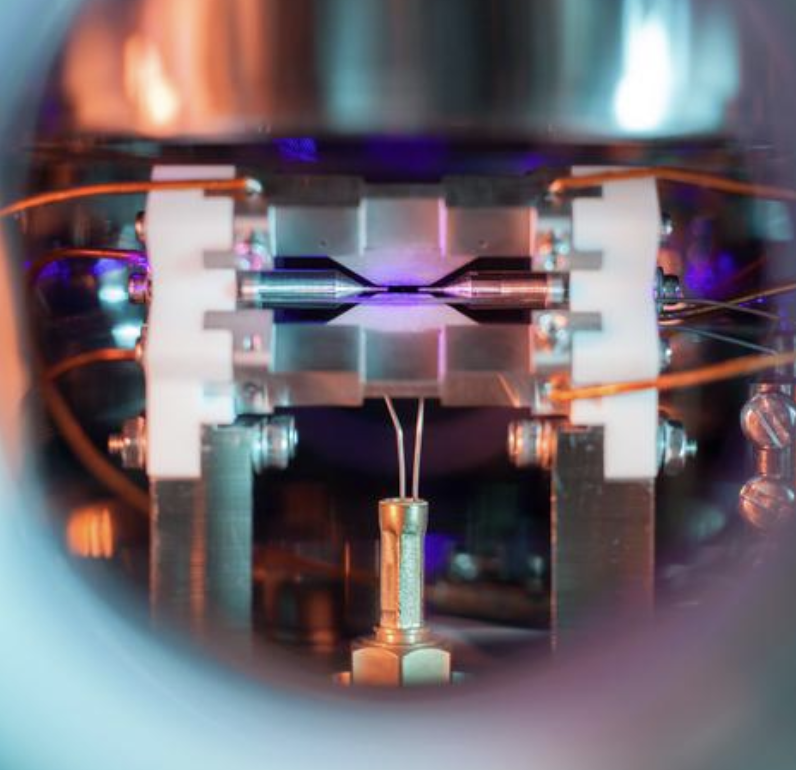
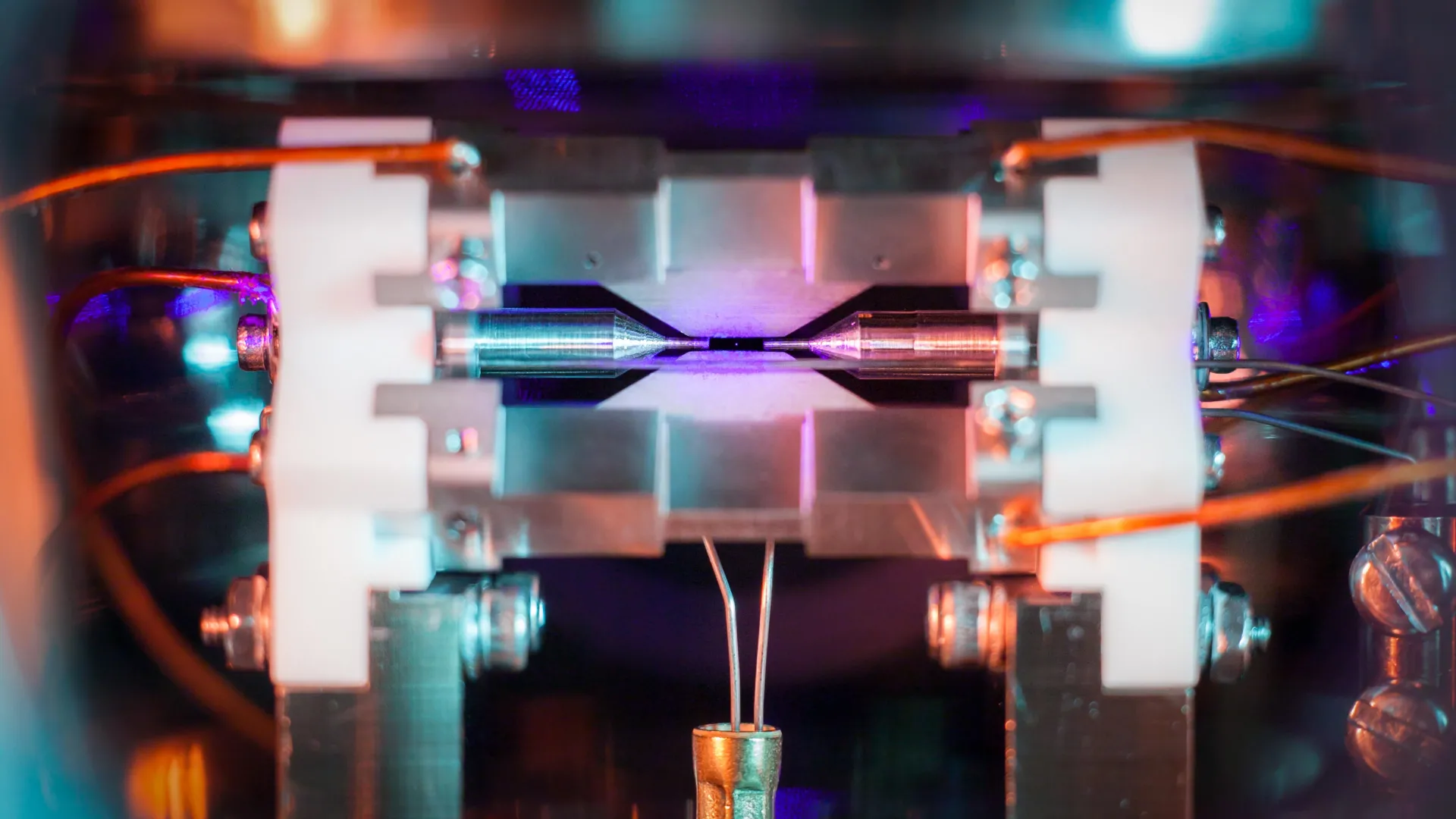
The Oxford team, led by Dr. Oana Băzăvan of the Department of Physics, produced the effect by combining two precisely controlled forces acting on a single trapped ion. Their method exploits a property called non-commutativity — the quantum quirk in which the order in which operations are applied changes the outcome — to amplify the interaction far beyond what was expected. "The fourth-order quadsqueezing interaction was generated more than 100 times faster than expected using conventional approaches," Băzăvan said. Dr. Raghavendra Srinivas, who supervised the work, co-authored the study.
Crucially, the technique relies on tools that are already standard equipment in many quantum laboratories, meaning other groups should be able to reproduce and build on the result without exotic new hardware. That accessibility is part of what makes the demonstration significant: it could quickly become a practical building block for exploring higher-order quantum behaviors that until now existed mostly in theory.
The researchers say quadsqueezing could enhance the sensitivity of quantum sensors, expand the repertoire of quantum simulators used to model complex physical systems, and contribute to the toolkit of quantum computing.
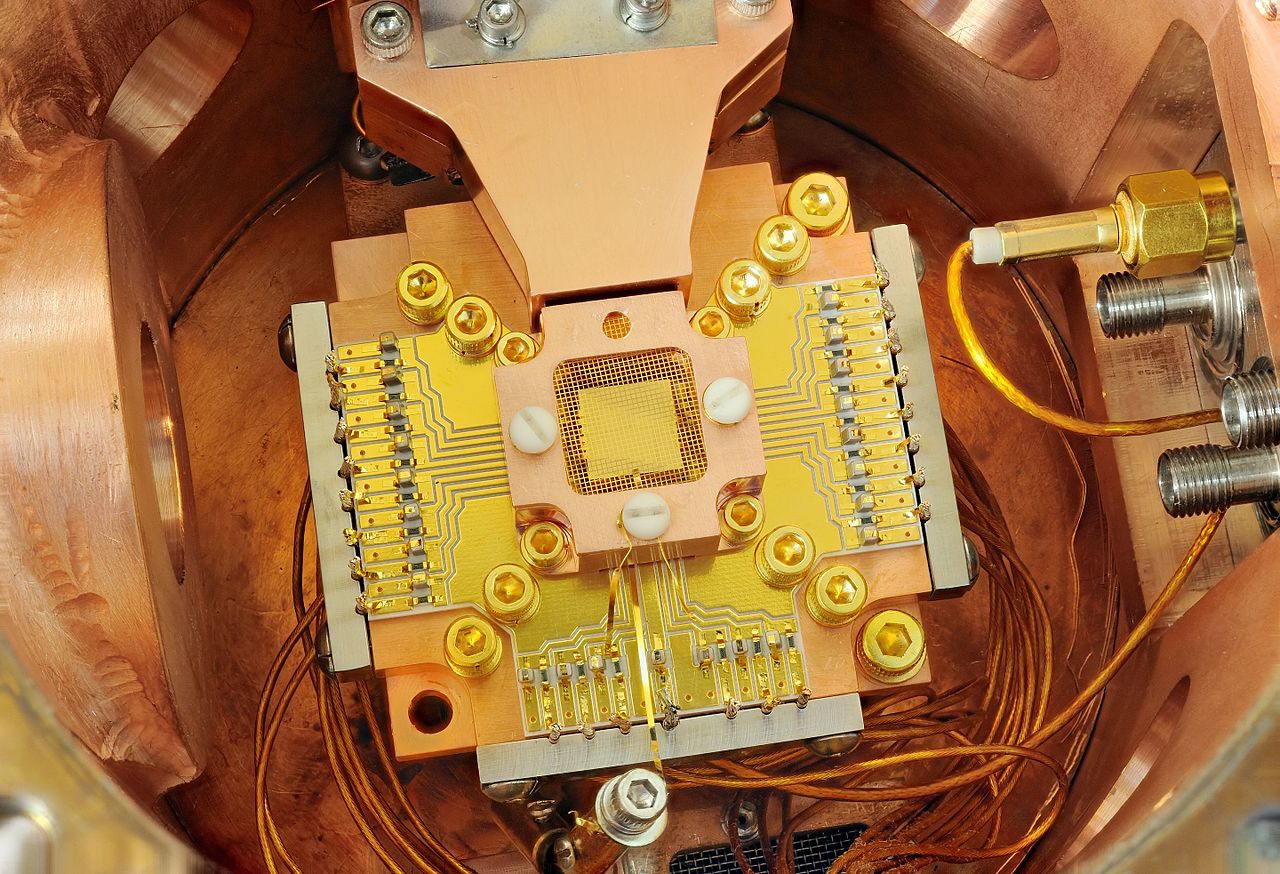
Ordinary squeezing is already a workhorse of cutting-edge physics: gravitational-wave observatories such as LIGO inject squeezed light into their detectors to push measurements below the so-called standard quantum limit, sharpening their ability to sense ripples in spacetime. Higher-order variants like quadsqueezing have been theorized for years as a route to manipulating quantum systems in still more sophisticated ways, but generating them efficiently had remained out of reach. The Oxford demonstration suggests that the same trapped-ion hardware used in today's quantum computers can be repurposed to access these richer effects. The work was published May 1 in the journal Nature Physics. While trapped-ion systems are only one of several competing platforms in the race to build useful quantum machines, the Oxford result illustrates how rapidly experimentalists are gaining mastery over the delicate quantum states at the heart of that effort.