Those 'Impossible' Early Black Holes Webb Found May Not Be Giants After All, New Analysis Says
Astronomers argue the universe's X-ray-silent, seemingly overmassive black holes are actually smaller objects feeding at furious rates — a finding that could defuse one of cosmology's freshest crises.

One of the most unsettling puzzles thrown up by the James Webb Space Telescope may have a reassuring answer. A new analysis suggests that a strange population of early black holes that appear far too massive for their host galaxies — a discovery that seemed to threaten the standard picture of how cosmic giants grow — might not be so massive after all.
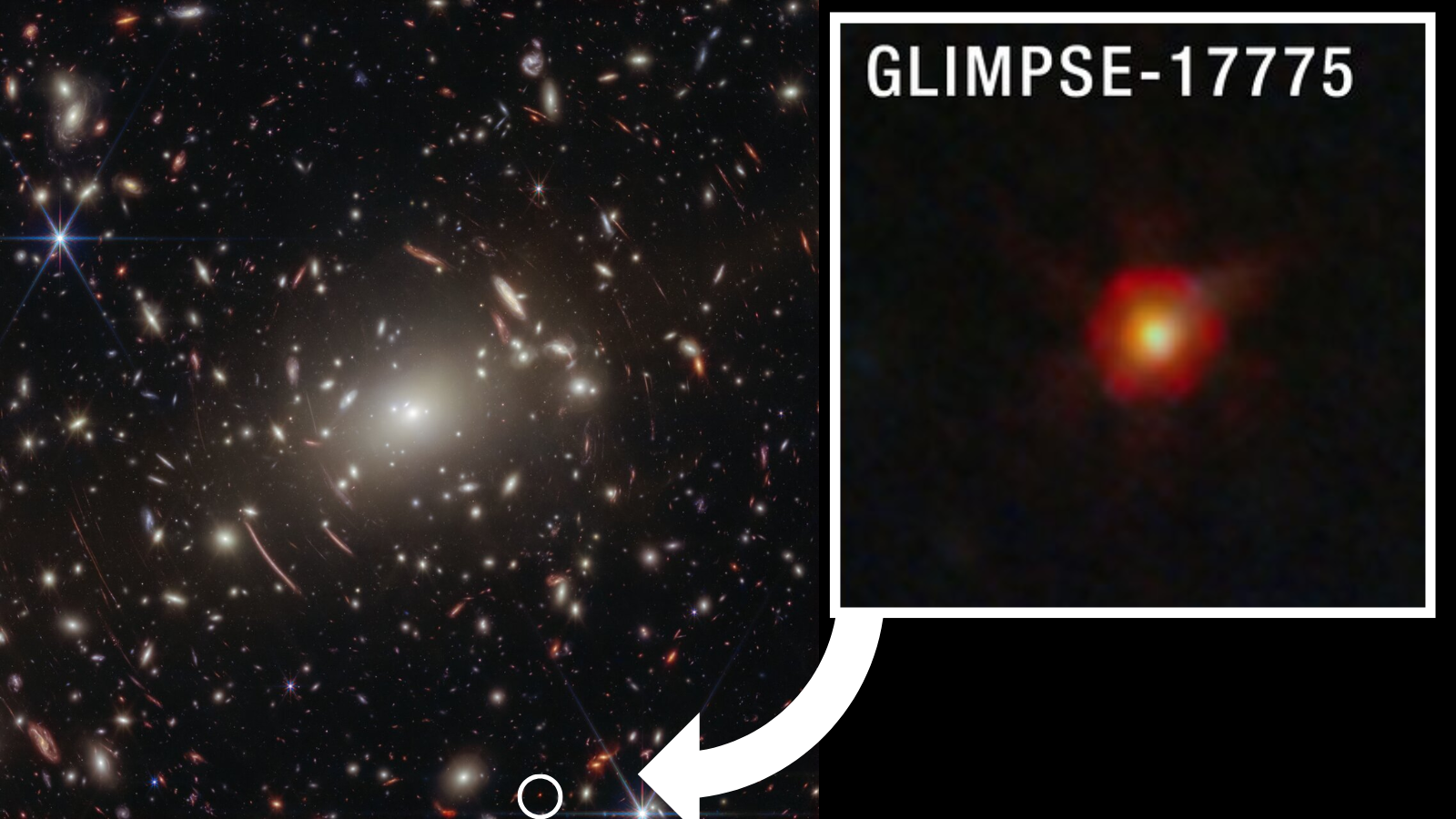
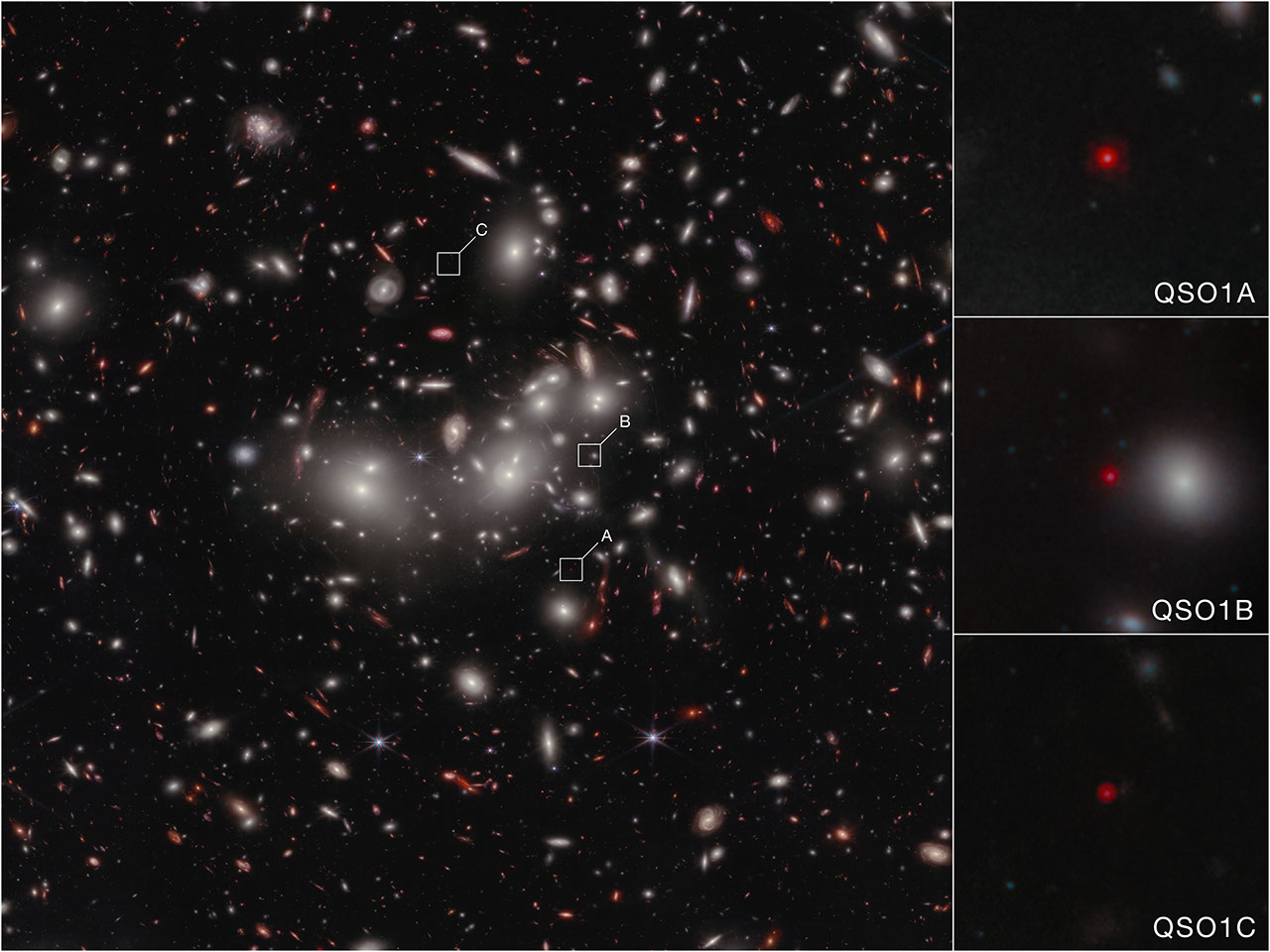
Since it began peering into the infant universe, Webb has spotted black holes in the first billion years after the Big Bang that look impossibly heavy relative to the galaxies around them, and oddly quiet in X-rays. That combination has vexed astronomers. In the nearby universe, black holes and their galaxies grow roughly in lockstep, and actively feeding black holes blaze in X-rays. Objects that break both rules at once, so early in cosmic history, hinted that something might be missing from theories of black-hole formation.
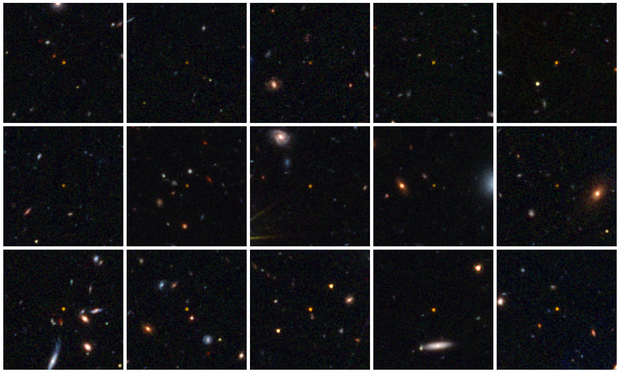
Researchers led by Alessandro Trinca of the INAF Astronomical Observatory of Rome took a closer look at 14 of these X-ray-silent, apparently overmassive black holes. Their conclusion: the objects may be considerably smaller than they seem, and the illusion of enormous mass arises from the extreme rate at which they are gorging on surrounding gas.
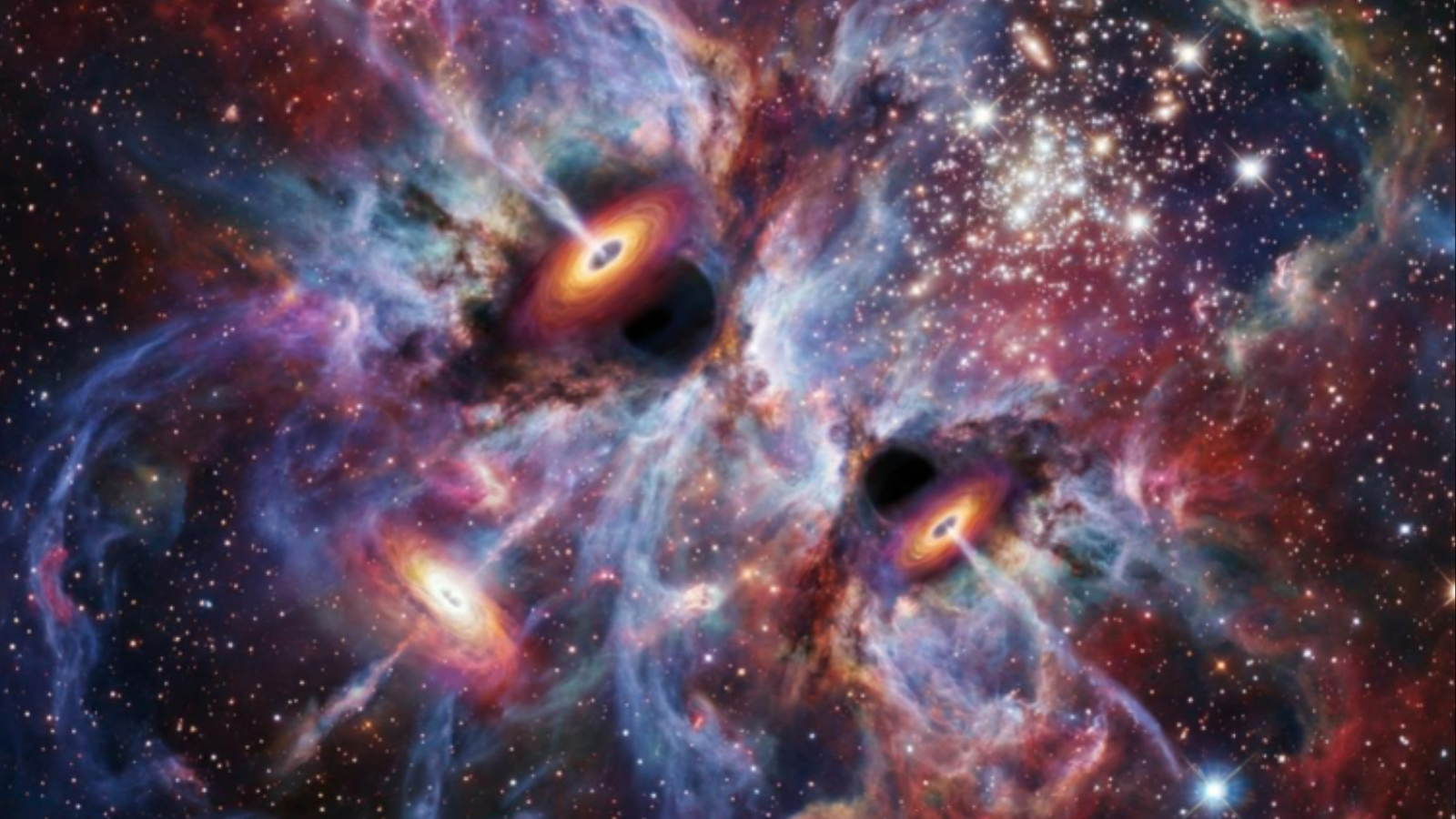
The key is a phenomenon called super-Eddington accretion, in which a black hole feeds faster than the classical theoretical limit. When matter pours in that quickly, the physics of the glowing disk changes. It can suppress the telltale X-ray emission and distort the spectral lines astronomers use to weigh the black hole, making a rapidly growing but modest object masquerade as a lumbering behemoth. Nearly all 14 objects in the study favored this "small, fast-feeding" interpretation over the alternative that they are genuine early-universe titans.
The finding, published in the journal Astronomy & Astrophysics, matters because it offers a way to reconcile Webb's observations with existing models rather than tearing those models down. If the black holes are smaller and simply feeding at breakneck speed, then the tidy relationship between black holes and galaxies need not have been violated in the cosmic dawn, and no exotic new formation channel is required to explain their birth.
The result is unlikely to be the last word — measuring the masses of objects more than 13 billion light-years away is fiendishly hard, and the debate over Webb's "little red dots" and overmassive black holes remains lively. But it is a pointed reminder that in the early universe, appearances deceive, and that a black hole caught in the act of a feeding frenzy can look a great deal bigger than it truly is.