A Planet of Eternal Day and Endless Night May Still Have a Sliver Fit for Life
New modeling of tidally locked worlds like LHS 3844b suggests heat can circulate in a stable loop, making the twilight 'terminator zone' between scorching day and frozen night more hospitable than thought.

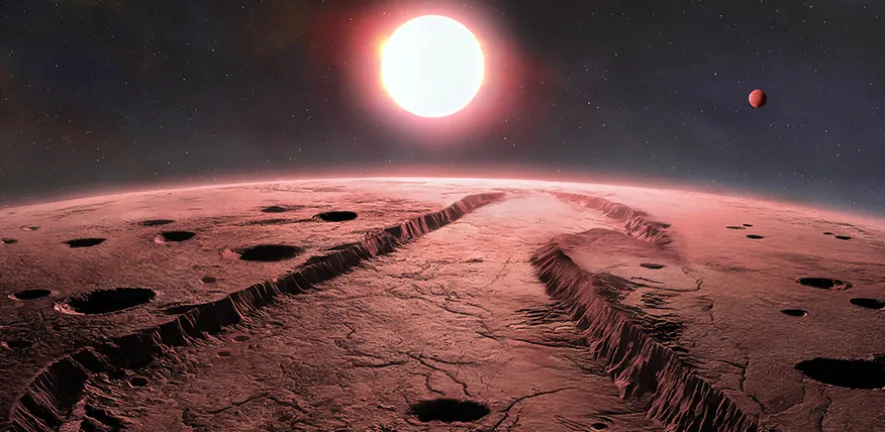
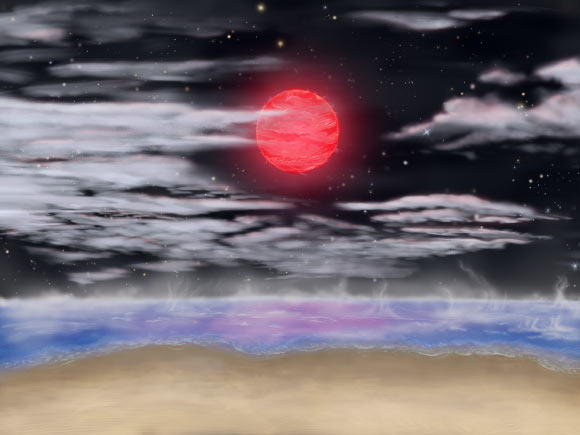
Imagine a world where the sun never rises and never sets — where one half bakes in perpetual daylight while the other is locked in eternal frozen darkness. New research suggests that even on such an extreme planet, a narrow band of twilight between the two extremes might be surprisingly hospitable to life.
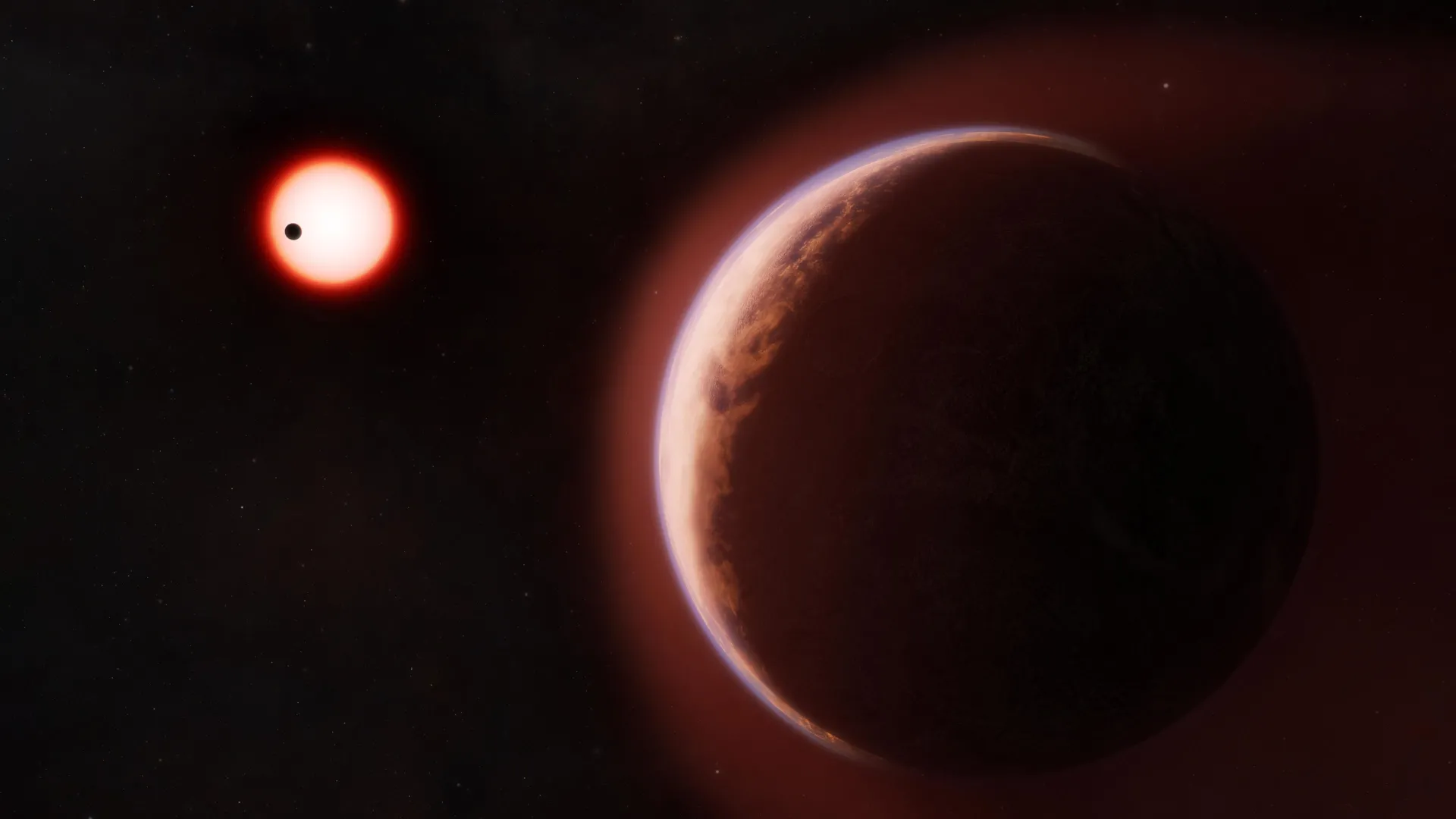
The study focuses on tidally locked exoplanets, worlds that orbit so close to their star that gravity has fixed one hemisphere permanently facing the star and the other permanently turned away. A prime example is LHS 3844b, a planet slightly larger than Earth orbiting a red dwarf star roughly 48.5 light-years away. Because it never rotates relative to its star, it has no day-night cycle at all — just a scorching dayside, a glacial nightside, and a fixed ring of perpetual dusk in between.
That ring is known as the terminator zone, the line separating the burning day from the freezing night. Using laboratory models of how heat moves through such a planet, researchers found that heat inside a tidally locked world could circulate in a stable, continuous loop, distributing warmth sideways and moderating temperatures in certain regions rather than letting the dayside and nightside remain in brutal isolation.
The implication is that these worlds may be more tolerant of life than astronomers previously assumed. "Such exoplanets may be more tolerant of sustaining life as tidal locking can contribute to maintaining moderate thermal environments locally by distributing heat flux laterally," the researchers reported. In other words, the very tidal locking that makes these planets seem so hostile might also help smooth out their temperature extremes, carving out a livable strip in the twilight.
The finding matters because tidally locked planets are extremely common in the galaxy. Red dwarfs are the most abundant type of star, and the planets that orbit within their habitable zones are almost always locked into this eternal day-night configuration. If terminator zones can indeed harbor moderate conditions, then a huge fraction of the galaxy's potentially habitable real estate — long dismissed as too extreme — could be back in play.
Much work remains before anyone can say whether life could actually take hold in such a place; the models simplify enormously complex atmospheric and geological processes. But the research reframes a class of worlds once written off as uninhabitable, suggesting that the search for life beyond Earth may need to include planets where the sun stands frozen in the sky, forever caught between blazing noon and endless midnight.